

US Stands with Canada and More as Hurricane Simon Extends Mexico’s Puerto Vallarta and Manzanillo Airport Closures Disrupting Tourism

Published
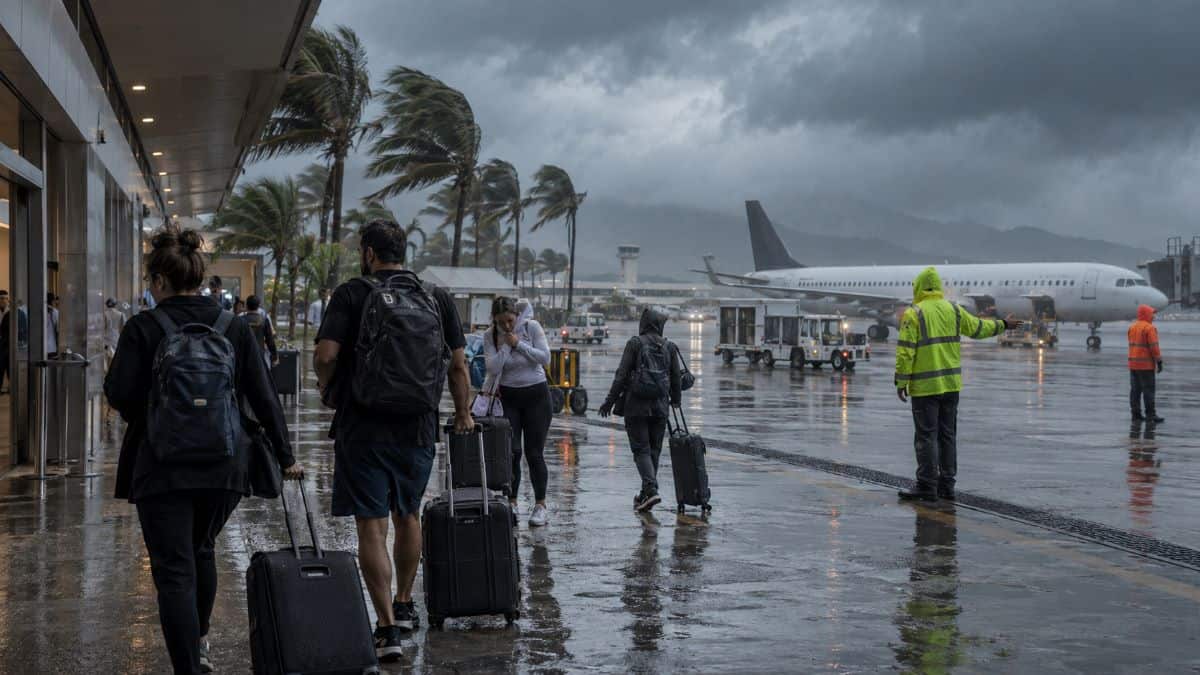
The US stands with Canada and more affected travel markets as Hurricane Simon extends Mexico’s Puerto Vallarta and Manzanillo airport closures, disrupting tourism, international flights and holiday plans. Puerto Vallarta’s reopening was scheduled for 13 October 2026, while Manzanillo’s was set for 12 October, subject to safety conditions. The United States has provided hurricane forecasts and traveller guidance, while Canada has warned against non-essential travel to the affected coast. North American airlines have introduced rebooking options as travellers face uncertain departures, disrupted hotel stays and transport challenges, highlighting the storm’s wider impact on regional tourism.
Mexico Extends Puerto Vallarta and Manzanillo Airport Closures as Hurricane Simon Threatens Tourism
Mexico’s Pacific aviation network faces disruption following official extensions to airport closures announced on 11 October.
Advertisement
Advertisement
Both airports stopped operating at 6 pm local time on 10 October after aviation authorities issued safety notices.
The revised timetable is:
Advertisement
Advertisement
| Airport | Closure began | Scheduled reopening |
|---|---|---|
| Puerto Vallarta (PVR), Jalisco | 10 October, 6 pm | 13 October, 8 am |
| Manzanillo (ZLO), Colima | 10 October, 6 pm | 12 October, 8 am |
These schedules represent planned closure periods of 62 and 38 hours respectively.
However, the reopening dates are conditional. Passengers should not assume their flights will operate simply because an airport is scheduled to reopen.
Advertisement
Advertisement
Read: GAP official airport closure announcement, 11 October 2026.
Hurricane Simon Brings Dangerous Weather, Flooding and Coastal Risks Across Western Mexico
The US National Hurricane Center’s 09:00 UTC update on 12 October placed Simon approximately 235 kilometres west-north-west of Manzanillo.
Advertisement
Advertisement
The storm maintained sustained winds of 185 km/h while moving north-west at around 7 km/h.
Although Simon had weakened from Category 4, the danger remained considerable.
Forecasters warned that some locations in Michoacán, Colima and Jalisco could experience storm-total rainfall approaching 762 millimetres. Additional rainfall, dangerous waves and landslides remained serious concerns.
For tourists, the threat extends beyond airports. Flooded roads, unsafe beaches and interruptions to essential services can make travel difficult even after winds begin to ease.
Advertisement
Advertisement
Why the United States and Canada Have Direct Stakes in Mexico’s Tourism Disruption
The United States and Canada are vital international visitor markets for Mexico.
Official Mexican tourism statistics show that approximately 8.1 million tourists arrived by air from the United States between January and July 2026, accounting for 65% of the recorded air-tourist market.
Meanwhile, Statistics Canada recorded approximately 1.3 million Canadian visits to Mexico during the first quarter of 2026.
These strong travel connections explain why the airport closures matter internationally.
Mexico manages its aviation response. US authorities provide hurricane forecasts and consular guidance. Canada has warned its citizens about the affected coastline.
These are parallel national responses rather than a formally announced joint emergency operation.
Advertisement
Advertisement
Delta, American Airlines and WestJet Introduce Hurricane Simon Travel Waivers
Airlines serving Mexico’s Pacific coast have introduced special arrangements for affected customers.
Their policies differ in eligibility, travel dates and booking deadlines.
| Airline or operator | Affected travel | Passenger arrangements |
|---|---|---|
| Delta Air Lines | Puerto Vallarta and Guadalajara, 10–12 October | Eligible rebooking through 15 October |
| American Airlines | Puerto Vallarta, 9–11 October | Change-fee waiver; booking deadline was 11 October |
| WestJet | Puerto Vallarta and Mazatlán, 9–12 October | Flexible changes through applicable booking channels |
| Air Canada Vacations | Puerto Vallarta | Eligible date changes or future travel credit |
Delta’s waiver also covers Guadalajara, while WestJet includes Mazatlán. This does not establish that either airport has closed.
An important distinction concerns American Airlines: its published change deadline preceded Puerto Vallarta’s revised reopening target.
Passengers who missed that deadline should contact the airline rather than assume the original waiver remains available.
Sources: Official travel advisories from Delta, American Airlines, WestJet and Air Canada Vacations.
Advertisement
Advertisement
Puerto Vallarta’s 4.54 Million Passengers Reveal the Scale of Mexico’s Tourism Exposure
Puerto Vallarta is considerably larger than Manzanillo in passenger traffic.
GAP’s report published on 6 October provides a useful comparison of their aviation markets before Hurricane Simon.
| Airport traffic indicator | Puerto Vallarta | Manzanillo |
|---|---|---|
| Total passengers, January–September 2026 | 4,540,200 | 160,700 |
| International passengers, January–September | 2,272,600 | 62,100 |
| September 2026 passengers | 307,100 | 12,700 |
| September annual traffic change | −10.4% | +14.0% |
Puerto Vallarta’s international traffic was already 19.4% lower during January–September than in the same period of 2025.
That decline preceded Simon and must not be attributed to the hurricane.
The figures nevertheless show how essential dependable aviation is to the region’s tourism industry.
Canada’s Mexico Travel Warning Raises Important Questions for Holidaymakers
Global Affairs Canada updated its Mexico advisory on 10 October, advising against non-essential travel along the west-central coast from Punta San Telmo to El Roblito, including the Islas Marías.
Advertisement
Advertisement
This warning concerns a defined hurricane-affected region. It is not a nationwide ban on visiting Mexico.
Canadian holidaymakers should check whether their destination falls within the affected area.
They should also ask their travel provider whether the warning changes their booking options or insurance coverage.
For visitors already in Mexico, following local emergency instructions takes priority over maintaining the original holiday schedule.
Mexico’s Tourism Economy Faces Pressure Beyond Cancelled Flights
Mexico welcomed approximately 28.9 million international tourists between January and July 2026, according to DataTur. International visitor receipts reached approximately US$21.7 billion.
These nationwide figures underline tourism’s economic importance.
Advertisement
Advertisement
Hurricane-related interruptions can affect far more than airline revenue. Hotels may face delayed arrivals, while restaurants, guides and transport providers can lose expected business.
One overlooked concern is the difference between restoring airport operations and restoring the complete visitor experience.
A functioning runway provides little reassurance if surrounding roads remain unsafe or essential hotel services are interrupted.
However, no verified consolidated estimate of Simon-related tourism losses or stranded visitor numbers is available in the reviewed official sources.
Airport Reopening Does Not Guarantee a Smooth Return to Normal Tourism
Travellers often focus on airport reopening announcements. Yet a successful journey depends on several connected services working together.
An airport must meet safety requirements. Airlines must have suitable aircraft and crews. Roads must allow passengers to reach terminals. Hotels and ground operators must be ready to receive visitors.
Advertisement
Advertisement
A delay in any one area can affect the wider journey.
This creates a practical lesson for holidaymakers: confirm the flight, airport access and accommodation separately.
Changing to another airport should not be the automatic solution. Long-distance journeys during flooding or landslide warnings may introduce additional risks.
Safe travel matters more than reaching a departure point quickly.
US and Canadian Air Passenger Rights Can Help Travellers Manage Cancellations
Passengers affected by Hurricane Simon should understand the difference between airline goodwill policies and legal refund rights.
Under US Department of Transportation rules, travellers on covered flights can generally obtain refunds when airlines cancel their journeys and they decline alternative transport or travel credit.
Advertisement
Advertisement
Canadian Air Passenger Protection Regulations also provide rebooking and refund rights in qualifying situations.
However, extreme weather is normally classified as outside an airline’s control. Fixed inconvenience compensation generally does not apply in such cases.
Extra hotel nights and other expenses are not automatically reimbursed.
Passengers should review their insurance coverage and retain booking documents, airline notifications and receipts.
What Travellers Should Do Before Flying to Puerto Vallarta or Manzanillo
Anyone travelling through the affected airports should make decisions using verified information.
Five practical steps can reduce avoidable problems:
Advertisement
Advertisement
- Check flight status: Confirm departure details directly with the airline.
- Review travel waivers: Examine eligibility, rebooking deadlines and fare differences.
- Contact accommodation providers: Verify hotel operations and available airport transfers.
- Follow weather warnings: Avoid unsafe coastal areas, flooded roads and unnecessary journeys.
- Keep essential documents: Save receipts, tickets and messages for insurance or refund claims.
Travellers already in Mexico should remain in contact with local authorities and their accommodation providers.
Mexico’s emergency telephone number is 911.
| Traveller Priority | What Travellers Should Do | Why It Matters |
|---|---|---|
| Flight Status | Confirm departure times, cancellations and rescheduled flights directly with the airline. | Avoid unnecessary airport trips and missed connections. |
| Airline Travel Waivers | Check rebooking eligibility, deadlines, refund options and additional charges. | Reduce unexpected costs and protect booking rights. |
| Hotel and Accommodation | Contact hotels to confirm availability, operating conditions and extended-stay options. | Prevent accommodation problems during flight disruptions. |
| Airport Transfers | Verify road conditions and transport availability before travelling. | Avoid flooded roads, unsafe routes and transport delays. |
| Weather and Safety Alerts | Follow Mexico’s civil protection authorities and official hurricane forecasts. | Stay informed about flooding, landslides and dangerous coastal conditions. |
| Travel Documents | Keep boarding passes, tickets, booking confirmations and receipts. | Support insurance claims, refunds and reimbursement requests. |
| Emergency Assistance | Contact local authorities, accommodation providers or consular services when necessary. | Access reliable assistance during emergencies. |
| Emergency Contact | Call 911 in Mexico for immediate emergency assistance. | Reach emergency services when urgent help is required. |
In conclusion, the US stands with Canada and more affected travel markets as Hurricane Simon extends Mexico’s Puerto Vallarta and Manzanillo airport closures, disrupting tourism, international flights and holiday plans. Both countries have direct interests in traveller safety, airline assistance and reliable travel connections. Mexico’s recovery depends on restoring safe airport operations, road access and essential tourism services. Travellers must verify flight schedules, accommodation arrangements and rebooking options before travelling. Beyond the immediate disruption, Hurricane Simon highlights the importance of stronger aviation resilience, coordinated travel information and passenger protection to restore confidence in Mexico’s Pacific tourism destinations.
Advertisement
