Published on March 1, 2026

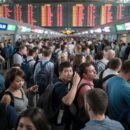
Image generated with Ai
As families gathered across the country for the 2026 Lunar New Year celebrations, new official data show passenger traffic surged to levels far above what is usually seen on an ordinary day. During the holiday period this year, travel volumes were forecast to rise by 10.8% compared with regular daily figures earlier in 2026, signalling one of the most intense peaks in seasonal travel demand in recent years.
This remarkable trend emerged from a forecast report released by the International Air Transport Association (IATA), which analysed passenger movements across markets that recognise the Lunar New Year as an official holiday. The analysis underscores how this annual tradition continues to shape travel behaviour not just within China but across the broader Asia Pacific region.
At the same time, Chinese government transport agencies continued to publish robust travel counts throughout the extended holiday season. Data from the Civil Aviation Administration of China (CAAC) show that aviation activity alone handled over 22 million passenger trips during the Spring Festival period, marking a significant uptick compared with 2025 figures.
Travel demand across China during the 2026 Spring Festival was driven by a combination of long‑held cultural traditions and a record‑length nine‑day public holiday. Known locally as “Chunyun,” this period is universally recognised as the single largest human migration event each year, encompassing inter‑regional movement by road, rail and air.
Advertisement
According to the Ministry of Transport, daily cross‑regional passenger traffic on one of the peak days exceeded 350 million trips, a figure that sets a high benchmark compared with previous years. Another high point during the season recorded travel volumes close to 380 million trips in one day, reflecting both strong outbound leave and return‑to‑work movements.
In total, government forecasts pointed to an estimated 9.5 billion cross‑regional passenger trips across the broader 40‑day travel season — a season that began in early February and stretched into mid‑March. The scale of that movement reinforces why comparative day‑to‑day traffic levels during the official holiday appear so elevated.
Advertisement
Advertisement
Air travel also witnessed notable increases during the festive stretch. CAAC data indicate that the aviation sector managed nearly 19,000 flights per day on average during the Spring Festival holiday, achieving a 7.7% rise in passenger trips compared with the same period last year.
These figures point to broader confidence in air mobility and expanded travel opportunities, even as millions still rely on high‑speed trains or highways for synchronised family reunions and leisure travel. Rail and road transport continued to dominate total mobility figures, but civil aviation preserved a steady role in facilitating both domestic and international travel segments.
One key driver in this year’s statistics was the extension of the official holiday to nine days, providing travellers with more flexibility to plan longer trips and combine leisure travel with traditional family visits. The prolonged break encouraged people to venture further from home or return to distant hometowns with reduced time pressure.
The IATA forecast emphasised that this extended break window played a central role in boosting passenger volumes, especially for outbound travel to neighbouring Asia Pacific destinations. Chinese travellers showed heightened interest in countries such as Thailand, Singapore and Malaysia, where visa‑free access has been broadened, helping unlock new travel opportunities during the holiday.
While the travel surge was nationwide in scope, certain regions recorded particularly high volumes of passenger movement. Major cities such as Beijing and Shanghai not only saw strong outbound departures but also welcomed significant inbound returns as the holiday drew to a close. Tourism authorities reported enthusiastic participation across scenic destinations, rural towns and cultural attractions.
Railway hubs in provinces like Jiangxi, Fujian and Guangdong maintained intense flow management efforts as millions queued to board trains returning to urban centres after family gatherings. Highways similarly teemed with private vehicles, reflecting the continuing preference for road travel among many holidaymakers.
Beyond the comparison with regular daily travel levels, the 2026 holiday also showed growth when viewed year‑over‑year (YoY). IATA’s forecasting work suggests that the overall passenger volumes during this Lunar New Year period are expected to be about 8.5% higher than during the 2025 holiday season, reinforcing the narrative that seasonal mobility demand continues to recover and expand further each year.
This notable uptick in travel volumes has implications beyond passenger mobility. Tourism, hospitality and retail sectors across China reported brisk activity throughout the holiday, with accommodation bookings, sightseeing excursions and local consumption seeing significant upticks. Though transport infrastructure bore the brunt of the volume increase, services sectors largely welcomed the influx of visitors and travellers. Government officials noted that this seasonal burst plays a vital role in stimulating economic activity and sustaining domestic consumption growth.
As the Lunar New Year celebrations wrapped up and normal work patterns resumed, travel flows began to transition back toward regular levels. Nevertheless, the strength of the mobility figures points to robust underlying travel appetite in the region — a trend that experts say bodes well for travel markets throughout 2026. Continued expansion of connectivity, eased travel regulations in neighbouring countries, and broadening holiday options may further support travel growth in future peak seasons.
In sum, the 10.8% increase in traffic volumes during the 2026 Lunar New Year holiday compared with normal daily travel stands as both a symbol of recovery and an indicator of sustained seasonal demand. Government transport data and industry forecasting together reveal travel behaviours that are increasingly dynamic and economically consequential as China and the Asia Pacific region embrace post‑pandemic mobility patterns.
Advertisement
Tags: 2026 travel demand, China transport data, China travel surge, civil aviation increase, IATA traffic forecast


















Sunday, March 1, 2026
Sunday, March 1, 2026

Sunday, March 1, 2026

Sunday, March 1, 2026

Sunday, March 1, 2026