

Japan Teams Up With Singapore in a Five-Market Test as Personal Trackers Challenge Asia’s Airline Baggage Systems

Published
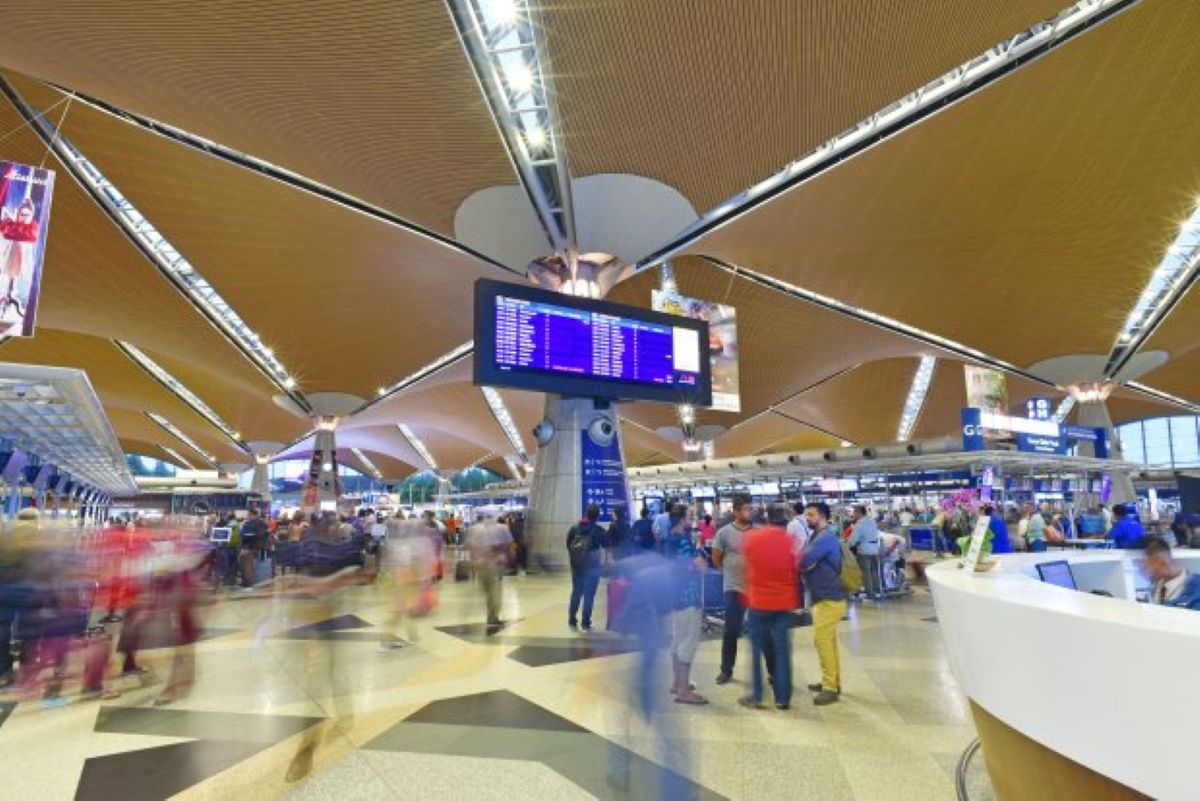
Japan, Singapore, South Korea, Malaysia and Thailand face a growing test of airline baggage tracking as personal devices give passengers another way to locate delayed or misrouted suitcases. The challenge comes into focus after a Washington Post report published on 9 October 2026 examined why luggage continues to go missing despite technological advances. Globally, airlines mishandled 24 million bags in 2025, even as the rate fell 23% to 4.9 bags per 1,000 passengers, according to SITA’s 2026 Baggage IT Insights report. The five Asian markets offer contrasting ways to examine airport automation, passenger notifications, baggage recovery and compensation. However, publicly available evidence does not yet establish a reliable ranking of their overall performance.
The Numbers Behind the Missing Baggage Problem
The latest international figures reveal a paradox for the aviation industry. Airlines are improving baggage operations, yet millions of suitcases still fail to complete their journeys as intended. SITA’s 2026 report recorded approximately five billion air passengers worldwide in 2025, while mishandled baggage volumes declined 19% to 24 million bags. The mishandling rate also dropped 23%, reaching 4.9 bags per 1,000 passengers.
Advertisement
Advertisement
That improvement marks substantial progress, but it does not eliminate the consequences for travellers. Delayed luggage can disrupt business meetings, family holidays, cruise departures and onward transport, while permanently missing possessions create additional financial and administrative burdens. SITA estimates that baggage mishandling costs the aviation industry $6.3 billion annually, with an average cost of $260 per mishandled bag.
Transfer operations remain a particularly significant vulnerability. According to the same report, transfers accounted for 39% of mishandling cases in 2025, down from 41% the previous year. This makes connecting journeys especially important to the investigation, because bags must move between flights, handling teams and sometimes separate airline information systems.
Advertisement
Advertisement
A separate US benchmark illustrates the scale of the problem in another major aviation market. The Washington Post reported that US airlines mishandled 1.1 million of 226 million checked bags during the first half of 2026. That figure covers the United States, however, and should not be used to estimate performance in the five Asian countries.
Why Better Tracking Still Cannot Guarantee Recovery
A suitcase can have a digital record without having a continuously visible location. Most operational systems record events when baggage passes through designated checkpoints, allowing airlines to identify where a bag was last processed. Those records can help investigators narrow a search, but they do not necessarily provide a live map of every movement.
Advertisement
Advertisement
The distinction matters because tracking visibility and successful recovery are separate outcomes. An airline may know that a bag was loaded onto an aircraft without confirming whether it reached the correct transfer area. Likewise, a passenger may see a tracker signal near an airport terminal without knowing whether the suitcase is inside a secure sorting facility or awaiting another flight.
The International Air Transport Association’s Resolution 753 addresses this problem through four key tracking points. Member airlines must track baggage at passenger handover, aircraft loading, transfer to another flight and return to the passenger. The framework also supports the exchange of baggage information between airlines handling connecting itineraries.
Advertisement
Advertisement
Implementation remains uneven across the wider industry. In a 2024 IATA survey of 155 airlines and 94 airports, 44% of airlines had fully implemented Resolution 753, while another 41% were still implementing it. Among surveyed airports, 75% had the capability to support the required tracking processes. These figures establish an important historical baseline, not the current adoption rate in any of the five markets.
Japan Tests the Difference Between Tracing and Live Visibility
Japan provides a useful starting point because its major carriers publish established procedures for investigating missing international baggage. All Nippon Airways (ANA), for example, offers an online tracing system for eligible international passengers after they report missing luggage and receive a reference number. The service provides baggage status information and notifications, helping passengers follow the recovery process without repeatedly contacting airport staff.
However, this is not the same as tracking every suitcase throughout its journey. ANA’s published guidance directs passengers to report missing baggage at the arrival airport before using its tracing service. It also specifies that passengers on certain connecting itineraries must contact the airline operating the final flight segment. That qualification highlights a persistent weakness in international baggage journeys: information can become fragmented when responsibility passes between carriers.
Japan Airlines also publishes an international baggage tracing service and procedures for compensation when luggage remains missing. Its published conditions describe a search period generally lasting 30–45 days, with the possibility of an extension to 100 days upon request. ANA similarly states that compensation may apply after a full search fails to locate baggage within 30–45 days, subject to its conditions of carriage.
Advertisement
Advertisement
These provisions should not be interpreted as a guarantee that every claim will be settled after a fixed period. Eligibility, documentation and applicable conditions still matter. For travellers, the more immediate question is whether an airline can provide meaningful progress updates during the first hours and days after a bag disappears.
Singapore Connects Airport Data With Passenger Updates
Singapore offers one of the clearest airport-led examples in this comparison. Changi Airport’s Baggage Tracker displays selected baggage events through the Changi app, combining information supplied by airlines with data from the airport’s own baggage systems. Depending on the journey, passengers can follow luggage from check-in through aircraft loading or arrival at the baggage carousel.
The service also covers transfer passengers when their airlines participate. Changi states that connecting travellers may receive updates at departure check-in, arrival at Singapore and loading onto their onward aircraft. Its tracker can also provide first-bag and last-bag information for the arrival belt, helping passengers understand when baggage delivery begins and ends.
Yet the airport explicitly acknowledges that coverage depends on airline participation. A missing record does not automatically mean that a suitcase has disappeared; the airline may simply not participate in the service. Changi also notes that its airport-integrated information may differ from the additional information available through an airline’s own system.
This creates an important distinction for international travellers. An airport app can improve visibility within a particular hub without guaranteeing uninterrupted tracking across the entire itinerary. Passengers connecting through Singapore should therefore check both the airport’s tracking coverage and their airline’s own baggage service.
South Korea Examines the Automation Question
South Korea adds another dimension through Incheon International Airport, a major gateway for international and connecting travel. Its published passenger guidance directs travellers towards airline-specific lost-baggage contacts and procedures. Korean Air and Asiana Airlines therefore provide relevant cases for examining how carrier-level systems interact with airport handling operations.
Advertisement
Advertisement
The research must distinguish automated baggage handling from passenger-facing tracking. Self-service bag drops, automated sorting and barcode or RFID readers can improve operational efficiency, but their presence does not prove that passengers receive continuous location updates. Nor does it establish that missing luggage is recovered faster than at competing airports.
The crucial evidence would include confirmed RFID deployment, baggage-event coverage, interline data-sharing arrangements and published recovery performance. Without comparable figures for mishandled bags per 1,000 passengers, median recovery times and permanently lost luggage, South Korea cannot responsibly be ranked above or below Japan or Singapore.
For travellers, the practical lesson is straightforward. Before a multi-airline journey, confirm which carrier accepts responsibility for a missing-baggage report and which airline will provide subsequent updates. That preparation becomes particularly important when the ticket includes codeshare flights or connections operated by different carriers.
Malaysia and Thailand Reveal Different Operational Priorities
Malaysia’s comparison should begin with Kuala Lumpur International Airport and the procedures published by Malaysia Airlines. The investigation should establish which baggage events passengers can view, how the airline handles delayed luggage, and whether its tracking information continues across partner-operated flights. Low-cost and full-service carriers should be assessed separately because their service arrangements and passenger interfaces may differ.
However, the available evidence does not justify a numerical ranking of Malaysia’s baggage performance. A reliable assessment requires current official airline policies and operational statistics, not assumptions based on airport size, traffic volumes or digital modernisation. Where airlines do not publish recovery times or mishandling rates, the article should identify that information gap explicitly.
Thailand provides a particularly interesting example of back-end automation. SITA’s 2026 report describes Thai Airways’ use of Auto Reflight across nine airports, reducing a baggage reflight task from three minutes to one second per bag. The technology accelerates a process associated with arranging onward transport for baggage that has missed its intended flight.
Advertisement
Advertisement
The result demonstrates how automation can remove administrative delays from baggage recovery. Nevertheless, it does not mean that a passenger receives a live location signal or that every missing suitcase is recovered within seconds. The achievement concerns a specific operational task, rather than the entire journey from misrouting to delivery.
Thailand’s case illustrates why the article should assess operational speed separately from passenger visibility. The next research step is to establish how Thai Airways communicates baggage status, how quickly recovered luggage reaches passengers and which rules apply when a bag remains missing.
Five Markets Compared Through Their Tracking Capabilities
The available official information supports the following preliminary comparison. It describes documented services and research priorities rather than declaring a winner.
| Market | Verified example | What travellers should check |
|---|---|---|
| Japan | ANA and JAL publish international baggage tracing procedures. | Incident-reference requirements and responsibility for final-leg connections. |
| Singapore | Changi’s app displays selected baggage events for participating airlines. | Airline participation and coverage across connecting flights. |
| South Korea | Incheon publishes airline-specific lost-baggage guidance. | Which carrier handles the claim and whether tracking extends across partner flights. |
| Malaysia | Malaysia Airlines and KLIA provide the basis for an airline-level investigation. | Current tracing facilities, claim procedures and interline coverage. |
| Thailand | Thai Airways has documented an automated baggage reflight process. | Passenger-facing updates, recovery delivery and missing-bag procedures. |
The table reveals a useful pattern. Some systems focus on showing passengers recorded baggage events, while others improve the speed of internal handling. The strongest passenger experience would combine both, supported by consistent information exchange between airlines, airports and ground handlers.
RFID, Barcodes and Personal Trackers Serve Different Purposes
The technology debate needs careful treatment because these systems solve different problems. Barcode readers identify baggage when its printed tag is scanned, creating a record of a handling event. RFID uses radio-frequency identification to read compatible tags without requiring the same direct optical scan, potentially improving identification speed and automation.
IATA’s 2024 airport survey found that optical barcode scanning was used by 73% of surveyed airports, compared with 27% implementing RFID tracking. At mega airports, RFID adoption reached 54%. These figures demonstrate the historical difference between established scanning infrastructure and more advanced identification technology, but they do not establish current adoption in individual Asian markets.
Advertisement
Advertisement
Personal trackers offer a different source of information. Devices such as Apple’s AirTag use nearby-device networks to help owners locate belongings, while compatible services allow passengers to share location information with an airline. The device does not replace the baggage tag, airport handling records or the airline’s responsibility for recovery.
SITA’s 2026 report provides a significant example of the potential benefit. Its integration of Apple’s Find My location-sharing technology with WorldTracer reportedly reduced permanently lost luggage by 90% during the first year. It also shortened delayed-baggage recovery by 26%. These results relate to the reported integration, rather than every passenger using a tracker.
The development matters because the traveller can contribute useful information to the search. If a suitcase appears to be at another terminal or airport, that location may help staff narrow their investigation. However, location estimates can change, and passengers must not attempt to enter restricted baggage areas or retrieve luggage without authorisation.
The Financial Cost Extends Beyond the Suitcase
Baggage failures impose costs on airlines as well as travellers. SITA estimates the average industry cost at $260 per mishandled bag, while its report places the annual total at $6.3 billion. The average combines operational expenses and compensation-related costs, so it should not be mistaken for an automatic payment to the passenger.
The underlying cost differs by incident type. A delayed bag may require tracing, storage, rerouting and final delivery. A permanently lost bag can generate additional compensation costs, while damaged luggage may require separate assessment and settlement. SITA’s published estimates put the cost of a lost bag at substantially more than that of a delayed one.
| Measure | Published benchmark | Why it matters |
|---|---|---|
| Mishandled bags in 2025 | 24 million | Shows the global scale of baggage disruption. |
| Mishandling rate | 4.9 per 1,000 passengers | Provides a rate-based measure that accounts for traffic volume. |
| Share linked to transfers | 39% | Highlights the importance of connecting-flight operations. |
| Average industry cost per mishandled bag | US$260 | Illustrates the financial consequences for airlines. |
| Estimated annual industry cost | US$6.3 billion | Shows the wider operational and commercial impact. |
These global measures offer context, but they cannot reveal which of the five countries performs best. A defensible ranking would require consistent national or airline-level data, including the number of mishandled bags, recovery times, permanent-loss rates and the passenger volumes used to calculate each rate.
Advertisement
Advertisement
Compensation Rules Matter When Tracking Fails
A tracking service helps passengers obtain information, but it does not determine their legal rights. Compensation depends on the applicable conditions of carriage, the journey, the nature of the incident and the governing legal framework. International carriage may fall under the Montreal Convention, where applicable, while domestic journeys can involve different national rules.
Travellers should report missing baggage promptly and obtain a written incident reference before leaving the airport. They should also retain baggage tags, receipts for necessary replacement purchases and correspondence with the airline. Reporting deadlines and claim requirements vary, so passengers should consult the operating carrier’s current official policy rather than assume that one country’s procedures apply throughout Asia.
The five-market comparison should examine how each airline defines delayed and lost baggage, which expenses it considers, how claims are submitted and when it closes a tracing case. It should also distinguish compensation for reasonable expenses during a delay from claims for permanently lost or damaged possessions.
That distinction is particularly important for international connections. A ticket may involve several carriers, but passengers still need to identify the appropriate reporting channel. ANA’s guidance, for instance, directs certain connecting passengers to the airline operating the final flight segment when baggage fails to arrive. Travellers should confirm the relevant procedure for their own itinerary.
What Travellers Can Do Before Flying
The most effective protection combines sensible packing, accessible documentation and an understanding of the airline’s tracking facilities. Travellers should photograph their suitcase and baggage tag, remove obsolete destination labels and keep essential medicines, travel documents and valuables in cabin baggage. On connecting itineraries, they should also confirm that their luggage has been checked through to the final destination.
A personal tracker can provide an additional source of information, particularly when a suitcase misses a connection. However, passengers should verify that their chosen device works with their phone and the relevant location-sharing network. They should also understand that a tracker cannot guarantee recovery, prevent misrouting or replace an official missing-baggage report.
Advertisement
Advertisement
Once a bag fails to arrive, passengers should report the incident immediately and retain the reference number. They should check the airline’s tracing service, follow delivery updates and share tracker information through an accepted channel. If the airline cannot locate the suitcase, written records and receipts will help support any subsequent claim.
Baggage Trust Now Depends on Better Information
Japan, Singapore, South Korea, Malaysia and Thailand offer five useful perspectives on a challenge that extends across the global aviation industry. Airport tracking, automated sorting and consumer devices are improving baggage visibility, yet fragmented information and connecting-flight handovers continue to create vulnerabilities. SITA’s 2026 findings demonstrate progress, with the global mishandling rate falling to 4.9 bags per 1,000 passengers in 2025. Nevertheless, the absence of consistent country-level recovery data prevents a credible ranking of the five markets. The next advance must combine accurate operational records, passenger-facing updates and effective recovery procedures. For travellers, personal trackers are valuable additional safeguards, but airline accountability remains essential.
Advertisement
