
Macau Declares Cultural Megaproject Boom as Population Shift Triggers Radical Urban Transformation Plan

Published
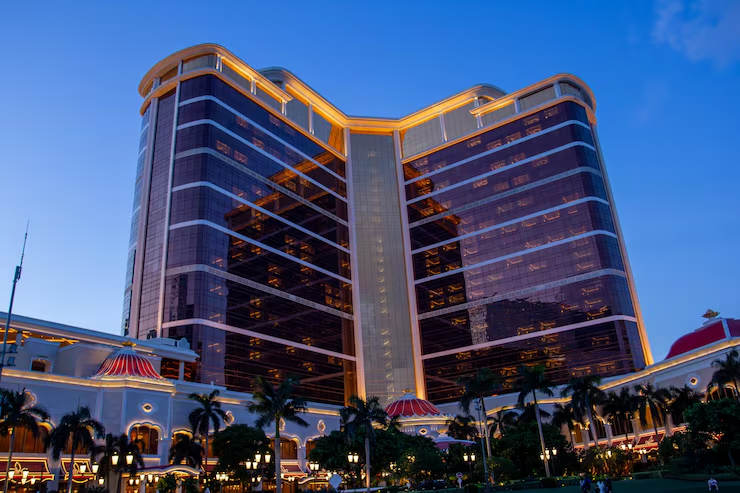 Image generated with Ai
A major transformation has been initiated in Macau tourism development strategy, reclaimed land cultural redevelopment Macau Zone C, and Macau integrated cultural and innovation planning framework 2040 as the government has confirmed the creation of a new international tourism and culture hub on a 33-hectare reclaimed site near Taipa island. The decision has been positioned as part of a broader restructuring of Macau’s long-term urban development and economic diversification strategy.
The redevelopment has been framed within the revised Macau Master Plan, where previously designated residential land has now been repurposed into a large-scale cultural and tourism district aimed at strengthening the city’s global competitiveness beyond its traditional gaming-driven economy.
Reclaimed Land Repositioned as Major Cultural and Tourism District
The 33-hectare landfill site in Zone C, completed in 2022 and previously left unused, has now been formally reclassified for public utility development. Under the revised framework, the land will no longer serve residential or commercial purposes but will instead be transformed into an International Integrated Tourism and Culture District Macau development project.
This strategic shift has been aligned with Macau’s broader objective of enhancing cultural infrastructure while supporting diversified economic growth. The reclassification into a public utility zone allows the land to be used for cultural, recreational, educational, and social facilities, marking a significant departure from earlier urban planning assumptions.
Advertisement
Advertisement
The transformation has been described as a structural adjustment in Macau reclaimed land urban redevelopment strategy and cultural infrastructure expansion plan, reflecting changing priorities in long-term city planning.
Major Cultural Landmarks Planned for Zones B and C
According to the Land and Urban Construction Bureau (DSSCU), three major cultural facilities are planned across Zones B and C, which are strategically located between the Macau Peninsula and Taipa island.
Advertisement
Advertisement
In Zone B, the National Cultural Museum of Macau is expected to be developed, while Zone C will host both the International Contemporary Art Museum and the Macau International Performing Arts Centre. These developments have been designed as flagship institutions to elevate Macau’s position within the regional and global cultural tourism landscape.
This initiative has been framed under Macau cultural landmark development strategy Zones B and C integrated tourism expansion, where cultural infrastructure is being used as a driver for tourism diversification and economic resilience.
Advertisement
Advertisement
The overarching goal has been defined as promoting the integrated development of tourism, culture, and commerce through large-scale public infrastructure investment.
Urban Integration Designed to Strengthen Cultural Ecosystem
The planning framework has emphasised strong integration between the new cultural district and existing infrastructure. Zone B has been designed to interact with established landmarks such as the Macau Science Centre, Macau Cultural Centre, Kun Iam Statue, Nam Van Lake, Sai Van Lake, and the Macau Tower cultural zone.
This integration has been positioned within the concept of Macau cultural ecosystem connectivity and tourism infrastructure synergy development, where new and existing attractions are linked to create a unified visitor experience.
The design has been described as a method to enhance industrial diversification while increasing the overall attractiveness of the city as a global tourism destination.
Advertisement
Advertisement
Strategic Location Supports Cross-Border Cooperation Potential
The reclaimed land has also been identified as a strategically valuable area due to its geographic positioning between Macau and Zhuhai. This proximity has been highlighted as an opportunity to strengthen cross-border collaboration in tourism, culture, and economic development.
The area has been assessed as having strong potential to support Macau Zhuhai cross-border cultural tourism cooperation framework and regional integration strategy, enabling joint development of tourism corridors and shared cultural infrastructure initiatives.
Additionally, the layout of the reclaimed zones has been designed to enhance the visual landscape and skyline profile across both sides of the water, contributing to broader urban aesthetics and identity formation.
Population Forecast Revision Reshapes Urban Planning Priorities
During the public consultation process, updated demographic projections were presented, revising Macau’s expected population in 2040 from 808,000 to 783,000. The current population stands at approximately 688,000.
This downward adjustment has directly influenced land use planning, resulting in significant changes to residential zoning allocations across the master plan.
The revised forecast has been incorporated into Macau demographic planning adjustment and urban land use reclassification strategy 2040, where population trends are being aligned with infrastructure development priorities.
Advertisement
Advertisement
Residential Land Converted to Commercial and Industrial Use
As part of the revised planning framework, several land parcels have been reallocated to support economic diversification. A site in the western section of New Urban Zone E1, previously designated for residential development, has been reclassified for commercial use.
Similarly, another site along Avenida Wai Long has been shifted from residential zoning to industrial designation. These adjustments reflect a broader effort to optimise land usage in response to evolving economic requirements.
These changes have been incorporated into Macau commercial and industrial land reallocation strategy adjacent to transport infrastructure hubs, particularly in areas near Macau International Airport and Taipa Ferry Terminal.
Science and Technology Industrial Park to Drive Innovation Growth
The newly designated commercial and industrial zones are expected to host a Science and Technology Research and Development Industrial Park. This development has been positioned as a key component of Macau’s shift toward innovation-driven economic diversification.
The selected locations have been identified as highly advantageous due to their strong transport connectivity, enabling efficient movement of people, goods, and technology resources.
This initiative has been framed within the context of Macau science and technology innovation park development and digital economy expansion strategy, aimed at strengthening integration with regional and international innovation networks.
Advertisement
Advertisement
The park is expected to support emerging industries, research collaboration, and technology-based enterprises, contributing to Macau’s broader economic transformation agenda.
Public Consultation Process and Long-Term Planning Framework
The Macau Master Plan amendment draft has been opened for public consultation until 27 August, with three scheduled public explanation sessions designed to encourage stakeholder engagement and transparency.
This consultation process has been positioned as a key component of Macau urban planning governance framework and public participation development model, ensuring that long-term development strategies reflect both governmental priorities and community input.
The revised master plan represents a significant recalibration of Macau’s urban and economic development direction, moving away from a purely residential expansion model toward a hybrid system focused on culture, innovation, and tourism.
Future Outlook for Macau Cultural and Innovation Transformation
The transformation of Zone C into a major cultural and tourism district has been positioned as a cornerstone of Macau’s long-term development strategy. By integrating museums, performing arts infrastructure, and innovation zones, the city is expected to strengthen its identity as a diversified global destination.
The combined focus on cultural heritage, technological innovation, and cross-border cooperation reflects a broader shift in urban planning philosophy.
This evolution has been summarised within Macau integrated cultural tourism and innovation-driven urban transformation outlook 2040, where long-term competitiveness is expected to be shaped by cultural investment and economic diversification.
Advertisement
