
New Zealand’s Tourism Tax Revolution Rescues Backcountry Trails and Powers a Bold Levy-to-Lodge Model

Published
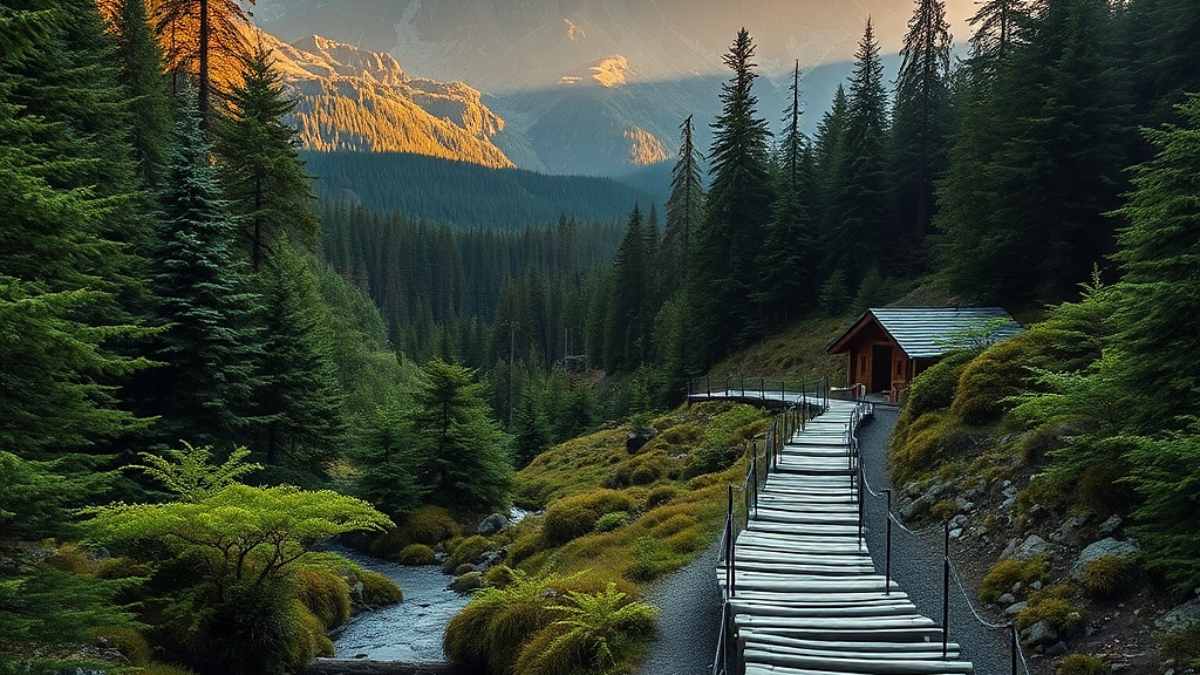 Image generated with Ai
Worldwide increasing visitor pressure on vulnerable wilderness ecosystems has compelled destinations to deal with significant gaps in conservation efforts. New Zealand has devised an innovative solution to this challenge by altering the way that visitors from abroad can help with conservation efforts in their land. Instead of collecting and consolidating visitor payments in the coffers of the government, the government in New Zealand is innovatively using the Levy-to-Lodge approach. With this innovative financial instrument, international tax revenues have been directly allocated to the building of mountain huts and backcountry tracks. This proactive move de-risks commercial adventure enterprises while safeguarding the remote wilderness assets in perpetuity.
The Fiscal Architecture of Backcountry Funding: From Consolidated Treasuries to Ring-Fenced Trusts
For decades, international visitor taxes functioned primarily as blunt revenue instruments for municipal and national cash management. Across global tourism capitals, hotel occupancy taxes, municipal bed charges, and airport embarkation fees were routinely directed into consolidated state treasuries. Municipal authorities deployed these fiscal windfalls to patch structural deficits, subsidise urban public transit, or finance civic amenities entirely divorced from the natural attractions that originally motivated international travel.
Advertisement
Advertisement
For commercial adventure operators, outbound travel designers, and eco-conscious consumers, this conventional approach created persistent friction. International visitors perceived entry levies as arbitrary bureaucratic surcharges that offered zero transparency, while commercial trekking companies faced escalating client pushback regarding the deteriorating state of the physical infrastructure they were paying to access.
In high-altitude adventure destinations, this disconnect triggered an acute operational crisis. The outdoor assets that international tourists consume—multi-day tramping routes, glacial valley suspension bridges, and sub-alpine emergency bivouacs—demand high capital expenditure and specialized maintenance. Yet, because national park agencies historically relied on fixed taxpayer appropriations vulnerable to political reprioritisation, maintenance budgets stagnated while international footfall surged.
Advertisement
Advertisement
Destination management organisations (DMOs) and conservation authorities have broken this cycle by deploying the Levy-to-Lodge model. Built on statutory hypothecation—the legal ring-fencing of dedicated tax receipts for a singular public purpose—this model dictates that revenue collected from international border arrivals is legally tied to preserving, rehabilitating, and climate-proofing the physical outdoor infrastructure that visitors consume.
The policy justification for direct hypothecation is reinforced by extensive empirical research from the Organisation for Economic Co-operation and Development (OECD) on environmental taxation and consumer tax morale. OECD studies confirm that public compliance and consumer acceptance increase markedly when tax revenues are explicitly earmarked for visible environmental restoration. When international mountaineers, trekkers, and nature tourists understand that their border entry fee directly finances stormproof Colorsteel roofing, helicopter-ferried foundation timbers, and professional bridge load-testing, the payment ceases to be a travel deterrent. Instead, it becomes a visible value proposition that aligns visitor spending with environmental preservation.
Advertisement
Advertisement
| Administrative Stage | Operational Trigger | Fiscal Mechanism | Resulting State & Asset Impact |
| Border Collection | Visa / NZeTA digital processing | Statutory NZ$100 levy capture under s399A Immigration Act | Direct capital pooling outside consolidated tax funds |
| Bespoke Ring-Fencing | Joint ministerial annual determination | Formal segregation into conservation and tourism portfolios | Multi-year capital liquidity locked through FY 2028/29 |
| Partnership Disbursement | Bilateral operational accord | Direct grant release to non-profit backcountry trusts | Tripling of purchasing power via volunteer mobilisation |
| Physical Deployment | High-altitude weather execution window | Precision helicopter supply drops and skilled trade retrofits | Decades of service life added to remote alpine assets |
The $100 IVL Reset: Policy Directives, Cabinet Mandates, and Revenue Projections
The primary real-world benchmark for this funding model is New Zealand’s International Visitor Conservation and Tourism Levy (IVL). Enacted in 2019 through the Immigration (International Visitor Conservation and Tourism Levy) Amendment Act, the charge was set at an initial rate of NZ$35 per visitor, collected alongside visa and New Zealand Electronic Travel Authority (NZeTA) applications [cite: 9, 17]. While the digital collection architecture proved highly efficient, the initial NZ$35 rate quickly fell behind rising backcountry maintenance deficits and high post-pandemic construction inflation.
By early 2024, official baseline evaluations conducted by the Ministry of Business, Innovation and Employment (MBIE) and the Department of Conservation (DOC / Te Papa Atawhai) revealed that the deferred maintenance backlog across public conservation land had expanded rapidly. Submissions from Tourism Industry Aotearoa (TIA) and government economists established that international visitor pressures imposed an uncompensated cost on regional infrastructure and conservation estates of at least NZ$250 million per year.
Advertisement
Advertisement
The direct unfunded cost international visitors imposed on conservation tracks, historic huts, and park sanitation exceeded NZ$96 million annually. Meanwhile, domestic taxpayers were contributing approximately NZ$884 million each year to support tourism promotion, natural heritage, and recreation networks. This widening funding gap strained local host communities and raised questions about the long-term sustainability of the tourism sector.
In response, the New Zealand Government executed a comprehensive policy reset. Following public consultations in May and June 2024—which demonstrated 93 per cent public support for an increase—Cabinet approved a structural adjustment. On 3 September 2024, Minister for Tourism and Hospitality Matt Doocey and Minister of Conservation Tama Potaka announced that the IVL would rise from NZ$35 to NZ$100 per person, taking effect on 1 October 2024.
| Metric & Governance Dimension | Legacy System (Pre-October 2024) | Reformed System (2024/25–2026/27) | Policy Framework & Legal Basis |
| Per-Visitor Border Levy | NZ$35 per qualifying arrival | NZ$100 per qualifying arrival | Immigration Regulations 2010; s399A Immigration Act |
| Annual Levy Revenue | NZ$62.5 million (FY 2023/24 actual) | ~NZ$229m–$230m per annum forecast | Uplift driven by rate adjustment and visitor recovery |
| Discretionary DOC Conservation Allocation | Ad-hoc contestable bidding | NZ$55 million baseline per annum | Dedicated appropriation established via Budget 2025 |
| Discretionary MBIE Tourism Allocation | Fragmented regional grants | NZ$35 million baseline per annum | Multi-year infrastructure and corridor initiatives |
| Crown Baseline Offset Ratio | Nil direct formalised baseline offset | 50:50 Crown expenditure offset | Residual revenue offsets operational taxpayer expenditure |
| Direct Backcountry Partner Ring-Fence | Intermittent agency subsidies | NZ$4.2 million dedicated package (2024–26) | Direct non-contestable funding to Backcountry Trust |
The fiscal results of this adjustment materialised quickly. In the year ending 30 June 2025, gross IVL revenue reached NZ$146 million, more than doubling the NZ$62.5 million collected during the previous fiscal year. Official Treasury and MBIE forecasts project annual receipts stabilizing at approximately NZ$229 million to NZ$230 million from the 2025/26 financial year onward.
Under statutory funding decisions authorized in Budget 2025, the Minister of Finance established clear distribution rules: NZ$55 million is appropriated annually to DOC for targeted conservation and asset investments, and NZ$35 million is allocated to MBIE for tourism infrastructure and visitor management. The remaining revenue offsets existing Crown baseline spending on conservation and tourism on an equal 50:50 basis.
Advertisement
Advertisement
Most importantly for high-altitude preservation, total multi-year commitments allocated to out-years reached NZ$271.95 million as of 30 June 2025, securing guaranteed capital horizons through the 2028/29 financial year. By removing conservation funding from single-year budget cycles, this structural mechanism gives engineering teams the forward planning certainty required to undertake complex capital restorations across high-alpine environments.

Securing Backcountry Heritage: The Historic DOC and Backcountry Trust Accord
New Zealand’s public conservation network encompasses nearly 1,000 backcountry huts and 24,000 kilometres of walking and tramping tracks. This recreation infrastructure is unique worldwide: rather than operating exclusively as fully serviced commercial lodges, the network features historic bivouacs, 1950s government deer-culler shelters, and high-alpine huts scattered across remote mountain ranges. These facilities serve as essential safety outposts, offering shelter from severe maritime weather systems, while anchoring the multi-day wilderness expeditions that draw visitors from around the world.
Maintaining physical structures located hours or days from road access requires specialist logistics. Helicopter transport costs, mountain carpenter day-rates, and the need to coordinate around volatile weather windows make routine maintenance through traditional government procurement expensive. To resolve this operational challenge, the government institutionalised a direct partnership with skilled community volunteers.
On 11 September 2026, Conservation Minister Tama Potaka formally announced the execution of a historic Memorandum of Understanding (MOU) between DOC and the Backcountry Trust. The non-binding MOU formalises a decade of successful collaboration and sets out a clear roadmap: both parties will develop and sign a binding National Operational Agreement before the close of 2026.
Minister Potaka confirmed that the government has injected NZ$4.2 million of direct IVL funding into the Backcountry Trust since 2024 to protect remote recreational facilities. This non-contestable funding stream has supported the targeted preservation of high-altitude alpine huts such as Almer Hut in Westland Tai Poutini National Park and Hopeless Hut in Nelson Lakes National Park, alongside hunting shelters like Venison Tops Hut in Kaweka Forest Park and regional trail networks in the Silverpeaks.
The operational value of partnering with the Backcountry Trust is anchored in cost efficiency. As Backcountry Trust Deputy Chair Geoff Spearpoint noted, conservation funds go “three or four times further” when channelled through volunteer-supported trusts rather than traditional commercial tendering. Since its establishment in 2014, the Backcountry Trust has funded the physical restoration of more than 300 remote huts and maintained between 1,500 and 2,000 kilometres of walking and mountain biking tracks. Over 1,400 skilled volunteers—including licensed builders, roofers, and trail technicians—have contributed more than 100,000 hours of voluntary labour. By pairing international visitor fee revenue with local volunteer trade expertise, the Levy-to-Lodge model maximizes the physical impact of every dollar collected at the border.
Advertisement
Advertisement
Engineering at 1,580 Metres: The Structural Rehabilitation of Almer Hut
The physical impact of this hypothecated funding model is well illustrated by the successful restoration of Almer Hut, one of the Southern Alps’ most famous alpine shelters. Perched at 1,580 metres elevation on a narrow rock terrace overlooking the Franz Josef Glacier (Kā Roimata o Hine Hukatere) icefall within Westland Tai Poutini National Park, Almer Hut provides emergency shelter and staging access for mountaineers, high-route ski tourers, and glacier tramping parties.
Originally constructed in 1953 from prefabricated timber and iron airdropped onto the glacier by fixed-wing aircraft, Almer Hut is one of the few surviving alpine shelters from the transitional period between early packing expeditions and modern helicopter operations. The 12-bunk, two-room historic shelter is subjected to an extreme maritime alpine environment characterised by hurricane-force westerly gales, deep winter snow loading, and high annual precipitation.
By late 2023, the shelter was approaching structural failure. Snow regularly drifted through warped timber cladding into the interior sleeping quarters during winter, and a major storm tore away the entrance foyer roof, leaving the building exposed to water damage. Under standard departmental funding models, an isolated facility requiring specialist alpine builders and expensive helicopter operations faced potential decommissioning or abandonment.
Using hypothecated conservation funding, a joint restoration team led by the Backcountry Trust, DOC Franz Josef operations, and the NZAC Tupiki Trust mobilized on site. Working through narrow autumn weather windows, experienced alpine carpenters and DOC rangers stripped three exterior elevations down to the original studs. Structural plywood shear walls and diagonal steel strap bracing were installed to withstand high wind shear, while leaking window assemblies dating back to 1953 were properly flashed and sealed. The team re-wrapped the exterior in modern moisture barriers before refitting the original historic corrugated cladding, preserving the structure’s physical heritage while restoring weather tightness.
A follow-up carpentry team flew in by helicopter to strip the compromised roof down to the rafters. Rotten timber purlins and sarking boards were removed and replaced with structural framing, topped with heavy-gauge Colorsteel corrugated cladding and custom-fabricated protective flashing. Structural adjustments were completed by treating internal timber floors with preservative linseed coatings and servicing the high-altitude exterior toilet installation. Through these targeted interventions, the Levy-to-Lodge model extended the operational service life of Almer Hut by decades, ensuring this historic high-altitude sanctuary remains open and functional for international and domestic mountaineers.
A similar engineering overhaul rescued Hopeless Hut, situated in the glaciated basin of Nelson Lakes National Park. Operating as a primary base for technical climbs of Mount Hopeless and traverses across Travers Saddle, the shelter underwent comprehensive exterior envelope repairs, structural sub-floor stabilisation, and weatherproofing upgrades, safeguarding visitor safety along one of the country’s premier tramping networks.
Advertisement
Advertisement
Restoring Backcountry Arteries: The Silverpeaks Network and Trailhead Resilience
Hypothecated visitor revenue supports more than isolated alpine shelters; it also finances comprehensive remote trail restoration across regional backcountry networks. A prime example of this investment is the Silverpeaks track network, located north of Dunedin. The Silverpeaks region offers classic backcountry tramping through rolling tussock ridgelines, steep rocky gullies, and native sub-alpine forest.
Because the Silverpeaks trail system is exposed to sudden southern weather fronts and heavy seasonal rainfall, sustained foot traffic had severely degraded the trail surface. Critical track sections across Green Ridge and the Devil’s Staircase suffered deep rutting, erosion, and wetland deterioration, creating environmental damage and safety hazards for hikers.
Using IVL funding distributed through the Backcountry Trust, volunteer track teams and professional trail contractors carried out extensive restorations. Working across the network, crews installed rock-armoured drainage swales to redirect water runoff, laid timber boardwalks over fragile sub-alpine peat bogs, removed trail-choking vegetation, and upgraded trail markers to ensure safe navigation during sudden whiteouts.
This trail rehabilitation demonstrates how ring-fenced international visitor levies generate broad public benefits. While international visitors pay the IVL upon entering the country, the physical improvements directly benefit local tramping clubs, domestic outdoor enthusiasts, and visiting hikers alike. Rather than imposing a burden on local councils, the Levy-to-Lodge model provides a self-sustaining funding mechanism that maintains recreational infrastructure for everyone who uses it.
| Preservation Category | Geographic Asset | Operational Intervention Funded by Levy Receipts | Strategic Outcome |
| Glaciated Alpine Shelters | Almer Hut (1,580m), Westland Tai Poutini | Full envelope strip, plywood shear-walls, Colorsteel roof, window refit | 40-year extension of structural lifespan; storm survival secured |
| High-Valley Bivouacs | Hopeless Hut, Nelson Lakes National Park | Structural timber reinforcement, cladding repairs, drainage upgrades | Vital safety refuge maintained for multi-day alpine traversals |
| Remote Forest Bases | Venison Tops Hut, Kaweka Forest Park | Cladding refurbishment, hearth replacement, exterior weatherproofing | Core backcountry hunting and tramping base preserved |
| Exposed Ridge Networks | Silverpeaks Network, North Dunedin | Sub-base rock armouring, bog boardwalks, weather-resistant wayfinding | Soil erosion halted; route safety enhanced during poor weather |
| Critical Trail Bridges | Totara River Bridge, West Coast | NZ$1.625m complete structural replacement of deteriorated rail bridge | Restored connectivity for West Coast Wilderness Cycle Trail |
Commercial Implications: How Ring-Fenced Levies Benefit the Adventure Travel Trade
The transition toward hypothecated destination taxes has reshaped business models across the commercial adventure tourism sector. Inbound tour operators (ITOs), international trekking travel companies, and commercial mountain guiding services originally greeted proposed tourism tax increases with skepticism, concerned that higher fees would reduce price competitiveness and lower international booking volumes.
However, post-implementation data following the October 2024 IVL increase has shown these concerns to be unfounded. Econometric modeling prepared for MBIE demonstrated that a NZ$100 entry fee accounts for less than 3 per cent of total expenditure for the average long-haul international visitor to New Zealand. Long-haul adventure travellers—who invest thousands of dollars in long-distance airfares, high-performance equipment, and specialist guiding services—display very low price sensitivity to modest border fees.
Advertisement
Advertisement
Instead, commercial adventure operators derive direct operational and risk-mitigation benefits from the Levy-to-Lodge model:
- Reduction in Commercial Itinerary Disruptions: Deteriorated backcountry infrastructure presents serious operational risks for commercial outfitters. A single washed-out swing bridge or closed alpine hut can force emergency helicopter evacuations, require complex route redesigns, and trigger substantial client refund claims. By investing NZ$6.4 million of IVL funding into the safety of visitor structures—alongside targeted bridge projects like the NZ$1.625 million Totara River bridge replacement—the government directly de-risks the commercial operating environment for private tour operators.
- Alignment with Eco-Conscious Traveller Expectations: Consumer research shows that high-yield international adventurers actively seek out destinations that demonstrate transparent conservation practices. When international adventure agencies can market that every traveler’s border registration fee contributes directly to preserving high-altitude shelters and funding landscape-scale predator control in national parks, the levy becomes a valuable marketing narrative rather than a bureaucratic penalty.
- Preservation of Concession Assets: Commercial guiding operations rely heavily on public conservation assets to run guided ascents, ski tours, and walking treks. In places like Franz Josef Glacier, where Franz Josef Glacier Guides actively supports Almer Hut maintenance, direct government capital injections protect the commercial assets that outfitters depend on for daily business operations.
- Renewal of the Industry’s Social Licence: Unmanaged tourism growth that outpaces local infrastructure can generate local public resistance against commercial operators. By demonstrating that international visitors contribute substantially to national park ecosystems and community recreation assets, the IVL helps rebuild local support for the tourism sector across regional New Zealand.
| Commercial Indicator | Un-Hypothecated General Municipal Tax | Hypothecated Levy-to-Lodge Model | Net Commercial Impact |
| Consumer Friction | High; perceived as an unjustified border surcharge | Low; transparently tied to tangible conservation | Reduced customer price resistance |
| Physical Track Integrity | Poor; subject to severe deferred maintenance backlogs | High; sustained multi-year capital injections | Elimination of sudden route closures |
| Guiding Liability & Safety | Elevated; aging bridges and leaking shelters create hazard | Reduced; certified structural overhauls and inspections | Lower operational and insurance risks |
| Brand Positioning | Dissonant; visitor volumes degrade the natural environment | Synergistic; validated “100% Pure” eco-credentials | Enhanced pricing power for adventure travel |
| Community Relations | Antagonistic; local ratepayers bear maintenance burdens | Cooperative; visitors visibly fund shared facilities | Stronger social licence for commercial operators |
International Benchmarks: Comparing Hypothecated Backcountry Funding Models
The shift toward dedicated wilderness taxation is gaining momentum internationally, as popular outdoor destinations re-examine how they finance conservation infrastructure. New Zealand’s national IVL system provides an interesting contrast with other leading international models.
| Country / Model | Fee Structure | Revenue Flow | Funding Recipient / Allocation | Primary Outcome |
|---|---|---|---|---|
| New Zealand: IVL Entry Model | National border fee | 50:50 split between DOC and MBIE | Non-profit trail trusts | High-efficiency backcountry trail restoration |
| United States: FLREA National Park Model | Trailhead and gate entrance fees | 80–100% retained at the collection site | At least 55% directed toward maintenance backlogs | Strong maintenance funding, with a bias toward high-traffic parks |
| Bhutan: Sustainable Development Fee | Daily sovereign tourism charge | Consolidated into a national fund | Cultural preservation and mountain trail restoration, including the Trans Bhutan Trail | Sustainable tourism development and heritage trail protection |
The United States: Federal Lands Recreation Enhancement Act (FLREA)
In the United States, recreation finance is governed primarily by the Federal Lands Recreation Enhancement Act (FLREA), which authorizes the National Park Service (NPS), U.S. Forest Service, and Bureau of Land Management to collect entrance and amenity fees. Under FLREA statutory provisions, between 80 and 100 per cent of all collected fee revenue is retained directly at the park unit where it is collected, rather than returning to the general federal treasury.
Federal law mandates that at least 55 per cent of all retained FLREA receipts must be dedicated specifically to deferred maintenance backlog projects that directly enhance visitor facilities, including trail restorations, backcountry campsite repairs, and wastewater facility upgrades.
While FLREA has channeled hundreds of millions of dollars into repairing historic trails across Yosemite, Yellowstone, and Rocky Mountain National Parks, the site-specific retention model creates significant geographic imbalances. High-traffic national parks generate large capital reserves, whereas remote wilderness areas that receive lower footfall struggle to finance basic backcountry track repairs. By comparison, New Zealand’s national pooling framework distributes funds across both iconic tourist corridors and remote backcountry networks, ensuring that isolated shelters like Almer Hut receive capital based on conservation priority rather than sheer visitor footfall.
The Kingdom of Bhutan: The Daily Sustainable Development Fee (SDF)
In the Himalayas, the Royal Government of Bhutan takes a different approach, managing visitor volumes through a mandatory daily Sustainable Development Fee (SDF). When Bhutan reopened its borders in 2022, it raised the fee to US$200 per person per night, before lowering it in September 2023 to US$100 per night—a rate officially confirmed through 31 August 2027.
Advertisement
Advertisement
Under Article 14 of Bhutan’s Constitution, all SDF revenues are collected into a Consolidated Account that funds universal healthcare and education for Bhutanese citizens, while financing national carbon-neutrality initiatives and the preservation of historic mountain trails. Most notably, SDF revenues fully financed the multi-year restoration of the historic 403-kilometre Trans Bhutan Trail, reopening an ancient foot-path that links remote high-altitude communities across the country.
While Bhutan’s model operates as a broad national development instrument rather than a narrow infrastructure fund, it shares the central principle of the Levy-to-Lodge model: international visitor receipts are ring-fenced to ensure tourism directly supports host communities and environmental preservation.

Emerging Policy Challenges: Balancing Visitor Promotion and Backcountry Resilience
Despite the demonstrable success of New Zealand’s reformed levy framework, tourism and conservation leaders face ongoing policy decisions regarding how funds are allocated and managed. A central discussion revolves around the ongoing balance between international marketing demand-generation and physical asset preservation.
Within MBIE’s tourism portfolio, initial investment plans allocated up to 80 per cent of available tourism IVL funding toward offshore marketing and international airline capacity development, in line with the government’s broader economic goal of doubling exports over a decade. Conservation advocates, trail trusts, and environmental organisations have argued that heavily funding demand-generation without matching capital investments in backcountry infrastructure risks overwhelming the very assets that attract visitors to New Zealand.
The development of the 2026 National Operational Agreement between DOC and the Backcountry Trust provides a key institutional mechanism to balance these priorities. By moving beyond temporary funding grants to establish a structured, multi-year partnership, conservation leaders aim to guarantee sustained baseline funding for backcountry hut and track maintenance.
| Strategic Component | Funding / Mechanism | Purpose / Outcome |
|---|---|---|
| Visitor Demand Generation | 80% MBIE marketing investment | Drives visitor demand and directs tourism activity toward backcountry destinations |
| Backcountry Structural Equilibrium Point | 2026 DOC–Backcountry Trust Agreement | Creates coordination between demand generation and long-term backcountry asset management |
| Asset Preservation | $55 million annual DOC baseline + Trust grants | Funds trail maintenance, conservation and infrastructure preservation |
Concurrently, the Department of Conservation is preparing a substantial modernization of its visitor booking and compliance systems. Across standard backcountry huts, fee collection has historically relied on physical paper tickets and unmonitored honesty boxes, resulting in low compliance and lost revenue. Building upon the digital booking system rolled out across Tongariro National Park huts in late 2025, DOC is evaluating digital visitor credentials linked to international visas and NZeTA records. This would allow international visitors to verify their pre-paid backcountry access digitally, while providing conservation managers with clearer data on trail utilization patterns.
Advertisement
Advertisement
Finally, future funding allocations must address the accelerating impacts of extreme weather and alpine climate change. Increasing storm intensity, permafrost degradation on high-altitude faces, and riverbed scouring create severe challenges for remote structures. The destruction and subsequent relocation of the Leon Kinvig Hut following Cyclone Gabrielle—where an entire hillside collapse forced builders to dismantle and reconstruct the facility on higher ground—highlights the need for proactive climate engineering.
Looking ahead, the Levy-to-Lodge model must continue directing capital into geotechnical hazard mapping, reinforced foundation systems, and climate-resilient building envelopes. Maintaining alpine sanctuaries like Almer Hut above rapidly receding glacier tongues requires ongoing engineering vigilance. By transforming international tourist fees into a dedicated capital pipeline for wilderness preservation, governments and conservation organisations have built a practical, replicable model that protects natural heritage while supporting sustainable adventure tourism for decades to come.
The transition toward hypothecated visitor levies marks an enduring turning point in global sustainable tourism governance. By establishing transparent fiscal pipelines connecting border charges directly to high-altitude conservation, the Levy-to-Lodge model demonstrates that targeted visitor taxation can secure enthusiastic international endorsement when paired with visible environmental stewardship. New Zealand’s ring-fenced funding framework protects historic alpine huts, empowers vital volunteer partnerships, and restores vulnerable backcountry trail systems facing severe climatic strain. As destination managers worldwide reassess recreational infrastructure, hypothecating tourism revenue into wilderness preservation proves that commercial adventure travel and rigorous conservation can actively reinforce each other for decades to come.
Conclusion
The New Zealand model of levying tourists is an example of how the revenues from the visitors can be used to bolster the backcountry economy and preserve vital trails and wilderness sites. Through the connection of tourist marketing, government funding, and trusts of communities, this approach helps enhance conservation and strengthen remote lodges.
Advertisement
