
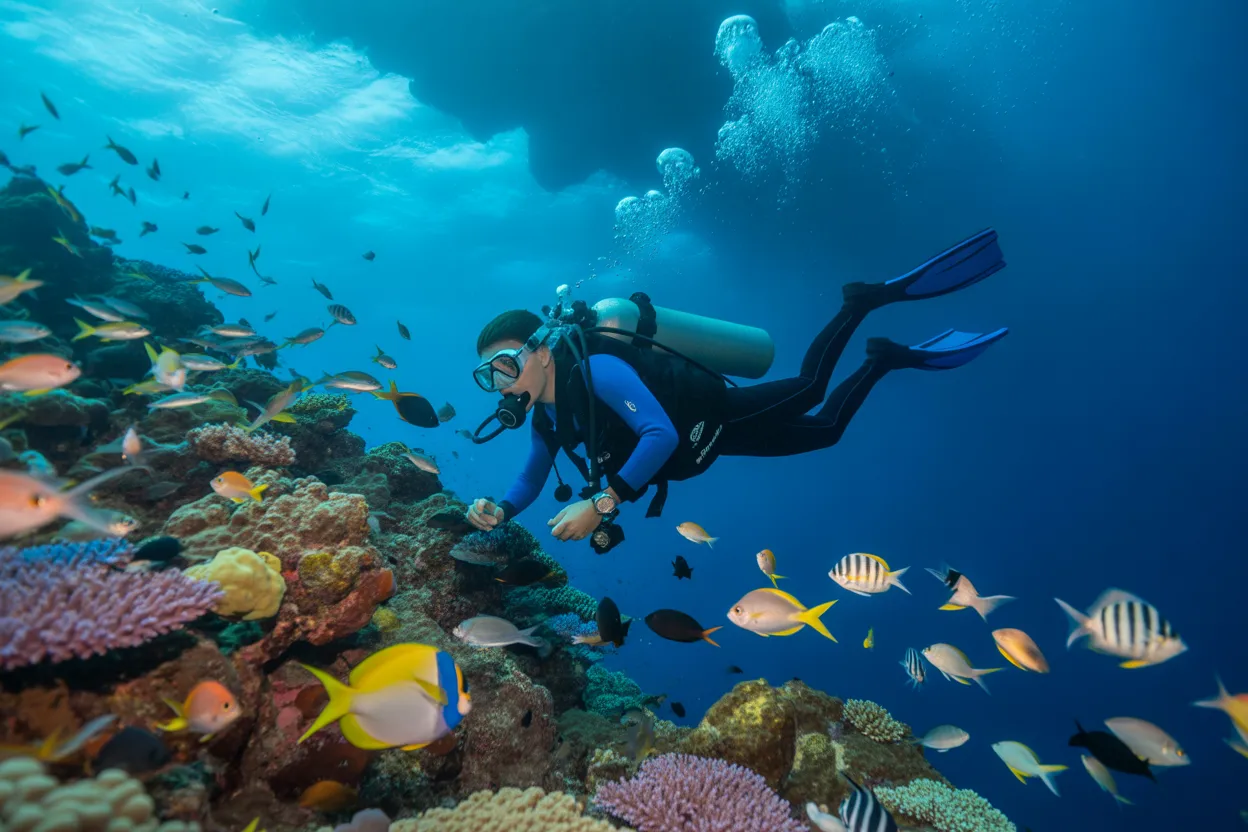
Image generated with Ai
A coordinated push has been initiated to promote and develop diving tourism in Southern Leyte, Philippines, with particular focus placed on Sogod Bay as a premier scuba diving destination. Strengthened collaboration among government agencies, local communities, and tourism operators has been established to enhance the province’s diving industry while ensuring marine conservation, environmental sustainability, and inclusive community benefits.
The initiative has been positioned as part of a broader national tourism strategy aimed at developing lesser-known destinations into globally competitive eco-tourism hubs, particularly in marine-based travel segments.
In recent tourism development discussions, Southern Leyte diving tourism, Sogod Bay, Philippines; scuba diving industry development, Philippines eco-tourism, marine conservation tourism Southern Leyte sustainability; and community-based tourism, Philippines diving sector growth, have emerged as key themes shaping the future of underwater tourism in the region.
According to official tourism information, Southern Leyte has been identified as one of the country’s emerging diving destinations due to its rich coral reef systems, diverse marine biodiversity, and relatively unspoiled underwater ecosystems.
Advertisement
Advertisement
The development of Sogod Bay as a diving hotspot has therefore been integrated into national and regional tourism development plans.
Sogod Bay has gained increasing recognition among diving enthusiasts for its clear waters, healthy coral reefs, and sightings of large marine species, including whale sharks, manta rays, and various reef fish species.
The bay’s long coastline and relatively low commercial development have helped preserve its natural marine environment, making it an attractive destination for eco-conscious travelers and professional divers.
Local tourism stakeholders have been actively promoting Sogod Bay as an alternative diving destination to more crowded global sites, emphasizing its natural beauty and ecological significance.
Advertisement
Advertisement
According to marine tourism development frameworks, emerging eco-tourism destinations benefit significantly from early-stage sustainability planning to ensure long-term environmental and economic viability.
Sogod Bay’s positioning as a diving destination has therefore been closely aligned with sustainability-focused tourism strategies.
Government agencies have played a central role in supporting the development of diving tourism in Southern Leyte through infrastructure support, policy coordination, and environmental protection initiatives.
Tourism development programs have been implemented to improve access to dive sites, strengthen safety standards, and support local tourism enterprises operating in coastal communities.
Marine protection policies have also been reinforced to safeguard coral reef ecosystems and regulate responsible diving practices in sensitive underwater areas.
According to environmental governance frameworks, sustainable marine tourism requires strict enforcement of conservation policies, community engagement, and continuous monitoring of ecosystem health.
These efforts have been designed to ensure that tourism growth does not compromise the ecological integrity of Sogod Bay.
Local communities in Southern Leyte have been actively involved in the development of diving tourism through community-based tourism programs and livelihood initiatives.
Fisherfolk, coastal residents, and small business operators have been integrated into tourism value chains through training programs, employment opportunities, and participation in eco-tourism enterprises.
This community-centered approach has helped ensure that tourism benefits are distributed more equitably across local populations.
According to community tourism development models, inclusive tourism strategies are essential for ensuring long-term sustainability and social acceptance of tourism projects in rural and coastal areas.
The involvement of local stakeholders in Sogod Bay has therefore been recognized as a key factor in strengthening the region’s tourism resilience.
Tourism operators in Southern Leyte have increasingly adopted responsible diving practices aimed at minimizing environmental impact while enhancing visitor experiences.
Dive shops, tour guides, and marine excursion providers have implemented safety protocols, environmental guidelines, and educational programs for divers.
These measures include reef protection rules, waste management practices, and marine life interaction guidelines designed to preserve underwater ecosystems.
According to sustainable tourism standards, responsible tourism operations are essential for protecting biodiversity while maintaining high-quality visitor experiences.
Sogod Bay diving operators have, therefore, aligned their services with global eco-tourism principles.
Marine conservation has been positioned as a core pillar of diving tourism development in Southern Leyte.
Coral reef monitoring programs, marine protected areas, and coastal rehabilitation projects have been implemented to preserve underwater ecosystems.
Scientific assessments and environmental monitoring activities have been conducted to track coral health and marine species diversity in Sogod Bay.
According to marine conservation guidelines, sustainable tourism in marine environments must be supported by continuous conservation efforts and scientific research.
These initiatives have helped ensure that tourism development contributes to environmental protection rather than degradation.
Improvements in transportation, tourism facilities, and coastal infrastructure have also supported the growth of diving tourism in Southern Leyte.
Upgraded roads, better port facilities, and improved access to dive sites have enhanced convenience for both domestic and international tourists.
Accommodation providers and tourism service operators have also expanded their offerings to accommodate increasing visitor demand.
According to tourism infrastructure development insights, infrastructure investment is a critical factor in enabling sustainable tourism growth in emerging destinations.
These improvements have strengthened Sogod Bay’s competitiveness as a diving tourism destination.
The long-term tourism development strategy for Southern Leyte has been centered on sustainability, community inclusion, and environmental protection.
Authorities have emphasized the importance of balancing tourism growth with marine conservation to ensure that natural resources remain intact for future generations.
Educational campaigns and awareness programs have been launched to promote responsible tourism behavior among visitors and stakeholders.
As diving tourism continues to grow in Sogod Bay, integrated management approaches are expected to play a central role in maintaining ecological balance and supporting local economic development.
Southern Leyte’s approach to diving tourism development is increasingly being viewed as a model for sustainable marine tourism in the Philippines and other coastal regions.
Advertisement
Tags: community-based tourism Philippines diving sector growth, marine conservation tourism Southern Leyte sustainability, Philippine scuba diving destinations eco-tourism, scuba diving industry development Philippines eco-tourism
Advertisement
Advertisement

Saturday, September 12, 2026
Saturday, September 12, 2026
Saturday, September 12, 2026
Saturday, September 12, 2026
Saturday, September 12, 2026
Friday, September 11, 2026
Saturday, September 12, 2026
Saturday, September 12, 2026