
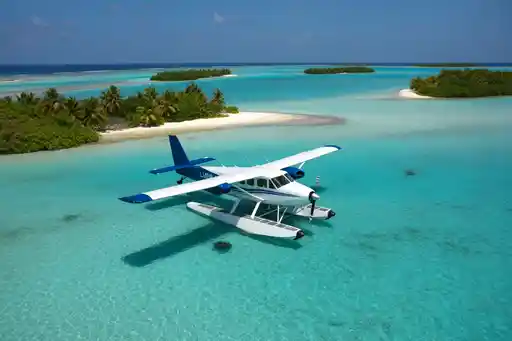
Image generated with Ai
A major development in Lakshadweep seaplane tourism connectivity in India, water aerodrome infrastructure development in Lakshadweep, and India’s island luxury tourism expansion strategy have been proposed through plans to introduce seaplane services linking Kochi with multiple islands across Lakshadweep. The initiative has been designed to significantly improve accessibility to the remote island territory while promoting high-end tourism experiences.
The proposed seaplane network has been structured to reduce travel time between mainland India and Lakshadweep, offering faster and more convenient transportation options for tourists. Environmental clearance has been recommended for the establishment of water aerodrome projects, which are expected to serve as operational hubs for seaplane landings and takeoffs.
Advertisement
The initiative has been positioned as part of a broader effort to enhance tourism infrastructure in India’s island regions while maintaining environmental sensitivity and sustainable development principles.
The proposed seaplane service has been designed to connect Kochi, a major coastal city in Kerala, with multiple islands across Lakshadweep through a dedicated air-water transport system.
Advertisement
This network has been envisioned to provide rapid connectivity to remote islands that are otherwise accessible only through longer sea-based transport routes. By introducing seaplane operations, travel times are expected to be significantly reduced, improving convenience for both domestic and international tourists.
The project has been aligned with national tourism development goals aimed at improving regional connectivity and unlocking the tourism potential of island territories.
Transport authorities have indicated that the seaplane system could play a transformative role in reshaping travel patterns to Lakshadweep.
Environmental clearance processes have been initiated for the development of water aerodrome facilities, which are expected to serve as key infrastructure components for the seaplane operations.
These water aerodromes have been proposed as designated landing and docking points for seaplanes, enabling safe and regulated operations in island waters.
Environmental assessments have been prioritized to ensure that marine ecosystems and fragile coastal environments are protected during infrastructure development.
Sustainability considerations have been emphasized in project planning, with efforts being made to balance tourism expansion with ecological preservation.
The introduction of seaplane services has been expected to dramatically improve accessibility to Lakshadweep’s remote islands, which have traditionally been limited by transportation constraints.
Travel times from Kochi to various islands have been projected to be reduced significantly compared to conventional ferry services.
This improvement in connectivity has been expected to encourage higher tourist inflows, particularly among travelers seeking premium and time-efficient travel options.
Tourism authorities have highlighted that improved accessibility is a key factor in unlocking the full economic potential of island destinations.
The proposed seaplane tourism model has drawn comparisons with Maldives-style luxury tourism systems, where seaplane transfers are commonly used to connect travelers to high-end island resorts.
Lakshadweep has been identified as having similar natural advantages, including pristine beaches, coral ecosystems, and scenic island landscapes that appeal to premium tourism markets.
The introduction of seaplane services has been viewed as a step toward positioning Lakshadweep as a high-end island destination capable of attracting luxury travelers from around the world.
Tourism planners have emphasized that the focus is not only on accessibility but also on enhancing the overall visitor experience through premium travel infrastructure.
Government-led efforts have been directed toward strengthening tourism infrastructure in Lakshadweep as part of a broader strategy to promote island tourism in India.
The seaplane initiative has been aligned with national objectives to develop underutilized tourism regions and distribute tourism benefits more evenly across coastal and island territories.
Policy frameworks have emphasized sustainable tourism development, improved connectivity, and economic growth for local communities.
The introduction of advanced transport systems such as seaplanes has been positioned as a key enabler of long-term tourism expansion.
One of the primary objectives of the seaplane project has been the reduction of travel time between mainland India and Lakshadweep islands.
Current travel methods, which rely heavily on sea transport, often require extended journey durations. The introduction of air-based water transport has been expected to significantly improve travel efficiency.
Shorter travel times have been anticipated to increase tourist demand, particularly among high-value travelers seeking short-duration luxury vacations.
This improvement in convenience has been identified as a critical factor in making Lakshadweep more competitive in the global island tourism market.
The seaplane initiative has been recognized as part of a broader infrastructure development vision for Lakshadweep, aimed at transforming the region into a more accessible and globally competitive tourism destination.
Investment in aviation-linked infrastructure, including water aerodromes and support facilities, has been positioned as a long-term development strategy.
Authorities have emphasized that infrastructure upgrades are essential to support sustainable tourism growth and ensure operational efficiency.
The project has been aligned with broader national initiatives focused on improving regional connectivity and tourism-led economic development.
With the introduction of proposed seaplane services and water aerodrome infrastructure, Lakshadweep has been positioned for a significant transformation in its tourism landscape.
The combination of improved connectivity, luxury tourism positioning, and sustainable development planning has been expected to reshape the region’s global tourism profile.
As planning and environmental assessments continue, Lakshadweep’s potential as a premium island destination has been increasingly recognized within India’s broader tourism strategy.
The seaplane project has marked a key step toward integrating remote island destinations into mainstream tourism circuits while preserving ecological balance and cultural identity.
Advertisement
Tags: coastal aviation India, Indian island tourism expansion, Lakshadweep eco tourism development, remote island connectivity India
Advertisement
Advertisement

Friday, September 11, 2026
Friday, September 11, 2026
Friday, September 11, 2026
Friday, September 11, 2026
Friday, September 11, 2026
Friday, September 11, 2026
Friday, September 11, 2026
Friday, September 11, 2026