
Dengue Risks in Australia: Travel Safety & Insurance Guide

Published
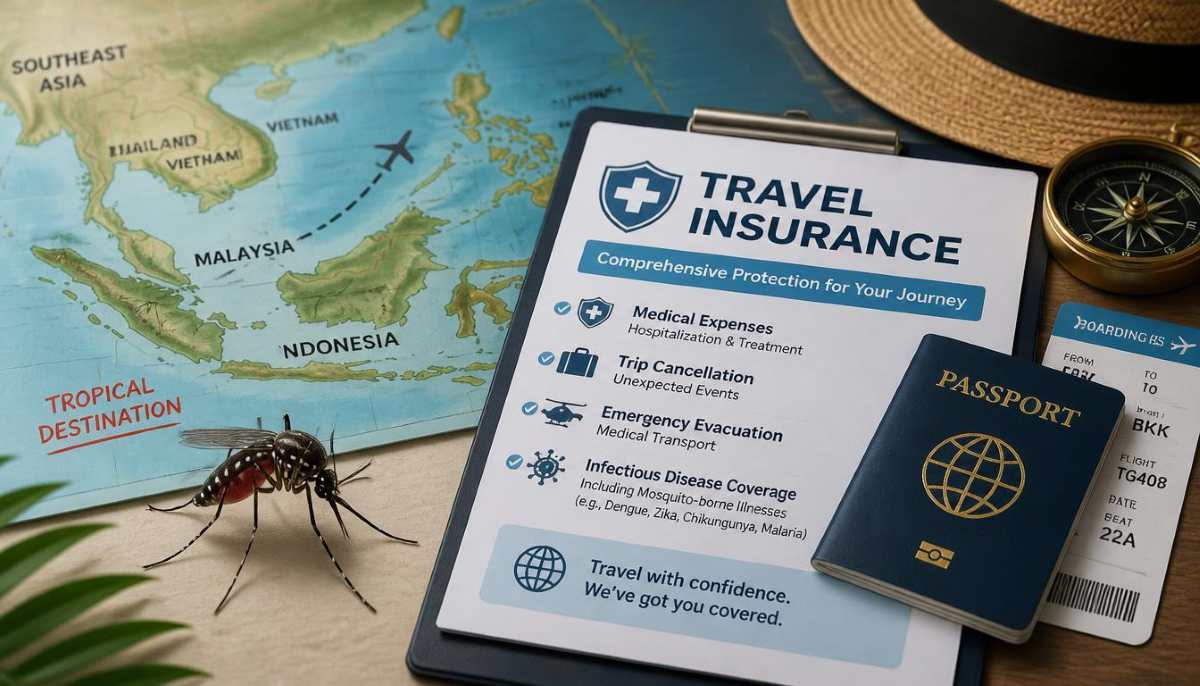
Global climate shifts and climbing temperatures are actively reshaping the distribution patterns of vector-borne illnesses, bringing the escalating risk of mosquito-borne diseases into sharper focus for populations worldwide. Recent research released by Monash University highlights that warming climatic conditions are accelerating the potential spread of both dengue and malaria on a global scale. While parts of northern Australia have historically managed endemic exposure, projections indicate that warming trends could eventually push transmission risks further south into more temperate regions.
Concurrently, historical epidemiological data reveals that over ninety-four percent of all recorded Australian dengue cases originate abroad, underscoring that overseas travel remains the primary driver of infection for citizens journeying across international borders. As international mobility continues to rebound to pre-pandemic levels, public health authorities emphasize the critical need for heightened awareness regarding how environmental changes interact with human movement.
Advertisement
Advertisement
Epidemiological surveillance reports further indicate that urban and suburban centers across Oceania are experiencing shifting vector habitats, requiring coordinated cross-border monitoring to anticipate seasonal outbreaks and protect vulnerable populations from novel exposure risks.
Impact on Travellers
For holidaymakers and business voyagers alike, venturing into tropical and subtropical destinations introduces a notable health hazard that requires proactive mitigation and thorough preparation. When tourists visit endemic zones overseas, they expose themselves directly to mosquito bites carrying the dengue virus.
Advertisement
Advertisement
Beyond the immediate physical toll of high fevers, debilitating joint aches, severe fatigue, and prolonged recovery periods, travellers frequently encounter complex insurance hurdles. According to guidelines issued by the Insurance Council of Australia, standard travel insurance policies often contain strict exclusions regarding infectious disease outbreaks, declared pandemics, and known events.
Consequently, holidaymakers who contract the virus abroad may find themselves entirely unprotected for emergency medical treatment, hospitalization, or trip cancellations unless they carefully select product disclosure statements that specifically cover epidemic-related healthcare costs. Furthermore, unexpected medical repatriation expenses can accumulate rapidly in foreign jurisdictions, placing severe financial strain on tourists who fail to verify their coverage limits prior to departure.
Advertisement
Advertisement
Industry Insights and Policy Realities
Insurance brokers and underwriting specialists face an increasingly complex risk landscape as climate projections intersect with modern travel patterns and global mobility trends. Industry evaluations conducted by consumer organizations such as CHOICE indicate that a significant majority of single-trip travel policies exclude financial losses stemming from broad epidemics or regional outbreaks. However, select underwriters—including major providers such as Allianz, Travel Insurance Direct, and Cover-More—offer partial medical coverage for pandemic or epidemic scenarios, though cancellation provisions may still be systematically withheld by policy wordings.
Furthermore, the precise timing of policy acquisition is critical for consumers; purchasing coverage after a health authority declares an outbreak at a specific destination often triggers the known event exclusion clause, leaving clients completely unprotected for any related claims. Underwriters are consequently refining risk models to account for shifting epidemiological maps, resulting in more granular policy definitions and heightened scrutiny on pre-existing travel advisories issued by foreign affairs departments.
Advertisement
Advertisement
Practical Information and Prevention for Tourists
Mitigating the threat of mosquito-borne infections requires a structured, multi-layered prevention strategy for anyone planning a trip abroad. Tourists are strongly advised to adopt rigorous personal protection measures while visiting endemic regions across the globe:
- Application of Repellents: Use insect repellents containing active ingredients such as DEET, picaridin, or oil of lemon eucalyptus on exposed skin and clothing to deter vector landings.
- Appropriate Clothing: Wear long-sleeved shirts, long trousers, and high socks during peak mosquito biting hours, which typically occur during dawn and dusk.
- Accommodations Safety: Stay exclusively in screened or air-conditioned rooms, and utilize mosquito nets treated with insecticide if sleeping outdoors or in open-air structures.
- Medical Preparation: Consult qualified healthcare professionals regarding available vaccinations, such as Takeda’s Qdenga vaccine, which is available via private prescription in Australia for eligible travellers heading to high-risk areas.
- Policy Review: Carefully scrutinize travel insurance documentation before departure to confirm whether medical expenses, hospitalization, and emergency evacuations related to vector-borne illnesses are included in the policy schedule.
Comparison with Previous Policies and Developments
Public health strategies governing vector control have evolved considerably over recent decades, transitioning from reactive chemical spraying to advanced biological interventions. In northern Queensland, biological control methods—specifically the introduction of the Wolbachia bacteria into local mosquito populations—have successfully driven regional outbreaks down to near-zero levels over the past ten years.
Despite these localized victories in urban hubs like Cairns and Townsville, recent seasonal anomalies, such as higher rainfall during wet seasons, have triggered localized transmissions and tested existing containment frameworks. When compared with historical notification peaks recorded in previous decades, overall notification numbers have experienced fluctuations, yet imported cases continue to dominate national statistics, cementing overseas travel as the dominant pathway for infection and reinforcing the necessity for continuous public health vigilance.
Advertisement
