

France Joins Spain and Others in EES Spotlight as UK Travellers Face Five Hour Border Queue Warning

Published
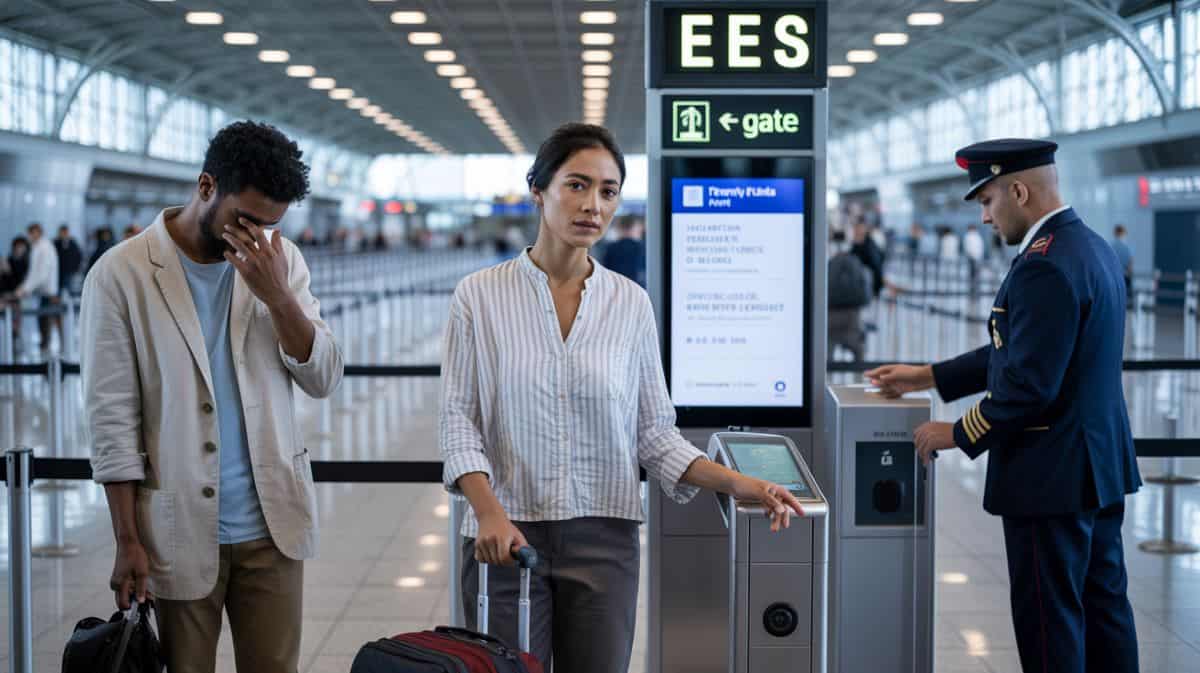
France joins Spain and others in the EES spotlight as UK travellers face a five hour border queue warning, with biometric checks putting tight holiday connections at risk. ACI EUROPE and Airlines for Europe report waits reaching five hours in extreme peak cases—not a government average or a forecast for every airport. France, Spain, Germany and Italy apply the Entry/Exit System to eligible British short-stay visitors. This guide explains where checks happen, why departure immigration matters and how realistic connections and flexible onward bookings can help protect your entire holiday.
EES Departure Checks: Your Return Flight Needs a Plan
The UK’s advice for Spain, Germany and Italy tells passengers to allow additional time for departure immigration and reaching their gate. None of that guidance sets a universal five-hour airport-arrival requirement. Follow your operator’s current instructions rather than turning the headline into a fixed timetable.
Work backwards from the gate-closing time, not simply the flight’s departure time. Ask where passport control sits after check-in and whether a terminal transfer is involved.
A holiday timetable should account for every required stage, not stop when the boarding pass appears on your phone.
Advertisement
Advertisement
France, Spain, Germany and Italy: Locate the Border Before Booking
Your destination and your Schengen entry point are not always the same place. Lufthansa confirms that entry occurs at the first Schengen airport and exit at the last.
| Illustrative journey | Where relevant checks occur | What to plan around |
|---|---|---|
| Dover, Folkestone or St Pancras to France | Before leaving the UK, under the relevant cross-Channel arrangements. | Follow your operator’s registration and arrival instructions. |
| Direct UK flight to Spain | At the Spanish arrival airport. | Avoid assuming you will reach onward transport immediately after landing. |
| London–Frankfurt–Rome | Entry at Frankfurt, before continuing to Italy. | Assess border processing within the connection. |
| Rome–Frankfurt–London | Exit at Frankfurt. | Leave room for immigration before the UK-bound flight. |
These examples explain border location; they do not identify airports with five-hour queues.
Advertisement
Advertisement
The Hidden Holiday Risk Is an Inflexible Next Booking
The useful question is not only “How long is the queue?” Ask: “What happens if I reach my next booking late?”
Before paying, check three points:
Advertisement
Advertisement
- Onward transport: Can you change the train, transfer or separate flight?
- Accommodation: How will you enter if reception closes before arrival?
- Fixed departures: Would arriving the previous day provide a better margin before cruise embarkation?
These are planning scenarios, not measured EES losses. Flexibility deserves particular attention where several prepaid arrangements depend on one punctual airport exit. Compare the possible replacement cost with the saving offered by a tighter schedule.
EES Registration: Free Does Not Mean Instant
EES registration carries no fee, and UK government guidance says travellers need not provide information before reaching the border. Eligible visitors may need to supply passport details, fingerprints and a facial image.
A useful detail from Germany’s Federal Police: completing a self-service kiosk does not complete border control. Travellers must continue to the staffed desk for verification. If kiosk registration fails, approach manual border control instead.
Each eligible family member needs an individual record. Children under 12 do not provide fingerprints, but still require registration and a facial image. Travellers with qualifying Schengen-issued residence permits or national long-stay visas are exempt.
Advertisement
Advertisement
Carry proof of any exemption. Repeat visitors should also expect possible biometric verification: an existing record does not remove border checks.
EES Numbers: Security Results Are Not Queue Forecasts
EES began on 12 October 2025 and became fully operational on 10 April 2026, across 29 participating countries. Digital crossing records replaced passport stamping for eligible short-stay visitors.
| Official evidence | Reporting date | Correct interpretation |
|---|---|---|
| More than 52 million entries and exits; over 27,000 entry refusals, including over 700 people identified as security risks | European Commission, 10 April 2026 | Historical registration and enforcement figures—not delayed travellers. |
| Around 76 million passenger records by mid-August | eu-LISA, 9 September 2026 | A later database measure—not an October queue count. |
The totals use different units and should not become a growth comparison. Neither tells you how long passport control will take on your travel date.
Six Proposed EES Fixes: What Would Actually Help Passengers?
Airport and airline bodies seek less repeated verification, better biometric matching, fewer duplicate records, an improved Travel to Europe app and portal, wider consistent use of automated gates, and flexibility to suspend biometric registration during excessive congestion.
Their statement proposes changes; it does not create exemptions passengers can demand.
Separately, eu-LISA announced EES security, business-continuity and disaster-recovery plans on 24 September 2026.
Advertisement
Advertisement
The analytical distinction matters: protecting the technology is not the same as delivering shorter queues. Meaningful evidence of improvement would include comparable peak waiting times and processing reliability, not simply more registrations.
Missed a Flight at Passport Control? Separate Help From Compensation
Germany’s Federal Police advises contacting the airline immediately when border formalities affect a flight or connection.
Do not assume automatic compensation. EU guidance makes missed-connection claims conditional on factors including a single reservation, the applicable passenger-rights framework and the cause of the delay. A single reservation alone does not guarantee a payout. Its exclusions concerning security screening should not become a universal ruling on passport-control incidents. European Union
Record when you arrived, retain airline messages and keep receipts. Ask the carrier about rebooking before purchasing a replacement. Then distinguish any statutory claim from assistance under your fare conditions or insurance policy. The warning itself establishes no individual entitlement.
EES Record Errors Can Follow You Into the Next Holiday
British short-stay visitors generally share one 90-days-in-180 allowance across Schengen. Travelling from France to Spain or Italy does not restart it.
France’s Interior Ministry confirms rights to request correction of inaccurate or incomplete EES data. Travellers can also ask border guards about their remaining authorised stay. Individual crossing records generally remain for three years; personal files and missing-exit records follow different retention rules.
Advertisement
Advertisement
UK guidance advises raising suspected errors with border officials and providing supporting evidence. Keep journey confirmations accessible, especially when your recorded dates appear wrong.
The longer-term concern is not just losing time at a booth. An inaccurate travel history deserves attention before another border crossing.
Better EES Travel Planning Protects More Than the Flight
For a holiday involving several connections, compare itineraries by how easily you could recover from a delay, not speed alone. Which plan leaves another train, a later transfer or workable overnight accommodation?
That is a planning judgement, not a reason to abandon European travel. Choose arrangements you understand and establish who to contact when timing slips.
Before departure, save airline, hotel and transfer contacts offline. Keep booking references alongside them. Your fallback should remain usable even without an internet connection. A well-planned holiday does not depend on every stage running perfectly.
| Planning priority | What to do | How it helps |
|---|---|---|
| Compare the whole journey | Choose an itinerary that allows you to recover from delays, not just the fastest route. | Makes missed connections easier to manage. |
| Check backup transport | Identify later trains and alternative transfers. | Gives you another way to continue your journey. |
| Consider an overnight option | Check where you could stay if onward travel becomes impossible. | Provides a fallback when same-day alternatives run out. |
| Know who to contact | Confirm whom to call about flights, transfers and accommodation. | Helps you act quickly when plans change. |
| Save essentials offline | Store contact details and booking references on your phone. | Keeps your backup plan accessible without internet access. |
In conclusion, France joins Spain and others in the EES spotlight as UK travellers face a five hour border queue warning, with lengthy immigration checks putting tightly timed holidays at risk. The extreme is not an expected wait at all airports, it is only an industry reported extreme. Find where EES checks take place on trips to France, Spain, Germany and Italy, and understand operator instructions and the flexibility of onward travel. Students should not be deterred by Europe but be warned to safeguard the entire trip with realistic links, readily available documents and a viable contingency plan.
Advertisement
