
Canada Stands in a Row with Barbados and Other American and Caribbean Countries Confronting Expanding Biometric Checks and Digital Records: What Are the New Travel Requirements?

Published
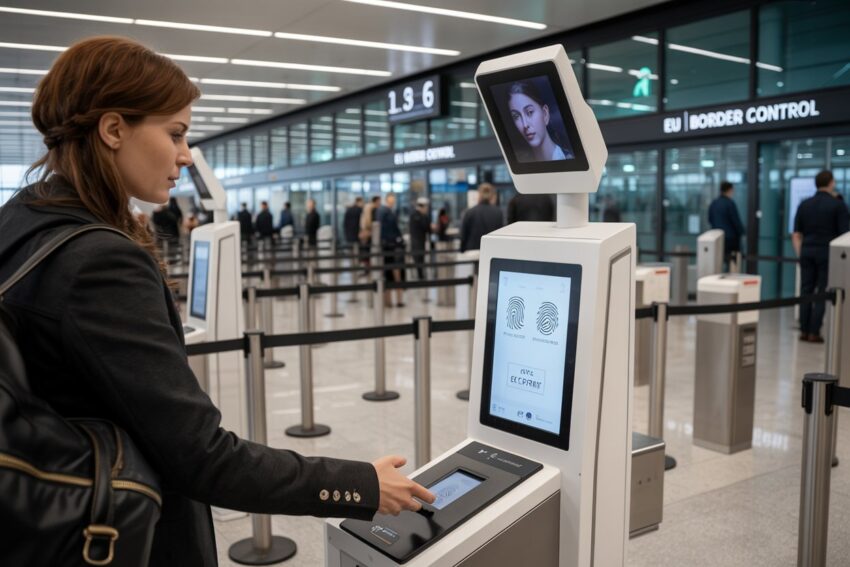 Image generated with Ai
The United States is accelerating its transition toward electronic border processing, affecting travelers from Canada, Mexico, Brazil, Chile, and countries throughout Central America and the Caribbean. The shift combines digital arrival and departure records, biometric identity verification, and automated immigration documentation. While these systems are not entirely new, expanded federal biometric regulations that took effect in December 2025 are strengthening the legal framework for their use in 2026. For international visitors, the changes mean greater reliance on accurate passport information, electronic travel histories, and recorded admission periods. However, the new framework does not automatically introduce additional visa requirements for every nationality.
US Border Goes Digital in 2026: Which American Countries Face Electronic Entry-Exit Records, Biometric Checks and New Travel Requirements?
North America
| Country | Main electronic border implications | Travellers most affected | Tourism and travel implications |
|---|---|---|---|
| Canada | Electronic entry-exit information exchange, biometric processing, I-94 where applicable, airport preclearance | Cross-border visitors, non-Canadian residents, business travellers | Greater importance of accurate land-crossing histories and digital travel records |
| Mexico | Digital I-94 records, biometric checks, electronic land-border processing | Land-border visitors, air passengers, tourists and business travellers | Electronic documentation and recorded admission periods become especially important |
| United States | Domestic deployment of electronic arrival, departure and biometric systems | Foreign visitors and US citizens using affected border facilities | Airports, ports and border agencies must support electronic identity verification |
Central America
| Country | Main electronic border implications | Travellers most affected | Tourism and travel implications |
|---|---|---|---|
| Belize | Electronic I-94 and biometric processing | US-bound holidaymakers, family visitors | Digital admission records and passport consistency |
| Costa Rica | Electronic arrival records and facial comparison | Leisure and business travellers | More automated identity checks on US-bound journeys |
| El Salvador | Digital entry-exit and admission records | Family visitors, tourists, business passengers | Accurate records become important for repeat visits |
| Guatemala | Electronic I-94 and biometric verification | Air passengers and visiting relatives | Stronger reliance on electronically recorded admission information |
| Honduras | Digital admission and biometric processing | US-bound visitors and connecting passengers | Greater emphasis on passport and travel-history accuracy |
| Nicaragua | Electronic border records and biometric identification | Visa-holding visitors and family travellers | Digital verification supplements existing entry requirements |
| Panama | Electronic I-94 and biometric checks | Business passengers, tourists, connecting travellers | US-bound connecting itineraries require appropriate documentation |
Caribbean
| Country | Main electronic border implications | Travellers most affected | Tourism and travel implications |
|---|---|---|---|
| Antigua and Barbuda | Electronic I-94 and biometric processing | Holidaymakers and family visitors | Digital records for US-bound travel |
| Bahamas | US preclearance, electronic admission records, biometrics | Tourists, business travellers, frequent flyers | US inspections may take place before departure from the Bahamas |
| Barbados | Electronic admission and biometric checks | Leisure and business visitors | Greater use of digital identity verification |
| Cuba | Electronic I-94 and biometric processing | Eligible visa-holding visitors and family travellers | Digital processing operates alongside separate visa and admissibility rules |
| Dominica | Electronic admission records | Holidaymakers and visiting relatives | Digital travel histories may assist record verification |
| Dominican Republic | Electronic I-94 and facial biometrics | Leisure travellers, family visitors, business passengers | Digital border checks on US-bound journeys |
| Grenada | Electronic admission and biometric records | Holidaymakers and family visitors | Greater reliance on electronic arrival information |
| Haiti | Electronic admission and biometric processing | Eligible visitors and family travellers | Accurate digital documentation and immigration status records |
| Jamaica | Electronic I-94 and facial comparison | Holidaymakers, business travellers, visiting relatives | Increased importance of electronically recorded travel histories |
| Saint Kitts and Nevis | Electronic admission and biometric verification | Tourism and business passengers | Digital processing for US-bound journeys |
| Saint Lucia | Electronic I-94 and biometric processing | Holidaymakers and family visitors | Electronic records increasingly replace routine paper admission documents |
| Saint Vincent and the Grenadines | Electronic admission records and biometric checks | Leisure and family travellers | Digital records support border verification |
| Trinidad and Tobago | Electronic I-94 and biometric verification | Business travellers, tourists, family visitors | More reliance on automated US entry documentation |
South America
| Country | Main electronic border implications | Travellers most affected | Tourism and travel implications |
|---|---|---|---|
| Argentina | Electronic I-94 and biometric processing | Leisure and business travellers | Digital verification and admission history |
| Bolivia | Electronic admission and biometric records | Visa-holding tourists and business visitors | Accurate electronic entry records |
| Brazil | Electronic I-94 and biometric processing | Tourists, business passengers, visiting relatives | Digital processing across major US gateways |
| Chile | ESTA under Visa Waiver Program, electronic admission and biometrics | Eligible visa-waiver travellers | Electronic authorisation and admission records are particularly important |
| Colombia | Electronic admission and biometric checks | Tourists, family visitors, business passengers | Greater use of automated border identity verification |
| Ecuador | Electronic I-94 and biometric processing | Holidaymakers and family visitors | Electronic travel-history verification |
| Guyana | Electronic admission and biometric records | Business passengers and family visitors | Digital record accuracy becomes important |
| Paraguay | Electronic I-94 and biometric checks | Business and leisure travellers | Electronic admission documentation |
| Peru | Electronic arrival records and facial biometrics | Tourists and business travellers | Greater reliance on digital identity checks |
| Suriname | Electronic admission and biometric processing | Eligible visitors and business passengers | Digital records supplement immigration requirements |
| Uruguay | Electronic I-94 and biometric verification | Leisure and business visitors | Electronic travel history and admission records |
| Venezuela | Electronic border records and biometrics | Travellers eligible for US admission | Digital processing remains subject to applicable visa and entry restrictions |
Why Is the United States Expanding Electronic Border Processing in 2026?
The United States is moving further toward electronic immigration processing to improve identity verification, strengthen the accuracy of travel records, and make border administration more efficient. The transition is particularly important for international aviation, cruise tourism, and the country’s busy land borders with Canada and Mexico.
Advertisement
Advertisement
A major regulatory development occurred when the Department of Homeland Security published its biometric entry-exit final rule on October 27, 2025. The rule became effective on December 26, 2025, expanding the legal framework for collecting photographs and other biometric information from foreign nationals entering or departing the country.
Electronic border processing was already operating at American airports, seaports, and land crossings before this regulatory change. The latest framework builds upon those existing capabilities rather than introducing an entirely new immigration system.
Advertisement
Advertisement
For travelers, the practical result is an increasing dependence on digital records instead of traditional paper documentation. Immigration officers can use electronic admission information and biometric identity checks to verify travelers and examine their immigration histories.
However, implementation varies across ports of entry, and not every traveler encounters identical procedures.
Advertisement
Advertisement
Which Countries Across the Americas Are Affected by Electronic US Border Records?
The expanding digital framework potentially affects foreign nationals traveling to the United States from all 35 sovereign countries across North America, Central America, South America, and the Caribbean.
Canada and Mexico have particularly direct connections because of their extensive land-border operations with the United States. Caribbean countries are affected primarily through international aviation, maritime travel, and airport processing. South American travelers encounter electronic admission records and biometric verification when entering the United States.
Advertisement
Advertisement
The consequences vary according to nationality, visa classification, immigration status, and transportation method.
| Region | Countries affected | Principal implications |
|---|---|---|
| North America | Canada, Mexico | Land-border processing, electronic I-94 records, biometric verification |
| Central America | Belize, Costa Rica, El Salvador, Guatemala, Honduras, Nicaragua, Panama | Electronic admission records, identity verification, digital travel histories |
| Caribbean | Antigua and Barbuda, Bahamas, Barbados, Cuba, Dominica, Dominican Republic, Grenada, Haiti, Jamaica, Saint Kitts and Nevis, Saint Lucia, Saint Vincent and the Grenadines, Trinidad and Tobago | Airport and seaport processing, biometric checks, electronic admission documentation |
| South America | Argentina, Bolivia, Brazil, Chile, Colombia, Ecuador, Guyana, Paraguay, Peru, Suriname, Uruguay, Venezuela | Electronic entry records, biometric verification, digital travel documentation |
The United States itself is the country implementing these procedures, bringing the geographical scope to all 35 sovereign American nations when the United States is included.
Importantly, this geographical coverage does not mean Washington has announced 35 separate immigration restrictions. The systems apply according to federal immigration rules and individual traveler circumstances.
How Will Canada and Mexico Experience the Most Direct Border Processing Changes?
Canada and Mexico occupy a distinctive position because both countries share extensive land borders with the United States.
Advertisement
Advertisement
For Canadian travelers, electronic processing is already integrated into several cross-border procedures. American and Canadian authorities exchange certain entry information that helps establish corresponding departure records.
This arrangement is particularly relevant to travelers who cross the border regularly for business, family visits, tourism, and other permitted purposes.
Mexico faces similar operational considerations because large numbers of travelers use land crossings connecting the two countries.
Electronic Form I-94 procedures are especially important for eligible Mexican visitors who require admission records for their journeys.
However, the requirements are not identical for every traveler. Some Canadian citizens are exempt from routine I-94 requirements, while certain Mexican border-crossing arrangements operate under specific immigration rules.
For both countries, accurate entry and departure records are increasingly important. Travelers should verify the documents required for their particular circumstances rather than assuming that electronic processing eliminates established immigration obligations.
Advertisement
Advertisement
What Does the Digital Transition Mean for Brazil, Chile, Argentina, and Other South American Countries?
South American countries are affected through the wider application of electronic admission records, passport verification, and biometric border processing.
Brazil, Argentina, Colombia, Peru, Ecuador, Uruguay, Paraguay, Bolivia, Guyana, Suriname, and Venezuela fall within the broader framework when their nationals travel to the United States.
Chile has an additional distinction because it participates in the US Visa Waiver Program.
Eligible Chilean citizens can use the Electronic System for Travel Authorization, commonly known as ESTA, to seek admission for qualifying short-term visits without obtaining a conventional visitor visa.
However, ESTA approval is not equivalent to admission. American border officials retain responsibility for determining whether a traveler may enter the country.
For other South American nationalities, electronic processing generally operates alongside existing visa requirements and eligibility rules.
Advertisement
Advertisement
The practical implications extend beyond arrival inspections. Accurate digital travel histories can become important when travelers return to the United States, apply for immigration benefits, or need to demonstrate compliance with previous admission conditions.
Why Are Caribbean Tourism Destinations Important to America’s Electronic Border Expansion?
The Caribbean has extensive aviation and maritime connections with the United States, making electronic border procedures particularly relevant to regional tourism.
The Bahamas, Jamaica, Dominican Republic, Barbados, Haiti, Trinidad and Tobago, and several smaller island countries have travelers who encounter US immigration processing when visiting American destinations.
The Bahamas has an especially significant operational connection through US preclearance facilities.
At designated airports, eligible passengers complete American immigration and customs inspections before departing for the United States. This arrangement allows qualifying flights to arrive in the country after passengers have already undergone US border inspection.
US preclearance also operates in Aruba and Bermuda, although these are territories rather than independent sovereign countries.
Advertisement
Advertisement
For other Caribbean travelers, biometric identity verification and electronic admission records are primarily encountered upon arrival at American airports or seaports.
These systems do not replace the need for appropriate visas or other travel documentation.
For tourism businesses, the growing importance of digital processing highlights the need to communicate accurate entry requirements to customers before departure.
How Are Electronic I-94 Records Replacing Traditional Paper Immigration Documents?
Form I-94 is one of the most important components of the United States’ electronic border administration system.
The document records essential admission information, including a traveler’s immigration classification and the period for which the person is authorized to remain in the country.
US Customs and Border Protection has already automated I-94 processing at air, sea, and land ports of entry for most travelers who require the record.
Advertisement
Advertisement
Consequently, many visitors no longer receive a traditional paper I-94 document when entering the United States.
Instead, eligible travelers can retrieve their admission information through CBP’s official online portal.
The system also provides access to certain travel-history information and allows qualifying travelers to begin provisional I-94 applications before some land-border journeys.
However, travelers should understand that the electronic record is not a visa. It documents admission rather than independently granting permission to travel.
Checking the recorded admission date and authorized period of stay remains an important precaution after arrival.
How Will Biometric Technology Change Airport and Seaport Travel Experiences?
Biometric processing represents another significant element of the American border modernization effort.
Advertisement
Advertisement
The technology commonly uses facial comparison to help confirm that a traveler matches the identity associated with their passport or travel document.
CBP has already deployed facial biometric capabilities at numerous airports and maritime facilities.
The federal biometric entry-exit rule that became effective in December 2025 provides broader authority for collecting photographs from foreign nationals entering or departing the United States.
The regulatory framework also addresses earlier limitations associated with biometric departure programs.
For international passengers, biometric verification may form part of routine immigration or departure procedures at participating facilities.
However, the existence of nationwide legal authority does not mean that every airport, seaport, or land crossing operates the same biometric system.
Advertisement
Advertisement
Deployment depends on available infrastructure, operational procedures, and applicable legal requirements.
The growing use of biometric technology also raises questions about privacy, data retention, and government oversight, making clear information about travelers’ rights and applicable procedures increasingly important.
What Are the Important Dates and Costs Associated With Electronic US Border Processing?
The electronic border transition involves several regulatory developments and established systems rather than one universal implementation deadline.
Travelers should distinguish between the introduction of a technology, a subsequent regulatory change, and the fees associated with particular travel documents.
| Date or period | Development | Importance for travelers |
|---|---|---|
| October 2022 | ESTA became mandatory for Visa Waiver Program travelers entering by land | Eligible travelers must obtain the required electronic authorization |
| September 30, 2025 | Updated ESTA and land-border I-94 fees took effect | Increased certain processing costs |
| October 27, 2025 | DHS published its biometric entry-exit final rule | Established the expanded regulatory framework |
| December 26, 2025 | Biometric entry-exit rule became effective | Broadened the legal authority for biometric collection |
| 2026 | Electronic processing and biometric systems continue operating | Travelers encounter procedures according to their port and immigration status |
Under the updated fee arrangements, ESTA costs $40, while the land-border I-94 application fee is $30.
These charges apply to different processes. Not every international visitor must pay both fees.
Advertisement
Advertisement
Travelers should confirm current amounts through official government websites before applying, because immigration fees and administrative procedures can change.
Will Electronic Border Records Make Travel More Complicated for International Tourists?
Electronic processing can simplify certain administrative tasks, but it also increases the importance of accurate information.
For many visitors, digital I-94 records remove the need to retain a paper admission form. Online access also makes it easier to review recorded admission details.
Biometric identity verification may support more efficient processing where appropriate technology and procedures are available.
However, electronic systems cannot eliminate every complication associated with international travel.
Incorrect passport details, mismatched records, misunderstood admission periods, or incomplete departure information can still create difficulties.
Advertisement
Advertisement
Land-border travelers should be particularly attentive to the accuracy of their travel histories because some departures may not be recorded in the same way as air or sea movements.
The transition also does not change the fundamental distinction between permission to travel and permission to enter.
A visa or approved ESTA allows an eligible traveler to seek admission, while the final entry decision remains with American border authorities.
Understanding these differences is essential for avoiding preventable documentation problems.
How Should Airlines, Cruise Companies, and Travel Agencies Respond to the Digital Shift?
The continuing expansion of electronic border processing has important implications for companies serving international visitors to the United States.
Airlines already operate within established passenger-information and travel-document verification frameworks. As electronic border systems become more integrated, accurate passport information and familiarity with immigration requirements remain essential.
Advertisement
Advertisement
Cruise companies must also account for electronic admission procedures and biometric systems at participating American seaports.
For travel agencies, the challenge is largely informational.
Customers may confuse ESTA, electronic I-94 records, biometric inspections, and visa requirements because all involve digital immigration processes.
Travel advisers should explain that these systems serve different purposes and do not necessarily apply to every traveler in the same way.
The distinction is particularly important for multi-country itineraries involving Canada, Mexico, the Caribbean, and the United States.
Travelers moving between destinations may encounter different entry requirements, even when their journeys involve the same airline or cruise operator.
Advertisement
Advertisement
Clear guidance can help reduce documentation errors and unnecessary travel disruption.
What Should International Travelers Check Before Entering the United States in 2026?
International travelers should prepare for the growing use of electronic border procedures without assuming that every new system creates an additional immigration requirement.
The first priority is confirming passport validity and the appropriate visa or ESTA eligibility.
Travelers should then understand whether they will receive an electronic I-94 record and how to retrieve it after entering the country.
Visitors who require an I-94 should check that their admission classification and authorized stay are recorded correctly.
Passengers traveling through airports or seaports should also be prepared for biometric identity verification where the technology is deployed.
Advertisement
Advertisement
Those crossing land borders may need to pay additional attention to departure documentation and electronic travel histories.
Official government websites remain the most reliable sources for procedural information.
CBP provides electronic I-94 services at i94.cbp.dhs.gov, while eligible Visa Waiver Program travelers can apply for ESTA at esta.cbp.dhs.gov.
Checking these requirements before departure can prevent confusion at airline check-in counters and border inspection facilities.
What Does America’s Digital Border Expansion Mean for the Future of Tourism?
The United States’ movement toward electronic border records marks a continuing transformation in how international arrivals and departures are documented.
For Canada and Mexico, the implications are closely connected to land-border movements and established information-sharing arrangements. For Caribbean countries, airport and maritime processing remain central. For Brazil, Chile, Argentina, Colombia, and other South American nations, electronic admission records and biometric verification are increasingly familiar components of US travel.
Advertisement
Advertisement
The December 2025 biometric regulation strengthens the legal foundation for this wider transition, but it should not be mistaken for the introduction of a universal new visa requirement.
The longer-term significance lies in the increasing integration of digital identity verification, admission information, and departure records.
For travelers and tourism businesses, accurate documentation and a clear understanding of immigration procedures will remain essential as the United States continues modernizing its border systems.
America’s transition toward electronic border processing signals a significant change for international tourism across the Western Hemisphere. Canada and Mexico face direct implications through land-border movements, while Brazil, Chile, and Caribbean countries encounter evolving airport and maritime procedures. The expansion reflects Washington’s efforts to improve identity verification, maintain accurate immigration records, and strengthen entry-exit monitoring. Although biometric technology and electronic documentation may streamline certain processes, travelers must remain attentive to visa requirements, passport accuracy, and authorized stays. As implementation continues, clear information and advance preparation will help visitors navigate the increasingly digital American border system with greater confidence.
Advertisement
