
Riga Follow Pilsen and More as Hidden Winter Markets of Europe Unveil Magical Christmas Escapes for an Unforgettable Festive Holiday!

Published
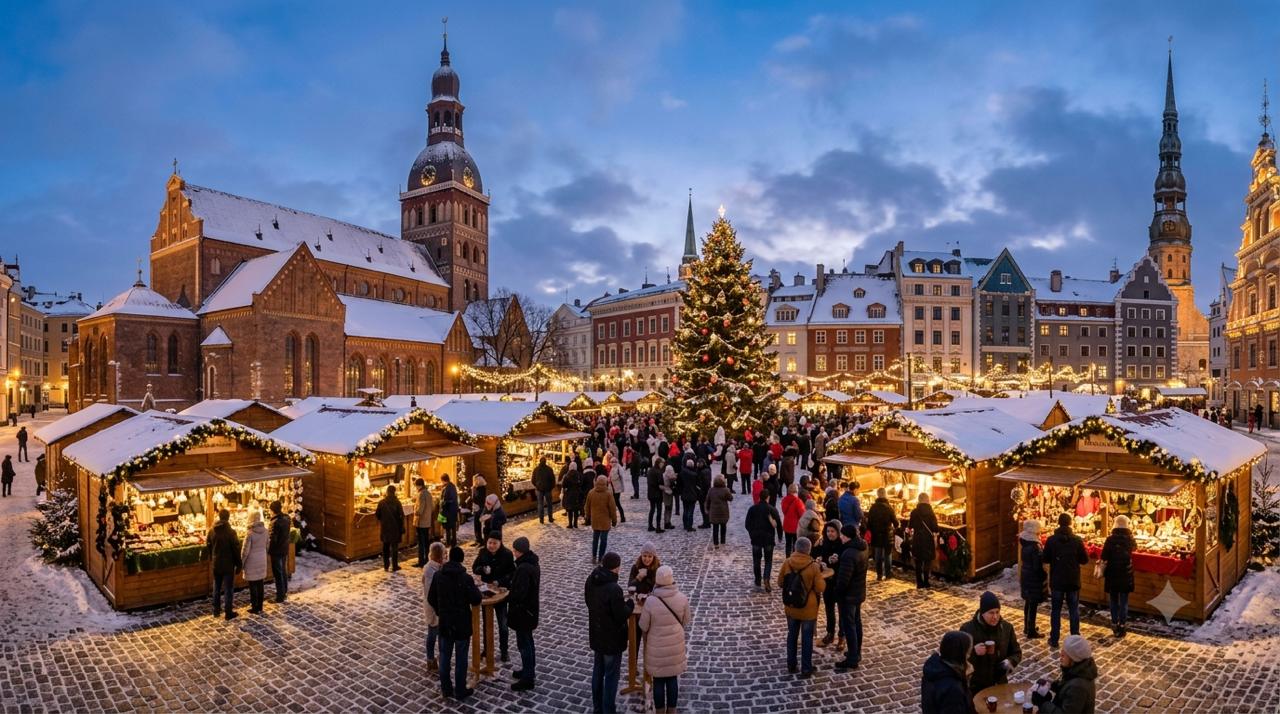
Riga follows Pilsen and more as the hidden winter markets of Europe unveil magical Christmas escapes for an unforgettable festive holiday. This winter, Riga follows Pilsen and other hidden destinations, inviting global travellers to discover Europe’s enchanting winter markets, traditional celebrations and unforgettable Christmas experiences. Moreover, these magical Christmas escapes combine historic streets, festive delicacies, handmade gifts and charming seasonal attractions. From Riga to Pilsen and more, Europe’s hidden winter markets promise memorable festive holidays for families, couples and cultural explorers. Travel And Tour World urges readers to explore these captivating destinations, uncover hidden Christmas treasures and plan an unforgettable European winter holiday.
Europe’s Hidden Winter Markets by Rail Reveal Six Underrated Festive Destinations, Local Food and Five-Year Tourism Trends
Europe’s winter market season offers far more than the celebrated Christmas squares of Vienna, Prague and Strasbourg. Travellers willing to explore smaller destinations can discover Baltic traditions, Moravian cuisine, historic Central European streets and festive celebrations that fit naturally into a multi-city rail holiday.
Advertisement
Advertisement
For global tourists planning winter travel in 2026, six destinations deserve closer attention: Riga in Latvia, Pilsen in Czechia, Bratislava in Slovakia, Brno in Czechia, Olomouc in Czechia and Tallinn in Estonia. Each offers a different combination of seasonal markets, architectural attractions, regional food and opportunities to experience local culture.
The strongest travel strategy is to treat these markets as gateways to their cities rather than isolated shopping attractions. A well-planned itinerary can combine market visits with museums, historic landmarks, neighbourhood restaurants and scenic rail journeys.
Advertisement
Advertisement
Tourism statistics also provide useful context. Official data show substantial visitor activity in Riga, Brno and the wider regions around Pilsen and Olomouc. However, these figures measure different geographical areas and accommodation categories. They should not be interpreted as direct counts of Christmas market visitors.
Research methodology and how to read the tourism statistics
This extension uses official municipal tourism releases, national statistical offices, destination tourism authorities and official market organisers wherever available. Figures are identified by their reporting geography and measurement.
Advertisement
Advertisement
Three distinctions are particularly important:
- Overnight guests: People registered at accommodation establishments. Depending on the source, one person may be counted again on another trip.
- Overnight stays: The total number of nights spent in registered accommodation. This measures accommodation use rather than unique visitors.
- Market footfall: Visits to a particular market or public event. These counts can include residents, repeat visits and people who never stay overnight.
The available official records do not provide a consistent, five-year series of Christmas market attendance for all six destinations. Consequently, the tables below distinguish published annual statistics from figures that are not available in a comparable form. This avoids presenting invented numbers as verified tourism data.
Advertisement
Advertisement
Five-year tourism statistics reveal how these destinations are performing
The following figures offer a statistical starting point for evaluating the destinations. They also demonstrate why travellers and travel publishers should distinguish national tourism recovery from local market popularity.
Table 1. Official tourism figures and measurement coverage, 2021–2025
| Destination | Latest verified annual figure | Reporting geography | What it measures |
|---|---|---|---|
| Riga, Latvia | 1.1 million foreign hotel visitors in 2024 | City of Riga | Foreign visitors staying in hotels |
| Pilsen, Czechia | 912,595 accommodation guests in 2025 | Plzeň Region | Guests at collective accommodation establishments |
| Bratislava, Slovakia | City-specific annual series requires further extraction | Bratislava | Accommodation tourism |
| Brno, Czechia | More than 870,000 overnight visitors in 2025 | City of Brno | Visitors staying at least one night |
| Olomouc, Czechia | 816,500 accommodation guests in 2025 | Olomouc Region | Guests at collective accommodation establishments |
| Tallinn, Estonia | Approximately 3.7 million accommodation tourists in 2025 | Estonia nationally | Guests at accommodation establishments |
Sources: Riga municipal government, Czech Statistical Office, Brno municipal information service and Statistics Estonia. The geographic coverage differs between rows, so the numbers must not be used as a direct city-to-city ranking.
Table 2. Five-year comparison of published accommodation tourism data
| Year | Riga: foreign hotel visitors | Estonia: accommodated tourists, all nationalities | Brno: overnight visitors | Pilsen Region: annual guests | Olomouc Region: annual guests |
|---|---|---|---|---|---|
| 2021 | Not stated in the cited city release | 2.1 million | Not verified here | Not verified here | Not verified here |
| 2022 | Not stated in the cited city release | 3.3 million | Not verified here | Not verified here | Not verified here |
| 2023 | 1.2 million total city tourists; 980,000 hotel guests | 3.4 million | Not verified here | Not verified here | Not verified here |
| 2024 | 1.1 million foreign hotel visitors | 3.6 million | 850,685 guests | Noted below | Noted below |
| 2025 | A comparable city figure was not verified here | 3.7 million | More than 870,000 guests | 912,595 guests | 816,500 guests |
Figures are rounded where appropriate. “Not verified here” means a consistent annual figure was not established from the sources reviewed; it does not mean that no official data exist. Riga’s 2023 total includes more than one accommodation type, whereas its 2024 figure in this table refers specifically to foreign hotel visitors. The 2024 Brno and 2025 regional figures are drawn from their respective official releases.
What the five-year comparison tells travellers
Estonia’s accommodation sector recovered substantially after the pandemic disruption. Nationally, accommodated tourists increased from approximately 2.1 million in 2021 to 3.7 million in 2025. That is an increase of roughly 76% over four years, although the 2025 total remained around 3% below the 2019 level. Tallinn is the country’s principal tourism gateway, but national totals must not be presented as Tallinn-only visitor counts.
Advertisement
Advertisement
Riga’s figures show that international demand remained strong. The municipal government reported 1.2 million tourists in 2023, including approximately 980,000 hotel visitors and just over 200,000 apartment visitors. In 2024, foreign visitors staying in hotels reached 1.1 million, while total hotel overnight stays reached two million. These figures use different categories and should not be treated as a like-for-like annual comparison.
The Czech regional figures also indicate meaningful tourism activity beyond Prague. Plzeň Region recorded 912,595 guests in 2025, while Olomouc Region recorded 816,500. Brno, meanwhile, welcomed more than 870,000 overnight visitors in 2025. These numbers support the case for exploring secondary cities, but they do not prove that their Christmas markets are less crowded or more popular than those in major capitals.
1. Riga, Latvia: A Baltic winter market surrounded by medieval architecture
Riga is an excellent choice for travellers seeking a winter destination that combines festive shopping, medieval architecture and Baltic food traditions. The Old Town Christmas Market takes place in Dome Square, close to historic streets and notable buildings. The official Latvian tourism portal describes seasonal offerings that include handmade products, traditional food, gingerbread and festive entertainment.
What to see and do: Begin at Dome Square, then explore the Old Town, the House of the Blackheads and the surrounding historic streets. Allow time for museums, cafés and independent shops. Visit the market after dark for illuminated stalls, but explore the architecture during daylight when details are easier to appreciate.
What to eat: Look for grey peas with bacon, rye bread, gingerbread, smoked fish and warming seasonal drinks. Grey peas with bacon are a particularly recognisable Latvian dish. Market menus vary, so check ingredients if you have dietary restrictions.
Where to eat: Province restaurant offers an option for exploring Latvian-style dining in the historic centre. Another centrally located choice is Rozengrāls, known for its medieval-inspired atmosphere. Check current menus, prices and winter opening hours before visiting.
Advertisement
Advertisement
Where to stay: Rixwell Old Riga Palace Hotel is worth considering for travellers who want accommodation near the Old Town. Pullman Riga Old Town is another central option. Compare refundable rates, breakfast arrangements and walking distances before booking.
Tourism statistics: Riga’s municipal government reported 1.2 million tourists in 2023, including 980,000 hotel guests and slightly more than 200,000 apartment guests. In 2024, foreign hotel visitors numbered 1.1 million, with two million hotel overnight stays. The city estimated that total tourist numbers could be at least 20% higher when short-term rentals were considered.
Best travel plan: Allocate two nights. Spend the first afternoon exploring the Old Town, visit the market after sunset, and dedicate the next day to museums, architecture and local dining. Check the official Riga Christmas Market information for seasonal dates before travelling.
2. Pilsen, Czechia: A festive city break with Czech cuisine and historic streets
Pilsen, also known as Plzeň, makes a useful alternative for visitors who want to explore Czechia beyond Prague. Its central square, historic architecture and food culture create a setting for a winter city break. The city is also known internationally for its brewing heritage, adding another dimension to a market-focused visit.
What to see and do: Start at Republic Square and admire St Bartholomew’s Cathedral. Explore the surrounding historic centre and investigate guided tours of the city’s underground passages when seasonal schedules permit. The Pilsner Urquell brewery visitor experience is another option for travellers interested in the region’s brewing history; check tour availability and age restrictions before booking.
What to eat: Traditional Czech choices include roasted sausages, potato pancakes, roast pork with dumplings, hearty soups and sweet pastries. Look for local specialities rather than assuming every stall offers identical menus. Visitors who do not consume alcohol can still enjoy the city’s architecture, museums and food scene.
Advertisement
Advertisement
Where to eat: Švejk Restaurant U Pětatřicátníků serves Czech-style food. Restaurace U Salzmannů is another established dining option in the city centre.
Where to stay: Hotel Continental Plzeň is a central option to compare. Courtyard by Marriott Pilsen is another possibility for travellers who prefer a familiar international hotel brand.
Tourism statistics: The Czech Statistical Office reported 912,595 guests at collective accommodation establishments across Plzeň Region in 2025. This was 1.4% above 2024. The region recorded 2,230,610 overnight stays in 2025, up 3.6%, and the average stay was approximately 3.4 days. More than 315,000 guests came from abroad. These are regional figures, not attendance counts for Pilsen’s Christmas market.
Best travel plan: Spend two nights in Pilsen. Visit the market and cathedral on arrival, explore the underground passages or brewery the following day, and reserve time for a Czech dinner. For rail planning, check official Czech railway timetables and book accommodation within walking distance of the centre.
3. Bratislava, Slovakia: A festive capital with a historic old town
Bratislava is particularly practical for travellers who want a compact historic centre and the option of extending their holiday to neighbouring Central European cities. The main Christmas market occupies Main Square, while seasonal activities also take place in other central locations.
The official 2026 visitor information lists the Bratislava Christmas Markets from 26 November 2026 to 3 January 2027, with the main market scheduled to open daily from 10 am to 10 pm, except on 24 and 25 December. Confirm the latest programme before travelling, as individual event schedules may differ.
Advertisement
Advertisement
What to see and do: Explore Main Square, the Old Town, St Martin’s Cathedral and Bratislava Castle. The castle offers a broader historical perspective and views across the city. Visitors should allow time for the pedestrian streets and smaller squares instead of limiting their itinerary to the principal market.
What to eat: Try kapustnica, a traditional sauerkraut soup, and lokše, thin potato-based flatbreads often served with savoury or sweet fillings. The official market programme also lists international dishes, including bao and gyoza, alongside traditional Slovak options. Vegetarian and vegan choices are expected at the main market.
Where to eat: Slovak Pub is an option for exploring Slovak dishes. For a meal near the castle area, compare menus at Knešel and confirm its current offering before visiting.
Where to stay: Look for accommodation in the Old Town or near the main railway station, depending on whether sightseeing or onward rail travel is the priority. Booking early is sensible for weekends and dates close to Christmas.
Tourism statistics: Slovakia’s official statistical resources publish accommodation indicators for Bratislava, but the reviewed evidence does not establish a complete, consistent five-year city-level series for this article. National or regional totals should not be substituted for city-specific visitor counts.
Best travel plan: Two nights provide time for the market, castle and historic centre. A third night allows a slower visit or a rail connection to Brno or Vienna. Check holiday opening arrangements carefully: restaurants, shops and other services may operate reduced hours around Christmas.
Advertisement
Advertisement
4. Brno, Czechia: A major Moravian market destination with a lively city centre
Brno is one of the strongest choices in this list for travellers who want a substantial Christmas market programme without making Prague the centre of their holiday. The official Brno Christmas market website lists the 2026 season from 13 November to 31 December. Attractions include festive lights, a skating rink, a Ferris wheel and family-oriented activities. Individual attractions may have separate operating hours.
What to see and do: Explore Freedom Square, the Old Town and the seasonal market locations. The programme’s listed attractions make Brno particularly suitable for families and visitors seeking more than shopping. Outside the market, consider Špilberk Castle, the Cathedral of St Peter and Paul, and the city’s underground attractions.
What to eat: Moravian and Czech dishes include roast meats, dumplings, potato-based foods, pastries and warming soups. Look for regional baked goods and seasonal market specialities. Brno’s wider dining scene also makes it easy to plan an evening meal away from the busiest stalls.
Where to eat: Lokál U Caipla is an option for Czech-style food, while Stopkova Plzeňská Pivnice offers another central dining choice. Check seasonal menus and book ahead for popular dates.
Where to stay: Choose a hotel in or near the historic centre if you want to walk between market areas. Visitors planning several day trips may prefer accommodation with convenient access to Brno’s main railway station.
Tourism statistics: Brno’s municipal information service reported 850,685 guests in 2024. In a subsequent update, the city reported more than 870,000 overnight visitors in 2025. Separately, mobile-operator data recorded more than three million visits to Brno’s Christmas markets in 2025, with 6 December identified as the busiest day, exceeding 43,000 visitors to the city centre. These market-visit figures are not equivalent to unique overnight tourists.
Advertisement
Advertisement
Best travel plan: Spend two or three nights. Explore the principal market squares on the first evening, visit the castle and cathedral the next day, then enjoy a slower food-focused afternoon. Brno can also serve as a base for exploring southern Moravia, subject to winter transport schedules.
5. Olomouc, Czechia: Baroque architecture and a slower-paced Christmas escape
Olomouc offers a compelling alternative for travellers interested in historic architecture, regional food and a less hurried city break. Its Upper Square, historic town hall and UNESCO-listed Holy Trinity Column create a distinctive setting for seasonal exploration. The city’s university atmosphere also supports a lively café and dining scene outside the main market areas.
What to see and do: Begin at Upper Square, where the Holy Trinity Column stands as a major landmark. Explore the town hall and nearby streets, then visit local museums or churches according to their winter opening hours. Travellers who enjoy photography should return to the square after sunset to see the festive lighting.
What to eat: Try Olomouc tvarůžky, a distinctive ripened cheese associated with the region. It has a strong aroma and is often served with bread or in cooked dishes. Other options include Czech soups, potato pancakes, dumplings and seasonal pastries. Ask about ingredients and preparation if you have dietary requirements.
Where to eat: Choose a restaurant around the historic centre for convenient access to the market. Local pubs and cafés provide alternatives to the busiest stalls. Confirm winter opening hours, particularly on Sundays and public holidays.
Where to stay: Miss Sophie’s Olomouc – Boutique Hotel offers a centrally located boutique option. Theresian Hotel is another property to compare when planning a stay.
Advertisement
Advertisement
Tourism statistics: Official regional data show that Olomouc Region recorded 816,500 guests in collective accommodation establishments in 2025, an 8.4% increase over 2024. Domestic guests accounted for 664,500 arrivals, while foreign guests numbered 152,000. The region registered 2.304 million overnight stays, up 4.5% year on year. In the final quarter alone, 168,600 guests were accommodated, an increase of 9.9% over the same period in 2024. These are regional statistics rather than city-specific Christmas market counts.
Best travel plan: Allow two nights. Spend the first afternoon exploring Upper Square and the Christmas market, then use the following day for architecture, cafés and regional food. Olomouc also fits well into a longer Czechia itinerary that includes Brno and Pilsen, although the journey between those cities should be checked against the current timetable.
6. Tallinn, Estonia: A medieval winter market in the Baltic region
Tallinn is a strong option for travellers seeking a northern European winter experience. Its medieval Old Town, historic Town Hall Square and Baltic food traditions create an atmospheric backdrop for seasonal visits. While Tallinn is an established tourist destination rather than an undiscovered city, it can still offer an alternative to the better-known Central European market circuit.
What to see and do: Explore Town Hall Square, walk through the Old Town’s historic lanes and visit Toompea Hill for views across the city. Museums and indoor attractions provide useful alternatives during very cold weather. Travellers should allow extra time for snow, ice and short daylight hours when planning walking routes.
What to eat: Look for Estonian black bread, sauerkraut, roasted pork, blood sausage and gingerbread during the festive season. Menus vary between stalls and restaurants, so ask about ingredients before ordering. Warm cafés provide an opportunity to take a break between outdoor sightseeing stops.
Where to eat: Old Estonia Restaurant is a central option for exploring Estonian-style food. Farm offers another restaurant to compare for a meal featuring regional ingredients and contemporary presentation.
Advertisement
Advertisement
Where to stay: Consider a hotel in the Old Town or nearby city centre for easy access to the market. Travellers arriving by ferry or continuing by rail should compare transfer times before selecting accommodation.
Tourism statistics: Statistics Estonia reported approximately 3.7 million tourists accommodated nationally in 2025, compared with 3.6 million in 2024, 3.4 million in 2023, 3.3 million in 2022 and 2.1 million in 2021. In 2025, around 1.95 million accommodated tourists were foreign visitors and approximately 1.74 million were domestic travellers. Tallinn accounted for a substantial share of the country’s accommodation tourism, but the national figures are not Tallinn-only totals.
Best travel plan: Plan two or three nights. Visit the market and Old Town on the first day, explore Toompea and museums on the second, and leave time for local dining. Check official city tourism information for market dates, weather advice and transport updates before departure.
Table 3. Six markets compared for practical holiday planning
| Destination | Ideal stay | Main travel appeal | Food to seek out | Best for |
|---|---|---|---|---|
| Riga | 2 nights | Baltic culture and medieval streets | Grey peas with bacon, rye bread, gingerbread | Architecture and food |
| Pilsen | 2 nights | Czech history and brewing heritage | Czech soups, dumplings, sausages | Culture and culinary exploration |
| Bratislava | 2–3 nights | Compact capital and castle views | Kapustnica, lokše | Short breaks and families |
| Brno | 2–3 nights | Multiple market locations and activities | Moravian and Czech specialities | Families and longer city breaks |
| Olomouc | 2 nights | Baroque landmarks and regional identity | Olomouc tvarůžky, Czech pastries | Architecture and slower travel |
| Tallinn | 2–3 nights | Medieval streets and Baltic winter atmosphere | Black bread, gingerbread, seasonal meat dishes | Northern European winter holidays |
Suggested durations are itinerary recommendations, not official minimum stays. Food items are regional suggestions and may not be available at every market stall.
Table 4. Confirmed and indicative 2026 Christmas market dates
| Destination | Published dates or status | What travellers should check |
|---|---|---|
| Riga | Official tourism listings and market organisers publish seasonal schedules; confirm the current main-market dates | Daily hours, holiday closures and cultural programme |
| Pilsen | Exact 2026 dates not independently confirmed in the reviewed sources | Official city market announcements |
| Bratislava | 26 November 2026–3 January 2027 published for the main market | Holiday closures and event-specific hours |
| Brno | 13 November–31 December 2026 listed by the official organiser | Opening times for individual attractions |
| Olomouc | Exact 2026 dates not independently confirmed in the reviewed sources | Official city tourism announcements |
| Tallinn | Confirm the official 2026 market calendar before booking | Market dates, weather and winter transport |
Sources: Latvia’s official tourism portal, Bratislava’s official market information, Brno’s official market website and Visit Estonia.
A detailed 12-day European winter market rail itinerary
For international visitors, combining all six destinations requires some advance planning because they are spread across the Baltic region and Central Europe. The most practical approach is to divide the holiday into two geographical sections rather than attempting to travel between every city in a single sequence.
Advertisement
Advertisement
Table 5. Suggested day-by-day itinerary
| Day | Destination | Suggested activities | Overnight |
|---|---|---|---|
| 1 | Riga | Arrive, explore the Old Town and visit the market | Riga |
| 2 | Riga | Architecture, museums, local food and festive shopping | Riga |
| 3 | Tallinn | Travel to Tallinn using a verified available connection; explore the Old Town | Tallinn |
| 4 | Tallinn | Market visit, Toompea Hill and museums | Tallinn |
| 5 | Bratislava | Travel via an appropriate air or rail connection, depending on the timetable | Bratislava |
| 6 | Bratislava | Castle, historic centre and Christmas market | Bratislava |
| 7 | Brno | Travel to Brno and explore its central market squares | Brno |
| 8 | Brno | Historic landmarks, market activities and Moravian dining | Brno |
| 9 | Olomouc | Travel to Olomouc and explore Upper Square | Olomouc |
| 10 | Olomouc | Historic architecture, cafés and regional food | Olomouc |
| 11 | Pilsen | Travel via the available Czech rail connections; explore the city centre | Pilsen |
| 12 | Pilsen | Visit remaining attractions and depart | — |
Important transport consideration: This itinerary is a suggested sequence, not a verified rail timetable. Riga and Tallinn are geographically separated from the Central European cities, and connections may require changes or a different transport mode. Check the actual travel time, operating dates, transfers and ticket availability before booking. A trip of this length is more comfortable if the Baltic and Central European sections are planned separately.
Table 6. Official resources for transport and destination planning
| Resource | What to verify |
|---|---|
| Latvian official tourism portal | Riga market information, local attractions and seasonal events |
| Visit Estonia | Tallinn sightseeing and winter visitor information |
| Visit Bratislava | Market locations, dates and city activities |
| Brno Christmas markets | Market programme and attraction opening times |
| Visit Plzeň | Pilsen attractions and city visitor information |
| Olomouc Tourism | Historic landmarks and local travel guidance |
| Deutsche Bahn | European journey planning and applicable connections |
| Czech Railways | Domestic Czech train timetables and tickets |
| Slovak Railways | Slovak rail routes and travel conditions |
| Elron | Passenger train services in Estonia |
How much should travellers budget for a winter market holiday?
There is no single reliable cost for visiting these six destinations because accommodation prices, train fares and market expenses depend on travel dates, advance booking, room type and demand. The Christmas period can be particularly busy, so travellers should compare actual prices rather than rely on a fixed regional average.
A practical budget should cover accommodation, transport between cities, local public transport, meals, market purchases, attraction tickets and a contingency for winter disruptions.
Table 7. Budget categories to compare before booking
| Expense | What affects the price | Money-saving approach |
|---|---|---|
| Accommodation | Christmas dates, weekends, location and room type | Compare refundable rates and stay slightly outside the busiest squares |
| Intercity transport | Route, operator, fare class and booking time | Compare available trains and book when suitable fares are released |
| Local transport | Distance from accommodation and number of journeys | Choose walkable accommodation where practical |
| Food and drinks | Restaurant type, market stall and portion size | Combine market snacks with planned restaurant meals |
| Attractions | Admission fees, guided tours and special events | Check official websites for current prices |
| Shopping | Handmade goods, decorations and souvenirs | Set a spending limit before visiting |
| Travel contingency | Weather delays, missed connections and changed plans | Keep flexible time and emergency funds available |
Travellers should also check entry requirements for every country on their itinerary. Visa rules depend on nationality and residence status, while travel insurance should cover the activities and disruptions relevant to the trip.
Final analysis: Which winter market should travellers choose?
These six destinations provide different reasons to travel. Riga combines Baltic culture with a historic setting, while Pilsen introduces visitors to Czech heritage. Bratislava is suited to a compact capital-city break, and Brno offers a more extensive festive programme. Olomouc is attractive for architecture and regional food, while Tallinn provides a northern European winter atmosphere.
The tourism statistics reinforce the importance of looking beyond individual market attendance. Estonia’s national accommodation figures reached approximately 3.7 million tourists in 2025, while the Czech regions around Pilsen and Olomouc recorded substantial registered accommodation activity. Brno’s separate market-footfall figures also demonstrate that public-event attendance and overnight tourism measure different things.
Advertisement
Advertisement
For a first-time visitor, the strongest plan is to choose two or three destinations that share convenient transport connections. Travellers with more time can combine the Baltic and Central European regions, provided they allow sufficient time for transfers.
Europe’s winter markets are most rewarding when visitors explore beyond the stalls. Historic neighbourhoods, regional dishes, museums and conversations with local makers can turn a festive shopping trip into a deeper cultural experience. With verified event dates, realistic travel connections and a flexible itinerary, these six cities offer a compelling starting point for a European winter holiday.
Conclusion
In conclusion, Riga follows Pilsen and more as the hidden winter markets of Europe invite global travellers to experience magical Christmas escapes and unforgettable festive holidays. From charming market squares to traditional delicacies, handmade gifts and historic streets, these destinations offer a refreshing alternative to Europe’s busiest Christmas hotspots. Moreover, visitors can combine festive celebrations with cultural discoveries and scenic rail journeys for a memorable winter adventure. Therefore, travellers planning their next seasonal getaway should explore Riga, Pilsen and other hidden European gems. Travel And Tour World encourages readers to discover these enchanting winter markets and embrace the magic of an unforgettable European Christmas holiday.
Advertisement
