Published on February 23, 2026

Image generated with Ai
As the global travel landscape shifts towards meaningful, heritage-driven experiences, the Republic of Armenia has emerged as a leader in spiritual exploration. Beginning in 2025, a comprehensive national strategy has been launched to elevate the country’s rich religious history to the forefront of its international tourism profile. This initiative is more than just a promotional campaign; it represents a multifaceted redevelopment of how the global community interacts with faith and history.
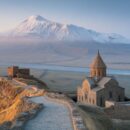
Armenia’s status as the first country to adopt Christianity as its state religion in 301 AD provides an unrivalled foundation for this endeavour. A roadmap has been developed in collaboration with the Ministry of Economy’s Tourism Committee and international development partners to ensure that the nation’s sacred geography—dotted with thousand-year-old monasteries and sun-drenched stone cathedrals—is presented with the reverence and accessibility it deserves.
Central to the 2025 vision is the enhancement of physical and digital infrastructure surrounding key spiritual landmarks. Significant capital is being directed toward the “Tourism and Regional Infrastructure Project” (TRIP), supported by a $100 million investment from the World Bank. Through this project, major corridors leading to spiritual epicenters such as the UNESCO-listed Geghard Monastery and the Monasteries of Haghpat and Sanahin are being modernized.
New pilgrimage routes are being meticulously mapped to offer a seamless journey through the Armenian highlands. These pathways are designed to connect the “Mother See of Holy Etchmiadzin” with more remote, cliff-clinging retreats like Tatev. Road networks are being widened, and sustainable transport solutions are being integrated to ensure that the influx of international visitors does not compromise the serenity of these hallowed grounds. Furthermore, the development of high-quality hospitality hubs in rural provinces like Syunik and Vayots Dzor is being prioritized, allowing travelers to remain immersed in the local culture without sacrificing modern comforts.
Advertisement
Advertisement
A significant emphasis is placed on the delicate balance between increasing visitor numbers and maintaining the sanctity of the sites. It is widely recognized by Armenian officials that these locations are not merely “tourist attractions” but living centers of worship and community identity. Consequently, a “preservation-first” philosophy is being applied to every stage of the 2025 plan.
Restoration projects are being conducted with meticulous attention to archaeological integrity. Khachkars (Armenian cross-stones), which are inscribed on the UNESCO Representative List of the Intangible Cultural Heritage of Humanity, are being protected through advanced conservation techniques. Moreover, visitor management systems are being introduced at high-traffic sites to prevent overcrowding. By regulating the flow of guests, the spiritual atmosphere is preserved, ensuring that a visitor’s encounter with the divine remains personal and profound.
Advertisement
Advertisement
The expansion of Armenia’s religious tourism sector is also framed as a catalyst for regional economic growth. International tourism partners and global travel agencies are being engaged to curate specialized itineraries that highlight the intersection of faith, viticulture, and gastronomy. These partnerships are intended to position Armenia as a year-round destination, moving beyond the traditional summer peak to include winter pilgrimages and spring theological retreats.
Strategic marketing at international forums, such as the Moscow International Travel & Tourism Exhibition (MITT) 2025, has already signaled Armenia’s readiness to welcome a diverse demographic of travelers. From scholars of theology to secular history enthusiasts, the narrative is being broadened. The economic benefits of this surge are expected to be felt most acutely in the “crossroads” communities—local villages located along the new pilgrimage trails—where traditional craftsmanship and local produce are being integrated into the traveler’s journey.
One of the most distinctive features of the 2025 strategy is the active involvement of local communities in the tourism value chain. The plan ensures that religious sites remain “vibrantly connected” to the people who have served as their custodians for centuries. Cultural programs are being developed in tandem with the Armenian Apostolic Church to provide visitors with authentic insights into the liturgical music, ancient manuscripts, and culinary traditions associated with monastic life.
By fostering this connection, the government ensures that the development is socially sustainable. When visitors engage with a local artisan in the shadow of the Khor Virap monastery or share a meal in a village guest house near Noravank, they contribute directly to the preservation of the Armenian way of life. This “responsible tourism” model is designed to generate durable returns, ensuring that the wealth created by the sector is reinvested into the communities that safeguard Armenia’s spiritual heart.
As the year 2025 approaches, Armenia is being transformed into a destination where history is not only observed but also experienced. The government’s commitment to the “Crossroads of Peace” and other regional unblocking initiatives strengthens this tourism pivot, as improved connectivity makes the South Caucasus more accessible than ever before.
This ambitious plan’s ultimate goal is to provide a sanctuary for the entire world. In an era of rapid globalisation, Armenia offers a rare opportunity to return to the origins of Christian civilisation. Armenia is ensuring that its sacred legacy will continue to inspire and welcome the world for future generations by modernising infrastructure, protecting ancient stones, and empowering local voices.
Advertisement
Tags: Armenia religious tourism 2025, Armenian pilgrimage routes, spiritual travel Armenia, UNESCO heritage sites Armenia

















Monday, February 23, 2026

Monday, February 23, 2026

Monday, February 23, 2026

Monday, February 23, 2026
Monday, February 23, 2026
Monday, February 23, 2026
Monday, February 23, 2026
Monday, February 23, 2026