Published on December 7, 2025

Image generated with Ai
Asia’s travellers have been hit by brutal air‑travel chaos. Across major hubs such as Beijing, Singapore, Tokyo, Hong Kong and beyond, nearly 937 flight disruptions — a mix of cancellations and delays — have plunged holidaymakers, business travellers and families into turmoil. The disruption has forced last‑minute rebookings, long hours in crowded terminals and abrupt cancellations of urgent plans.
Passengers from many walks of life — parents travelling with children, elders heading for medical check-ups, business executives en route for crucial meetings — now face uncertainty and stress. Stories of passengers missing flights minutes before boarding, sudden gate changes, and delayed baggage are surfacing daily. Airport terminals — once efficient and bustling — have turned chaotic, amplifying frustration and despair.
Data from recent reports confirms the extent of the chaos. Key airports across Asia have recorded major disruptions:
These numbers add up to 827 delays and 110 cancellations, totalling 937 flight disruptions across Asia.
Advertisement
Advertisement
But this tally likely represents only the tip of the iceberg. Recent external data — from independent aviation monitoring platforms — has flagged hundreds more disruptions across East and Southeast Asia, suggesting the full picture may be even more alarming.
A combination of systemic stress factors, regulatory overhaul and external pressures have created a perfect storm.
Advertisement
Advertisement
In India — one of the epicentres of the chaos — IndiGo, the country’s largest airline by market share, has borne the brunt. The airline has suspended or cancelled hundreds of flights per day over several days, as it struggles to comply with new crew rostering and duty‑time regulations imposed by the government to ensure pilot safety.
Indeed, on‑time performance at major Indian airports plunged to a shocking 8.5% — down from a healthy average in normal times. The regulatory pressure on airlines to reduce pilot fatigue — while commendable from a safety standpoint — collides with airlines’ aggressive expansion and increasing flight demand. The result: widespread cancellations and delays as airlines scramble to rework schedules.
Elsewhere in Asia, airlines have reported separate operational glitches. In some cases — particularly in East and Southeast Asia — delays stem from aircraft maintenance, crew shortages, or sudden schedule cutbacks. For a growing number of carriers, the cascading effect of delays and subsequent crew‑rest requirements further compromise their ability to fulfil scheduled flights.
An additional pressure comes from surging passenger demand. As travel rebounds post‑pandemic, many airports and airlines have expanded schedules aggressively — sometimes without proportionate investment in operational infrastructure or staffing. As a result, even minor hiccups ripple into widespread disruptions.
Across Asia, the human cost is mounting. Holiday-goers scrambling for alternate flights. Students missing exams. Families cancelling weddings. Business travellers missing crucial meetings. The sense of uncertainty has replaced the anticipation.
At one major airport, a university student bound for her MBA classes discovered her flight cancelled only after she reached the terminal. Her exams? Missed. Another traveller headed to Delhi for a job interview endured repeated gate changes and indefinite waiting.
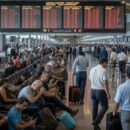
Airports — once symbols of convenience and global connectivity — have turned into scenes of frustration: overcrowded concourses, long queues at customer‑service desks, overburdened staff scrambling to rebook flights or issue refunds.
For many, the dreams of holiday trips, weddings, family reunions or business deals have evaporated on arrival at the airport.
In India, the national regulator Directorate General of Civil Aviation (DGCA) has launched a formal probe into IndiGo’s operational failures. The regulator has asked IndiGo for a detailed explanation along with a recovery plan.
Meanwhile, regulatory pressure on airlines to maintain strict pilot rest‑time compliance remains firm — a move motivated by recent global scrutiny of aviation safety. The disruption illustrates the tension between passenger convenience and operational safety.
Across other Asian countries, some civil aviation authorities have issued advisories urging airlines to stabilise schedules, improve communication and prepare contingency plans. But with demand surging, infrastructure and staffing remain stretched. Several industry analysts now warn of recurring episodes of such travel collapse unless airlines and regulators coordinate more effectively.
This wave of cancellations and delays reaches far beyond the airport lounges.
For a region like Asia — undergoing rapid aviation expansion — these disruptions signal that growth may be outpacing systemic readiness.
This widespread disruption across Asia is not just a temporary glitch — it is a wake‑up call. The rapid growth of air travel demand, especially post‑pandemic, must be matched by robust infrastructure, better staffing, and smarter regulation.
Flying should not mean a gamble. Airlines and regulators must coordinate to ensure that safety protocols, crew‑rest rules and flight‑demand forecasting evolve in tandem. At present, the imbalance is too sharp — leaving travellers, economy and trust in limbo.
For thousands stranded in airports across Asia this week, travel has become a nightmare. Holidays cancelled. Dreams postponed. Businesses disrupted. The skies — once a gateway to hope and connection — have turned into a cage of uncertainty.
Yet, this crisis may also fuel change. As frustration mounts among passengers, regulators and airlines may be forced to rethink flight‑demand strategies, ramp up staffing and build stronger safety‑first systems.
If done right, this chaos could become a turning point for more dependable air travel across Asia — where passports once again open doors to hope, not heartbreak.
Advertisement
Tags: airline passengers stranded Asia, Asia flight cancellations, Asia flight delays, Beijing airport delays, Hong Kong flight chaos

















Saturday, February 28, 2026

Saturday, February 28, 2026

Saturday, February 28, 2026

Saturday, February 28, 2026
Saturday, February 28, 2026
Saturday, February 28, 2026

Saturday, February 28, 2026

Saturday, February 28, 2026