

Azamara Cruises Redefines Travel, From Egypt’s Ancient Majesty to Brazil’s Golden Coast, a Voyage That Transforms the Way the World Explores

Published
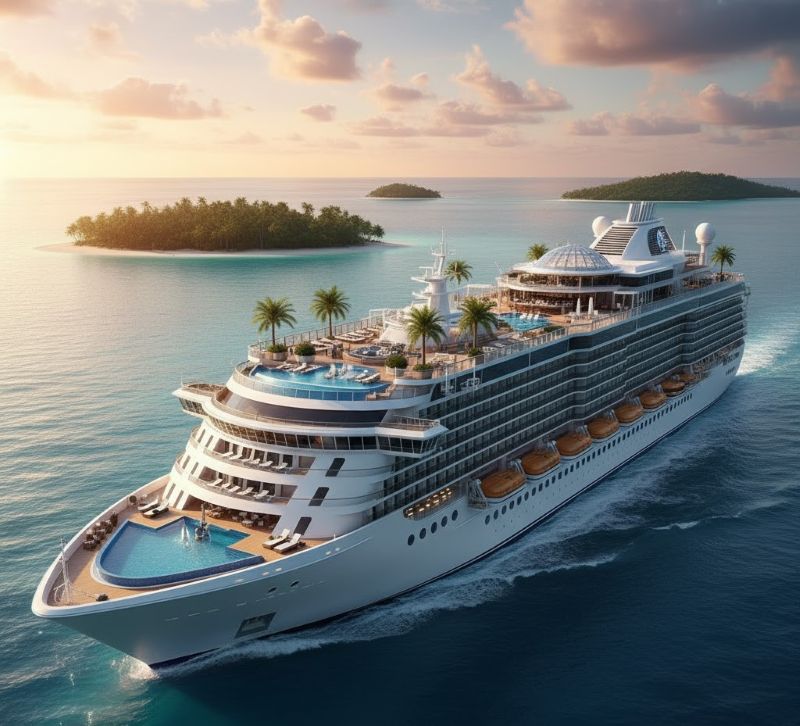 Image generated with Ai
The unveiling of the Winter 2027–2028 Cruise Itineraries was being regarded as a landmark moment in global travel, setting an entirely new rhythm for ocean exploration. Scheduled to unfold from October 16, 2027, to April 28, 2028, this extraordinary season was described as a visionary experiment in how the world experiences travel. Rather than rushing from port to port, the program was said to invite travelers to slow down, breathe in the soul of each destination, and rediscover the timeless beauty of the sea through immersion and authenticity.
These meticulously planned journeys were designed to touch every corner of the world, linking continents, cultures, and climates into one harmonious flow. The itineraries stretched from the sun-kissed coasts of Brazil, embracing São Francisco do Sul, Paranaguá, Porto Belo, and Rio Grande, to the mystical landscapes of Egypt, where the ancient majesty of Alexandria and Luxor would reawaken under the soft glow of desert light. Across the South Pacific, the routes were set to weave through Fraser Island and Gladstone in Australia, destinations known for their natural purity and serene horizons.
Advertisement
Advertisement
Farther across the Atlantic, the crystalline charm of Bimini in the Bahamas was expected to attract those enchanted by turquoise waters and coral wonders, while Algiers in Algeria promised travelers a blend of Moorish grace and Mediterranean warmth. Beyond these new additions, the season was also bringing back forgotten jewels such as Sandakan in Malaysia, New Orleans in the United States, and Coron in the Philippines, restoring them to the global travel map with renewed cultural energy.
Adding to this mosaic of discovery, the itineraries offered extended Asian voyages uniting Vietnam, Hong Kong, and Japan, allowing travelers to explore the region’s vibrant ports and deep traditions in continuity. Collectively, these destinations represented a reawakening of world travel, where every port became a story, every horizon a connection, and every voyage a living reminder that travel was never just about movement — it was about meaning.
Advertisement
Advertisement
This new era of cruising was thus being portrayed as more than an itinerary; it was seen as a philosophy of mindful exploration, urging the world to move slower, stay longer, and travel deeper than ever before.
Encouraging Early Adventurers
Advertisement
Advertisement
Industry observers suggested that travelers who planned their voyages early were being offered attractive incentives, rewarding foresight with remarkable benefits. By reserving their journeys in advance, travelers could reportedly receive up to 30% savings along with an additional value of $4,500, giving them an early advantage to secure the most sought-after routes.
This initiative was viewed as more than a marketing strategy; it was considered a gesture to restore confidence in global travel after years of unpredictability. The travel industry seemed to recognize that modern explorers valued security, flexibility, and personalized experiences. Hence, early reservations were designed to ensure access to premium itineraries and exclusive on-shore activities, creating a sense of assurance and excitement long before departure.
The move was interpreted as a thoughtful step toward strengthening traveler trust, while at the same time supporting the idea that planning ahead could enhance both comfort and value in the world of long-haul voyages. It marked an important shift where modern travelers were encouraged to balance spontaneity with stability.
Global Implications for the Travel Industry
The unveiling of these itineraries was predicted to leave a lasting impact on the international travel landscape. The Winter 2027–2028 season, stretching from October 16, 2027, to April 28, 2028, was designed to reshape tourism patterns by spreading interest throughout the entire year. The season’s focus on off-peak exploration promised to reduce overcrowding in traditional summer hotspots, offering instead a balanced approach to tourism.
Industry analysts observed that this would lead to economic redistribution, especially for regions that remained temperate and welcoming during winter. Such destinations would benefit from an influx of global travelers seeking warmth and cultural depth outside the conventional travel calendar.
Advertisement
Advertisement
Among the anticipated outcomes were:
- Enhanced cross-regional tourism collaboration, encouraging shared economic growth
- Expansion of sustainable tourism practices, minimizing ecological footprints
- Increased visibility for emerging destinations, empowering lesser-known ports
- Deepened cultural exchange, strengthening bonds between locals and global visitors
This transformation, according to experts, would redefine how travelers perceive global mobility. It would not only diversify travel habits but also stimulate inclusivity and sustainability — the cornerstones of the future travel era.
Extended Journeys for the Modern Explorer
The season was said to have been thoughtfully crafted to appeal to slow travelers — those who sought meaning in continuity rather than movement. One of the most exciting developments came in the form of 30 pre-designed back-to-back voyages, offering passengers the ability to explore multiple regions seamlessly without the complexity of rebooking or transferring vessels.
A standout example was the 28-night journey that combined two distinct experiences: a 14-night voyage through Vietnam and Hong Kong, followed by a 14-night Japan Intensive expedition. Together, these itineraries covered 20 culturally rich ports across Asia, weaving a narrative of history, modernity, and natural wonder.
Such offerings mirrored the global traveler’s growing preference for slow, immersive travel. The journeys were no longer about checking off destinations but about living within them — learning local traditions, savoring regional flavors, and witnessing communities in their natural rhythm. This evolution was redefining the modern explorer’s mindset, turning exploration into a form of self-reflection.
Advertisement
Advertisement
In a world increasingly conscious of sustainability, these extended voyages demonstrated how responsible tourism could coexist with adventure, blending cultural appreciation with ecological respect.
Rediscovering the Lost Ports of the World
A particularly emotional element of the Winter 2027–2028 program lay in its decision to revive forgotten ports — locations that had once been major gateways of trade and culture but had since faded from cruise maps. These included Porto Belo and Rio Grande in Brazil, Sandakan in Malaysia, New Orleans in the United States, and Coron in the Philippines.
The return to these ports was seen as a symbolic reunion with the world’s maritime heritage. Each location carried a legacy of resilience and identity — from the Creole flavors and jazz rhythms of New Orleans to Coron’s enchanting lagoons and shipwreck diving sites. The inclusion of these ports in the upcoming season reflected a deliberate attempt to reconnect travelers with authentic local experiences and communities that had been overshadowed by modern tourism trends.
This revival was more than nostalgic; it was strategic. By drawing global attention back to heritage ports, the itineraries were breathing new life into local craftsmanship, cultural preservation, and artisanal economies. The ripple effect was expected to reach small businesses and family-run ventures, giving them renewed visibility and income.
For the broader global travel industry, this trend reinforced a powerful truth — that heritage and authenticity remain tourism’s most valuable assets. The revival of these lost ports symbolized a reconnection between travelers and the world’s oldest coastal narratives, reshaping the emotional geography of modern exploration.
Advertisement
Advertisement
Six New Horizons at Sea
Another defining moment of the 2027–2028 cruise lineup was the introduction of six maiden ports, each representing a fresh invitation to explore the world’s lesser-known edges. These destinations included São Francisco do Sul and Paranaguá in Brazil, Fraser Island and Gladstone in Australia, Bimini in the Bahamas, and Algiers in Algeria.
Each of these newly added ports carried distinct charm and character. Bimini, celebrated for its turquoise waters and rich marine biodiversity, was said to attract those drawn to oceanic adventures and deep-sea exploration. Fraser Island, the world’s largest sand island, promised travelers the serenity of freshwater lakes and golden dunes untouched by mass tourism. Meanwhile, Algiers, blending Moorish elegance with colonial architecture, stood as a living testament to history’s layered beauty.
Beyond the allure of novelty, the inclusion of these ports was considered a strategic expansion in global tourism. It was expected to stimulate regional economies, create local employment, and encourage the practice of eco-conscious exploration in areas previously unexposed to large-scale cruising.
This initiative marked a deliberate shift from commercial mass travel toward authentic discovery, offering travelers a chance to step beyond the familiar and engage with the world’s cultural diversity in its purest form.
Egypt’s Everlasting Allure Reimagined
Advertisement
Advertisement
One of the most celebrated returns within the new season was that of Egypt, whose timeless magnetism had always captivated global travelers. The reintroduction of Alexandria and Luxor to the itinerary signaled a return to the cradle of civilization, where the Nile River continued to carry echoes of human history.
Scheduled between October and February, when the Egyptian climate turned cool and comfortable, these voyages were crafted to let visitors walk through time. Travelers would be able to wander amid ancient temples, royal tombs, and pharaonic monuments, experiencing a fusion of archaeology and serenity under the desert’s golden light.
The renewed focus on Egypt’s heritage was projected to rejuvenate regional tourism and generate sustainable opportunities for local communities. By allowing longer port stays in Luxor and Alexandria, the itineraries invited guests to witness Egypt’s enduring cultural heartbeat after sunset — when marketplaces, music, and cuisine reflected the nation’s true spirit.
This revival of Egyptian destinations was seen not merely as a tourist venture but as a journey into humanity’s collective memory, reconnecting travelers with civilizations that laid the foundation for art, science, and philosophy.
Charting a New Definition of Ocean Exploration
The Winter 2027–2028 cruise program was being described as one of the most visionary projects in recent travel history. Comprising 87 distinct voyages across multiple continents and climates, it promised to transform the essence of sea travel. From the sun-kissed coastlines of Brazil to the ancient landscapes of Egypt, and from Asia’s vibrant ports to the Pacific’s tranquil islands, these journeys redefined what exploration could mean.
Advertisement
Advertisement
What made this season distinct was its emphasis on time-rich experiences rather than the quantity of ports visited. With over 150 late-night departures and 60 overnight stays, travelers would gain access to local nightlife, regional cuisines, and traditional performances — aspects of culture that daytime visits often missed.
The program’s guiding philosophy revolved around connection over collection, prioritizing immersion in local customs, stories, and flavors over superficial sightseeing. This shift symbolized a maturing mindset among travelers: that authentic exploration is not about moving faster, but about feeling deeper.
The Dawn of a Slower Journey
The Winter 2027–2028 itineraries were said to have been designed with one vision — to slow down travel. Operating from October 16, 2027, to April 28, 2028, the season embraced a new rhythm of exploration that emphasized immersion, authenticity, and cultural depth. By including extended port stays, overnight visits, and late-night departures, travelers were invited to witness each destination’s heartbeat long after the sun had set.
This concept represented a broader global trend toward experiential travel, where journeys were no longer measured by distance but by emotional connection. The season stood as a tribute to time-rich exploration, allowing travelers to absorb each moment fully — from the music echoing through harbor towns to the flavors simmering in local kitchens.
It reflected an industry-wide awakening: travel was transforming from an act of movement into an art of meaning.
Advertisement
Advertisement
The New Era of Sea Voyages Begins
The Winter 2027–2028 Cruise Itineraries were being hailed as a groundbreaking moment for the global travel industry, setting the stage for a new era of sea exploration. Running from October 2027 through April 2028, this season was seen as a turning point where travelers would rediscover the true essence of slow travel. Designed with thoughtful pacing, extended stays, and deeper engagement, the itineraries aimed to let travelers experience destinations beyond their surface beauty.
Experts suggested that this unveiling marked not just the beginning of another travel season, but the dawn of a redefined philosophy of exploration — one that valued connection over completion, and emotion over itinerary. With routes stretching across continents, cultures, and climates, the Winter 2027–2028 voyages were set to reshape global tourism, proving that the future of travel lies not in how far one goes, but how deeply one experiences.
Advertisement
