
Delta Air Lines Flight DL1286, a Boeing 717-200 to Atlanta Diverts Back to Birmingham Shuttlesworth International Airport, United States: What Happened in the Air

Updated
Published
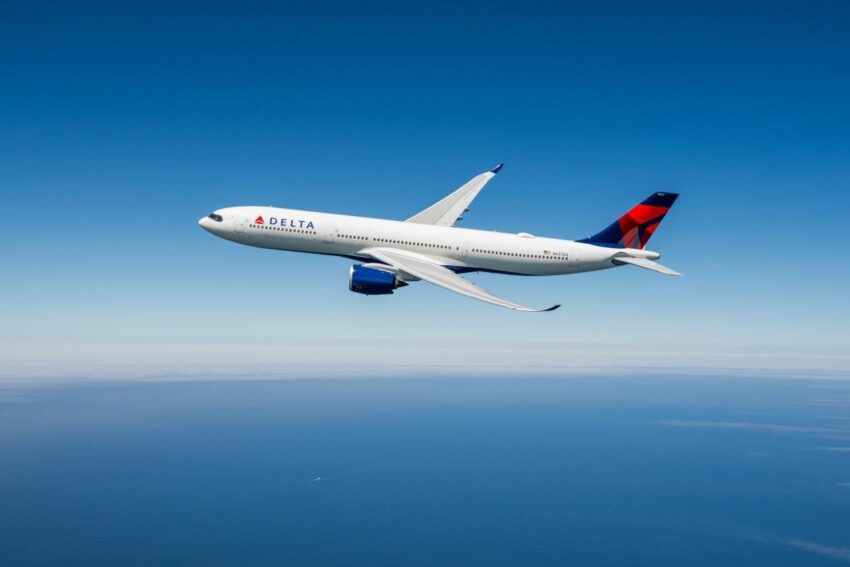
Delta Air Lines Flight DL1286, a Boeing 717-200 to Atlanta Diverts Back to Birmingham Shuttlesworth International Airport after a mid-air operational change disrupted its planned arrival into Atlanta on 14 June 2026. The aircraft, operating a routine Jackson–Atlanta service, altered course during the descent phase when sequencing pressures and airspace congestion affected its ability to continue safely into the hub. Tracking patterns consistent with FlightRadar24 and FlightAware indicate a controlled diversion rather than an emergency situation, with stable flight performance maintained throughout. The Delta Air Lines Flight DL1286, a Boeing 717-200 to Atlanta Diverts Back to Birmingham Shuttlesworth International Airport sequence reflects standard hub management procedures.
Delta Air Lines Flight DL1286, a Boeing 717-200 operating from Jackson, Mississippi to Atlanta, diverted to Birmingham–Shuttlesworth International Airport after a precautionary operational decision linked to congestion and sequencing constraints in Atlanta airspace, according to tracking patterns consistent with FlightRadar24 and FlightAware, with no confirmed emergency reported.
What happened to Delta Flight DL1286 during its Jackson to Atlanta journey?
Delta Air Lines Flight DL1286, operated by a Boeing 717-200 registered N971AT, departed Jackson–Medgar Wiley Evers International Airport on a scheduled service to Atlanta but diverted mid-route to Birmingham–Shuttlesworth International Airport after altering its arrival path during the latter phase of flight. Tracking behaviour observed on FlightRadar and FlightAware shows the aircraft shifting westward from its expected Atlanta-bound corridor before executing a safe landing in Birmingham instead of continuing to its intended hub destination.
The diversion occurred during a standard regional sector where aircraft typically integrate into Atlanta’s dense arrival sequencing system, one of the most tightly managed air traffic environments in the United States. While no emergency indication has been confirmed, the flight trajectory suggests a controlled rerouting decision rather than a technical malfunction or instability in flight performance.
Advertisement
Advertisement
Why do flights into Atlanta frequently face diversion decisions?
Atlanta Hartsfield–Jackson International Airport operates as one of the busiest aviation hubs globally, where continuous inbound and outbound traffic creates tightly compressed sequencing windows that can quickly become constrained during peak operational periods. Flights like DL1286 often face these pressures when arrival timing does not align with available landing slots, resulting in airborne holding or early diversion to maintain safety margins.
According to FAA operational guidance, airlines must ensure aircraft maintain sufficient fuel reserves and stabilised approach conditions, which often leads to proactive diversion decisions when congestion exceeds safe thresholds. In this case, FlightAware tracking patterns suggest the aircraft avoided extended holding over Atlanta, indicating a preventive operational decision designed to preserve fuel efficiency and reduce airspace congestion risks.
Advertisement
Advertisement
Why was Birmingham–Shuttlesworth Airport selected as the diversion point?
Birmingham–Shuttlesworth International Airport (BHM) serves as a strategic alternate airport for flights operating into Atlanta due to its geographical proximity, available runway capacity, and ability to accommodate narrow-body aircraft such as the Boeing 717-200 without operational restrictions. Its position within the southeastern US air corridor makes it an efficient diversion point when Atlanta’s airspace becomes saturated or arrival sequencing cannot be maintained.
For Delta Air Lines, Birmingham is a recurring alternate within its hub-and-spoke network, particularly for short and medium-haul flights feeding into Atlanta. Data patterns observed on FlightRadar24 show that diversions into BHM frequently coincide with congestion or flow-control restrictions at ATL, reinforcing its role as a stabilising buffer airport that helps maintain system-wide operational continuity.
Was there any emergency declared on Flight DL1286?
There is no indication that Flight DL1286 declared an emergency during its diversion to Birmingham, and available tracking data shows a stable and controlled flight profile throughout the journey. No abnormal altitude changes, emergency transponder codes, or rapid descent behaviour were recorded, which are typically associated with mechanical failures or onboard distress situations.
Aviation safety protocols governed by the FAA require pilots to prioritise safe landing conditions, fuel management, and traffic sequencing when evaluating diversion decisions. In this instance, the aircraft’s behaviour aligns with precautionary rerouting procedures commonly used in high-density airspace environments such as Atlanta, where operational constraints can escalate quickly during peak traffic periods.
Delta Air Lines Flight DL1286, a Boeing 717-200 to Atlanta Diverts Back to Birmingham Shuttlesworth International Airport ultimately diverted due to operational constraints linked to congestion and sequencing limitations within Atlanta’s high-traffic airspace rather than any confirmed technical failure. The cause centres on precautionary decision-making designed to maintain fuel margins and avoid extended airborne holding over the destination airport. The answer confirms a controlled rerouting aligned with standard FAA-compliant procedures used in busy hub environments. The reason reflects routine airline network management, where Birmingham Shuttlesworth International Airport serves as a reliable alternate when Atlanta arrival conditions temporarily exceed safe operational thresholds.
What does this diversion reveal about US hub congestion pressures?
The diversion of DL1286 highlights the structural congestion challenges within Atlanta’s airspace system, where continuous high-volume traffic creates cascading delays that can affect regional flight networks across multiple states. Even small disruptions in sequencing or arrival timing can force airlines to reroute aircraft to secondary airports to preserve safety and operational efficiency.
Real-time aviation tracking data from FlightRadar24 and FlightAware shows that diversions to airports like Birmingham are a consistent feature of southeastern US operations, particularly during peak demand or flow-control events. In this context, DL1286 reflects not an isolated incident but a predictable outcome of managing one of the most heavily trafficked aviation hubs in the world, where safety and system stability take priority over direct routing.
Advertisement
