Published on March 3, 2026
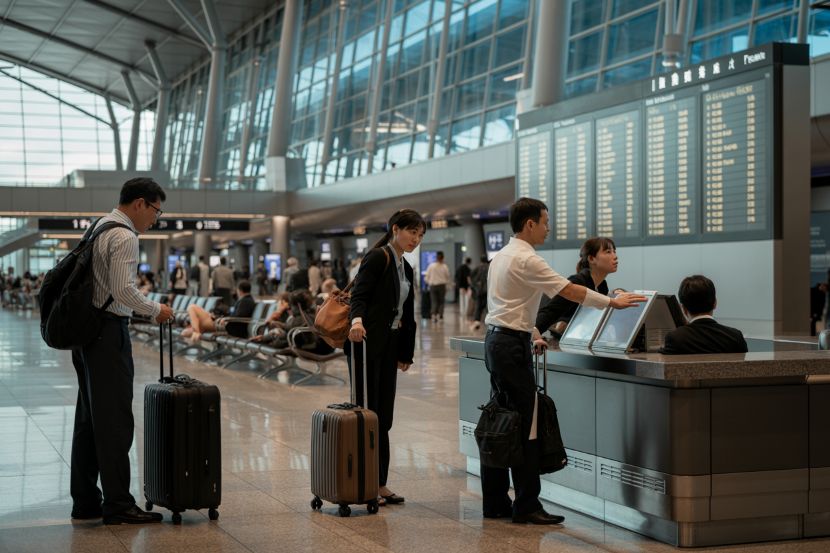
Image generated with Ai
Thailand’s tourism industry has moved swiftly to shield travellers from the ripple effects of escalating tensions in the Middle East, with authorities activating a dedicated crisis unit to manage disruptions across Bangkok, Phuket, Chiang Mai, Krabi and Suvarnabhumi Airport. The newly operational centre is designed to coordinate responses to widespread flight cancellations affecting routes linked to the United Arab Emirates, Israel, Saudi Arabia, Kuwait and Qatar.
As airlines including Emirates, Qatar Airways and Etihad Airways suspend or reroute services due to regional airspace restrictions, Thailand’s tourism authorities are working to protect visitor confidence and ensure stranded passengers receive timely support. While the immediate impact has been concentrated on Middle Eastern routes, the broader focus remains on sustaining Thailand’s reputation as a safe and resilient destination during global uncertainty.
Thailand’s tourism leadership has established a Tourism Crisis Monitoring Centre to consolidate information, assess real-time developments, and coordinate assistance measures nationwide. The unit functions as a strategic operations hub, linking airports, airlines, overseas tourism offices and domestic agencies.
The activation follows a wave of airspace closures across parts of the Middle East, prompting international carriers to suspend or adjust services. Thai authorities have confirmed that 59 international flights operating to or through the Middle East have been cancelled. These cancellations affect key gateways including:
Advertisement
Airlines impacted include Emirates, Qatar Airways, Etihad Airways, Gulf Air, Kuwait Airways, Air Arabia, flydubai, El Al, Arkia Israeli Airlines, and Saudi Arabian Airlines.
Despite the operational strain, officials have emphasised that Thailand’s aviation and tourism infrastructure remains fully functional for other global routes.
Advertisement
Advertisement
The disruption primarily affects travellers connecting between Thailand and the Gulf region. However, the timing coincides with the Ramadan fasting period, traditionally a quieter season for outbound leisure travel from several Middle Eastern markets. This seasonal factor has somewhat softened the broader economic shock.
Thailand has long considered the Middle East a high-value tourism segment, especially for luxury travellers visiting Phuket, wellness seekers heading to Krabi, and medical tourists travelling to Bangkok. In recent years, Gulf carriers have played a significant role in boosting connectivity between Thailand and cities such as Dubai, Doha, Abu Dhabi, Riyadh and Tel Aviv.
While current cancellations pose short-term challenges, tourism planners are simultaneously preparing recovery campaigns aimed at restoring travel flows once airspace restrictions are lifted.
Thai airport authorities have activated contingency plans to minimise inconvenience for passengers caught in the disruption.
At Suvarnabhumi Airport, additional staff have been deployed, temporary assistance counters established, and waiting areas expanded. Drinking water and basic facilities have been arranged for passengers awaiting rebooking or onward travel.
Airlines have largely taken responsibility for accommodation arrangements for affected travellers, resulting in a limited number of passengers remaining inside terminals overnight.
Across Phuket, Chiang Mai, Krabi and Don Mueang, local tourism offices are coordinating with:
Global aviation regulators, including international air traffic authorities, have issued advisories recommending airlines avoid high-risk airspace. Travellers should expect rerouting or longer flight durations where services continue operating.
The Tourism Crisis Monitoring Centre is not solely focused on reactive measures. Authorities have reportedly prepared both short-term and medium-term frameworks covering:
Domestic tourism teams are working with provincial agencies to stimulate internal travel demand. This includes promotional campaigns targeting Thai residents and alternative international markets less affected by the Middle East situation.
Thailand’s tourism strategy in recent years has emphasised resilience following the COVID-19 pandemic. Crisis preparedness frameworks developed during that period are now being adapted to address geopolitical disruptions.
The current airspace closures highlight the interconnected nature of modern travel. Middle Eastern hubs such as Dubai, Doha and Abu Dhabi serve as major global transit points linking Asia, Europe and Africa. Any restriction in these corridors inevitably affects long-haul travel patterns worldwide.
International aviation data indicates that Gulf carriers collectively handle millions of transit passengers annually, making temporary suspensions significant for tourism-dependent economies.
Thailand’s swift coordination reflects lessons learned from previous global disruptions, including volcanic ash crises in Europe and pandemic-era border closures.
Despite the turbulence, Thailand remains fully open to visitors from Europe, North America, East Asia and other regions unaffected by Middle Eastern airspace issues.
Tourism authorities are prioritising:
By reinforcing operational readiness across Bangkok, Phuket, Chiang Mai and Krabi, Thailand aims to demonstrate its ability to manage external shocks without compromising visitor safety or hospitality standards.
Once regional airspace restrictions ease, authorities plan to accelerate confidence-restoration initiatives targeting Gulf markets. These may include collaborative airline promotions, joint marketing campaigns and familiarisation trips for travel trade partners.
Thailand’s tourism ecosystem — spanning luxury resorts, cultural destinations, medical facilities and wellness retreats — remains well positioned to regain momentum. Historical trends show that travel demand from Middle Eastern markets rebounds strongly once connectivity is restored.
For now, the Tourism Crisis Monitoring Centre will continue monitoring developments and issuing timely updates to industry stakeholders, reinforcing Thailand’s commitment to responsible tourism governance during uncertain times.
Advertisement
Tags: Bangkok airport disruption, Gulf airlines suspension, Middle East flight cancellations, Phuket travel update, Thailand aviation news


















Tuesday, March 3, 2026

Tuesday, March 3, 2026

Tuesday, March 3, 2026
Tuesday, March 3, 2026

Tuesday, March 3, 2026
Tuesday, March 3, 2026

Tuesday, March 3, 2026