

Big Breaking: Powerful 7.7 Magnitude Earthquake Rocks Tourist Hotspot in Myanmar, Vietnam, Thailand, Urgent Travel Advisory Rattles Asian Tourism Industry

Updated
Published
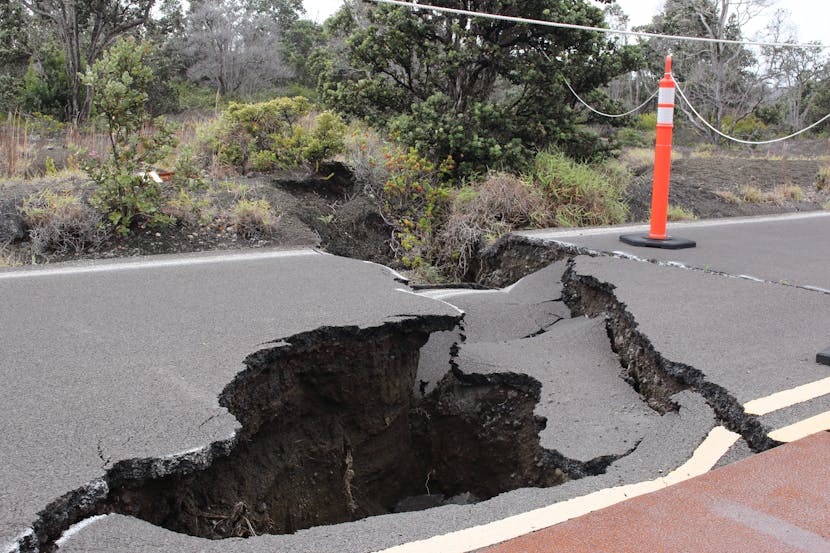 Image generated with Ai
A powerful earthquake measuring 7.7 on the Richter scale struck Myanmar and parts of Thailand on March 28, according to the United States Geological Survey (USGS). The quake occurred at 12:50 PM local time, with the epicenter located just 16 kilometers northwest of Sagaing, Myanmar, at a shallow depth of 10 kilometers—intensifying its surface-level impact.
Earlier, the German Research Centre for Geosciences (GFZ) had reported varying magnitudes, initially registering the quake at 6.9 in Myanmar and 7.3 in Bangkok, Thailand and Vietnam. The seismic event was pinpointed at 21.9 degrees north latitude and 95.65 degrees east longitude.
The tremors were strongly felt in central Bangkok, where alarm systems in high-rise buildings and hotels were triggered. Hundreds of residents and tourists evacuated to the streets in panic, while reports surfaced of water sloshing out of swimming pools in several parts of the city.
In response to the shaking, several metro and railway lines in Bangkok were temporarily suspended as a precaution, though no immediate reports of major damage or casualties have been confirmed.
Advertisement
Advertisement
The shallow depth of the quake, combined with its magnitude, contributed to its wide-reaching effects, rattling nerves across the region and raising questions about urban preparedness in Southeast Asia’s major cities. Authorities are continuing to monitor the situation closely, with aftershocks possible in the coming hours.
On the morning of March 28, 2025, Southeast Asia was shaken—literally. A powerful earthquake measuring 7.7 on the Richter scale struck near Mandalay, Myanmar, sending tremors across borders and triggering panic in cities as far as Bangkok, Thailand.
Advertisement
Advertisement
The quake, recorded by the German Research Centre for Geosciences (GFZ), occurred at a shallow depth of just 10 km (6.2 miles), intensifying its surface-level impact. With its epicenter near Myanmar’s cultural capital, Mandalay, the seismic jolt reverberated through the travel industry, raising red flags across airports, hotels, and tourism authorities in the region.
Tourist destinations rattled: Mandalay and beyond
Mandalay, a cornerstone of Myanmar’s cultural tourism circuit, is home to ancient monasteries, royal palaces, and bustling riverfronts. While initial reports from Myanmar have not yet confirmed casualties or infrastructural damage, the proximity of the epicenter to densely populated and tourism-dependent zones is causing widespread concern.
Tour operators in Bagan, Inle Lake, and Pyin Oo Lwin are urgently assessing the situation, with some cancelling or rerouting tours. Hotel staff across Mandalay reported feeling intense shaking, with guests rushing outside in fear—some abandoning accommodations altogether.
Bangkok shaken—literally and figuratively
The tremors did not stop at Myanmar’s borders. In Bangkok, over 1,000 kilometers away, skyscrapers swayed and pool water sloshed violently. Hundreds of people poured into the streets in panic, many evacuating hotels, offices, and shopping complexes.
Advertisement
Advertisement
Thailand’s tourism authorities moved swiftly, conducting structural inspections on high-rise hotels and issuing public advisories. While no damage has been reported in the Thai capital, the psychological impact has been significant—especially for international tourists already cautious following recent weather disruptions and political protests.
Tourism sector braces for cancellations and rebookings
The timing couldn’t be worse. March marks a peak inbound travel period for Southeast Asia, as global tourists flock in for spring holidays and festivals. With the earthquake dominating headlines and social media feeds, travel uncertainty is spreading.
Already, major tour operators and booking platforms have reported a spike in cancellations and postponements, particularly for Myanmar itineraries. Meanwhile, Thai domestic tourism is seeing a shift in bookings away from Bangkok to lower-risk coastal areas such as Krabi and Koh Samui.
Cruise companies operating on the Irrawaddy River have halted operations for 48 hours pending damage assessments. Riverbank structures, including jetties and floating hotels, are being checked for stress fractures.
Airports on high alert, airlines monitor aftershocks
Advertisement
Advertisement
While Myanmar’s main airport near Mandalay has not reported operational damage, aviation authorities remain on alert for potential aftershocks. Bangkok’s Suvarnabhumi and Don Mueang airports issued precautionary notices to airlines, though no flight disruptions were recorded at the time of reporting.
Low-cost carriers such as AirAsia, Thai Lion Air, and Myanmar Airways are watching the situation closely. If seismic activity continues, route suspensions could follow—particularly to interior Myanmar destinations.
Safety perceptions shift overnight
Southeast Asia is no stranger to natural disasters, but events like this can significantly shift tourist confidence. Global travelers are quick to reconsider destinations following seismic activity, especially in regions with limited emergency infrastructure.
Tourism boards in Myanmar and Thailand now face a dual challenge: managing immediate safety protocols and launching damage-control campaigns to protect future bookings.
Emergency travel advisories are likely to be updated in the coming days, particularly from the U.S. State Department, Canada, Australia, and the EU. Travel insurance providers are also reviewing coverage terms for Myanmar-bound travelers, with many expected to activate emergency clauses.
Advertisement
Advertisement
Tour operators activate contingency plans
Responsible travel companies in the region are enacting standard earthquake response protocols. These include:
- Relocation of tourists to safe zones or ground-level accommodations
- Emergency contact distribution
- Evacuation route orientation
- On-the-ground safety briefings for tour groups
Some agencies have already begun rerouting itineraries away from Mandalay, opting for less affected cities such as Yangon and Naypyidaw—though even these options are being reviewed hour by hour.
The path forward: Safety, recovery, and traveler trust
While the full scale of the damage is still unknown, the March 28 quake is a stark reminder of how fragile the Southeast Asian tourism ecosystem remains in the face of natural disasters.
Myanmar’s tourism board is expected to release an official statement shortly, addressing both infrastructure safety and traveler concerns. Hoteliers across the country are urged to perform structural checks and communicate transparently with international partners.
Advertisement
Advertisement
For Bangkok, the episode is a wake-up call for disaster readiness in vertical urban environments. With tourists continuing to favor high-rise accommodations and rooftop experiences, safety reassurances will be key to sustaining trust.
How should travelers respond now?
- Check advisories: Monitor real-time travel advisories from official sources like embassies and tourism boards.
- Communicate with tour providers: Request contingency plans and updates on itinerary changes.
- Review insurance: Make sure your travel insurance covers natural disasters and includes emergency evacuation.
- Stay informed: Track reliable seismic updates from GFZ, USGS, and regional disaster management centers.
Final word: Tourism in a tremor-prone region
Southeast Asia’s charm lies in its diversity, culture, and vibrant natural beauty—but these very elements also come with risk. Earthquakes, cyclones, political unrest—each has the potential to shift the region’s travel narrative in an instant.
As the region awaits more clarity from Myanmar, one thing is clear: for tourism to rebound from events like this, the focus must move from damage control to resilience-building—starting with infrastructure safety, emergency response training, and transparent, traveler-first communication.
This earthquake may have shaken the ground, but the region’s tourism leaders now face the greater task of rebuilding confidence—one traveler at a time.
Advertisement
Advertisement
What’s More in Travel And Tour World
Read Travel Industry News in 104 different regional language platforms
Get daily dose of news from Travel Industry, by subscribing to Travel And Tour World newsletters. Subscribe here.
Watch Travel And Tour World Interviews here.
Read more Travel News, Daily Travel Alert, and Travel Industry News on Travel And Tour World only.
Advertisement
