
Vietnam and Thailand Drive a New Hotel Boom as Global Brands Race Across Southeast Asia

Published
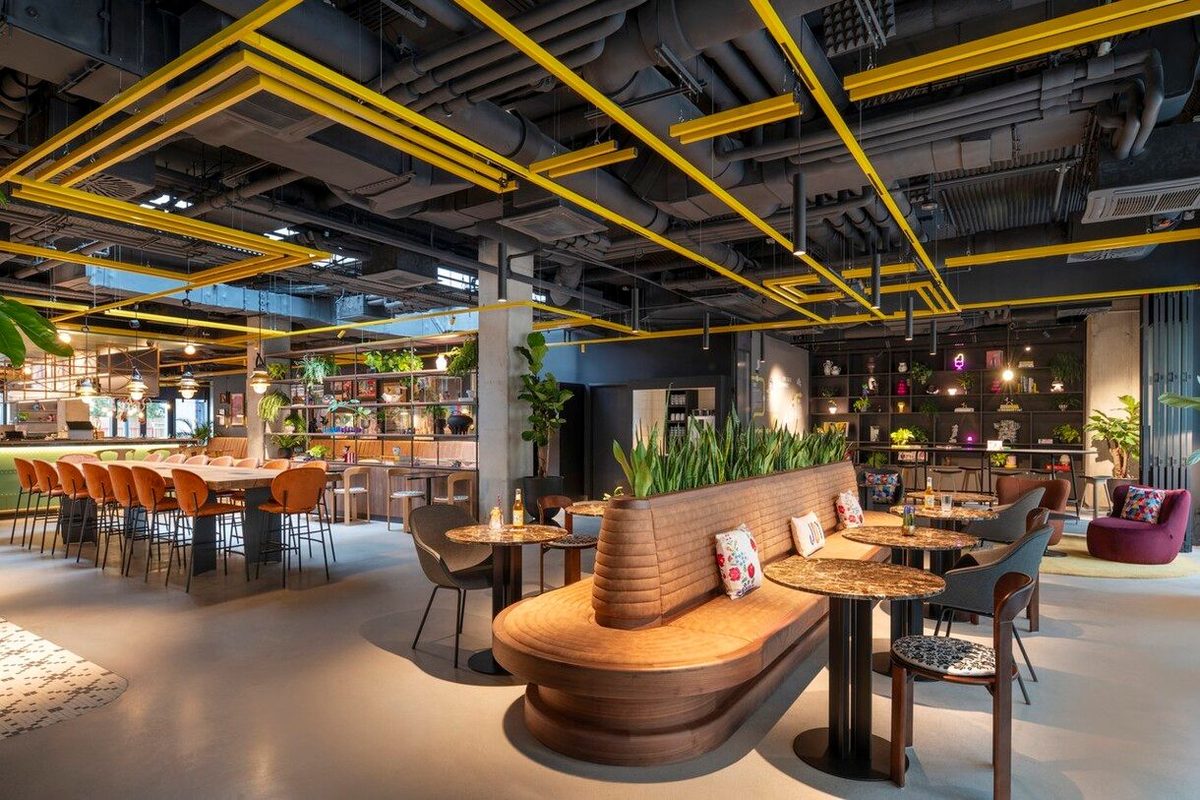
Vietnam’s hotel boom is just beginning. With the surge in global travel and the expansion of Southeast Asian operations, global hotel chains are coming to Vietnam at a rapid rate. Vietnam welcomed 21.2 million international guests in 2025, a new record high, up 20.4% from 2024, when Thailand welcomed 32.97 million guests and Indonesia continued to grow its vacationer market and resort economy. Marriott, Hilton, Hyatt, Accor and IHG are building their networks in all three mentioned countries. The building now goes beyond the major travel hubs to Hoi An, Lombok, Phu Quoc, and Nha Trang among others. Guests now have access to a more robust selection of luxury and branded staying options throughout Southeast Asia.
A New Contest For Southeast Asia’s Hotel Map
The latest figures show why hotel groups are intensifying their regional push. Vietnam National Authority of Tourism reported nearly 21.2 million international visitors in 2025, a record 20.4% increase from 2024.
Thailand remained the larger market, welcoming 32.97 million international visitors during the year, according to the Tourism Authority of Thailand and Thailand’s tourism authorities. Indonesia presents a different proposition, combining international demand with an enormous domestic travel market.
Data from BPS-Statistics Indonesia shows that December alone brought 1.41 million international arrivals and 105.98 million domestic trips, while star-hotel occupancy stood at 56.12%.
Advertisement
Advertisement
That distinction matters for hotel developers. Thailand offers scale and maturity, Indonesia offers depth and destination diversity, while Vietnam offers particularly strong recent international growth.
| Market | 2025 tourism signal | What it means for hotels |
|---|---|---|
| Vietnam | Nearly 21.2m international arrivals | Rapid demand growth supports new branded supply |
| Thailand | 32.97m international arrivals | Mature market continues attracting premium brands |
| Indonesia | 8.53m arrivals in Jan-Jul; 714m domestic trips | Huge domestic base supports resort diversification |
| Vietnam | 17.8m+ air arrivals | Strong dependence on international connectivity |
| Indonesia | 56.12% star-hotel occupancy in Dec. 2025 | Supply-demand balance remains important |
Vietnam Turns Visitor Growth Into Hotel Demand
Vietnam’s hotel boom is particularly striking because the country has moved beyond simple post-pandemic recovery. The 2025 visitor figure was not merely a return to previous levels. It represented a new record, with arrivals 20.4% above 2024 and 17.8% above 2019.
Advertisement
Advertisement
The economic backdrop also favours accommodation investment. Vietnam estimated accommodation and food-service revenue at 843.1 trillion Vietnamese dong in 2025. That represented a 14.6% annual increase, while travel-service revenue rose 20.2% to about 93.9 trillion dong.
The country’s geography gives developers another advantage. Hanoi and Ho Chi Minh City provide large urban markets, while Da Nang, Nha Trang, Hoi An and Phu Quoc connect international demand with coastal leisure. Ha Long Bay and northern Vietnam add another dimension through wellness, nature and cruise-oriented tourism.
Hotel companies are consequently moving beyond the traditional concentration of major Vietnamese cities. Marriott’s current opening pipeline includes an 281-room Hoi An Marriott Resort & Spa, a 91-room Marriott Executive Apartments property in Da Nang and new Fairfield and Moxy properties at Hon Thom, Phu Quoc.
Hilton is pursuing an even broader strategy. Its 2025 Vietnamese pipeline included 29 properties following a 14-hotel Tru by Hilton programme. Hilton also announced plans that would significantly expand its Vietnamese trading supply through partnerships with major local developers.
Thailand Protects Its Luxury Lead
Thailand’s advantage is not simply visitor volume. It possesses one of Asia’s most mature international hospitality ecosystems, supported by Bangkok, Phuket, Koh Samui, Chiang Mai, Krabi and other established destinations.
That maturity makes the country’s latest hotel expansion particularly revealing. Global brands are not treating Thailand as a saturated market. Instead, they are refining the offer around luxury, lifestyle, wellness, focused-service and experience-led travel.
Advertisement
Advertisement
Hilton, for instance, announced Hampton by Hilton’s debut in Thailand through a Phuket Town project. The move shows how operators are pursuing travellers beyond the conventional five-star segment. Hilton said it had 110 properties across Southeast Asia and expected its regional portfolio to expand by more than 50% in coming years.
Luxury is also gaining new territory. Hilton and YTL Hotels announced agreements that will introduce LXR Hotels & Resorts to Thailand, including a Rawai Phuket property. The development demonstrates how established destinations can continue attracting new luxury concepts.
Hyatt has likewise been extending its premium footprint. Andaz One Bangkok opened in December 2025, adding a lifestyle proposition to the Thai capital’s rapidly evolving luxury landscape.
Thailand’s next chapter therefore looks less like a conventional room-building cycle. It is increasingly a segmentation story, with operators targeting wellness, lifestyle, experiential travel, long-haul visitors and higher-value travellers.
Indonesia Looks Beyond Bali’s Familiar Horizon
Indonesia’s hotel story is structurally different because Bali remains an exceptionally powerful international resort brand. Yet the country’s future pipeline increasingly points towards destinations beyond the island.
Lombok is among the clearest examples. Hyatt announced Samara Lombok as its first Destination by Hyatt hotel in Southeast Asia. The 249-room project forms part of an integrated development in southern Lombok. Hyatt already had 15 Indonesian properties across seven brands when the announcement was made.
Advertisement
Advertisement
The strategy reflects a broader destination-development pattern. Developers can use a global hotel brand to strengthen an emerging location’s international visibility, while the destination provides the land, leisure proposition and growth potential.
Indonesia’s domestic market makes this particularly important. BPS recorded more than 713 million domestic trips during January-July 2025. International demand therefore represents only one part of the accommodation equation.
However, hotel performance still varies. Indonesia’s star-hotel occupancy rate stood at 56.12% in December 2025, down 1.94 percentage points year on year. That figure illustrates why rapid construction does not automatically translate into stronger hotel performance.
Seven Global Names, Seven Expansion Strategies
The most revealing feature of the current competition is the diversity of hotel-company strategies. Marriott combines luxury resorts, city hotels and focused-service brands, while Hilton is expanding from luxury into mid-market accommodation.
Hyatt is pursuing luxury and lifestyle growth alongside destination-led concepts. Its global pipeline reached approximately 148,000 rooms at the end of 2025, equivalent to around 40% of its existing room base. Indonesia was especially notable, with Hyatt reporting a 46% increase in room signings there during 2025.
Accor operates on an even broader scale. At the end of June 2025, the group had 854,695 rooms globally and a pipeline exceeding 241,000 rooms. Its 2025 results subsequently showed pipeline growth of 10.3%, with particularly strong expansion across its Premium, Midscale & Economy portfolio.
Advertisement
Advertisement
IHG is similarly balancing luxury with broader distribution. It operates 20 hotels across eight brands in Vietnam, with 22 additional properties in its pipeline, according to a 2025 company update. Its regional growth includes Six Senses and other luxury brands alongside Holiday Inn, voco and focused-service concepts.
| Global operator | Key expansion signal | Strategic direction |
|---|---|---|
| Marriott | New Vietnam properties across Hoi An, Da Nang and Phu Quoc | Luxury plus broad brand coverage |
| Hilton | 29 Vietnam properties in development in 2025 | Luxury, lifestyle and mid-market |
| Hyatt | 148,000-room global pipeline; Indonesia signings up 46% | Luxury, lifestyle and destination resorts |
| Accor | More than 241,000 rooms in pipeline at H1 2025 | Broadest segment coverage |
| IHG | 22-property Vietnam pipeline in 2025 | Luxury, premium and mainstream |
| Four Seasons | Established resort presence across all three markets | Ultra-luxury and experiential travel |
| Mandarin Oriental | Selective luxury expansion | High-end urban and resort positioning |
The figures are not directly interchangeable because companies report different portfolio definitions and measurement dates. They are best read as signals of development intensity rather than a single league table.
Luxury Is No Longer The Only Prize
A striking shift is occurring beneath the headline five-star race. Hotel companies increasingly want several price points within the same destination.
That means the Southeast Asian hotel landscape is gaining depth. A destination can attract an ultra-luxury resort, a lifestyle property, a four-star business hotel and a focused-service operation within the same development cycle.
Hilton’s 14-property Tru by Hilton launch in Vietnam illustrates this transition. The brand’s Asia-Pacific debut brings a global mid-market proposition into a country whose international hotel expansion has often been associated with luxury resorts.
IHG’s voco strategy provides another example. The group opened its first global voco resort in Quang Binh and planned further properties in Vietnam, while also expanding the brand into Thailand and Indonesia.
Advertisement
Advertisement
For travellers, this could prove more significant than the arrival of another flagship luxury hotel. A wider brand ladder gives destinations greater capacity to accommodate different budgets, trip purposes and lengths of stay.
Emerging Destinations Become The Real Story
The most consequential change may therefore happen away from Bangkok and Bali. Hoi An, Lombok, Phu Quoc, Nha Trang, Quang Binh and other destinations are becoming more visible on international hotel development maps.
Vietnam offers perhaps the clearest illustration. Marriott’s Hoi An project, Hilton’s Hoi An pipeline and Hyatt’s Nha Trang opening all point towards deeper penetration of established leisure destinations. Hyatt Regency Nha Trang opened with 434 rooms, marking Hyatt’s first hotel on Vietnam’s south-central coast.
Indonesia is pursuing a comparable strategy around Lombok. Thailand, meanwhile, is using Phuket, Bangkok and other established destinations to introduce new brands and more specialised products.
This creates a potentially valuable feedback loop. Better-known hotel brands can raise destination confidence, while stronger destinations can justify further international investment.
What The Hotel Race Means For Travellers
For consumers, the expansion should gradually reshape how Southeast Asia can be travelled. Loyalty-programme members will have more opportunities to earn and redeem points outside traditional gateways. Families can also find more internationally managed resorts, while business travellers gain additional branded accommodation in secondary cities.
Advertisement
Advertisement
The expansion could also improve destination choice. Travellers who previously considered Bali, Phuket or Bangkok almost automatically may find comparable branded options in Lombok, Hoi An, Phu Quoc or Nha Trang.
However, travellers should not assume that a larger hotel pipeline means cheaper rooms. New resorts often target premium demand, while occupancy can vary sharply between destinations. Indonesia’s December 2025 occupancy data demonstrates that additional supply can coexist with moderate utilisation.
Connectivity remains equally important. Vietnam’s 2025 data shows that 84.3% of international arrivals came by air. For emerging destinations, therefore, airport capacity and direct international routes will remain crucial to whether hotel investment translates into sustained tourism growth.
The Investment Signal Behind The Numbers
The hotel race ultimately reveals something broader about Southeast Asia’s tourism economy. Global operators are increasingly entering through management agreements, franchises and partnerships with local developers rather than relying solely on direct property ownership.
That model allows brands to expand faster while local partners provide market knowledge, land and development capital. It also explains why hotel pipelines can grow rapidly even when individual companies do not own most of the underlying real estate.
The model is visible across the three markets. Hilton’s Vietnamese expansion has relied heavily on local partnerships, while Hyatt’s Lombok project uses an integrated development structure. Marriott’s current Vietnam openings similarly demonstrate how international brands can attach themselves to resort and mixed-use projects.
Advertisement
Advertisement
Accor’s development structure also highlights the depth of the regional market. The company maintains dedicated development leadership covering Thailand, Vietnam and Indonesia, underlining the strategic importance of the three markets within its Asia-Pacific expansion.
The Next Wave Will Be More Selective
The evidence points towards competition rather than a single national winner. Thailand retains the largest international visitor base among the three, while Indonesia possesses extraordinary domestic travel depth. Vietnam, however, has produced the sharpest recent international-arrival acceleration and is rapidly adding branded accommodation.
The next phase will therefore depend on more than room counts. Air connectivity, destination quality, tourism diversification, infrastructure and spending power will determine which hotel pipelines mature successfully.
For travellers, that is the most useful takeaway. The region’s hospitality map is becoming wider, not merely larger. Established resorts will continue to dominate international demand, but emerging destinations are increasingly gaining the brands, infrastructure and investment needed to compete for the next generation of Asian travel.
Advertisement
