
Greece Joins Norway and Various Destinations as Europe’s Hidden Golf Holiday Hotspots Spark Soaring Tourism Demand

Published
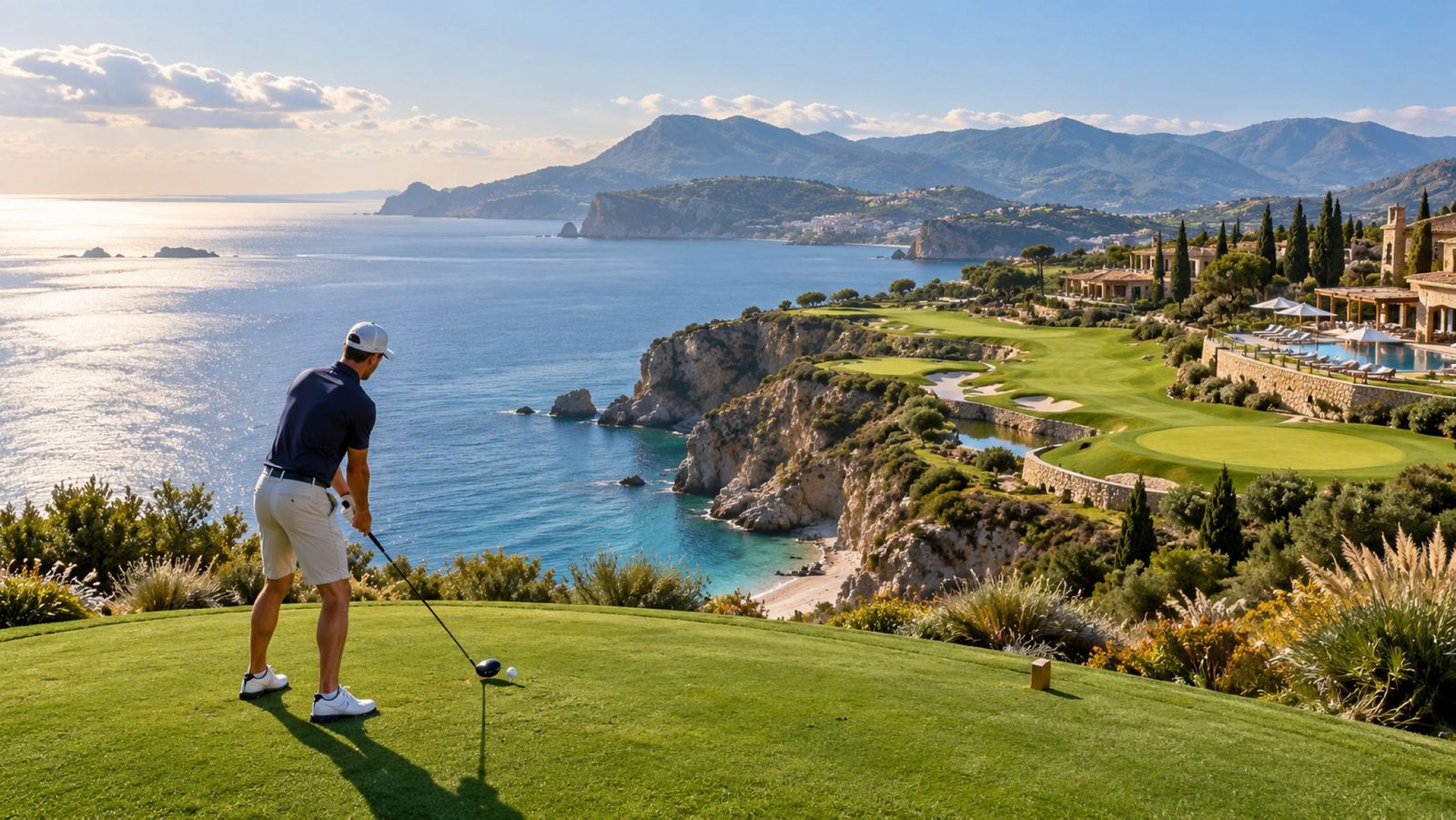
Greece joins Norway and several other European destinations as lesser-known golf holiday locations attract increasing attention from travellers seeking experiences beyond traditional resorts. Bulgaria, Portugal, Spain and France also feature in a 2026 selection highlighting scenic championship courses, luxury accommodation and distinctive regional attractions. From Costa Navarino’s Mediterranean fairways to Norway’s Arctic golf courses, these destinations demonstrate how sporting holidays can be combined with coastal exploration, cultural experiences and outdoor adventures. Their growing visibility also presents opportunities for regional hotels, tourism operators, transport providers and local businesses.
Europe’s Hidden Golf Holiday Destinations Are Reshaping Travel Choices in 2026
European golf holiday destinations are becoming increasingly diverse as travellers explore alternatives to established golfing centres. Golfbreaks’ 2026 destination analysis highlights seven locations across six countries, including Bulgaria’s Black Sea coast, Portugal’s Atlantic region and Norway’s Lofoten Islands. Each destination combines golf facilities with attractions that extend beyond the sport itself. Some offer championship-standard courses overlooking the sea, while others provide mountain landscapes, cultural heritage or luxury resort accommodation. These destinations demonstrate how golf can complement wider tourism experiences, including gastronomy, nature-based activities, wellness and regional exploration.
Advertisement
Advertisement
- Seven underrated golf destinations have been identified across six European countries.
- Greece, Norway, Bulgaria, Portugal, Spain and France feature in the selection.
- Portugal appears twice, represented by Comporta–Tróia and Tavira.
- The locations span the Mediterranean, Atlantic, Black Sea and Arctic regions.
- Golf tourism can support accommodation, transport, restaurants and other visitor services.
Europe’s seven underrated golf destinations at a glance
| Country | Destination | Leading golf courses | Major tourism attractions |
|---|---|---|---|
| Greece | Costa Navarino | The Dunes, The Bay, International Olympic Academy, The Hills | Luxury resorts, beaches, wellness |
| Norway | Gimsøya, Lofoten Islands | Lofoten Links | Midnight sun, Arctic mountains, outdoor adventures |
| Bulgaria | Varna and Black Sea coast | Thracian Cliffs, BlackSeaRama, Lighthouse | Coastal scenery, spas, beaches |
| Portugal | Comporta and Tróia | Dunas, Torre, Tróia Golf | Atlantic coastline, Sado Estuary |
| Spain | North-east Majorca | Son Servera, Capdepera, Alcanada | Mediterranean beaches, historic towns |
| France | Biarritz | Biarritz le Phare, Arcangues, Seignosse | Basque heritage, Atlantic beaches |
| Portugal | Tavira | Quinta da Ria, Quinta de Cima, Monte Rei | Ria Formosa, eastern Algarve coastline |
Bulgaria’s Black Sea Golf Resorts Make Varna an Emerging European Holiday Destination
Bulgaria’s Black Sea coastline combines championship golf courses, seaside accommodation and dramatic natural landscapes. Resorts around Kavarna and Balchik, north of Varna, include Thracian Cliffs Golf & Beach Resort, BlackSeaRama Golf & Villas and Lighthouse Golf & Spa Resort. Thracian Cliffs is an 18-hole course designed by Gary Player, extending across approximately 4.5 kilometres of coastal terrain and occupying around 85 hectares. Its location provides views of the Black Sea from every hole. Visitors can combine golf with beaches, resort facilities and wellness activities, making the region suitable for sporting holidays and wider coastal tourism.
- Thracian Cliffs features an 18-hole championship course designed by Gary Player.
- Its layout extends across approximately 4.5 kilometres of coastline.
- The golf course covers around 85 hectares.
- BlackSeaRama and Lighthouse Golf offer additional accommodation and golfing opportunities.
- Varna Airport provides access to the northern Black Sea golf region.
Bulgaria’s leading golf courses
| Golf resort | Course features | Visitor appeal |
|---|---|---|
| Thracian Cliffs Golf & Beach Resort | 18 holes, Gary Player design | Dramatic Black Sea cliffs and coastal scenery |
| BlackSeaRama Golf & Villas | Championship course | Golf villas, resort accommodation and sea views |
| Lighthouse Golf & Spa Resort | Championship-standard facilities | Golf, spa treatments and seaside holidays |
Portugal’s Comporta and Tróia Peninsula Combine Premium Golf with Atlantic Coastal Tourism
Portugal’s Comporta and Tróia Peninsula are attracting attention as alternatives to the country’s traditional Algarve golf holiday centres. Tróia Golf Championship Course, designed by Robert Trent Jones Senior, features 18 holes, a par-72 layout and a published professional length of 6,317 metres. The course occupies a landscape between the Atlantic Ocean and the Sado Estuary. Nearby Terras da Comporta provides additional championship golf through the Dunas and Torre courses. Sandy beaches, protected natural environments and regional gastronomy offer opportunities to extend a golf holiday into a broader Portuguese coastal experience.
Advertisement
Advertisement
- Tróia Golf features 18 holes and a par-72 layout.
- Its published professional course length is 6,317 metres.
- Terras da Comporta offers the Dunas and Torre golf courses.
- The Sado Estuary supports wildlife observation and nature tourism.
- Access through the Lisbon and Setúbal regions allows combined golf and coastal itineraries.
Comporta and Tróia golf course comparison
| Golf course | Key feature | Tourism experience |
|---|---|---|
| Tróia Golf Championship Course | Robert Trent Jones Senior design | Atlantic coastline and Sado Estuary |
| Terras da Comporta – Dunas | Championship layout across sandy terrain | Premium golf and natural landscapes |
| Terras da Comporta – Torre | Modern championship golf course | Resort experiences and coastal leisure |
Spain’s North-East Majorca Opens New Opportunities for Mediterranean Golf Holidays
North-east Majorca offers an alternative to the island’s established golfing regions around Palma and the south-western coast. The area includes Club de Golf Son Servera, Capdepera Golf Club and Club de Golf Alcanada. These courses combine pine-lined fairways, mountain scenery and Mediterranean coastal views. Son Servera is an established 18-hole club that welcomes visiting golfers, while Alcanada provides a scenic coastal golfing experience near Alcúdia. Nearby beaches, historic towns and restaurants allow visitors to combine sport with traditional Mallorcan culture. The region benefits from established tourism infrastructure and international air connections.
- Son Servera operates an 18-hole golf course surrounded by Mediterranean landscapes.
- Capdepera Golf combines varied terrain with mountain views.
- Alcanada provides a coastal course near Alcúdia.
- Local beaches, towns and restaurants add opportunities beyond golf.
- Palma de Mallorca Airport connects the island with international markets.
North-east Majorca’s principal golf courses
| Golf course | Main characteristic | Nearby attractions |
|---|---|---|
| Club de Golf Son Servera | Pine-lined fairways and Mediterranean scenery | Son Servera and Cala Millor |
| Capdepera Golf | Mountain surroundings and varied terrain | Capdepera and Artà |
| Club de Golf Alcanada | Coastal course with Mediterranean views | Alcúdia and surrounding beaches |
Norway’s Lofoten Islands Transform Golf Holidays with Arctic Landscapes and Midnight Sun Experiences
Norway provides one of Europe’s most unusual golf holiday experiences on the island of Gimsøya in the Lofoten archipelago. Lofoten Links occupies a striking coastal location above the Arctic Circle, surrounded by mountain peaks and the Norwegian Sea. During summer, golfers can experience the midnight sun, when daylight continues through the night. Visit Norway identifies approximately 28 May to 14 July as the Lofoten Islands’ midnight-sun period. Nearby accommodation allows travellers to combine golf with hiking, coastal exploration and nature-based experiences. Weather conditions and seasonal course operations remain important considerations for anyone planning an Arctic golf holiday.
Advertisement
Advertisement
- Lofoten Links is situated on Gimsøya, above the Arctic Circle.
- The course offers the unusual opportunity to play during continuous summer daylight.
- The Lofoten Islands experience the midnight sun approximately from 28 May to 14 July.
- Nearby accommodation supports multi-day sporting and outdoor holidays.
- The surrounding mountains and coastline provide opportunities for nature tourism and photography.
Lofoten Links: Essential golf holiday information
| Category | Details |
|---|---|
| Country | Norway |
| Destination | Gimsøya, Lofoten Islands |
| Main golf course | Lofoten Links |
| Golf course type | Coastal championship golf |
| Special attraction | Midnight-sun golfing |
| Midnight-sun period | Approximately 28 May–14 July |
| Accommodation | Lofoten Links Lodges and regional accommodation |
| Additional activities | Hiking, coastal exploration, photography and outdoor recreation |
| Important consideration | Weather-dependent and seasonal golfing conditions |
France’s Biarritz Brings Historic Golf, Basque Heritage and Atlantic Tourism Together
Biarritz combines historic golfing facilities with the cultural and coastal attractions of the French Basque Country. Golf de Biarritz le Phare dates to 1887 and is among France’s oldest golf courses. Its 18-hole, par-69 layout reflects the region’s long-established golfing tradition. Golf d’Arcangues provides countryside scenery and views towards the Pyrenees, while Golf de Seignosse offers another playing option in south-western France. Visitors can also explore Atlantic beaches, Basque cuisine, nearby villages and surfing destinations. This combination makes Biarritz attractive for travellers who want to incorporate cultural activities and seaside recreation into their golf holidays.
- Golf de Biarritz le Phare dates to 1887.
- The historic course features 18 holes and a par-69 layout.
- Golf d’Arcangues provides rolling countryside and mountain views.
- Golf de Seignosse adds variety to regional multi-course itineraries.
- The wider Biarritz region combines golf with Basque culture, gastronomy and coastal activities.
Biarritz’s leading golf courses
| Golf course | Distinctive characteristics | Visitor experience |
|---|---|---|
| Golf de Biarritz le Phare | Historic 18-hole, par-69 course | Traditional French golf heritage |
| Golf d’Arcangues | Undulating terrain and countryside views | Golf near Basque villages and the Pyrenees |
| Golf de Seignosse | Forested landscape and challenging layout | Golf and Atlantic coastal recreation |
Why the wider Biarritz region is relevant to golf tourism
France’s national tourism authority identifies 16 golf courses within approximately one hour of Biarritz. This concentration allows visitors to explore several courses during a single trip.
Advertisement
Advertisement
| Tourism advantage | Practical significance |
|---|---|
| Multiple nearby golf courses | Greater itinerary flexibility |
| Established resort infrastructure | Access to hotels and hospitality services |
| Atlantic coastal location | Opportunities for beach holidays and surfing |
| Basque cultural attractions | Regional cuisine, village tourism and heritage |
| Biarritz Airport | Air access to the wider destination |
Portugal’s Tavira Strengthens Eastern Algarve Golf Tourism with Nature and Luxury Resorts
Tavira provides access to the eastern Algarve, where established championship golf facilities sit alongside wetlands, traditional Portuguese towns and the Atlantic coastline. Quinta da Ria and Quinta de Cima are prominent courses near Vila Nova de Cacela. Portugal’s official tourism information lists both as 18-hole, par-72 layouts. Quinta da Ria has a published professional length of 6,053 metres, while Quinta de Cima measures 6,586 metres. The surrounding Ria Formosa landscape adds appeal for nature-focused travellers. Monte Rei offers another premium golfing option in the wider area, while Tavira’s historic centre and coastal attractions complement the golfing experience.
- Quinta da Ria is an 18-hole, par-72 course measuring 6,053 metres.
- Quinta de Cima is an 18-hole, par-72 layout measuring 6,586 metres.
- The Ria Formosa landscape provides nature-based tourism opportunities.
- Monte Rei adds a premium golf resort option to the eastern Algarve.
- Faro Airport provides an international arrival point for the region.
Tavira’s leading golf courses
| Golf course | Holes | Par | Published professional length | Main attraction |
|---|---|---|---|---|
| Quinta da Ria | 18 | 72 | 6,053 metres | Ria Formosa coastal scenery |
| Quinta de Cima | 18 | 72 | 6,586 metres | Undulating terrain and countryside views |
| Monte Rei | 18 | 72 | Varies by tee configuration | Jack Nicklaus Signature design |
Why Tavira matters to Portugal’s wider golf tourism industry
Portugal’s official tourism authority identifies more than 90 golf courses across the country. The eastern Algarve contributes to this established market through coastal resorts, high-quality golf courses and regional tourism infrastructure.
Tavira offers an alternative base for visitors exploring Portuguese golf holidays without concentrating exclusively on the major resort centres around Vilamoura and Albufeira.
Sources: Visit Portugal; Golfbreaks.
Advertisement
Advertisement
Greece’s Costa Navarino Elevates Peloponnese Golf Holidays with Four Championship Courses
Greece’s Costa Navarino has developed into a prominent Mediterranean golf destination through its resort infrastructure and four signature 18-hole courses. Located in Messinia in the Peloponnese, the destination offers The Dunes Course, The Bay Course, the International Olympic Academy Golf Course and The Hills Course. The latter two, designed by José María Olazábal, opened in 2022 at Navarino Hills. Costa Navarino also combines championship golf with luxury accommodation, wellness facilities, beaches and regional cultural experiences. Its ability to accommodate multiple rounds across different layouts makes it suitable for extended golf holidays and organised sporting events.
- Costa Navarino has four signature 18-hole golf courses.
- The International Olympic Academy Golf Course measures 6,366 metres.
- The Hills Course measures 6,280 metres and plays to par 72.
- Luxury hotels, restaurants, beaches and wellness facilities support extended resort stays.
- Kalamata International Airport provides an important arrival gateway for Messinia.
Costa Navarino’s four championship golf courses
| Golf course | Location | Course characteristics |
|---|---|---|
| The Dunes Course | Navarino Dunes | Coastal scenery and rolling fairways |
| The Bay Course | Navarino Bay | Views across Navarino Bay and surrounding hills |
| International Olympic Academy Golf Course | Navarino Hills | 18 holes; published length of 6,366 metres |
| The Hills Course | Navarino Hills | 18 holes; par 72; published length of 6,280 metres |
Costa Navarino’s golf events and sporting tourism opportunities in 2026
The destination’s 2026 programme included two important golfing events, demonstrating the resort’s ability to accommodate professional and organised competitions alongside recreational visitors.
| Golf event | 2026 dates | Destination significance |
|---|---|---|
| Legends Tour Trophy | 11–13 June | Professional golf tourism and destination visibility |
| Aegean Messinia Pro-Am | 24–28 June | Organised competition bringing together professional and amateur golfers |
Europe’s Best Underrated Golf Holiday Destinations: 2026 Country and Course Comparison
The following table provides a consolidated comparison of the seven destinations, their principal courses and key tourism advantages. It is a destination reference rather than an independently measured ranking.
| Country | Destination | Main golf courses | Important course information | Tourism appeal |
|---|---|---|---|---|
| Bulgaria | Varna and Black Sea coast | Thracian Cliffs, BlackSeaRama, Lighthouse | Thracian Cliffs: 18 holes, approximately 85 hectares | Black Sea scenery, beaches, spas |
| Portugal | Comporta–Tróia | Dunas, Torre, Tróia Golf | Tróia: 18 holes, par 72, 6,317 metres | Atlantic beaches, Sado Estuary |
| Spain | North-east Majorca | Son Servera, Capdepera, Alcanada | Alcanada: 18 holes, par 72, published length of 6,499 metres | Mediterranean landscapes, traditional towns |
| Norway | Gimsøya | Lofoten Links | Arctic coastal course, summer midnight-sun golf | Nature tourism, mountains, outdoor adventures |
| France | Biarritz | Biarritz le Phare, Arcangues, Seignosse | Biarritz le Phare: 18 holes, par 69 | Basque heritage, Atlantic beaches |
| Portugal | Tavira | Quinta da Ria, Quinta de Cima, Monte Rei | Quinta da Ria: 6,053 metres; Quinta de Cima: 6,586 metres | Ria Formosa, historic towns, wellness |
| Greece | Costa Navarino | The Dunes, The Bay, International Olympic Academy, The Hills | Four signature 18-hole courses | Luxury resorts, Mediterranean scenery, cultural experiences |
European Golf Holiday Demand in 2026: What the Available Figures Actually Show
The available 2026 data indicates rising interest in several destinations, particularly Bulgaria, Portugal’s Comporta–Tróia region and Greece’s Costa Navarino. Golfbreaks compared demand within its own customer base, identifying increases of 47% for Bulgaria during 2026 to date, 85% for Comporta–Tróia and 140% for Costa Navarino. Bulgaria had also recorded growth of 173% in 2025. These figures demonstrate changing demand patterns within the operator’s business but cannot be treated as national tourism growth rates. Differences in reporting periods and customer volumes prevent direct comparisons across every destination.
- Bulgaria recorded a reported demand increase of 173% in 2025.
- Bulgaria experienced a further reported increase of 47% during 2026 to date.
- Comporta and Tróia recorded up to 85% year-on-year demand growth.
- Costa Navarino recorded a reported 140% demand increase.
- Comparable growth percentages were not disclosed for every featured destination.
European golf tourism demand growth comparison
| Destination | Reported demand increase | Measurement context |
|---|---|---|
| Bulgaria | 173% | Growth reported for 2025 |
| Bulgaria | 47% | Further growth reported in 2026 to date |
| Comporta–Tróia, Portugal | Up to 85% | Year-on-year destination demand |
| Costa Navarino, Greece | 140% | Golfbreaks-reported destination growth |
| North-east Majorca, Spain | Not disclosed | Included in the destination selection |
| Gimsøya, Norway | Not disclosed | Included for distinctive Arctic golfing |
| Biarritz, France | Not disclosed | Included for its historic golf facilities |
| Tavira, Portugal | Not disclosed | Included for eastern Algarve golf tourism |
How European Golf Tourism Could Influence Airlines, Hotels and Regional Travel Economies
Golf tourism creates opportunities for businesses beyond the courses themselves. International visitors require accommodation, airport transfers, restaurants and supporting leisure services, connecting sporting holidays with the wider visitor economy. Bulgaria’s Black Sea resorts, Portugal’s coastal golf regions and Greece’s Peloponnese destinations can integrate accommodation and golf packages. Norway offers specialised outdoor tourism experiences, while Spain and France benefit from established hospitality infrastructure. However, the available destination data does not establish how much additional expenditure, airline capacity or employment can be attributed specifically to golf tourism. Wider European accommodation figures provide useful context without measuring golfing visitors separately.
Five key economic and tourism highlights
- Air connectivity: Regional airports support access to golf destinations and their surrounding resorts.
- Accommodation: Golf travellers can choose hotels, villas, apartments and integrated resort packages.
- Regional businesses: Restaurants, transfers, local guides and other tourism providers can benefit from visitor spending.
- Destination diversification: Golf adds another reason to visit established coastal and cultural tourism regions.
- Seasonal opportunities: Golf can support travel outside peak beach holiday periods where course conditions allow.
European tourism accommodation data
| Tourism indicator | Eurostat data | Reference year |
|---|---|---|
| Total EU tourist accommodation nights | 3.1 billion | 2025 |
| Annual increase in overnight stays | 4.1% | 2025 vs 2024 |
| Nights spent by visitors from the Americas | 155.5 million | 2025 |
| Nights spent by visitors from Asia | 81.6 million | 2025 |
| Nights spent by visitors from Oceania | 15.2 million | 2025 |
| Nights spent by visitors from Africa | 12.9 million | 2025 |
Important airports supporting the featured golf regions
| Golf region | Relevant airport | Travel planning consideration |
|---|---|---|
| Varna, Bulgaria | Varna Airport | Ground transfer to Balchik and Kavarna golf resorts |
| Comporta–Tróia, Portugal | Lisbon Airport | Road or ferry connections depending on destination |
| North-east Majorca, Spain | Palma de Mallorca Airport | Road transfers to north-eastern golf courses |
| Gimsøya, Norway | Leknes or Svolvær airports | Regional flight connections and onward road transfers |
| Biarritz, France | Biarritz Pays Basque Airport | Access to Biarritz and surrounding courses |
| Tavira, Portugal | Faro Airport | Road transfers to the eastern Algarve |
| Costa Navarino, Greece | Kalamata International Airport | Connections to Messinia and Costa Navarino |
What International Travellers Should Know Before Booking a European Golf Holiday
Selecting among Europe’s underrated golf destinations requires consideration of weather, course access, flights and overall holiday costs. Norway’s Arctic golfing season differs substantially from Mediterranean destinations such as Greece, Portugal and Spain. Travellers should confirm course opening dates, tee-time availability, green fees and handicap requirements before finalising accommodation or flights. Airline sporting-equipment policies can also affect total travel expenditure, especially when passengers carry personal golf clubs. The distance between airports, hotels and courses is another important consideration. Planning around these factors can help travellers combine championship golf with sightseeing, cultural exploration and coastal activities.
- Confirm course operating dates, availability and any visitor restrictions.
- Check airline baggage allowances and charges for golf equipment.
- Compare accommodation locations with actual road transfer requirements.
- Consider daylight hours, seasonal weather and course conditions.
- Review golf package inclusions, including green fees, buggies and airport transfers.
Golf holiday planning comparison
| Destination | Travel planning priority | Recommended holiday combination |
|---|---|---|
| Bulgaria | Coastal resort transfers and seasonal flights | Golf, Black Sea beaches and spas |
| Comporta–Tróia | Access from Lisbon and local transport | Golf, beaches and estuary exploration |
| North-east Majorca | Advance tee-time reservations | Golf, Mediterranean villages and beaches |
| Norway | Summer daylight and Arctic weather | Golf, hiking and nature photography |
| Biarritz | Multi-course access and local transport | Golf, Basque heritage and Atlantic attractions |
| Tavira | Golf packages and eastern Algarve transfers | Golf, coastal towns and nature tourism |
| Costa Navarino | Resort packages and course reservations | Golf, wellness and luxury leisure |
Conclusion
Greece, Norway, Bulgaria, Portugal, Spain and France demonstrate how European golf tourism extends beyond traditional resort centres. Costa Navarino offers championship courses and luxury Mediterranean hospitality, while Norway’s Lofoten Islands provide an unusual Arctic golfing experience. Bulgaria’s Black Sea coastline, Portugal’s Atlantic and Algarve regions, Spain’s north-east Majorca and France’s Biarritz further expand the range of golfing holidays available. Golfbreaks’ reported demand increases point to greater commercial interest in selected destinations, although they do not establish industry-wide growth rates. These locations offer opportunities for tourism diversification and regional businesses, with their long-term appeal depending on accessibility, course quality, sustainable management and the overall visitor experience.
Advertisement
