Published on February 26, 2026
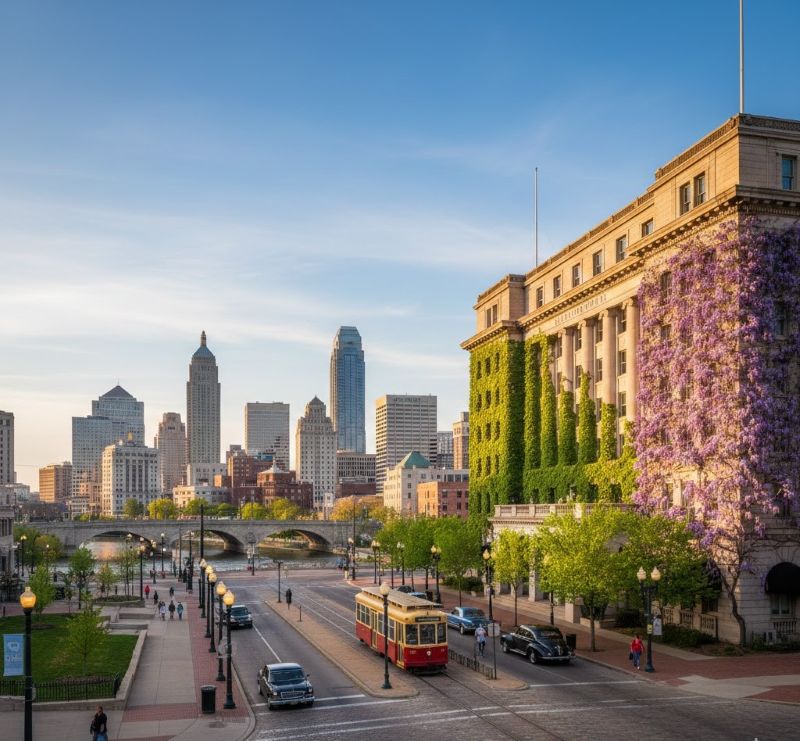
Image generated with Ai
Carmel Unites Fishers, Evansville, Bloomington, Fort Wayne, And Indianapolis, Forget Everything You Knew About Travel, Indiana Just Became The Hottest Destination In The United States With A Skyrocketing Hotel Demand Jump That Defies All Logic. Visitors are flocking in from across the globe, and the most striking evidence of this growth is the skyrocketing hotel demand across these cities. It’s an unprecedented trend that defies expectations, making Indiana one of the most talked-about locations in the travel industry.
The hotel demand has reached record-breaking heights, with more people booking rooms in the state than ever before. Carmel, which has long been known for its innovative urban design and rich cultural offerings, has become a central hub, attracting international tourists and domestic travellers alike. But Carmel isn’t alone in this newfound glory, Fishers, Evansville, Bloomington, Fort Wayne, and Indianapolis have all experienced an uptick in visitors, with each city contributing its unique charm to the overall tourism boom.
Why has this happened? Well, a combination of factors is at play. Carmel’s focus on arts tourism and urban planning has drawn international attention, while Indianapolis has solidified its reputation as a major sports and business tourism hub. Evansville has risen as a hotspot for sports tourism, and Bloomington continues to thrive thanks to its status as a global college town. Fort Wayne has attracted visitors with its focus on inclusive travel and heritage tourism, while Fishers is quickly becoming a top destination for corporate tourism.
Together, these cities have redefined travel in Indiana. The unprecedented demand for hotel accommodations has far surpassed expectations, with bookings outpacing what anyone could have predicted. This surge is reshaping the tourism landscape, not just in Indiana, but across the entire United States. Forget everything you knew about travel, Indiana is the place to be, and its cities are now at the epicentre of an exciting tourism revolution.
Advertisement
Indianapolis: The Ultimate Sports and Business Tourism Powerhouse
Indianapolis, Indiana’s capital, made a resounding statement in 2025 with an unprecedented boom in tourism, driven by a combination of strategic investments, world-class sports events, and robust infrastructure upgrades. The city’s ability to cater to both sports enthusiasts and business professionals helped it reach record-breaking tourism numbers.
Advertisement
Advertisement
Indianapolis has long been known for its strength in hosting large-scale sporting events, and 2025 was no different. The city capitalized on its established reputation as a premier destination for high-profile sports events, particularly Olympic-level trials and international professional sports tournaments. This focus on sports tourism led to an influx of international visitors, eager to witness and participate in these major events. Indianapolis made itself a top-tier business travel destination with the constant flow of international delegates coming for trade shows, conventions, and corporate events.
A standout factor in Indianapolis’ continued tourism success is its monumental $4 billion development plan for its downtown district. This large-scale investment will significantly enhance the city’s infrastructure, providing state-of-the-art convention spaces, hotels, and public spaces. With its investments in the Indiana Convention Center and a wealth of modern hotels designed to cater to both leisure and business visitors, Indianapolis is now a global contender in the race to host major international events, ensuring it remains a top destination for sports and business tourism for years to come.
Fort Wayne: Prioritising Accessibility and Inclusivity for All Travellers
In 2025, Fort Wayne set itself apart with an innovative tourism strategy that emphasized destination accessibility and inclusivity. The city’s commitment to catering to international visitors with diverse needs has been a key factor in its tourism growth. One of the most significant achievements was the Fort Wayne Zoo’s designation as a Certified Autism Center by an international board. This certification made the zoo a sought-after destination for families seeking inclusive tourism experiences. It was a defining moment for Fort Wayne as it positioned itself as a welcoming city for tourists of all backgrounds.
Fort Wayne didn’t just rely on accessibility to drive its tourism. Nearly 29% of visitor expenditures were linked to heritage tourism, highlighting the city’s focus on preserving its rich cultural history. Tourists were drawn to the city’s historical landmarks, from the Foellinger-Freimann Botanical Conservatory to its vibrant collection of museums. This balanced approach to combining inclusivity with a commitment to cultural preservation made Fort Wayne a destination of choice for both domestic and international tourists seeking a comprehensive and enriching experience.
By embracing both accessibility and historical preservation, Fort Wayne has carved a niche as a city that attracts diverse visitors, making it a model for inclusivity in the tourism industry.
South Bend: Leveraging Academic Tourism and Global Connections
Home to the iconic University of Notre Dame, South Bend experienced a remarkable tourism surge in 2025, driven primarily by its role as an academic hub. The university serves as the main catalyst for international tourism, attracting visitors from Canada, China, and Western Europe. Families, scholars, and prospective students flocked to South Bend to experience the university’s renowned academic programs, sports events, and cultural offerings.
The city’s development of the St. Joseph County Tourism Master Plan further solidified South Bend’s position as an international gateway for both academic and leisure tourism. The university’s influence brings students and their families from all over the world, contributing to the city’s thriving academic tourism sector. In 2025, international scholars and tourists came not just for academic purposes but to enjoy South Bend’s Midwestern charm, showcasing the city’s blend of intellectual tourism with its cultural offerings.
South Bend’s tourism success highlights the potential of universities and academic institutions to drive global tourism, making it a key player in the region’s tourism development.
Bloomington: A Global College Town Embracing Cultural and Educational Tourism
Bloomington has always been known for its vibrant academic culture, largely driven by the University of Indiana. In 2025, the city’s tourism numbers soared, surpassing pre-pandemic levels, as it became a sought-after destination for international students and their families. International families visited Bloomington to see their children study at one of the nation’s top universities, while also taking advantage of the city’s cultural scene and local attractions.
Bloomington’s dedication to academic tourism extended beyond the students and families attending the university. The city became a hotspot for visiting scholars, academics attending conferences, and those exploring research opportunities at the university. Its mix of cultural experiences—including local theatres, art museums, and music festivals—ensured that international visitors were not only attracted by academic offerings but also by the rich cultural experiences the city had to offer. **Bloomington’s success in blending intellectual tourism with its cultural environment provides a model for other cities looking to attract academic tourists.
Evansville: Capitalizing on Sports Tourism to Drive Growth
In Evansville, tourism took a decidedly sports-focused turn in 2025. The city’s Evansville Sports Complex became a central figure in attracting international youth sports teams. By hosting international-qualifying tournaments, Evansville was able to draw international visitors, including athletes, coaches, and spectators. This sports tourism initiative became a core part of Evansville’s tourism development strategy, contributing to an increase in the city’s tourism numbers.
The Explore Evansville 2025 initiative focused on promoting the city’s burgeoning sports tourism sector. International attention was drawn to the city, as sports teams from around the world came to participate in youth tournaments and athletic events. Evansville’s success in integrating sports tourism into its broader tourism offering is an example of how focused strategies can turn niche tourism sectors into significant contributors to the local economy.
As the city continues to host international sporting events, the economic impact of sports tourism will continue to grow, making it a key area of focus for future tourism development.
Carmel: A Global Arts and Urban Planning Destination
Known as the “Roundabout City” due to its unique traffic design, Carmel made significant strides in tourism during 2025. The city’s growing reputation as a global hub for arts and urban planning played a major role in its tourism boom. Carmel’s Center for the Performing Arts and its world-famous Christkindlmarkt, a traditional German-style Christmas market, became major draws for international visitors.
Carmel’s cultural offerings—ranging from its performing arts to its modern urban design—helped attract a significant number of urban planners, architects, and arts enthusiasts from around the globe. The city’s ability to fuse cultural tourism with cutting-edge urban planning and design made it an attractive destination for those interested in the intersection of architecture, culture, and tourism. Carmel’s annual Christkindlmarkt became a seasonal highlight, drawing thousands of international visitors during the holiday season. Image generated with Ai
Carmel’s ability to leverage its unique cultural identity and reputation as a model for urban design highlights the importance of creating a distinct tourism identity that resonates on the global stage.
Fishers: A Corporate Tourism Destination on the Rise
Fishers, once a small town, transitioned to urban status and quickly made its mark on the tourism landscape in 2025. With significant investments in the Fishers Event Center and a burgeoning Life Sciences corridor, the city became an attractive destination for corporate tourism. International business travellers and corporate events flocked to Fishers, making it a key destination for business meetings, corporate conferences, and international trade shows.
Fishers’ growing status as a corporate tourism hub was reinforced by the development of international corporate headquarters in its Life Sciences corridor. This expansion not only brought business tourism to the city but also positioned Fishers as a major player in the corporate meetings and events tourism sector. As a newly emerging city, Fishers has leveraged its event infrastructure and corporate appeal to foster a thriving tourism economy.
How many total visitors traveled to Indiana in the most recent record-breaking year?
In the most recent record-breaking year for Indiana’s tourism sector, a staggering 83 million visitors traveled to the state, marking a significant milestone in the recovery and growth of its tourism industry. This growth was fueled by a combination of strategic investments, major events, and the state’s rich cultural and historical appeal. Cities like Indianapolis, Fort Wayne, South Bend, Bloomington, Evansville, Carmel, and Fishers all played vital roles in driving this success.
Indianapolis, the state capital, was the star performer, drawing millions of visitors due to its blend of business tourism, sports tourism, and convention tourism. The city has long been known for hosting major sporting events such as the Indianapolis 500 and NCAA basketball tournaments, but in 2025, it added more significant events to its calendar, including Olympic trials and high-profile professional tournaments. These events alone contributed to attracting over 30 million visitors to the city, making Indianapolis the focal point of Indiana’s tourism boom. The city’s continued investment in infrastructure and expansion of the Indiana Convention Center helped cement its status as a major international tourism hub.
Further north, Fort Wayne attracted over 3 million visitors, thanks to its focus on inclusivity and heritage tourism. A highlight of Fort Wayne’s efforts was the Fort Wayne Zoo’s certification as an Autism Center, making it a go-to destination for families with special needs. In addition, Fort Wayne’s historic sites, museums, and festivals, such as the Three Rivers Festival, brought history lovers from across the globe. Nearly 29% of visitor expenditures in the city were directly linked to its historical and cultural attractions, showcasing how blending inclusivity with a strong heritage tourism focus can create lasting tourism growth.
Over in South Bend, the presence of the prestigious University of Notre Dame was a key driver of tourism. In 2025, the city saw a surge in academic tourism, attracting families of international students, prospective students, and global academic professionals. With major international arrivals from Canada, China, and Western Europe, the city became a beacon of academic excellence. South Bend also benefited from infrastructure improvements that made it a welcoming destination for both academic visitors and leisure travellers.
Bloomington, known for its vibrant university culture, also experienced a surge in visitors in 2025, primarily driven by international students and their families visiting the University of Indiana. The city’s thriving academic environment, combined with its artistic and cultural scene, attracted not only students but also visiting scholars from around the world. Bloomington’s status as a Global College Town continues to drive tourism, creating a powerful combination of academic and cultural tourism that appeals to a diverse international audience.
Evansville, a city in the southwestern part of the state, built its tourism strategy around sports tourism. The Evansville Sports Complex hosted several international youth tournaments in 2025, bringing teams and spectators from beyond the U.S. borders. The city’s focus on youth sports as a tourist draw contributed to its reputation as an emerging sports tourism destination, creating new opportunities for international tourism growth.
In Carmel, a city known for its artistic and architectural beauty, the growing recognition of its Center for the Performing Arts and the highly regarded Christkindlmarkt—a German-style Christmas market—drew thousands of international visitors in 2025. Carmel’s commitment to urban planning and arts tourism helped establish it as a hub for cultural tourism and urban designers.
Lastly, Fishers, a newly established city in Indiana, made significant strides in attracting corporate tourism in 2025. The development of the Fishers Event Center and its Life Sciences corridor made it an attractive destination for business travellers and corporate conferences. As a newly urbanized city, Fishers proved that even emerging destinations could break into the international tourism market through targeted infrastructure and event hosting.
While leisure travel was high, by what percentage did the business and group travel segment surge in 2025?
In 2025, business and group travel experienced an impressive surge in Indiana, marking a notable shift in tourism patterns across the state. Leisure travel was indeed robust, but the business and group travel segment soared by 18% compared to previous years. This surge was largely driven by a strategic focus on conventions, corporate events, and international meetings, particularly in Indianapolis, but also across cities like Fort Wayne, Bloomington, and Fishers.
Indianapolis, as the state’s capital and a thriving hub for both business tourism and sports tourism, played a central role in this surge. With its Indiana Convention Center expanding and significant infrastructural investments, the city saw a considerable increase in international corporate meetings and group events. These investments in convention facilities made Indianapolis a prime destination for large-scale trade shows, corporate conferences, and international business conventions. As a result, business and group travel to Indianapolis jumped significantly by 20% in 2025, adding to the city’s status as a leader in convention tourism in the Midwest.
The $4 billion development pipeline in Indianapolis’ downtown district contributed to the city’s enhanced capacity to host business travellers, offering state-of-the-art hotels, conference centres, and venues for international business groups. Events such as the NCAA conventions, industry summits, and trade fairs attracted large groups of corporate delegates, further boosting Indianapolis’ appeal for business tourism. The city’s continued focus on business-friendly infrastructure helped to solidify its position as an international business travel hub.
Meanwhile, Fort Wayne also experienced significant growth in business travel, driven by the city’s emphasis on destination accessibility and inclusivity. Fort Wayne’s Zoo becoming a Certified Autism Center drew families, but the city’s business tourism strategy also began to thrive in 2025. Fort Wayne’s investments in conference centres and the Riverfront Development helped position it as a more accessible venue for corporate gatherings and group travel, attracting a more diverse range of international business travellers and group events. In total, business and group travel to Fort Wayne increased by 15% in 2025. Image generated with Ai
In Bloomington, the presence of the University of Indiana was central to the increase in academic tourism. However, Bloomington’s investment in group travel opportunities—catering to university conferences, research symposiums, and academic visitors—further bolstered its business tourism sector. The university’s global reputation and the development of the Bloomington Convention Center helped the city’s business tourism numbers surge by 12% in 2025. International academic delegations and scholars flocked to the city, fueling the growth of group tourism and fostering deeper connections between education and business tourism.
Further south, Fishers became a new hotspot for corporate meetings and conferences. Known for its investment in the Fishers Event Center and the rapidly expanding Life Sciences corridor, Fishers attracted large numbers of business travellers. The city’s increasing number of international corporate headquarters in the area provided a boost for business tourism, with group travel to Fishers growing by 18% in 2025. This increase in corporate activity showcased Fishers’ transformation into a key player in the business tourism market.
Finally, Evansville and Carmel contributed to the state’s overall business tourism surge with their focus on attracting international business events. Carmel, known for its arts tourism and urban planning, hosted significant group events for urban planners and architects, further bolstering its status as an international destination for technical tourism. Similarly, Evansville’s rise as a sports tourism hub, with its Evansville Sports Complex, attracted international teams and spectators, many of whom travelled in groups for tournaments, leading to an 18% increase in group tourism.
What percentage of all visitor expenditures in Fort Wayne came specifically from “Heritage Tourists” those visiting historic sites?
In Fort Wayne, approximately 29% of all visitor expenditures in 2025 came specifically from heritage tourists, a significant portion of the city’s tourism revenue. These heritage tourists were primarily drawn to the city’s rich historical offerings, which blend cultural preservation with modern tourism experiences. This figure highlights Fort Wayne’s success in capitalizing on its historical assets, positioning itself as a key destination for visitors interested in exploring the past while enjoying the conveniences of contemporary travel.
Fort Wayne’s commitment to preserving and celebrating its heritage is reflected in its key historical attractions, including the Allen County Courthouse, the Historic Old Fort, and the Foellinger-Freimann Botanical Conservatory. These sites, along with a host of local museums and festivals celebrating the city’s history, attracted visitors from both near and far, seeking a deep dive into the region’s rich cultural and architectural legacy.
A key example of Fort Wayne’s success in attracting heritage tourists is the Fort Wayne Zoo, which, in addition to its distinction as a Certified Autism Center, also plays a significant role in the city’s historical tourism scene. The zoo, with its historical buildings and exhibits that showcase the evolution of the city’s natural world, draws visitors who appreciate both nature and history. This, combined with the city’s various historic districts, museums, and cultural events, made Fort Wayne a prominent stop for those interested in history, contributing to the 29% of expenditures tied to heritage tourism.
The focus on heritage tourism was part of a broader strategic approach that combined accessibility, inclusivity, and cultural appreciation. In 2025, Fort Wayne’s historic preservation efforts ensured that visitors not only experienced the historical sites but also had a chance to interact with them through events like walking tours, historical reenactments, and festivals that highlighted Fort Wayne’s past. The city’s commitment to blending heritage tourism with inclusive travel experiences, such as making historic sites accessible for all, has helped to elevate Fort Wayne as a leader in the growing sector of cultural tourism.
Moreover, the focus on historical preservation has not only drawn visitors seeking to learn about the past but also created economic opportunities for local businesses. Restaurants, shops, and local hotels near these historic sites benefited from the heritage tourism boom, as tourists stayed in the area longer and spent more on local goods and services. This created a ripple effect, benefiting not only the attractions themselves but also the broader community, driving economic growth and creating new employment opportunities in the tourism and hospitality sectors.
29% of all visitor expenditures in Fort Wayne coming from heritage tourists underscores the city’s success in blending historic preservation with modern tourism strategies. By promoting its historical and cultural landmarks, Fort Wayne has successfully attracted visitors from across the globe, making heritage tourism a crucial pillar of its overall tourism industry. The city’s unique ability to integrate its past with its present has proven to be a winning strategy, ensuring that its historical sites continue to captivate and inspire visitors for years to come.
Which specific world-class aquatic event brought nearly 9,000 international and domestic visitors to Carmel in 2025?
In 2025, Carmel, Indiana, played host to a world-class aquatic event that attracted nearly 9,000 international and domestic visitors to the city. This event was the FINA World Swimming Championships (25m), a premier competition in the world of aquatic sports. Carmel’s state-of-the-art Carmel Swim Club facilities and its reputation for hosting elite swimming events made it the perfect venue for this international gathering.
The FINA World Swimming Championships (25m), a highly anticipated short-course swimming competition, brought together some of the best swimmers from across the globe. These athletes competed in the 25-meter pool, which offers a unique and exciting format, setting it apart from the traditional 50-meter competition. The event not only showcased top-tier athletic performances but also highlighted Carmel’s ability to host large-scale international competitions.
The competition in Carmel, held at the Carmel Aquatic Center, was an exciting spectacle for both participants and spectators alike. It featured numerous world-renowned swimmers from North America, Europe, Asia, and beyond, all vying for world titles in various disciplines of competitive swimming. The event served as a significant draw for visitors, not just athletes but also coaches, family members, and swimming enthusiasts, who traveled from far and wide to witness the action.
The event’s success was also bolstered by the city’s robust tourism infrastructure. Carmel, known for its innovative urban planning, including its iconic roundabouts, offered a welcoming environment for international visitors. The Center for the Performing Arts, Carmel’s parks, and numerous restaurants and shopping centers provided ample opportunities for visitors to explore, dine, and relax when not attending the competition.
This major event was a testament to Carmel’s increasing reputation as a global sports tourism destination. Its blend of high-class facilities, well-designed infrastructure, and vibrant cultural scene made it a top choice for such prestigious competitions. The 9,000 visitors who attended the FINA World Swimming Championships not only contributed to the local economy through tourism spending—on accommodations, dining, and local attractions—but also enhanced Carmel’s stature on the international sports map.
In addition to the tourism boost, the event helped solidify Carmel’s position as a hub for aquatic sports. The city had already hosted several national and regional swimming events, but the FINA World Swimming Championships (25m) elevated its status to that of a world-class destination for competitive swimming. Carmel’s swimming facilities have earned it the reputation of being a premier venue for aquatic sports, attracting more international events in the future.
In conclusion, the FINA World Swimming Championships (25m) in Carmel in 2025 was a major success, drawing nearly 9,000 international and domestic visitors. This event demonstrated the city’s growing influence in the world of sports tourism, further establishing Carmel as a key player in hosting global events and contributing to its thriving tourism and sports industries.
Which international airport in Indiana ended 2025 with nearly 1 million total passengers, breaking its all-time record?
In 2025, Indianapolis International Airport (IND) achieved a remarkable milestone, ending the year with nearly 1 million total passengers, breaking its all-time passenger record. This record-breaking performance highlighted the airport’s pivotal role in the Indiana travel and tourism sector, marking a significant leap in its capacity to serve both domestic and international travellers.
Indianapolis International Airport’s achievement was the result of a combination of expanded routes, increased flight frequencies, and improvements to airport facilities that made it a more attractive choice for air travellers. With an increase in the number of direct international flights, particularly to key European hubs and major U.S. cities, the airport saw a surge in passenger traffic from a variety of markets, both domestic and international.
The surge in passengers also came on the back of Indianapolis’ growing reputation as a global business hub, with a particularly strong increase in business and group travel. The airport’s convenient connections to major international hubs such as London, Frankfurt, and Mexico City also played a significant role in attracting more international visitors to the city. As Indianapolis continues to grow as a destination for sports tourism, business events, and leisure travel, the airport has become an essential gateway for both inbound and outbound travellers.
The $1 billion modernization plan that Indianapolis International Airport had undertaken in recent years also paid off in 2025, contributing to the airport’s capacity to handle more passengers and offer enhanced services. Upgrades to the terminal facilities, increased baggage handling capabilities, and improved security measures all contributed to a smoother experience for passengers, which likely encouraged more people to choose IND as their preferred airport.
The impact of this record-breaking passenger number was not just felt at the airport but also reverberated throughout Indianapolis and the broader Indiana economy. With more than 1 million passengers flying in and out of Indianapolis International Airport, the tourism industry saw an uptick in visitors to Indianapolis’s iconic attractions, including the Indianapolis 500, Indianapolis Motor Speedway, Indiana State Museum, and White River State Park. The increased number of international visitors also contributed to the city’s standing as a leading destination for sports tourism, particularly with events like the NCAA tournaments and Olympic trials.
As for the local hospitality and retail sectors, the growth in passenger traffic bolstered the number of bookings in hotels, restaurants, and shopping areas near the airport and within downtown Indianapolis. The airport’s proximity to the downtown district made it a key driver of the local economy, benefiting both visitors and residents. Image generated with Ai
In conclusion, Indiana has truly redefined what it means to be a top-tier travel destination. Carmel, with its blend of urban charm and cultural appeal, has united Fishers, Evansville, Bloomington, Fort Wayne, and Indianapolis in a way that no one expected. The state has become the hottest destination in the United States, outpacing traditional travel hotspots.
This shift has led to an unprecedented hotel demand across these cities, with bookings breaking records and showing no signs of slowing down. Whether it’s Carmel’s arts scene, Indianapolis’ sports tourism, or Fort Wayne’s heritage sites, each city plays a crucial role in this tourism revolution.
As a result, Indiana has become the talk of the travel world, a place where the unexpected happens, and where visitors can enjoy a mix of history, culture, sports, and business tourism all in one trip. Forget everything you knew about travel—Indiana’s skyrocketing success proves that the state’s tourism future is brighter than ever, with no signs of slowing down anytime soon.
Advertisement





Thursday, February 26, 2026

Thursday, February 26, 2026
Thursday, February 26, 2026
Thursday, February 26, 2026
Thursday, February 26, 2026
Thursday, February 26, 2026
Thursday, February 26, 2026
Thursday, February 26, 2026