
France Stands Alongside Belgium and Other European Countries Facing Mass Protests as City Travel and Tourism Come Under Pressure

Updated
Published
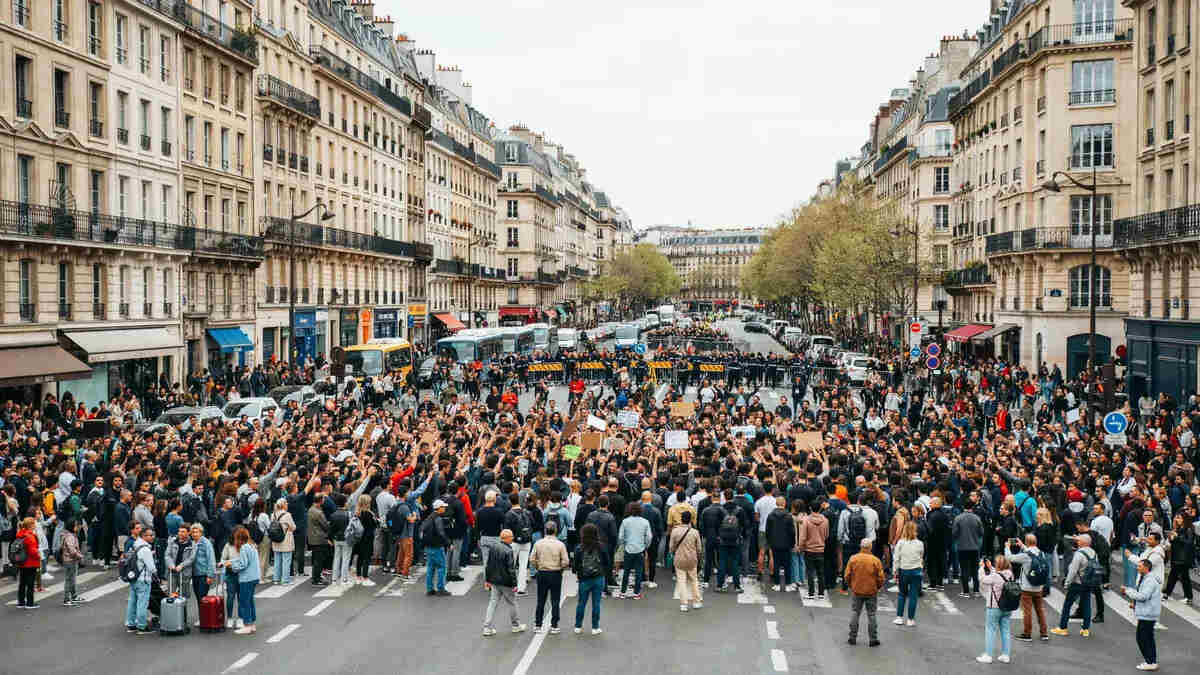
France, Belgium, Italy and Portugal are confronting surging urban transport and tourism challenges as mass protests against rising costs choke popular visitor districts, services and public spaces. Demonstrations erupting across several European cities on Saturday, 17 October 2026, have sparked new safety concerns for tourists, access restrictions to attractions and restrictions on visitor movements. Though most protests remained peaceful, clashes, property damage and transport disruptions occurred in several areas. Paris, Brussels, Milan, Bologna and Lisbon have emerged as key focal points, though no Europe-wide tourism shutdown has been confirmed.
Europe Faces a New Wave of Unrest as Tourist Cities Come Under Pressure
Hundreds of thousands of people reportedly joined separate demonstrations across Europe, demanding action on living costs, wages, housing and public services. France experienced the largest reported mobilisation, with more than 550,000 participants estimated by the country’s Interior Ministry.
The unrest has placed additional pressure on authorities responsible for public safety and city transport. Shopping streets, transport hubs and historic centres have been affected by demonstrations or security concerns. As a result, visitors may need to adjust sightseeing plans and allow additional time for local journeys. However, the movements were not coordinated, and their causes differed between countries.
France Sees Major Protest Disruption Across Paris and Other Tourist Destinations
France has emerged as the centre of the reported unrest, with demonstrations spreading across major cities and popular tourism destinations. Clashes between protesters and police were accompanied by reports of looting, fires and damage to public buildings.
Advertisement
Advertisement
Figures attributed to French authorities indicated approximately 1,200 arrests and 150 police officers injured. These reported totals have not been independently rechecked against original government records for this article.
Damage was reported in Paris, Marseille, Nice, Nantes, Bordeaux, Limoges, Lille, Toulouse and Strasbourg. A historic town hall in Limoges was reportedly severely damaged by fire, while Lyon’s tourist office was reportedly targeted.
Advertisement
Advertisement
In Paris, municipal authorities confirmed serious property damage and organised emergency cleaning and restoration work. The timing is particularly important because France’s autumn school holidays began on 17 October, increasing the relevance of local disruption for families starting seasonal trips.
Four European Countries Experience Different Levels of Tourism Disruption
The demonstrations have affected each country differently. Some consequences have been confirmed through transport or municipal notices, while others remain potential risks to tourism businesses.
- France – Historic Cities and Tourist Districts Face Uncertainty: Paris has experienced confirmed damage and protest-related bus diversions. Other French destinations, including Marseille, Lyon, Nice and Bordeaux, have faced reported disturbances. Access to individual shopping streets and visitor areas may be affected by local safety restrictions. Nevertheless, nationwide closures of tourist attractions have not been established.
- Belgium – Brussels Tourism Faces New Safety Concerns: Demonstrations in Brussels were accompanied by reports of clashes, fires and police crowd-control measures. Earlier protests over university registration fees had already created tensions. Visitors to the Belgian capital may encounter restrictions around protest areas, although a citywide public transport shutdown has not been verified. Business travellers and tourists attending city-centre events should check local service notices.
- Italy – Milan Shopping Tourism and Bologna Travel Come Under Pressure: Milan experienced reported disturbances around Piazza del Duomo and nearby shopping areas, including damage to commercial premises. In Bologna, municipal authorities confirmed disorder and public-property damage near the railway station. Separately, a national demonstration was organised in Rome around economic and social demands. These events should not be treated as one nationwide transport emergency.
- Portugal – Lisbon’s Famous Tram Routes Face Confirmed Changes: Demonstrations were organised in Lisbon, Porto and Coimbra over wages, housing costs and living standards. In Lisbon, transport operator Carris confirmed temporary changes affecting 18 bus and tram services on 17 October, including popular sightseeing routes. Portugal’s housing affordability concerns have added further pressure, with reported house prices more than doubling since 2017.
City Transport Disruptions Create Fresh Challenges for European Visitors
Local public transport has become one of the clearest areas of direct tourism impact. In Lisbon, services including the famous 28E tram were affected by temporary diversions and shortened routes between 14:30 and 17:00 on Saturday.
Paris also experienced protest-related bus diversions, including changes affecting route 87. These disruptions can make it harder for visitors to reach hotels, attractions and transport connections on time.
However, temporary urban transport changes must not be confused with national rail shutdowns or airport closures. No widespread international flight cancellations, border restrictions or new visa requirements have been established as direct consequences of these demonstrations.
At a Glance: How the European Protests Are Affecting Tourism
| Country | Key destinations | Main tourism concern | Confirmed or reported impact |
|---|---|---|---|
| France | Paris, Lyon, Marseille, Nice | Visitor safety, sightseeing access and retail tourism | Paris damage and bus diversions confirmed; other incidents reported |
| Belgium | Brussels | City-centre mobility and visitor confidence | Demonstrations reported; wider transport shutdown not established |
| Italy | Milan, Bologna, Rome | Shopping districts, station access and public safety | Bologna damage confirmed; Milan disturbances reported |
| Portugal | Lisbon, Porto, Coimbra | Historic tram services and urban mobility | Lisbon transport diversions officially confirmed |
The table highlights an important distinction: localised travel problems have been documented, but the scale of their wider economic impact remains unknown.
Advertisement
Advertisement
Hotels, Retailers and Tour Operators Face Possible Financial Pressure
Europe’s tourism businesses could face additional challenges if demonstrations continue. Hotels near protest areas may receive more questions about access and safety, while tour operators may need to alter sightseeing routes when important streets become temporarily inaccessible.
Shopping tourism is particularly exposed in destinations such as Paris and Milan, where well-known commercial districts attract international visitors. Property damage and temporary retail closures can reduce trading opportunities.
Tour guides, coach operators and attraction providers may also face scheduling difficulties. Nevertheless, no verified figures currently establish widespread hotel cancellations, reduced international arrivals or total tourism revenue losses directly caused by the October demonstrations.
Rising Inflation and Housing Costs Add to Europe’s Social Tensions

Economic conditions provide important context for the unrest. Eurostat figures previously reviewed for September 2026 indicated annual inflation of 4.5% in Belgium, 4.2% in Italy, 3.6% in Portugal and 3.4% in France, compared with 3.8% across the European Union.
Portugal has faced particularly strong housing-price pressure, with annual house-price growth reaching 16.5% in the second quarter of 2026.
These figures help explain why household budgets and affordability have become major public concerns. However, the demonstrations were shaped by several issues, including education, wages, public services and political decisions, rather than inflation alone.
Advertisement
Advertisement
Could the Protest Movement Spread to More European Travel Destinations?
Further demonstrations have been suggested as a possibility in Greece, Germany and Austria. However, these expectations should not be presented as confirmed protest schedules.
Portugal’s organising trade union has announced another planned mobilisation for 24 November 2026, linked to the parliamentary budget process.
For Europe’s tourism sector, the main concern is whether repeated demonstrations create longer-lasting disruption in popular urban destinations. Any future effect on hotel demand, tourism spending or international arrivals will depend on the duration and location of protests.
Visitors should therefore rely on official transport operators, municipal authorities and government travel advice rather than assuming that entire countries are unsafe.
What Travellers Should Know Before Visiting Europe
Travellers visiting affected cities should check public transport updates shortly before departure and allow additional time for journeys through busy central districts. Demonstration routes, temporary barriers and police restrictions may change access to individual attractions or shopping streets.
Hotel guests should confirm local access arrangements where accommodation is situated close to protest areas. Flexible sightseeing schedules may also help travellers avoid disruption.
Advertisement
Advertisement
France joins Belgium, Italy and Portugal in seeing mass protests against rising costs, low pay and housing, with disruption to transport threatening both the flow of tourists and their safety.
Protests sweeping Europe have caused significant disruptions to both transport and tourism, but the impact on the latter has so far been confined to specific destinations. France, Belgium, Italy and Portugal are still welcoming visitors, while authorities deal with both the immediate aftermath of protests and the longer-term implications for transport infrastructure and tourism-related businesses. For now, it is important for visitors to both France and other European destinations to be aware of specific disruptions in certain areas, rather than generalised disruption across entire countries or regions.
Advertisement
