Published on February 16, 2026

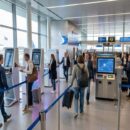
Image generated with Ai
Denmark is currently facing a significant wave of air travel disruptions. Both Copenhagen and Aalborg airports are reporting a surge in flight irregularities today. Passengers are navigating a complex landscape of 20 total cancellations and 176 delays across the region. Scandinavian Airlines (SAS) leads the affected carriers with a high volume of impacted flights in the capital. Meanwhile, Cityjet and KLM are also managing multiple service interruptions at both major hubs. These logistical hurdles affect both business commuters and holiday seekers. Travelers are feeling the immediate impact of these schedule changes. This report examines the specific data behind these events. It provides a clear overview of the current situation at Copenhagen and Aalborg. Please read on for a detailed breakdown of the affected routes and carriers.
The disruption is centered primarily around Copenhagen Airport, the largest international gateway in Denmark. At this location, a total of 15 cancellations have been recorded, alongside a staggering 168 flight delays. As the primary hub for Scandinavian travel, the ripple effects of these delays are being felt across the regional network.
Simultaneously, Aalborg Airport, which serves as a vital link for the northern Jutland region, is also experiencing its share of logistical hurdles. In Aalborg, 5 cancellations have been confirmed, while 8 delays have been reported. Although the volume of traffic in Aalborg is lower than that of the capital, the high ratio of cancellations relative to the total number of flights suggests a concentrated impact on local travelers and regional connectivity.
The operational burden is distributed across several major carriers, with SAS (Scandinavian Airlines) bearing the brunt of the disruptions at Copenhagen. A total of 8 cancellations and 51 delays have been attributed to SAS operations today. As the flag carrier of Denmark, the scale of these delays has a profound impact on the overall efficiency of the airport’s daily schedule.
Advertisement
Cityjet has also reported significant figures, with 4 cancellations and 9 delays occurring at Copenhagen and an additional 1 cancellation and 2 delays at Aalborg. Furthermore, KLM has seen its operations hindered with 2 cancellations and 2 delays in the capital, while its Aalborg services were met with 2 cancellations and 0 delays.
Other notable disruptions include German Airways, which recorded 2 cancellations and 1 delay in Aalborg and the low-cost carrier easyJet, which faced 1 cancellation and 14 delays at Copenhagen. The diversity of the affected airlines—ranging from legacy carriers to regional operators and budget airlines—indicates a widespread impact across all segments of the travel industry.
Advertisement
Advertisement
The concentration of these flight irregularities in Copenhagen and Aalborg might have a tangible effect on local tourism and business activities. Copenhagen, being a major cultural and economic center in Denmark, relies heavily on a seamless flow of international visitors. With 168 delays reported, the arrival of tourists to hotels, restaurants and scheduled events is inevitably postponed, potentially leading to lost revenue for the local hospitality sector.
In Aalborg, the impact is felt through the loss of regional connectivity. When 5 flights are cancelled in a single day at a regional hub, the movement of business travelers and domestic tourists is significantly restricted. The local economy in Aalborg often benefits from the efficiency of its airport; therefore, these disruptions may lead to a temporary slowdown in visitor spending and a decrease in the reliability of the city as a quick-access destination for weekend travel.
Advertisement
Advertisement
For those currently navigating the disruption in Denmark, several steps are recommended by industry experts to mitigate the inconvenience. Passengers at Copenhagen and Aalborg are advised to monitor their flight status through official airline mobile applications or the airport’s real-time departure boards before proceeding to the terminal.
Under European passenger rights regulations (specifically EC 261/2004), passengers whose flights are cancelled or significantly delayed may be entitled to care and assistance. This typically includes the provision of food and refreshments, as well as hotel accommodation if an overnight stay becomes necessary.
Affected travelers are encouraged to maintain communication with their respective carriers—whether it be SAS, KLM, Cityjet or easyJet—to discuss rebooking options. Most airlines are required to offer an alternative flight to the final destination at the earliest opportunity or a full refund of the ticket price if the travel is no longer required. It is also advised that all receipts for out-of-pocket expenses related to the delay be retained for future claims.
As the situation in Denmark develops, the focus remains on restoring the schedule to its full capacity and ensuring that the passengers impacted by today’s 176 delays and 20 cancellations are reaching their destinations with minimal further interference.
-The information provided is sourced from FlightAware.
Advertisement
Tags: Aalborg Airport, Copenhagen Airport, Denmark Travel Disruption, klm, Scandinavian Airlines (SAS)

















Monday, February 16, 2026
Monday, February 16, 2026

Monday, February 16, 2026

Monday, February 16, 2026
Monday, February 16, 2026

Monday, February 16, 2026
Monday, February 16, 2026

Monday, February 16, 2026