Published on March 3, 2026

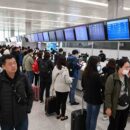
Image generated with Ai
For many travelers who once associated Dubai’s glittering skyline and seamless airports with luxury and security, the past few days have been defined by uncertainty, long waits, and tough decisions. After major airports in Dubai, Abu Dhabi, and Doha suspended operations following escalating regional conflict, tens of thousands of passengers found themselves stranded. While commercial flights remain limited, a small but determined group of affluent travelers is turning to private aviation, paying staggering sums to secure safe passage to Europe.
The closures, triggered by heightened security risks across the Gulf region, disrupted one of the world’s busiest aviation corridors. According to official aviation advisories from the United Arab Emirates General Civil Aviation Authority (GCAA.gov.ae) and Qatar Civil Aviation Authority (CAA.gov.qa), temporary airspace restrictions were implemented as precautionary measures to protect passenger safety. Government agencies emphasized that decisions were based on evolving threat assessments and coordination with international aviation partners.
With commercial departures severely reduced, demand for private charter flights has surged dramatically. Industry executives have indicated indirectly that requests for aircraft now far exceed available supply. Brokers operating between the Gulf and Europe report that flights which would normally command premium but manageable rates have doubled in cost due to scarcity, repositioning logistics, and heightened operational risk assessments.
Charter operators serving routes from Riyadh, Saudi Arabia, and Muscat, Oman — two airports still functioning as evacuation gateways — are seeing intense demand. Prices for long-haul flights to destinations such as Portugal, France, and the United Kingdom are reportedly reaching into the high six-figure euro range. Industry leaders explained that these elevated rates are not speculative but reflect limited aircraft availability, crew repositioning costs, and additional security considerations.
Advertisement
Advertisement
The U.S. Federal Aviation Administration (FAA.gov) has issued global NOTAM advisories in recent days, cautioning airlines about potential hazards in affected airspace corridors. Similarly, the UK Civil Aviation Authority (CAA.co.uk) has updated travel advisories urging passengers to monitor airline communications closely. These official notices underscore the volatility of the current airspace environment.
As Dubai International Airport and other hubs paused operations, many stranded travelers began making overland journeys to Muscat or Riyadh. The drive to Muscat typically takes approximately four hours under normal conditions, while reaching Riyadh can exceed ten hours depending on traffic and border wait times. However, heavy congestion at border crossings has extended travel times significantly.
Advertisement
Advertisement
Security and risk management firms operating in the region report that wait times at certain border checkpoints have stretched to several hours due to increased traffic flow. The UK government’s Foreign Office (Gov.uk) and the U.S. Department of State (Travel.State.gov) have both updated travel advisories urging citizens in the Gulf to remain vigilant, register with embassies, and follow official instructions.
Private security companies are assisting with coordinated transfers, arranging transportation in vehicles ranging from sedans to larger buses. Operators confirm that most clients seeking evacuation are international travelers rather than permanent residents. Business executives, entrepreneurs, remote workers, and families make up a significant share of those opting for charter solutions.
Security experts anticipate that the ongoing conflict may continue to disrupt aviation and energy infrastructure across the region for weeks. International SOS, a global health and security services provider, has reportedly advised corporate clients to prepare contingency evacuation plans and flexible travel arrangements.
The International Air Transport Association (IATA.org) notes that geopolitical instability can have cascading effects on global travel networks, particularly in regions serving as major transit hubs between Europe, Asia, and Africa. The Gulf’s airports are central connectors in this system, meaning closures ripple quickly across international itineraries.
Airlines are working with regulators to assess safe reopening timelines. However, aviation authorities have stressed that safety remains the overriding priority. The European Union Aviation Safety Agency (EASA.europa.eu) continues to monitor developments and update its conflict zone information bulletins accordingly.
For stranded travelers, the experience has been deeply emotional. Some describe a sense of urgency and uncertainty as they navigate shifting flight schedules and mounting accommodation costs. Others face the dilemma of whether to remain in place until commercial service resumes or to invest heavily in private alternatives.
Industry representatives conveyed that demand has reached extraordinary levels and that aircraft supply cannot keep pace. They indicated that pricing increases stem from operational realities rather than opportunistic markups. Charter availability varies depending on departure airport, aircraft size, and routing restrictions.
Despite the high costs, many travelers continue to explore evacuation options. Travel advisors recommend maintaining close contact with airlines, embassies, and official civil aviation websites for real-time updates. Governments have reiterated that citizens should rely only on verified channels for information and avoid unconfirmed social media reports.
As the situation evolves, Gulf airports remain symbols of both disruption and resilience. What began as a sudden shutdown has now reshaped travel decisions for thousands. For those waiting patiently in hotel rooms or lining up at border crossings, hope rests on the promise that stability will return and commercial travel corridors will reopen safely. Until then, the region’s once-effortless travel experience has transformed into a high-stakes journey defined by caution, coordination, and, for some, extraordinary expense.
Advertisement
Tags: Abu Dhabi, Doha, Dubai, Gulf region, Middle East


















Tuesday, March 3, 2026

Tuesday, March 3, 2026

Tuesday, March 3, 2026

Tuesday, March 3, 2026

Tuesday, March 3, 2026
Tuesday, March 3, 2026

Tuesday, March 3, 2026

Tuesday, March 3, 2026