
Flights Cancelled Sweeping Saudi Arabia As 248 Cancellations And 575 Delays Disrupt Major Airports And Airlines: What You Should Know

Published
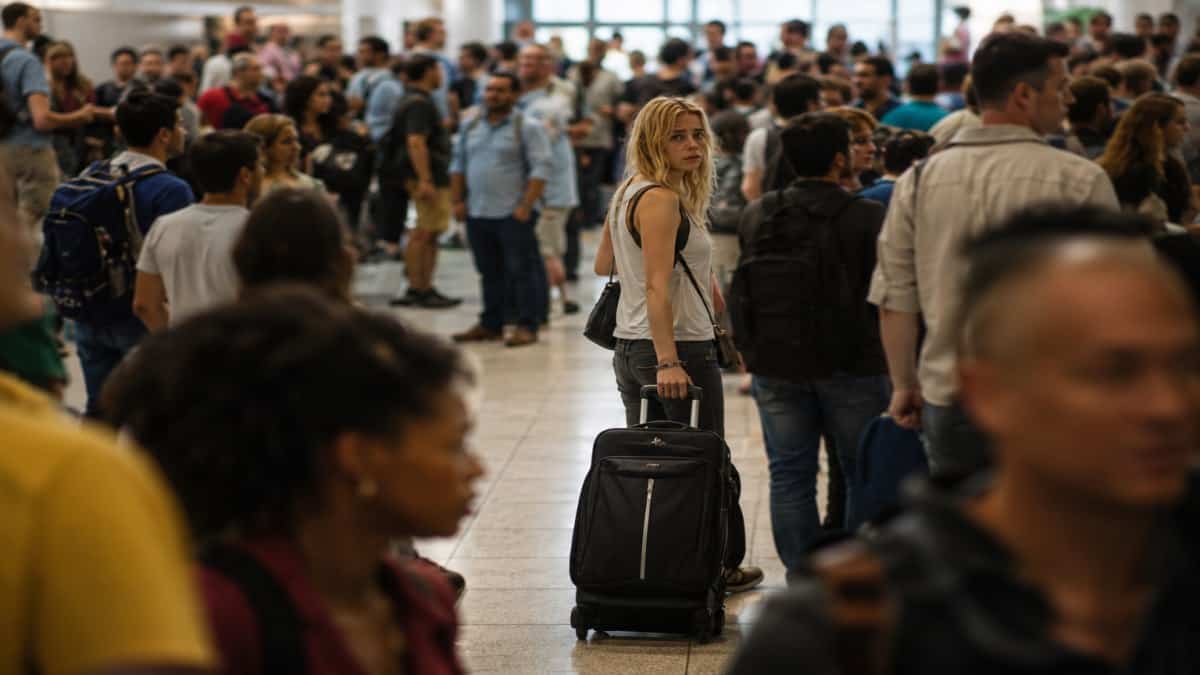
Thousands of passengers remain stranded as Saudi Arabia came under significant pressure today, with 575 delays and 248 cancellations disrupting airports serving Jeddah, Riyadh, Abha, Ta’if, Gizan, and Najran.
King Abdulaziz in Jeddah emerged as the country’s busiest disruption hotspot, recording both the highest number of delays (359) and cancellations (68), while King Khalid International Airport in Riyadh also experienced substantial operational strain. Saudia bore the brunt of the disruption, accounting for around 74.2% of all cancellations, highlighting the airline’s dominant domestic network and extensive exposure.
The disruption comes as regional aviation continues to operate against a backdrop of heightened security concerns linked to the Saudi-Houthi conflict, missile and drone threats, and broader geopolitical tensions involving Iran and the United States, all of which can influence airline scheduling, airport operations, and precautionary operational decisions.
- Jeddah experienced the highest number of both delays and cancellations.
- Riyadh was the country’s second-largest disruption center.
- Saudia accounted for roughly 74% of all cancellations.
- Heightened regional security concerns remain an important operational factor for airlines.
What Today’s Flight Data Reveals
The disruption pattern tells a far more nuanced story than a typical operational slowdown. Nearly all delays were concentrated at Saudi Arabia’s two largest aviation hubs—Jeddah and Riyadh—while regional airports recorded remarkably few delays despite experiencing large numbers of cancellations.
Advertisement
Advertisement
That contrast suggests airlines were prioritizing operational certainty over schedule recovery. At major hubs, carriers could continue moving aircraft and passengers through extensive airport infrastructure, even if departures slipped behind schedule. Smaller airports, however, offered fewer opportunities to absorb operational disruption. Rather than allowing flights to accumulate lengthy delays, airlines appear to have canceled services altogether.
Another striking feature is how heavily the disruption centered on airlines with extensive domestic operations. Because carriers such as Saudia, Flynas, and flyadeal connect major hubs with regional cities throughout the kingdom, operational adjustments at Jeddah and Riyadh can quickly ripple across airports like Abha, Gizan, Ta’if, and Najran.
Advertisement
Advertisement
Compared with a typical operating day, the balance between delays and cancellations was unusually uneven. Instead of widespread moderate delays across the network, Saudi aviation experienced concentrated congestion at its primary hubs while regional schedules were trimmed through cancellations, indicating a network-wide effort to stabilize operations.
Why Flights Were Disrupted Across Saudi Arabia
Several factors contributed to today’s challenges.
Regional aviation continues to operate amid Saudi-Houthi conflict, missile and drone threats, and elevated aviation security concerns.
Yemen’s Iran-backed Houthi movement recently said it had launched missiles and drones targeting facilities in Saudi Arabia following Saudi airstrikes on Hodeida.
The group also renewed threats involving shipping through the Bab el-Mandeb Strait after earlier tensions surrounding Sanaa International Airport.
Although airlines and aviation authorities do not publicly attribute individual flight disruptions to specific security events without official confirmation, periods of heightened regional tension can lead to increased operational caution.
Airlines may adjust schedules, aircraft positioning, crew planning, and airport operations while monitoring security developments.
Broader geopolitical tensions involving Iran and the United States also continue to add uncertainty across the Middle East, encouraging airlines to remain flexible as conditions evolve.
Advertisement
Advertisement
Editor’s Analysis
Today, Saudi Arabia’s aviation network effectively split into two operating environments.
Major hubs such as Jeddah and Riyadh continued processing large volumes of traffic, albeit with substantial delays, while regional airports experienced extensive cancellations despite little evidence of prolonged ground congestion.
That operational choice suggests airlines deliberately protected their core hub operations while reducing services on routes where recovery options were more limited.
The fact that Saudia alone accounted for nearly three-quarters of all cancellations reinforces how heavily the kingdom’s aviation system depends on one dominant network carrier.
If regional security concerns persist over the next 12 to 24 hours, airlines may continue favoring targeted cancellations over widespread delays to preserve schedule reliability across their busiest hubs.
Worst-Hit Saudi Airports
King Abdulaziz (Jeddah)
Jeddah became the country’s primary disruption center with 359 delays and 68 cancellations. Saudia, flyadeal, and Flynas experienced the greatest operational impact here, reflecting the airport’s role as one of Saudi Arabia’s busiest domestic and international gateways. Because so much of the kingdom’s traffic flows through Jeddah, even relatively small operational constraints can quickly cascade throughout airline networks.
King Khalid (Riyadh)
Riyadh recorded 211 delays and 58 cancellations, making it the second-largest disruption point. Saudia, Flynas, and flyadeal again accounted for much of the operational pressure. As Saudi Arabia’s capital hub, Riyadh continued operating many scheduled flights but with extended delays rather than widespread cancellations.
Abha Regional
Abha experienced an unusual pattern, recording only 2 delays but 51 cancellations. Most cancellations involved Saudia and flyadeal, suggesting airlines significantly reduced scheduled operations instead of allowing flights to depart late.
Gizan Regional
Gizan saw 37 cancellations with no reported delays. The airport’s disruption pattern points to outright schedule reductions, particularly affecting Saudia, flyadeal, and Flynas, rather than prolonged airport congestion.
Ta’if Regional
Ta’if experienced 17 cancellations while only 3 flights were delayed. Most affected flights belonged to Saudia, with several international regional carriers also recording cancellations, indicating selective operational cuts.
Advertisement
Advertisement
Najran Domestic
Najran reported 17 cancellations without any recorded delays. Almost every affected flight involved Saudia, illustrating how regional services were adjusted rapidly rather than delayed.
Which Airlines Faced The Greatest Operational Pressure
Saudia
No airline experienced greater operational pressure than Saudia, recording 207 delays and 184 cancellations, representing roughly 74.2% of all cancellations across the affected airports. The airline was heavily impacted at Jeddah and Riyadh while also dominating cancellations at Abha, Gizan, Ta’if, and Najran because of its extensive domestic network.
Flynas
Flynas accumulated 122 delays and 16 cancellations, with most delays concentrated at Jeddah and Riyadh. Although cancellations were comparatively lower, the airline remained one of the country’s most affected operators due to its extensive presence on domestic routes.
flyadeal
flyadeal recorded 96 delays and 28 cancellations, with operational pressure centered on Jeddah, Riyadh, Abha, and Gizan. The carrier experienced significant disruption across both major hubs and regional airports, reflecting its growing domestic footprint.
What Travelers Should Expect
Passengers flying through King Abdulaziz International Airport, King Khalid International Airport, Abha Regional, Gizan Regional, Ta’if Regional, and Najran Domestic Airport should be prepared for continued schedule adjustments if operational conditions remain unchanged.
Flights through Jeddah and Riyadh may continue experiencing longer departure delays as airlines work to recover aircraft rotations and reposition crews. At regional airports, passengers could see cancellations remain more common than lengthy delays if airlines continue prioritizing network stability.
Advertisement
Advertisement
Travelers should closely monitor airline notifications, as carriers may continue adjusting schedules throughout the day in response to operational requirements and evolving regional conditions.
Overview of Flight Disruptions
Saudi Arabia’s aviation network experienced one of its more uneven operating days, with disruptions affecting Jeddah, Riyadh, Abha, Gizan, Ta’if, and Najran. Saudia, Flynas, flyadeal, FlyDubai, EgyptAir, and several other carriers all experienced operational impacts, although the vast majority of cancellations were concentrated within Saudia’s network.
The pattern showed major hubs absorbing most delays while regional airports experienced significant schedule reductions, reflecting airlines’ efforts to manage operational pressure across the kingdom. As regional conditions continue to evolve, airlines are expected to keep adjusting schedules where necessary, making close monitoring of flight status increasingly important for travelers over the coming days.
Data Verification Notice
The Data is extensively curated by me with figures derived from Flightaware dated 26th July 4:38 am IST
Primary Source: Real-time data aggregated via FlightAware.
Verification Protocol: Statistics are cross-checked by our human editorial desk. Timestamped logs and feed snapshots are securely archived internally to maintain historical accuracy.
Note: Real-time tracking figures represent active airspace data and may experience minor variances from local airport terminal gates.
Travelers are advised to check respective airline and airports for more latest information and updates
Advertisement
