
Over 1,590 Cancellations and 4,424 Delays Impact Asia Travel across Hohhot, Riyadh and More Airports

Published
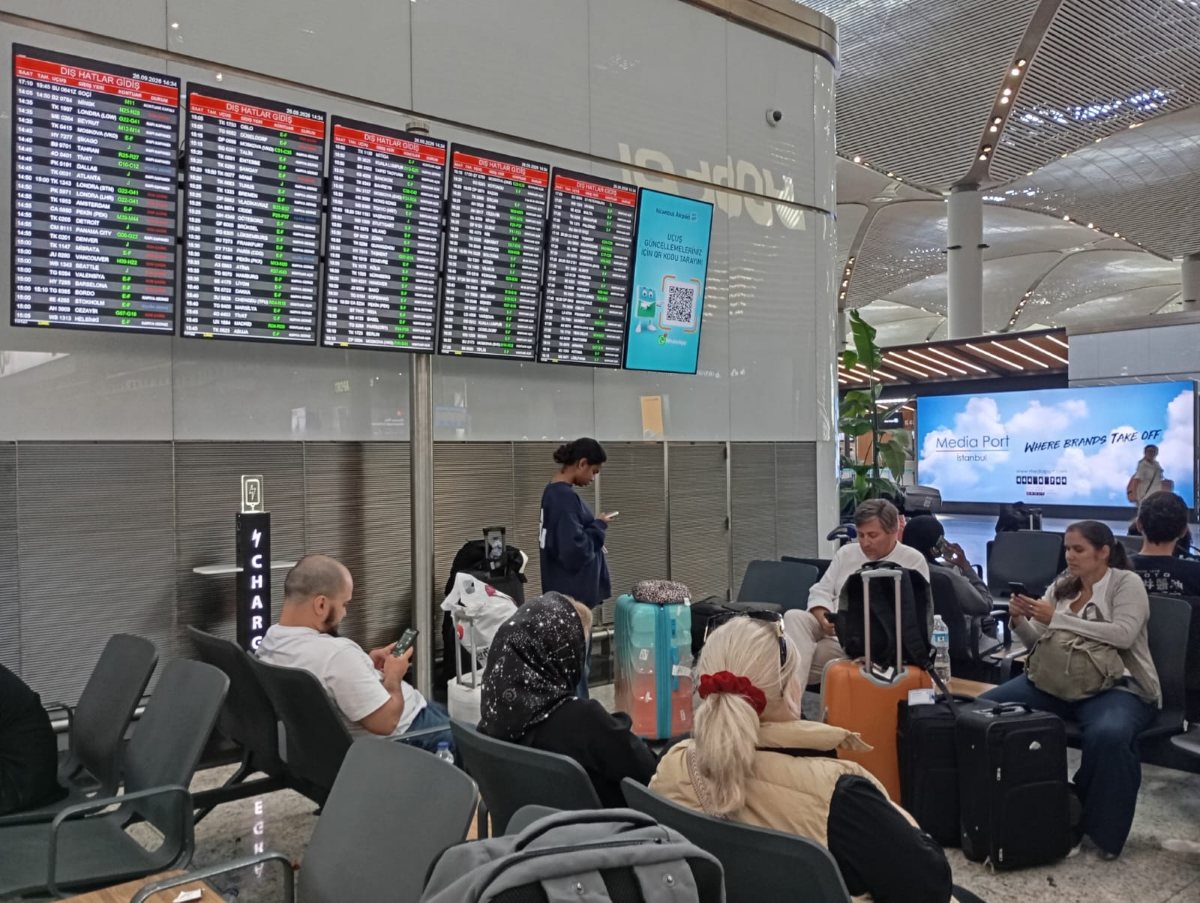
Travel in Asia has been negatively impacted on 13th October by around 1,590 flight cancellations and 4,424 delays, which have disrupted operations at key airports including Hohhot and Riyadh. Thousands of travelers are now dealing with uncertainty, lost connections, and unforeseen travel modifications as a result of the extensive disruption. Significant cancellations have occurred in Saudi Arabia as a result of regional tensions, airport closures, and increased security concerns. In the meanwhile, poor visibility and smoke from wildfires are causing aircraft difficulties in Indonesia. In addition, aviation operations in several regions of Thailand and the Philippines have been hindered by heavy rains, thunderstorms, and difficult weather. Significant delays have also been reported at airports in China, India, Vietnam, and the United Arab Emirates.
Saudi Arabia Records Severe Flight Cancellations as Riyadh and Jeddah Face Major Disruption over Asia
Saudi Arabia stands out as one of the most severely affected aviation markets in the supplied data.
Advertisement
Advertisement
Riyadh’s King Khalid International Airport recorded 532 cancellations and one delay, making it the airport with the highest reported cancellation count. Meanwhile, Jeddah’s King Abdulaziz International Airport experienced 168 cancellations and 173 delays.
Dammam’s King Fahd International Airport reported 79 cancellations and 42 delays. Madinah’s Prince Mohammad bin Abdulaziz International Airport registered 31 cancellations and 26 delays.
Advertisement
Advertisement
Other Saudi airports also recorded considerable disruption. Abha reported 29 cancellations and 13 delays, while Taif experienced 14 cancellations and three delays. Hail registered 12 cancellations and three delays.
The figures suggest that flight cancellations are particularly concentrated in Saudi Arabia, potentially affecting passengers travelling between the kingdom and other major Asian destinations.
Advertisement
Advertisement
China, India and Southeast Asia Experience Widespread Flight Delays
China and India Face Pressure at Major Aviation Hubs
China’s busiest international and domestic airports recorded substantial delays.
Guangzhou Baiyun International Airport reported 207 delays and six cancellations. Shanghai Pudong experienced 198 delays and seven cancellations, while Shanghai Hongqiao registered 145 delays and three cancellations.
Advertisement
Advertisement
Shenzhen Bao’an International Airport recorded 121 delays and 11 cancellations. Beijing Capital International Airport experienced 111 delays and 22 cancellations.
Hohhot Baita International Airport reported 13 delays and 12 cancellations.
India also experienced significant disruption. Mumbai’s Chhatrapati Shivaji Maharaj International Airport recorded 209 delays and 31 cancellations.
Bengaluru’s Kempegowda International Airport registered 69 delays and 12 cancellations, while Hyderabad’s Rajiv Gandhi International Airport reported 56 delays and 13 cancellations.
Advertisement
Advertisement
Ahmedabad recorded 27 delays and seven cancellations, while Navi Mumbai reported 21 delays and 10 cancellations.
Thailand, Vietnam and Indonesia Report Significant Schedule Disruptions
Bangkok’s Suvarnabhumi International Airport experienced 214 delays and two cancellations, placing it among the airports with the highest delay counts.
In Vietnam, Ho Chi Minh City’s Tan Son Nhat International Airport reported 233 delays and 10 cancellations. Hanoi’s Noi Bai International Airport registered 122 delays and seven cancellations, while Da Nang experienced 62 delays and 12 cancellations.
Indonesia also faced considerable disruption.
Jakarta’s Soekarno-Hatta International Airport recorded 233 delays and 39 cancellations. Bali’s I Gusti Ngurah Rai International Airport reported 84 delays and five cancellations, while Sultan Hasanuddin International Airport experienced 88 delays and nine cancellations.
These figures demonstrate how flight delays are affecting several important business and leisure travel destinations across Southeast Asia.
Advertisement
Advertisement
Which Airlines across Asia Are Most Affected by Flight Cancellations and Delays?
Airline-level figures reveal considerable differences in how carriers are experiencing the disruption.
Saudi Airlines Face Particularly High Cancellation Rates
Saudia recorded 265 cancellations, representing 50% of its reported flights, alongside 101 delays, or 19%.
Flynas registered 115 cancellations, equivalent to 43%, and 33 delays, representing 12%.
flyadeal reported 65 cancellations, accounting for 36%, alongside 18 delays, or 10%.
Riyadh Air recorded 23 cancellations, representing 71%, with no reported delays.
These figures highlight the unusually high cancellation rates affecting several Saudi carriers.
Advertisement
Advertisement
IndiGo, China Eastern and Air China Report Heavy Delays
India’s IndiGo recorded 370 delays, representing 17% of its flights, alongside 39 cancellations, or 1%.
China Eastern reported 282 delays, equivalent to 12%, and 32 cancellations, accounting for 1%.
Air China registered 94 delays, or 5%, alongside 53 cancellations, representing 3%.
Shenzhen Airlines experienced 84 delays, accounting for 11%, and 37 cancellations, equivalent to 5%.
Meanwhile, India’s Akasa Air reported 27 cancellations, representing 11%, and 26 delays, accounting for 10%.
Vietnam Airlines registered 80 delays, or 21%, alongside 17 cancellations, representing 4%.
Advertisement
Advertisement
Batik Air recorded 78 delays, equivalent to 26%, and 24 cancellations, accounting for 8%.
Qatar Airways experienced 80 delays, representing 12%, alongside 25 cancellations, or 4%.
Among UAE carriers, flydubai reported 22 cancellations, representing 7%, and 51 delays, or 18%. Emirates recorded four cancellations, displayed as 0% after rounding, and 69 delays, representing 13%.
Turkish Airlines registered 121 delays, equivalent to 8%, alongside five cancellations, displayed as 0% after rounding.
How Can Affected Passengers Manage Flight Delays and Cancellations?
- Passengers travelling through affected Asian airports should verify their flight status directly through airline websites, mobile applications or official airport information channels.
- Travellers whose flights have been cancelled should contact their airlines to explore rebooking options, alternative connections or refunds under applicable ticket conditions and passenger protection rules.
- Those facing lengthy delays should retain boarding passes, booking confirmations and receipts for additional expenses.
- Passengers with connecting flights should check whether their onward journeys remain valid before accepting alternative arrangements.
- International travellers must also review transit visa requirements when considering replacement routes through different countries.
Air travel across Asia and the Middle East faces widespread disruption, with 1,599 reported flight cancellations and 4,424 delays affecting major airports in Saudi Arabia, China, India, Thailand, Vietnam, Indonesia and neighbouring countries. The airport data highlights particularly severe cancellations in Riyadh and Jeddah, while passengers at Mumbai, Bangkok, Guangzhou and Jakarta face substantial delays. Airlines including Saudia, IndiGo, China Eastern, Air China and Flynas have also recorded significant disruption. The figures reveal different challenges across the region, from high cancellation volumes in Saudi Arabia to widespread schedule delays at major Asian aviation hubs.
Data Verification Notice
The data has been extensively curated by our editorial team using real-time aviation figures recorded on 13 October 2026 at 2:40 pm ET USA (13 October 2026, 10:40 pm GST).
Primary Source: FlightAware, Local Correspondent
Verification Protocol: All statistics have been independently reviewed and cross-checked by our human editorial desk. Timestamped records, data logs and feed snapshots are securely archived internally to support historical accuracy and editorial transparency.
Note: Real-time flight-tracking figures reflect active airspace and operational data. Minor variations may occur when compared with information displayed at individual airport terminals or airline departure gates.
You can read our yesterday’s article on disruptions across Asia. Click here to read the full report.
Advertisement
Verified by Tuhin Sarkar
