
Azerbaijan Moves Alongside Kazakhstan To Bypass Traditional Transit Corridors, Fuel Silk Road Tourism, And Link Central Asia Directly To Europe

Published
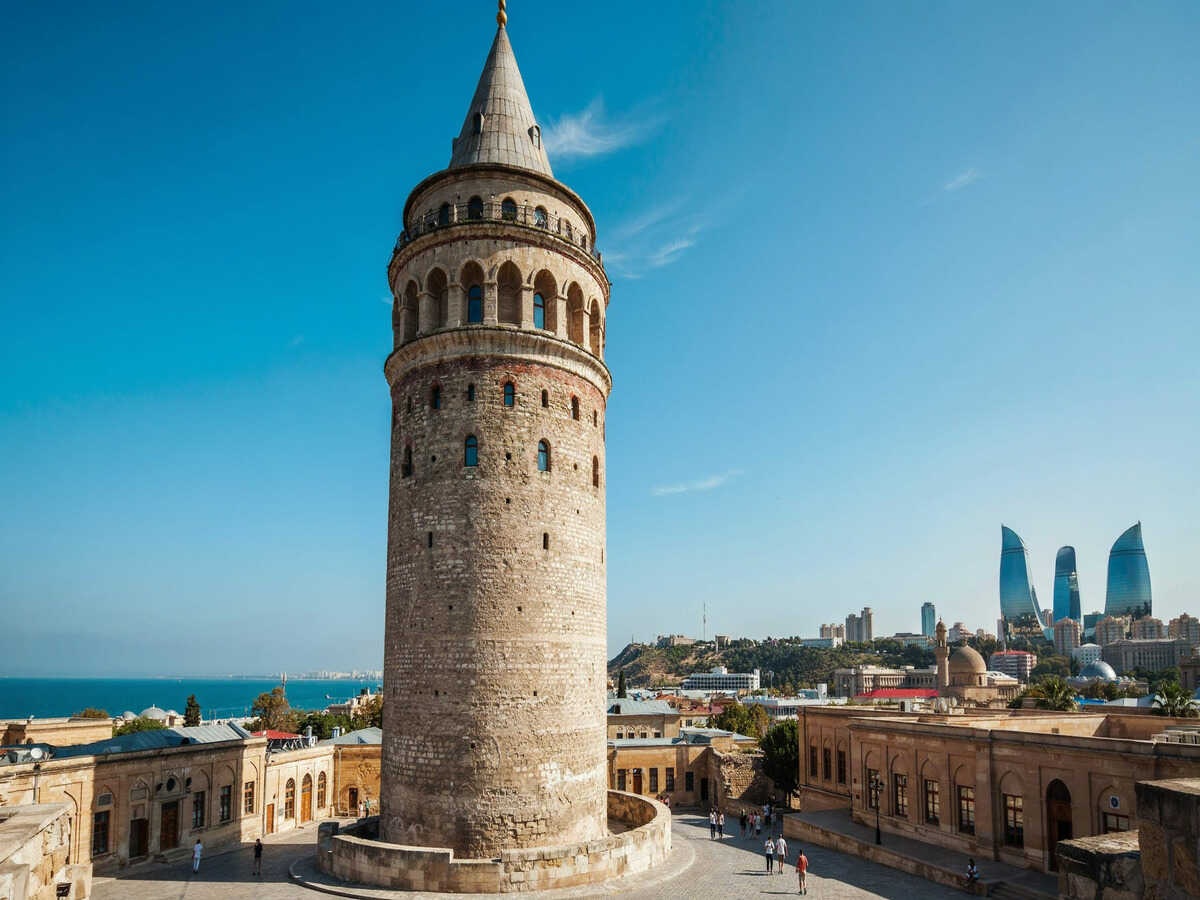
Together, Azerbaijan and Kazakhstan have formed an alliance to construct trans-Caspian routes that will enable Central Asia to be directly connected to Europe. There is a massive restructuring of the geopolitical and economic map of Eurasia taking place. This restructuring is primarily being fueled by the emergence of a new strategic partnership between Baku and Astana, which happen to lie at opposite ends of the Caspian Sea.
Combined, Azerbaijan and Kazakhstan account for more than three-fifths of the total nominal GDP of Central Asia and the South Caucasus. While their direct bilateral merchandise trade has historically been modest, their geographic synergy is unprecedented. By aligning their transport, energy, digital, and industrial strategies, Azerbaijan moves alongside Kazakhstan to bypass traditional transit corridors and link Central Asia directly to Europe.
Advertisement
Advertisement
The Core Engine: Reorienting Eurasia via the Middle Corridor
For decades, East-West trade between Asia and Western Europe relied heavily on Northern overland routes passing through Russia, or Southern maritime routes passing through congested chokepoints like the Suez Canal. Recent geopolitical disruptions and economic shifts have made supply chain predictability a paramount concern for global shippers.
The Trans-Caspian International Transport Route (TITR)—popularly known as the Middle Corridor—has emerged as the premier alternative. By coordinating investments in rail, port infrastructure, and customs clearance, Baku and Astana are transforming this transit path into a seamless, high-speed logistical backbone.
Advertisement
Advertisement
- ◈ Route Optimization: Synchronizing train schedules with Caspian Sea ship sailings eliminates costly bottlenecks at port terminals.
- ◈ Transit Time Reduction: Advanced logistical coordination aims to cut East-West transit times across the Caspian to under 15 days.
- ◈ Digital Customs Clearing: Integrated paperless customs platforms allow cargo to move across multiple national borders with single-window clearance.
Infrastructure Across the Caspian: Transit, Energy, and Bytes
The alliance between Azerbaijan and Kazakhstan extends far beyond cargo trains and container ships. The two nations are building a multi-layered infrastructure web beneath and across the Caspian Sea, spanning energy transit, telecommunications, and industrial manufacturing.
| Strategic Domain | Infrastructure & Bilateral Initiatives | Primary Strategic Objective |
| Maritime Transport | Modernization and expansion of Baku International Sea Trade Port (Alat) and Port of Aktau/Kuryk | Increase cross-Caspian container throughput and feeder ship capacity |
| Energy Transit | Diversification of Kazakh crude oil exports via the Baku-Tbilisi-Ceyhan (BTC) pipeline; high-voltage green energy transmission | Secure non-Russian energy export routes to European markets |
| Digital Connectivity | Digital Silk Way cross-Caspian fiber-optic cable project linking Aktau and Baku | Establish a high-capacity digital telecom corridor between Europe and Asia |
| Industrial Integration | Joint logistics hubs, economic zone synergies, and localized processing centers along transit nodes | Convert passive transit trade into value-added regional manufacturing |
Transforming Transit into Regional Industrial Powerhouses
A central pillar of the Azerbaijan-Kazakhstan strategic partnership is the belief that transit alone is insufficient to sustain long-term economic growth. For the Middle Corridor to reach its full economic potential, cross-Caspian shipping must be embedded directly into local supply chains and industrial production.
Advertisement
Advertisement
Instead of acting merely as a passive pass-through bridge for foreign goods, Central Asia and the South Caucasus are establishing specialized economic zones at major logistical nodes.
- ❖ Value-Added Processing: Raw materials from Central Asia are processed at regional hubs before being exported as finished or semi-finished products to European markets.
- ❖ Shared Manufacturing Hubs: Joint ventures in light manufacturing, chemical production, and machinery assembly are taking advantage of proximity to cross-Caspian transit lines.
- ❖ Supply Chain Resilience: Regionalizing supply chains buffers local economies against external global shocks and volatile commodity cycles.
4. Catalyzing Aviation and Regional Tourism Corridors
The tightening logistics and political cooperation between Baku and Astana is generating a powerful spillover effect in civil aviation, passenger travel, and regional tourism.
Advertisement
Advertisement
Expanding Air Connectivity and Express Logistics
Bilateral transit agreements have driven a significant increase in direct passenger and cargo flights connecting major urban and industrial centers, including Baku, Almaty, Astana, and Aktau. Shared codeshare agreements between national carriers—such as Azerbaijan Airlines (AZAL) and Air Astana—have created unified air corridors that serve both business travellers and high-value cargo.
Multi-Destination Silk Road Tourism
Enhanced transport coordination allows international travel agencies to market joint multi-destination travel packages. Tourists can easily explore the cultural landmarks of Baku and the South Caucasus, cross the Caspian, and continue through the mountain resorts of Kazakhstan and historical Silk Road cities in Central Asia on a single streamlined itinerary.
Simplified Border Logistics and Maritime Cruises
Bilateral efforts to digitalize visa processes and passport control are reducing friction for international visitors. Furthermore, port expansions in Baku, Aktau, and Kuryk are laying the foundation for future Caspian cruise tourism and passenger ferry routes, providing a unique maritime travel dimension across the sea.
Economic Weight and Geopolitical Significance
The economic alignment of Azerbaijan and Kazakhstan represents a shift toward self-determined regional integration. By establishing a direct, reliable bridge between Central Asia and Europe, both nations enhance their strategic autonomy while providing landlocked neighbors with dependable access to global maritime trade networks.
Advertisement
Advertisement
- ✦ Enhanced Strategic Autonomy: Developing independent transit options provides Central Asian economies with greater flexibility in choosing trade partners and routes.
- ✦ Attracting Global Investment: Multilateral financial institutions and European investors are actively funding Middle Corridor infrastructure due to its predictability and commercial viability.
- ✦ Anchor of Stability: Deepening ties between the South Caucasus and Central Asia foster broader diplomatic cooperation, promoting peace and economic stability across the wider Eurasian continent.
In a similar fashion, Azerbaijan and Kazakhstan join hands across the Caspian Sea in order to create an essential Middle Corridor transport corridor that connects Central Asia with Europe.
Through the harmonization of customs regulation, construction of port facilities, and development of digital and energy grids across the Caspian Sea, the Middle Corridor is becoming not only an innovative logistics project but also an essential trade highway. By acting in synergy, Azerbaijan and Kazakhstan are not just joining two shores of the Caspian Sea; they are changing Eurasian connectivity forever.
Advertisement
