
Qatar Airways Cuts 20 Long-Haul Routes, Depriving British Holidaymakers Of Vital Direct Welsh Regional Connections

Published
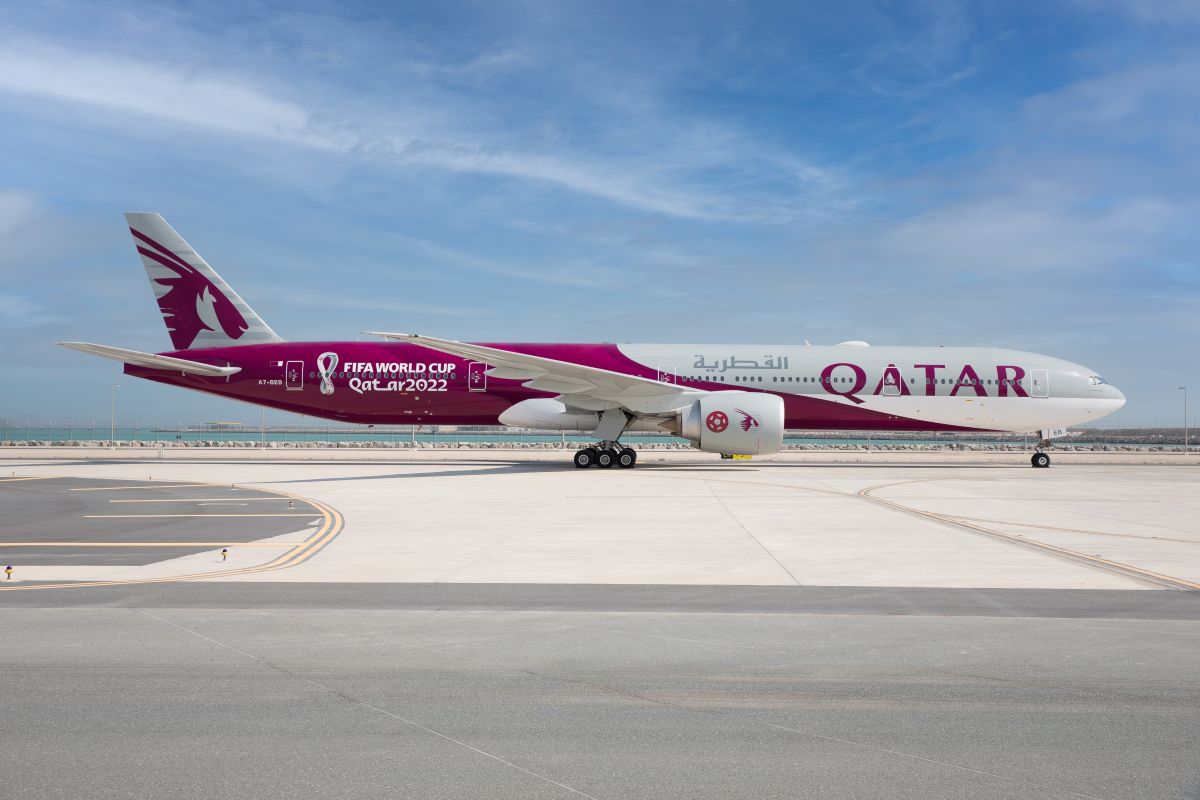
Doha-based flag carrier Qatar Airways has officially withdrawn scheduled passenger services across 20 international markets since 2016. The carrier eliminated underperforming regional destinations spanning Africa, the Americas, Asia, and Europe from its schedules. Fresh network analytics from Cirium Diio reveal that management axed routes that failed to maintain year-round load profitability. Qatar Airways cuts 20 long-haul routes to protect its core transit timetable through Hamad International Airport. Although the 2020 pandemic triggered most cancellations, strategic withdrawals continued steadily through 2026. This tactical consolidation signals a broader commercial pivot toward network discipline, elevated aircraft utilisation, and premium passenger revenue.
This commercial realignments fundamentally reshapes intercontinental transit routing for worldwide passengers. International travellers must now navigate connecting flights through domestic code-share agreements or regional alliance partners. The carrier now channels capital resources toward high-demand international trunk corridors.
Strategic Fleet Redeployment Reshapes the Doha Hub
A decade of schedule adjustments demonstrates how global carriers continually balance seat capacity against escalating fuel expenses. Qatar Airways concentrated the vast majority of its long-haul market closures during 2020. That historic health crisis forced the immediate suspension of 13 separate intercontinental routes. However, subsequent route exits through 2026 show ongoing operational optimisation rather than simple emergency downsizing. Aviation executives now favour sustainable yields over aggressive network map expansion.
The carrier rigorously examined secondary routes that delivered insufficient business cabin yields. Consequently, management redeployed modern widebody aircraft toward core capital gateways across Europe and North America. Official reports from the UK Civil Aviation Authority highlighted this commercial reality during the Cardiff route operation. The Welsh capital route recorded an average load factor of only 59% during 2019. Modest passenger loads cannot justify long-range aircraft operations without strong front-cabin corporate ticket sales.
Advertisement
Advertisement
| Strategic Metric | Historical Strategy (2016–2019) | Modern Operational Strategy (2020–2026) |
| Expansion Model | Rapid secondary city expansion | Strict yield consolidation on core trunk routes |
| Fleet Allocation | Mixed sub-fleet allocation across thin markets | Heavy deployment of twin-engine Airbus A350 and Boeing 787 |
| Route Viability | Dependent on regional airport financial incentives | Driven by self-sustaining premium and cargo yields |
| Connection Patterns | Dispersed secondary point-to-point operations | Concentrated high-volume transit banks through Doha |
Comprehensive Breakdown of Discontinued International Passenger Services
The 20 withdrawn destinations represent diverse operational environments across four distinct continents. European and Asian destinations bore the brunt of these schedule rationalisations over the decade. The European cancellations included secondary commercial centres such as Cardiff, Gothenburg, Pisa, Toulouse, Lyon, Hamburg, and Venice. Similarly, Southeast Asian adjustments eliminated leisure flights into Thailand, Malaysia, Indonesia, and Myanmar.
The carrier also terminated distant links across the South American and African regions. Qatar Airways permanently suspended passenger flights into Buenos Aires alongside African regional destinations like Windhoek and Gaborone. Each route exit returned valuable airframes back to the core Doha operational pool.
Advertisement
Advertisement
| Destination | Country | Region | IATA Code | Exit Year | Primary Aircraft Type |
| U-Tapao (Pattaya) | Thailand | Asia | UTP | 2018 | Boeing 787-8 |
| Gaborone | Botswana | Africa | GBE | 2020 | Airbus A350-900 |
| Rabat | Morocco | Africa | RBA | 2020 | Boeing 787-8 |
| Buenos Aires | Argentina | Americas | EZE | 2020 | Boeing 777-200LR |
| Chiang Mai | Thailand | Asia | CNX | 2020 | Boeing 787-8 |
| Da Nang | Vietnam | Asia | DAD | 2020 | Boeing 787-8 |
| Krabi | Thailand | Asia | KBV | 2020 | Boeing 787-8 |
| Langkawi | Malaysia | Asia | LGK | 2020 | Boeing 787-8 |
| Yangon | Myanmar | Asia | RGN | 2020 | Airbus A319 / A330 |
| Cardiff | United Kingdom | Europe | CWL | 2020 | Boeing 787-8 |
| Gothenburg | Sweden | Europe | GOT | 2020 | Boeing 787-8 |
| Pisa | Italy | Europe | PSA | 2020 | Airbus A320 / A330 |
| St. Petersburg | Russia | Europe | LED | 2022 | Boeing 787-8 |
| Windhoek | Namibia | Africa | WDH | 2023 | Boeing 787-8 |
| Medan | Indonesia | Asia | KNO | 2024 | Boeing 787-8 |
| Toulouse | France | Europe | TLS | 2024 | Airbus A330-200 |
| Lyon | France | Europe | LYS | 2025 | Boeing 787-8 |
| Kano | Nigeria | Africa | KAN | 2026 | Boeing 787-8 |
| Hamburg | Germany | Europe | HAM | 2026 | Boeing 787-8 |
| Venice | Italy | Europe | VCE | 2026 | Boeing 787-8 |
Economic Pressures Reshape Secondary Global Airport Connectivity
Airlines face intense pressure from elevated operating expenses, jet fuel volatility, and persistent aerospace supply delays. Major engine maintenance cycles also grounded dozens of modern widebody aircraft across the international aviation sector. These operational constraints forced airline planners to trim marginal routes that produce thin profit margins. When Qatar Airways cuts 20 long-haul routes, it eliminates exposure to weak secondary passenger demand.
Furthermore, secondary regional airports often lack sufficient high-yielding premium corporate traffic. Point-to-point economy leisure passengers rarely generate the revenue margins required to offset long stage lengths. Airlines must capture substantial cargo volumes and lucrative corporate bookings to achieve consistent profitability. Consequently, network planners redirect valuable aircraft capacity toward dense hub-to-hub trunk routes.
| Operating Cost Driver | Impact on Secondary Routes | Impact on Primary Hub Trunk Routes |
| Aviation Fuel Volatility | Erodes thin margins on low-fare tourist routes | Absorbed by premium business cabin ticket pricing |
| Fleet Maintenance Delays | Forces immediate cancellation of marginal frequencies | Prioritises aircraft allocation on highest-revenue city pairs |
| Cargo Belly Hold Demand | Limited outbound freight revenue from leisure outstations | Substantial regular commercial freight revenue streams |
| Airport Landing Fees | Heavy cost burden relative to average passenger yields | Economically justified by maximum aircraft seat occupancy |
Bilateral Air Rights and Shifting Alliances Alter Flight Paths
Bilateral air service agreements exert a decisive influence over long-haul commercial flight schedules worldwide. Many sovereign aviation authorities impose strict limits on foreign carrier frequencies into major primary airports. In response, international airlines previously launched flights into secondary regional gateways to circumvent restrictive slot caps. However, recent bilateral liberalisations and joint venture partnerships have lessened the need for secondary gateway operations.
The global airline industry increasingly relies on deep commercial partnerships within worldwide airline alliances. Qatar Airways actively expands strategic code-share agreements through the oneworld alliance network. Rather than deploying proprietary widebody aircraft into smaller cities, carriers now utilise partner regional flights. This collaborative framework delivers seamless passenger feed while entirely eliminating direct route operating risk.
| Route Planning Dimension | Direct Secondary Flight Model | Alliance Partnership Feeder Model |
| Financial Exposure | Carrier assumes 100% of route operational losses | Shared commercial risk across alliance partner networks |
| Schedule Frequency | Limited to 3–4 weekly flights due to weak demand | Daily or multiple daily connection options for flyers |
| Aircraft Productivity | Widebody aircraft tied down on long, low-yield rotations | Widebody aircraft reserved exclusively for high-density routes |
| Regional Reach | Restricted to a single secondary municipal airport | Comprehensive access to widespread domestic rail and air links |
Practical Navigation Advice for Displaced Global Passengers
Travellers planning journeys to discontinued destinations must adapt their booking strategies to avoid unexpected travel disruptions. Passengers should purchase single-ticket codeshare itineraries through established alliance networks rather than disjointed point-to-point tickets. Single-ticket arrangements ensure automatic rebooking protection whenever severe weather or air traffic delays disrupt tight connections.
Furthermore, modern international travellers can exploit integrated high-speed rail transfer partnerships across continental Europe. Efficient railway links transport passengers rapidly from primary arrival hubs straight into secondary regional city centres. Smart flyers should verify baggage transfer protocols before embarking on mixed-mode transit journeys.
Advertisement
Advertisement
| Discontinued Destination | Optimal Gateway Hub | Recommended Feeder Transit Mode | Recommended Alliance Partner |
| Cardiff (CWL) | London Heathrow (LHR) | Great Western Railway express train service | British Airways / oneworld |
| Lyon (LYS) | Paris Charles de Gaulle (CDG) | SNCF high-speed TGV rail connection | SNCF Train + Air partnership |
| Gothenburg (GOT) | Stockholm Arlanda (ARN) | Domestic scheduled shuttle flights or SJ rail | Finnair / British Airways |
| Pattaya (UTP) | Bangkok Suvarnabhumi (BKK) | Direct highway coach or pre-booked private transfer | Bangkok Airways codeshare |
| Chiang Mai (CNX) | Bangkok Suvarnabhumi (BKK) | High-frequency domestic flight connections | Bangkok Airways / Qatar Airways |
| Medan (KNO) | Jakarta Soekarno-Hatta (CGK) | Domestic connecting flights across regional carriers | Garuda Indonesia / codeshare |
| Toulouse (TLS) | Paris Charles de Gaulle (CDG) | High-speed rail or domestic feeder flight | Air France / rail codeshare |
Operational Lessons Driving Modern Fleet Reallocation Strategies
Historical route records offer compelling insights into the commercial viability of long-range narrowbody aircraft operations. The prolonged Yangon operation exemplified this operational experimentation across nearly two decades of dynamic commercial service. The airline originally served Myanmar with widebody Airbus A300 jets before downgrading to corporate-configured Airbus A319 aircraft. Thin passenger volumes on secondary holiday routes rarely sustain dedicated aircraft rotations over extensive flying hours.
International carriers constantly reassess geopolitical tensions, jet fuel prices, and regional tourism trends. Modern fleet management demands the deployment of advanced widebody aircraft exclusively into robust premium passenger markets. As Qatar Airways cuts 20 long-haul routes, smaller secondary airports forfeit direct international visibility. Nevertheless, primary international hubs absorb these passenger streams, strengthening overall network frequencies and seat factors.
| Aircraft Family | Typical Route Mission | Operational Strength | Commercial Vulnerability |
| Airbus A350-900 / 1000 | Ultra-long-haul trunk corridors | Superior fuel efficiency and massive cargo capacity | Excessive capacity for thin secondary leisure markets |
| Boeing 787-8 / 9 Dreamliner | Mid-to-long-haul secondary routes | Flexible passenger sizing with outstanding flight range | Expensive premium cabin real estate requires high yields |
| Airbus A330-200 / 300 | Medium-haul high-density sectors | Proven operational reliability on mature passenger trunk routes | Higher fuel burn compared to modern composite jets |
| Airbus A319 / A320 Family | Thin niche regional feeder segments | Low trip cost for developing emerging markets | Restricted passenger appeal on extended stage lengths |
Agile Hub Operations Define Future Transit Schedules
The calculated retirement of secondary international routes signals a new era of corporate maturity across global aviation. Industry analysts closely track these network changes to understand emerging passenger traffic patterns. When global airlines consolidate schedules, transit flyers benefit from increased flight frequencies on proven major corridors. Doha continues to cement its status as a vital crossroads connecting global commerce and international tourism. Global travellers who adapt to integrated alliances will enjoy superior schedule flexibility and seamless transit connectivity.
Advertisement
