

Germany Joins US, UK, France, Netherlands, Canada, and Hungary in Shutting Down Middle East Air Routes, Travel Disruption Intensifies as Security Risks and Escalating Tensions Impact Passengers

Published
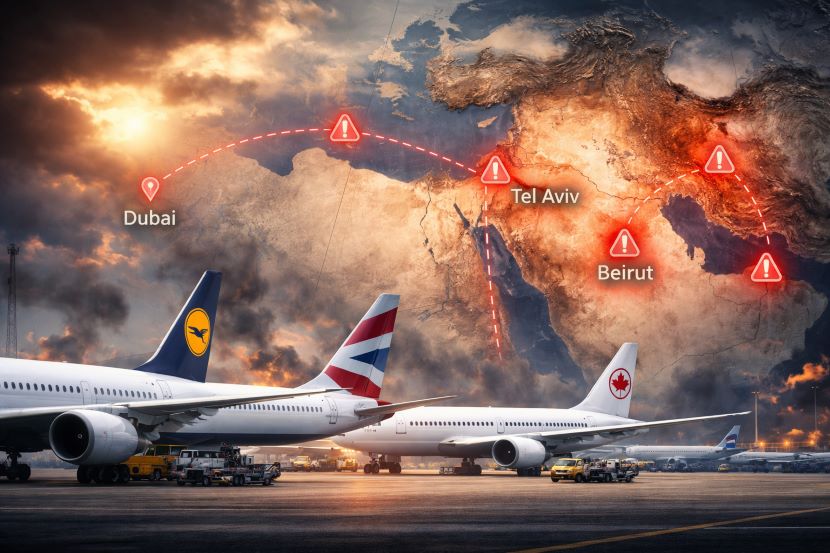 Image generated with Ai
In an unprecedented move, Germany has joined forces with the United States, United Kingdom, France, Netherlands, Canada, and Hungary to suspend or severely limit air routes to several key destinations in the Middle East, including Dubai, Tel Aviv, Beirut, and Tehran. The decision comes amid escalating security risks and airspace instability caused by growing geopolitical tensions, particularly involving Iran. This coordinated action is aimed at ensuring passenger and crew safety as tensions in the region continue to rise, causing significant disruption in the aviation industry. As a result, millions of passengers are facing cancelled flights and rerouted trips, while the broader global tourism and business sectors are grappling with the ripple effects of these unprecedented flight suspensions.
Germany: Lufthansa Group’s Major Suspension Impact
Germany has played a central role in the global suspension efforts due to the influence of Lufthansa Group, one of the world’s largest airline conglomerates. The Lufthansa Group, which owns national flag carriers from multiple European countries, has extended flight suspensions to Middle Eastern hubs until the end of May 2026, impacting routes that connect Germany with key destinations in the region.
Advertisement
Advertisement
Lufthansa Group Airlines Affected:
- Lufthansa (Germany)
- Swiss International Air Lines (Switzerland)
- Austrian Airlines (Austria)
- Brussels Airlines (Belgium)
- Eurowings (Germany)
- ITA Airways (Italy)
The suspended routes include major cities such as Dubai, Tel Aviv, Abu Dhabi, and Beirut. These actions are a direct response to airspace safety risks and restrictions on commercial flights in the region due to the ongoing military conflict and airspace instability.
- Dubai (DXB): Flights suspended until May 31, 2026
- Tel Aviv (TLV): Flights suspended until May 31, 2026
- Abu Dhabi (AUH): Suspended until October 24, 2026
- Beirut (BEY): Suspended until October 24, 2026
- Tehran (IKA): Long-term suspension until October 24, 2026
Passengers who are impacted by these suspensions are being offered flexible rebooking options or full refunds. The Lufthansa Group has also advised all travellers to check their flight status regularly on official airline websites and apps.
Advertisement
Advertisement
These measures are in place to ensure the safety of passengers and crew, as the risk of airspace violations, missile threats, and electronic warfare continues to rise. Additionally, with reduced capacity at airports like Dubai International and Tel Aviv Ben Gurion, maintaining normal flight schedules has become increasingly difficult for major airlines operating in the region.
United States: Extended Cancellations by American Airlines and Delta Air Lines
In the United States, major carriers have also followed suit, extending flight suspensions to the Middle East. Airlines such as United Airlines, Delta Air Lines, and American Airlines have all cancelled flights to Tel Aviv and Dubai until the summer months of 2026, in compliance with travel advisories issued by the Federal Aviation Administration (FAA) and Department of Transportation (DOT).
Advertisement
Advertisement
United States Airlines Affected:
- United Airlines (United States)
- Delta Air Lines (United States)
- American Airlines (United States)
- Tel Aviv (TLV): Flights suspended until June 14, 2026
- Dubai (DXB): Flights suspended until May 31, 2026
These flight suspensions are being driven by the FAA’s warnings of elevated risk to flight safety over the Middle Eastern airspace. US-based airlines, in particular, are focusing on minimising operational risks and are rerouting flights away from the regions most affected by geopolitical tensions. With airlines issuing long-term suspensions of non-essential routes, the impact on passenger travel plans is becoming more apparent, especially during peak summer travel periods.
Delta Air Lines and American Airlines have also made adjustments to their schedules, cancelling all direct flights to Tel Aviv and significantly reducing Middle Eastern routes for the coming months. These carriers are offering affected passengers the option of rebooking on alternative routes or full refunds.
United Kingdom: British Airways and Virgin Atlantic Follow the Lead
In the United Kingdom, the Civil Aviation Authority (CAA) has supported the decision to suspend flights to Middle Eastern destinations following a formal travel advisory issued by the UK Foreign Office. Both British Airways and Virgin Atlantic, the UK’s two major international carriers, have suspended all flights to Dubai, Tel Aviv, and Amman until the end of May 2026.
United Kingdom Airlines Affected:
- British Airways (United Kingdom)
- Virgin Atlantic (United Kingdom)
- Dubai (DXB): Flights suspended until May 31, 2026
- Tel Aviv (TLV): Flights suspended until May 31, 2026
- Amman (AMM): Flights suspended until May 31, 2026
These suspensions are part of the UK’s travel safety measures, which advise British nationals against non-essential travel to the Middle East due to escalating conflict. In addition to the direct impact on tourism, the UK’s business travel sector has also felt the disruption, particularly for corporate trips to Israel, a key tech and business hub.
Passengers whose plans are affected by these suspensions are being given the option to rebook flights or request full refunds. Virgin Atlantic has confirmed that rebooking on alternative routes or through other hubs such as Istanbul or Doha is available, though it may involve longer travel times.
France and Netherlands: Air France-KLM Extend Suspensions
The Air France-KLM Group, which represents both France and the Netherlands, has also acted in response to the Middle East security concerns. Air France and KLM have extended their flight cancellations to Tel Aviv, Beirut, and Dubai, with significant disruptions continuing into April 2026.
Advertisement
Advertisement
France and Netherlands Airlines Affected:
- Air France (France)
- KLM (Netherlands)
- Tel Aviv (TLV): Flights suspended until April 11, 2026
- Beirut (BEY): Flights suspended until April 11, 2026
- Dubai (DXB): Flights suspended until May 17, 2026
The Air France-KLM Group has announced that all affected passengers will be notified directly via email and the official airline apps. Alternative routing options are available through their respective codeshare partners, including Qatar Airways and Turkish Airlines, but passengers should expect longer travel durations.
Canada: Air Canada Extends Middle Eastern Flight Cancellations
In Canada, Air Canada has announced that it will extend flight cancellations to Dubai and Tel Aviv until May 31, 2026 in response to government safety advisories. The Canadian government’s travel warnings have strongly advised against non-essential travel to the Middle East.
Canada Airline Affected:
- Air Canada (Canada)
- Dubai (DXB): Flights suspended until May 31, 2026
- Tel Aviv (TLV): Flights suspended until May 31, 2026
In light of the regional airspace restrictions, Air Canada has coordinated with other international airlines to provide alternative flight options for travellers whose plans have been disrupted. Passengers may also be eligible for full refunds or rebooking on future flights to their intended destinations.
Hungary: Wizz Air Suspends Middle East Routes
In Hungary, Wizz Air, one of Europe’s leading low-cost carriers, has also suspended flights to Tel Aviv through April 7, 2026. This move follows EU safety regulations and Hungary’s own updated travel advice, which strongly discourages non-essential travel to the Middle East during the ongoing conflict.
Hungary Airline Affected:
- Wizz Air (Hungary)
- Tel Aviv (TLV): Flights suspended until April 7, 2026
Wizz Air is providing affected passengers with the option to rebook flights or request refunds. However, as a low-cost carrier, Wizz Air operates fewer alternative routes to the region, meaning passengers may face higher prices or longer wait times for rebooked flights.
Asia-Pacific Airlines: Cathay Pacific and Others Respond to Regional Instability
Cathay Pacific, based in Hong Kong, has extended cancellations to Dubai and Riyadh through April 30, 2026, as the airline seeks to manage risks associated with Middle Eastern airspace. Other Asian carriers are making similar adjustments, rerouting flights and offering alternative travel arrangements where possible.
Advertisement
Advertisement
Asia-Pacific Airlines Affected:
- Cathay Pacific (Hong Kong)
- Dubai (DXB): Flights suspended until April 30, 2026
- Riyadh (RUH): Flights suspended until April 30, 2026
Cathay Pacific has stated that all affected passengers will receive timely notifications via email and SMS, and the airline is offering alternative routing through Doha or Istanbul, albeit with added travel time.
Impact on Global Tourism and Business Travel
The suspension of Middle Eastern routes by Germany, the United States, the United Kingdom, France, the Netherlands, Canada, and Hungary has caused massive disruptions to global tourism and business travel. Several major tourist hubs in the Middle East, including Dubai, Tel Aviv, and Abu Dhabi, are seeing reduced numbers of international visitors as airlines reduce the frequency of their flights or cancel them entirely.
Business travellers, particularly those to Israel and the UAE, are also facing major challenges in rescheduling their trips, with increased costs and the possibility of longer travel times due to rerouted flights. Additionally, tourism-dependent industries such as hotels, tour operators, and travel agencies are experiencing the ripple effects of these disruptions, with hotel cancellations and tourist cancellations increasing.
What Passengers Should Do: Rebooking, Refunds, and Alternatives
Travellers whose flights have been affected by the cancellations or rerouting measures can take several actions:
- Rebooking: Most airlines are offering free rebooking for passengers whose flights have been cancelled. Passengers can opt to change their travel dates without incurring additional charges.
- Refunds: Airlines are also offering full refunds for affected passengers who choose to cancel their travel plans completely. This is in line with their commitment to providing flexibility during the crisis.
- Alternative Routes: For passengers still needing to travel, airlines are providing options to reroute flights through alternative airports such as Istanbul, Doha, Cairo, or Abu Dhabi.
- Stay Updated: It’s crucial for passengers to check the status of their flights regularly and stay in contact with airlines for the latest updates on flight availability and schedules.
Germany, along with the US, UK, France, Netherlands, Canada, and Hungary, has suspended Middle East flights from airlines like Lufthansa, British Airways, and Air Canada due to rising security risks and escalating tensions.
Conclusion: Global Aviation Faces Uncertainty
The coordinated flight suspensions by Germany, the United States, the United Kingdom, France, the Netherlands, Canada, and Hungary mark an unprecedented response to the growing instability in the Middle East. These actions, guided by official government advisories and aviation safety protocols, have reshaped travel for millions of passengers and caused severe disruptions to global tourism. As the situation continues to evolve, it is clear that aviation safety, tourism demand, and business travel will continue to face challenges well into 2026.
Travellers are urged to stay informed, consider alternative routes, and remain flexible in their travel plans as the global aviation industry adapts to these new conditions.
Advertisement
