Published on December 31, 2025
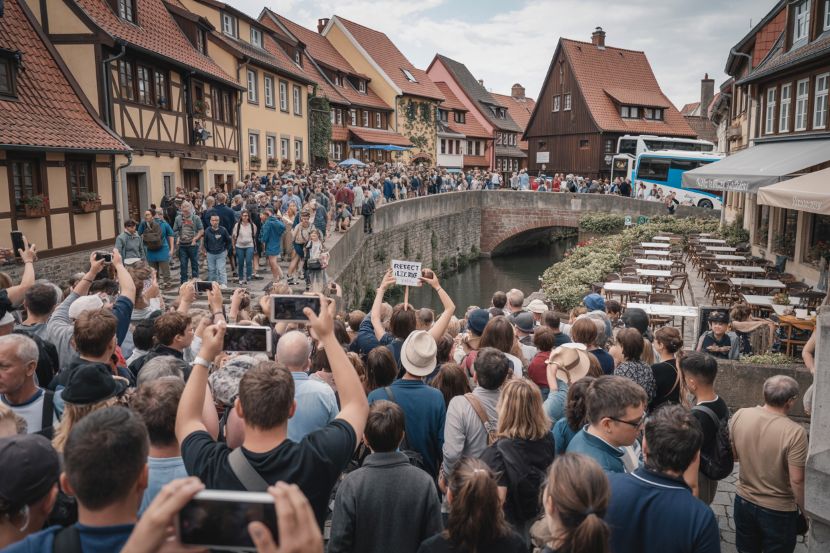
Across Europe, quaint villages have become viral sensations, with travelers flocking to these idyllic spots to capture their moment in front of a picture-perfect backdrop. These once-hidden gems, famous for their natural beauty or historical significance, have been transformed into bustling hotspots due to social media fame. However, as the flood of visitors continues, many of these tiny communities are beginning to show signs of strain, with residents and local authorities pushing back against overtourism.

From Austria’s Hallstatt to France’s Mont-Saint-Michel and the Netherlands’ Kinderdijk, these iconic villages are grappling with the consequences of mass tourism. Visitors, driven by Instagram photos and viral fame, often contribute little to the local economy while overwhelming infrastructure and eroding the very authenticity that attracted them in the first place.
Hallstatt, a picturesque alpine village in Austria, is one of the most photographed destinations in Europe. Its stunning lakeside views, charming wooden houses, and proximity to the Hallstatt-Dachstein/Salzkammergut Cultural Landscape, a UNESCO World Heritage Site, have earned it a place as an Instagram sensation. However, Hallstatt is now facing the downside of its own fairytale appeal. With a population of only 700 to 800 people, the village regularly sees up to 10,000 visitors a day, many of whom are drawn by the resemblance of Hallstatt to the fictional kingdom of Arendelle from Disney’s Frozen.
The massive influx of day-trippers has created serious problems. Local residents face overcrowded streets, noise, and even trespassing, as visitors take photos without regard for private property or community spaces. Tour buses regularly block narrow roads, and the once-quiet village now feels more like a theme park than a peaceful retreat.
In response, local authorities have implemented measures such as traffic restrictions, limiting the number of tour buses and cars, and placing barriers at popular viewpoints to control the crowds. These efforts have had some success, but Hallstatt’s vulnerability to overtourism continues to be a pressing issue.
Mont-Saint-Michel, one of France’s most iconic landmarks, has been a site of pilgrimage for centuries. The island commune, with its stunning architecture perched above the highest tides in Europe, attracts millions of visitors annually. However, its newfound popularity, bolstered by social media exposure and appearances in shows like Lupin, has exacerbated the issues of overtourism. The tidal island now draws around three million visitors each year, overwhelming its narrow medieval streets and creating bottlenecks that detract from the visitor experience.
Advertisement
The influx of tourists has turned Mont-Saint-Michel into a maze of souvenir shops, long queues, and crowded shuttle buses. Authorities are working to mitigate the damage, exploring new measures like booking systems, visitor caps, and implementing a more structured flow of visitors, particularly during off-peak hours. The commune is also encouraging tourists to visit before 10am or after 4pm to avoid the worst of the crowds and has even introduced incentives like cheaper parking during these times.
Despite these efforts, the challenge remains: how to balance the need for tourism revenue with the preservation of the island’s fragile environment and historic buildings.
In the Netherlands, the village of Kinderdijk has become an emblem of the clash between cultural heritage and mass tourism. Famous for its 18th-century windmills, Kinderdijk is a UNESCO World Heritage Site that attracts around 600,000 visitors annually, a huge number for a village with just 60 residents. The problem is exacerbated by cruise ship tourism, with visitors arriving in large groups and flooding the small village. Residents have expressed frustration with tourists who treat their homes as photo backdrops, entering private gardens, and disturbing their peaceful way of life.
To manage the crowds, local authorities have banned tour buses and camper vans from the village center, while fines have been imposed for trespassing and disruptive behavior. However, there is an ongoing tension between preserving the village’s authenticity and the financial benefits of tourism. The Kinderdijk World Heritage Foundation is also looking at ways to increase the number of tourists, which has raised concerns about how much further the village can accommodate before losing its charm.
Other European destinations have also faced the pressure of overtourism, including Pienza, Italy, and Goathland, England. Pienza, a Tuscan village known for its pecorino cheese, is being overrun by day-trippers who come for the cheese but disrupt local life. The quaint village is losing its authenticity as shops catering to tourists replace essential services, and noise complaints from tourists have silenced the historic bell tower at night.
In Goathland, a village in North Yorkshire, the location of Hogwarts Station in the Harry Potter films has transformed the town into a tourist magnet. The influx of visitors has crowded streets, put pressure on local infrastructure, and even led to illegal parking and littering. Locals are beginning to feel the strain as communal spaces are overtaken by tourists, and businesses adapt to the demands of visitors rather than the needs of the community.
As overtourism continues to threaten the authenticity and well-being of Europe’s smallest and most picturesque villages, it is clear that new measures are needed to balance tourism and preservation. Local protests, such as the ones seen in Hallstatt, have highlighted the growing frustration of residents who feel sidelined by the pressures of mass tourism.
Governments and tourism boards must work together to implement sustainable tourism policies that protect these fragile destinations while still allowing visitors to enjoy them. Whether through visitor caps, regulated entry times, or better distribution of tourists across the year, the key will be ensuring that these villages remain vibrant, welcoming places for both residents and tourists.
The pressures of overtourism on European villages like Hallstatt, Mont-Saint-Michel, and Kinderdijk show the need for a more balanced approach to travel. As these once-hidden gems become increasingly popular, it is essential for tourists to act responsibly and for authorities to implement policies that protect both the local way of life and the environment.
Disclaimer: The Attached Image in This Article is AI Generated
Advertisement
Tags: Goathland, Hallstatt, Kinderdijk, Mont-Saint-Michel, Pienza









Wednesday, December 31, 2025

Wednesday, December 31, 2025

Wednesday, December 31, 2025

Wednesday, December 31, 2025
Wednesday, December 31, 2025

Wednesday, December 31, 2025

Wednesday, December 31, 2025

Wednesday, December 31, 2025