Published on February 28, 2026

Image generated with Ai
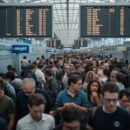
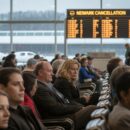
London Heathrow, London Gatwick and Manchester airports have become the epicentre of travel stress this week as major operational disruptions leave thousands of passengers facing unexpected delays and cancellations. Travellers who expected smooth journeys from Britain’s most important international gateways instead found themselves queuing for rebooking, struggling with missed connections and dealing with frustration that has rippled across both leisure and business travel plans. Many families, holidaymakers and professionals wrote heartfelt accounts of last‑minute changes and emotional scenes as airport lounges filled with worried passengers.
The scale of disruption at the three airports was stark: 293 delays and 66 cancellations were recorded during a recent travel period — a figure verified from live flight status reports and aviation data — underscoring ongoing challenges in the UK’s busiest air network. These numbers heighten concerns among travellers trying to plan around domestic and international itineraries and raise questions about the readiness of Britain’s aviation system to handle peak travel demand.
The disruptions at London Heathrow, Gatwick and Manchester follow a series of operational challenges that have affected the UK aviation sector this winter. Persistent operational knock‑on effects, including adverse weather conditions, air traffic flow management issues and airline scheduling pressures, are contributing to steady queues and delayed departures.
Industry analysts point to the cumulative effect of high passenger volumes — the UK handled record traffic in 2025 — and the strains it places on airline and airport logistics. These stressors, together with crew resource constraints and occasional technical delays in air traffic control, often manifest as longer runway wait times and rescheduling of flights. The Civil Aviation Authority (CAA) — the UK’s official aviation regulator — confirms that while airlines and airports strive to meet schedules, disruptions can occur, and passengers are entitled to care and assistance under UK law when flights are delayed or cancelled.
Advertisement
At Heathrow — the UK’s busiest international gateway — the majority of delays involved transatlantic and Middle Eastern routes, with some passengers held back for several hours before departure notices changed. Similarly, at Gatwick — ranked by official statistics as once having some of the longest average delays in the country — travellers faced uncertainty as flight boards showed frequent rescheduling. Manchester, a major hub for northern England, also recorded a high volume of delays caused by cascading scheduling pressures and operational decisions by airlines.
When disruption strikes at major airports, many holidaymakers feel powerless. But the UK Civil Aviation Authority is clear that passengers have legal protections. According to government‑published guidance, if a flight departing from a UK airport is delayed or cancelled, the airline is obliged to provide care and assistance — including food, drink and accommodation if it becomes necessary due to overnight delays.
Advertisement
Advertisement
Under UK law, passengers are entitled to sustain themselves while they wait. Food and drink vouchers often form part of this support, and if a re‑route requires a stay overnight, airlines must arrange accommodation and transport to the hotel. Should passengers choose to make alternative arrangements, receipts should be kept for reimbursement claims later.
Importantly, if a flight is cancelled with less than 14 days’ notice, passengers may also claim compensation — unless the reason for disruption falls under “extraordinary circumstances,” such as extreme weather or air traffic control strikes. This framework offers extra reassurance to travellers enduring lengthy delays and cancellations at Heathrow, Gatwick and Manchester.
The recent sequence of delays and cancellations comes at a time when many families and holidaymakers are planning winter getaways, business conferences and school‑break travel. For travellers heading into European destinations, connections at Heathrow and Gatwick are vital; disruption here can have cascading impacts across entire holiday plans.
Airlines are urging passengers to check flight status in real time and stay in close contact with customer service teams for rebooking options. Several carriers have offered flexible change policies and waived change fees to help mitigate the travel sorrow caused by these disruptions. While some travellers remain patient and adaptive, others have voiced outrage at the lack of timely information and perceived slowness in customer response. The emotional stress of travel chaos is palpable throughout departure lounges.
Airport authorities at Heathrow, Gatwick and Manchester are racing to stabilise operations and reduce backlog shutdowns. Enhanced staffing on ground support, digital flight status updates and coordinated scheduling efforts form part of the immediate response by airport management and carrier partners alike. Airlines have reiterated their commitment to safe operations, even as they acknowledge the complexity of reduced runway capacity during peak periods and adverse weather pressures.
Transport officials have also signalled plans to expand real‑time communication tools to inform passengers hours earlier when disruption is likely, and to bolster support desks inside terminals so that travellers can resolve issues in person. Collaborative efforts between airports and airlines are under way to improve punctuality metrics and minimise the emotional toll on passengers.
For anyone travelling through Heathrow, Gatwick or Manchester in the coming weeks, experts suggest several proactive steps:
This period of disruption highlights a broader challenge within UK air travel: balancing surging demand with operational reliability. For travellers, being informed is one strong defence against the anxiety caused by flights that fail to depart on schedule.
As the sun set on a troubled travel week, passengers reflected on the emotional highs and lows of journeys through Heathrow, Gatwick and Manchester. Some families managed to reach their destinations with only minor delays, while others were forced to re‑plan entire itineraries amid mounting frustration. Through it all, the strength of community among stranded travellers became apparent — strangers assisting each other, sharing updates and enduring uncertainty together.
The chaos that shook these airports is more than a series of statistics. It is a human story of travel ambition tested by reality — and a reminder that behind every flight number is a traveller with an itinerary, a destination and hopes for what lies ahead. As Britain’s aviation network works to recover its reliability, the resilience and resolve of passengers will shape the narrative of travel throughout 2026 and beyond.
Advertisement
Tags: airport travel chaos, Civil Aviation Authority rights, Gatwick & Manchester with 293 delays and 66 cancellations. Passenger rights and travel advice from UK Civil Aviation Authority., Gatwick cancellations, Heathrow disruptions


















Saturday, February 28, 2026

Saturday, February 28, 2026

Saturday, February 28, 2026
Saturday, February 28, 2026
Saturday, February 28, 2026
Saturday, February 28, 2026

Saturday, February 28, 2026

Saturday, February 28, 2026