Published on February 25, 2026

Image generated with Ai
A historic strategic partnership is reshaping travel in Indonesia. On Wednesday, February 25, 2026, a pivotal agreement was signed at Jakarta’s Sapta Pesona Building, signalling a united front between the Ministries of Culture and Tourism. This collaboration aims to bridge the gap between historical preservation and global tourism growth, transforming Indonesia’s vast ancestral wealth into a long-term and impactful economic engine for local communities.
The necessity of aligning institutional programmes was emphasized during the high-level discussions, with a focus on delivering tangible benefits to the grassroots level. It is understood that the synergy between cultural potential and tourism infrastructure is the primary catalyst for increasing international and domestic visitation. By integrating the management of National Cultural Heritage sites with modern tourism marketing, a comprehensive ecosystem is being constructed to safeguard the nation’s past while securing its financial future.
Central to this initiative is the integration of extensive datasets. Information regarding 313 National Cultural Heritage sites and 2,727 items of Intangible Cultural Heritage (WBTB) is being streamlined to provide a clearer roadmap for developers and travellers alike. With 514 new heritage items having been recorded in 2025 alone, the sheer volume of Indonesia’s cultural assets is being leveraged to diversify the national tourism portfolio.
The untapped potential of historical, religious, and culinary narratives was a major focal point of the recent ministerial briefing. It is recognized that while Indonesia possesses world-class assets, the packaging and storytelling surrounding these sites must be refined to meet the expectations of the modern traveller. A shift toward “experience-driven” tourism is being prioritized, where the history of a site is not merely observed but lived through carefully curated travel patterns.
Advertisement
Advertisement
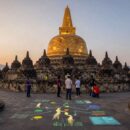
Spiritual and archaeological landmarks are being given renewed attention. Sites such as Borobudur, Prambanan, Ratu Boko, and Plaosan are currently being managed in coordination with InJourney to enhance the visitor experience. Specifically at Borobudur, the installation of the chattra (the parasol-like structure atop the stupa) is being finalized. This addition is expected to restore the spiritual integrity of the monument, transforming it into a “living heritage” site that resonates with global pilgrims and history enthusiasts.
Beyond the well-known temples of Central Java, significant resources are being directed toward the Dieng and Muara Jambi complexes. The restoration and construction of the Kedaton and Koto Mahligai temples are being fast-tracked, alongside the anticipated inauguration of the Sriwijaya Dharmakirti Museum in 2027. These projects are intended to highlight Indonesia’s role as a historical centre of learning and spiritual enlightenment in Southeast Asia.
Advertisement
Advertisement
The maritime history of the archipelago is also being elevated through the narrative of the “Spice Route”. Locations such as Banda Neira and the colonial fortifications in Maluku are being prepared for a surge in heritage tourism. Furthermore, the prehistoric significance of Indonesia is being promoted on the world stage, particularly the Leang-Leang caves in South Sulawesi and Leang Metanduno in Muna. These sites, which house cave art estimated to be 67,800 years old, have recently been featured in international scientific journals, positioning Indonesia as a cradle of early human civilization.
In an era dominated by digital discovery, the Ministry of Tourism is focusing on modernizing its promotional reach. The indonesia.travel.id platform is being enhanced with AI-based trend analysis to better understand the preferences of the younger demographic. It is acknowledged that the Gen Z and Millennial markets rely heavily on online information; therefore, the depth of storytelling provided by the Ministry of Culture is being integrated into these digital portals to create a more compelling online presence for museums and heritage zones.
Advertisement
Advertisement
Simultaneously, cultural diplomacy is being expanded through the arts. Indonesia’s participation in international film festivals and the hosting of the Jogja-NETPAC Asian Film Festival (JAFF) are being utilized as soft-power tools to attract cultural tourists. This year, the nation’s creative prowess is being showcased at the Venice Biennale, where 14 Indonesian artists have been sent to represent the country’s contemporary cultural identity.
The coming year will see ambitious growth targets, including a 14 per cent increase in foreign arrivals. The government plans to welcome 17 million international visitors by the end of 2026. To accomplish this, the Kharisma Event Nusantara (KEN) programme has grown to include 145 major events. These festivals serve as a platform for integrating local traditions with large-scale tourism, ensuring that cultural celebrations have a wide-ranging economic impact.
Finally, this inter-ministerial collaboration is expected to do more than just improve statistics. It is intended to be a movement that will strengthen Indonesia’s position as a global cultural and civilisation hub. The foundation for a sustainable and prestigious tourism sector is being solidified through asset protection, digital promotion optimisation, and increased visitor capacity at key sites.
Advertisement
Tags: Borobudur Chattra, Indonesia cultural tourism, Ministry of Culture Indonesia, sustainable travel Indonesia













Wednesday, February 25, 2026
Wednesday, February 25, 2026

Wednesday, February 25, 2026

Wednesday, February 25, 2026

Wednesday, February 25, 2026

Wednesday, February 25, 2026
Wednesday, February 25, 2026

Wednesday, February 25, 2026