
Singapore Airlines Flight SQ114 From Singapore to Kuala Lumpur Experiences Dramatic Landing Incident as Deflated Tyres Force Emergency Remote Bay Evacuation at KLIA: New Updates

Published
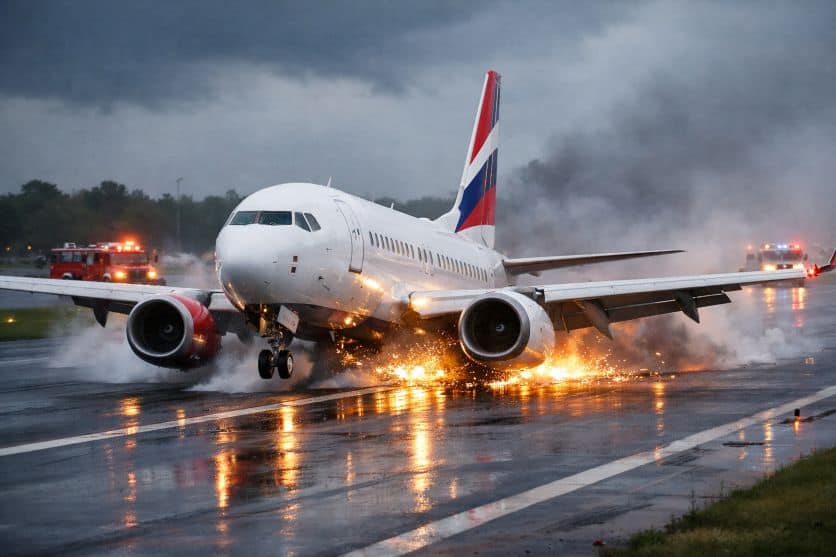
The recent Singapore Airlines flight SQ114 landing incident from Singapore to Kuala Lumpur caused significant operational adjustments at Kuala Lumpur International Airport after the Boeing 737-8 aircraft suffered a dual-tyre deflation on its left main landing gear upon touchdown. This tactical challenge forced emergency response units and B2B travel trade managers to quickly execute safety procedures for the 147 passengers and eight crew members onboard. Consequently, this critical disruption emphasizes how international transport bodies must maintain constant operational readiness during sudden cross-border aviation emergencies.
We explicitly highlight how this operational challenge joins the safety protocols of an international carrier with the structural infrastructure of a foreign aviation hub. The narrative joins these distinct entities because a single localized mechanical malfunction immediately impacts cross-border travel trade networks, requiring unified execution across bilateral channels.
Advertisement
Advertisement
To deliver verified insights for corporate travel strategists, our editorial mode of research relies exclusively on the synthesis of official corporate statements from Singapore Airlines and official travel advisories issued by Kuala Lumpur International Airport. By restricting our source parameters entirely to formal institutional communications, we eliminate speculative media narratives and ensure complete data integrity.
Immediate Chronology of the Singapore Airlines Flight SQ114 Landing Emergency
The precise operational timeline of the Singapore Airlines flight SQ114 landing event highlights the volatile nature of managing modern airfield operations. The short-haul international flight departed Singapore Changi Airport for its standard scheduled routing to Malaysia’s premier aviation gateway. Upon touching down on the designated runway at approximately 1:27 pm, the flight crew encountered an immediate mechanical anomaly on the left main landing gear.
Advertisement
Advertisement
The deflation of both tyres on the left main landing gear restricted the aircraft from taxying independently to its assigned arrival gate. However, the flight crew maintained total control during the deceleration phase, ensuring the aircraft remained securely on the ground without further structural complications. Crucially, all 147 passengers and eight crew members avoided injury, confirming that the initial touchdown phase concluded safely despite the sudden loss of tyre pressure.
Broad Travel Trade Consequences of the Singapore Airlines Flight SQ114 Landing Technical Deflation
Because the disabled Boeing 737-8 aircraft could not move under its own power, airfield engineers immediately initiated heavy towing operations to relocate the asset to a remote parking bay for technical repairs. This logistical restriction altered standard passenger deplaning workflows, requiring alternative ground transportation arrangements.
Advertisement
Advertisement
Ground operations staff deployed a fleet of airfield buses to transfer the stranded passengers and crew members directly from the remote bay to the main terminal building. This busing strategy successfully bypassed the compromised gate architecture, allowing passengers to clear border controls without systemic friction.
The temporary immobilisation of the aircraft on the airfield required corporate travel coordinators to immediately assess downstream impacts on regional flight capacities. For international tour operators managing multi-destination itineraries through the Singapore-Malaysia corridor, the incident created an immediate requirement for active itinerary management.
Advertisement
Advertisement
Comprehensive Corporate Service Recovery and Hospitality Deployment
Aviation disruptions require extensive financial and customer-service responses from top-tier carriers to preserve market reputation and consumer trust. Following the physical grounding of the Boeing 737-8 for mechanical repairs, Singapore Airlines cancelled the scheduled return flight from Kuala Lumpur. To manage the resulting disruption, the airline quickly deployed its structured service recovery protocols to support affected passengers.
The carrier provided comprehensive ground assistance, which included organizing hotel accommodations for passengers facing overnight delays. Furthermore, ticketing agents initiated rebooking procedures, routing affected travellers onto alternative flights to minimize total transit delays. For passengers with time-sensitive international connections, these proactive rebooking options protected multi-leg corporate journeys from cascading disruptions. Throughout the recovery process, Singapore Airlines maintained its strict safety culture, apologizing for the operational inconvenience while reinforcing that the safety of customers and staff remains their absolute priority.
Airfield Infrastructure Resilience and Runway Management Protocols at KLIA
The operational incident also tested the crisis management and airfield flexibility of Kuala Lumpur International Airport’s operations team. To ensure the safe towing of the disabled Boeing 737-8 and clear any potential debris from the tarmac, airport authorities implemented a temporary runway closure.
KLIA issued a formal travel advisory via its official communications channels at approximately 6:35 pm, informing stakeholders that the affected runway would remain closed until 9:00 pm. The advisory referred all operating flight crews and partner airlines to an officially filed aviation notice to ensure precise compliance with the updated airfield parameters.
Advertisement
Advertisement
While the targeted runway closure restricted total airfield capacity during the busy evening peak, KLIA effectively utilized its remaining infrastructure. The airport confirmed that its two alternative runways remained fully operational throughout the evening, allowing air traffic controllers to prevent complete hub paralysis. By rerouting incoming and outgoing movements to these active strips, the hub managed arrivals efficiently, though they advised passengers to prepare for minor delays.
Systemic Trade Insights on Fleet Continuity and Network Recovery
For travel procurement professionals and global tour operators, an airline’s speed in returning a grounded aircraft to service is a key indicator of network resilience. Following the completion of tyre replacements and comprehensive safety clearances by maintenance engineers, Singapore Airlines confirmed that the affected Boeing 737-8 was repaired and returned to active commercial service.
This rapid maintenance turnaround highlights the strength of the carrier’s regional engineering supply chain. By maintaining localized parts inventories and deployment-ready maintenance teams at major destinations like Kuala Lumpur, the airline prevented an extended grounding that could have disrupted broader fleet schedules. For the global travel trade, this efficiency demonstrates that premium carriers can resolve mechanical issues without causing long-term capacity shortages across their international networks.
Conclusion: Future-Proofing Aviation Corridors Post the Singapore Airlines Flight SQ114 Landing Resolution
Ultimately, the successful management of the Singapore Airlines flight SQ114 landing incident highlights the value of strong operational contingency plans within the global travel trade. While unexpected mechanical issues like tyre deflations will always occur, their systemic impact depends entirely on the speed and coordination of the ground response. The close cooperation between Singapore’s leading carrier and Malaysia’s primary aviation hub prevented minor airfield friction from turning into a broader regional disruption.
Additionally, the structured delivery of hotel accommodations and alternative flight arrangements preserved passenger trust and protected corporate travel investments. This incident reinforces the strategic value of multi-runway designs at major international hubs, which allow airports to maintain traffic flow during unexpected disruptions. As regional travel demand grows, the travel trade will continue to rely on hubs and carriers that prioritize operational resilience and transparent communication.
Advertisement
