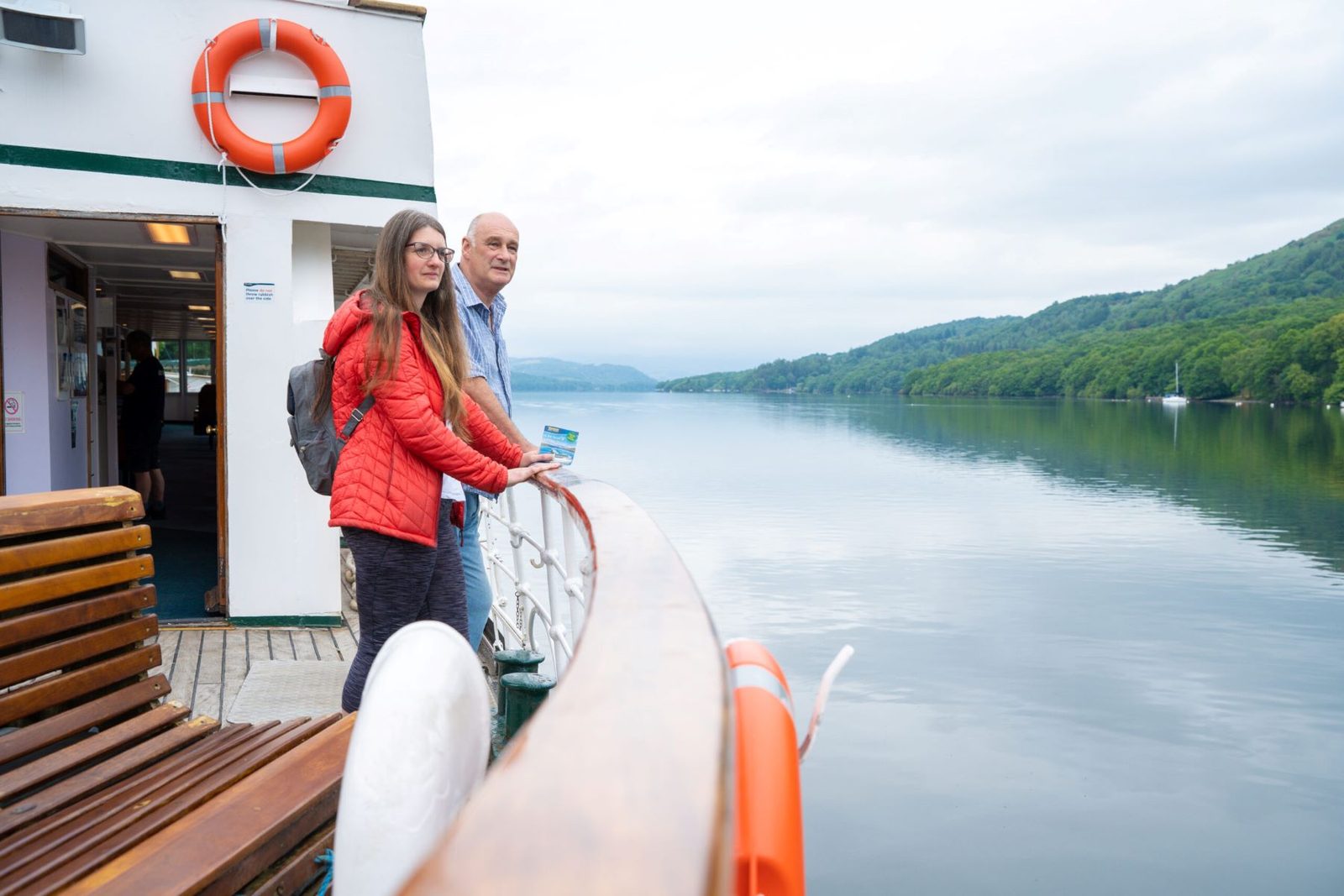
UK Align With France as Europe’s leaf-peeping destinations boost autumn travel demand, drawing travellers towards lakes, mountain valleys, vineyards, forests and heritage landscapes across the continent. From the Lake District to Perthshire, Lake Bled to the Bavarian Alps and the Loire Valley to Transylvania, autumn colours are attracting travellers to the off-season. Europe’s autumn attracts visitors and supports businesses like hotels and transport, walking routes and cultural sites. Shoulder season travel to Europe is showing the benefits of off-peak travel. Travellers can discover and explore more places that are usually buzzing during the peak summer season.
Autumn travel in Europe stretches across very different landscapes. Visitors can see coloured woodland around Lake Bled in , mountain scenery in Germany and Italy, lakes and forests in the UK, vineyards in France and Portugal, and northern foliage in Finland. The season can also support longer shoulder-season travel because colour changes do not happen everywhere at the same time. Official tourism organisations across Europe promote walking, nature, cultural heritage, wine tourism and outdoor experiences during autumn. This gives travellers several ways to build a seasonal European trip rather than relying on a single foliage destination.
Advertisement
| Country | Destination from the original content | Main autumn travel appeal | Current official context |
|---|---|---|---|
| Germany | Bavarian Alps | valleys, coloured forests, hiking and heritage | Germany’s national tourism organisation promotes autumn for colourful forests, active holidays and harvest-season experiences. |
| UK – England | Lake District | Lakes, woodland, fell walking and scenic touring | The National Park records 17.73 million tourists and 26.85 million tourist days in 2024, with £2.373 billion in tourism revenue. |
| UK – Scotland | Perthshire | Woodland, waterfalls, walking and seasonal events | VisitScotland says Perthshire contains more than 200,000 acres of woodland. The Enchanted Forest runs from 8 October to 8 November 2026. |
| Romania | Transylvania and Brașov | Carpathian scenery, medieval centres, castles and outdoor tourism | Brașov County Council promotes the region as a four-season destination combining nature, medieval towns, heritage and outdoor recreation. |
| Italy | Dolomites | Golden mountain landscapes, hiking and dramatic evening light | Italy’s official tourism portal identifies the Dolomites as a UNESCO World Heritage mountain system spanning more than 140,000 hectares. |
| France | Loire Valley | Vineyards, châteaux, gardens and cultural touring | Explore France promotes the Loire Valley around its châteaux, gardens, nature and wine experiences. |
| Finland | Lapland | Ruska foliage, hiking and Northern Lights | Visit Finland says ruska begins in Lapland in September and Northern Lights season starts around the same period. |
| Portugal | Douro Valley | Flame-coloured vineyards, wine tourism and river travel | Portugal’s official tourism portal says the terraced Douro vineyards become fiery red in autumn and promotes September-October harvest experiences. |
| Croatia | Plitvice Lakes National Park | Lakes, waterfalls, woodland and walking | The National Park is promoting dedicated September and October 2026 autumn stays. Its lake system includes 16 named lakes. |
These destinations show why autumn travel in Europe is not limited to one climate or one type of landscape. Travellers can move from northern foliage to scenery and then towards southern vineyard regions as the season develops.
The UK has a particularly strong base for autumn tourism because scenic rural destinations already support large visitor economies. The Lake District combines water, woodland, mountains and an extensive walking network. The National Park Authority says the area received 17.73 million tourists in 2024, generated 26.85 million tourist days and produced £2.373 billion in tourism revenue. At national level, VisitBritain forecasts 44.2 million inbound visits during 2026, with visitor spending expected to reach £33.9 billion. European inbound visits are forecast to rise by 4%, giving autumn destinations a sizeable international market to target.
Advertisement
Advertisement
The autumn opportunity also extends north to Perthshire. VisitScotland describes the area as “Big Tree Country”, with more than 200,000 acres of woodland. Seasonal events add another reason to stay overnight rather than make only a short sightseeing visit.
| UK autumn indicator | Latest verified figure or fact |
|---|---|
| Forecast UK inbound visits in 2026 | 44.2 million |
| Forecast inbound visitor spend | £33.9 billion |
| Forecast European inbound volume growth | +4% |
| Lake District tourists, 2024 | 17.73 million |
| Lake District tourism revenue, 2024 | £2.373 billion |
| Perthshire woodland | More than 200,000 acres |
The travel effect stretches beyond accommodation. VisitBritain reported that inbound UK air traffic in May 2026 was 8% higher than in May 2025. Stronger aviation flows create a broader pool of travellers who can combine major gateway cities with regional autumn destinations.
France offers a different form of autumn leaf-peeping through the Loire Valley. Instead of depending only on forests, the destination combines vineyard landscapes with historic châteaux, gardens and river scenery. Explore France identifies nature, outdoor activities, cultural heritage, food and wine among the Loire Valley’s core visitor experiences.
The tourism infrastructure is substantial. INSEE reported that Centre-Val de Loire had 591 hotels with 20,498 rooms at the beginning of 2026. It also had 218 campsites offering 18,017 pitches and 52 other collective tourist accommodation establishments providing 12,890 bed places.
Advertisement
Advertisement
Demand remained resilient going into the second half of the year. Hotel overnight stays in Centre-Val de Loire increased 0.6% year on year in June 2026. Across France as a whole, second-quarter collective accommodation nights outside campsites grew 1%, while hotel nights increased 1.4% to 61.1 million.
| Centre-Val de Loire tourism capacity | 2026 |
|---|---|
| Hotels | 591 |
| Hotel rooms | 20,498 |
| Campsites | 218 |
| Camping pitches | 18,017 |
| Other collective establishments | 52 |
| Bed places in other collective accommodation | 12,890 |
This broad accommodation base makes the Loire Valley well suited to multi-night autumn touring. Travellers can connect châteaux, vineyard areas, gardens and smaller communities rather than concentrating their stay in one attraction.
Germany’s Bavarian Alps can convert an already strong visitor market into autumn hiking, scenic touring and heritage travel. Bavaria recorded approximately 5 million guest arrivals in July 2026, up 7% from July 2025. Overnight stays reached roughly 12.2 million, increasing 5.1%. Camping performed particularly strongly, with arrivals rising 17% and overnight stays increasing 16.7%. These figures point to strong demand for outdoor and nature-based trips before the autumn season even begins.
Germany’s official national tourism organisation actively positions autumn around colourful forests, walking, outdoor activity, harvest time and seasonal relaxation. Füssen also provides direct access to the landscape and is promoted alongside Neuschwanstein Castle and the surrounding mountain region.
The Bavarian Alps suit autumn travel because changes in altitude can create different landscape experiences across a single trip. Travellers can combine historic towns, castles, forests, lakes and mountain routes rather than relying only on foliage viewing.
| Bavaria tourism indicator | July 2026 |
|---|---|
| Guest arrivals | Around 5 million |
| Arrival growth | +7.0% |
| Overnight stays | Around 12.2 million |
| Overnight growth | +5.1% |
| Camping arrival growth | +17.0% |
| Camping overnight growth | +16.7% |
The first half of 2026 had already produced 18.6 million guests and 46.3 million overnight stays across Bavaria, giving the region a broad tourism base that autumn nature experiences can extend into the shoulder season.
Romania gives autumn travellers a mixture of mountain nature and historic urban experiences. Brașov County Council’s official tourism platform promotes the region through spectacular nature, medieval towns, fortresses, castles, outdoor activities and local heritage. It also positions Brașov County as a destination for all four seasons, which is important for a market increasingly interested in travel beyond the traditional summer peak.
Brașov works as a practical base because visitors can combine its historic centre with wider Transylvanian and Carpathian landscapes. The county tourism platform highlights Brașov city, mountain activities, fortified heritage, wildlife attractions and outdoor adventures.
Romania’s National Institute of Statistics maintains monthly official tourism datasets covering tourist arrivals and overnight stays by county, development region and type of tourist accommodation. This provides an official framework for measuring how destinations such as Brașov perform as seasonal demand changes.
| Romania autumn travel element | Traveller relevance |
|---|---|
| Brașov | Historic city base |
| Transylvania | Wider cultural and mountain touring region |
| Carpathian landscape | Hiking, scenery and nature travel |
| Castles and fortresses | Cultural and heritage tourism |
| County tourism data | Official arrivals and overnight-stay monitoring |
| Four-season positioning | Supports shoulder-season itinerary building |
For international visitors, the strength of Transylvania is its ability to combine several travel motives within the same trip. Nature, mountain roads, historic centres, local food and cultural attractions can all complement the autumn landscape.
The wider travel impact of European autumn tourism comes from seasonality. Lake Bled, the Lake District, Bavarian Alps, Loire Valley and Transylvania can attract visitors after the main summer holiday period, while destinations such as Lapland, the Dolomites, Douro Valley, Perthshire and Plitvice add different seasonal windows. This gives hotels, restaurants, tour operators, rail services and airlines a stronger reason to maintain demand through September, October and parts of November.
The 2026 tourism figures already show large travel volumes in several of the featured markets. recorded 10.5 million overnight stays through July. Bavaria reached 12.2 million nights in July alone. France recorded 61.1 million hotel nights during the second quarter. The UK expects 44.2 million international visits across 2026.
| Market | Latest verified 2026 tourism signal | Autumn travel relevance |
|---|---|---|
| UK | 44.2 million inbound visits forecast | Large international visitor pool can support regional autumn trips |
| Germany – Bavaria | 12.2 million nights in July, +5.1% | Strong outdoor demand can carry into autumn travel |
| France | Q2 collective accommodation nights +1% | Stable national demand supports regional touring |
| Romania | Official monthly arrivals and overnight stays tracked by INS | Data allows changing seasonal demand to be measured |
| UK aviation | May inbound air traffic +8% year on year | Stronger international access can feed regional tourism |
Autumn travel also helps disperse tourists geographically. Instead of concentrating visitors only in famous capitals and summer coastal resorts, leaf-peeping encourages trips into mountain regions, national parks, rural communities, wine districts and smaller heritage cities.
That is particularly relevant in destinations already managing large visitor numbers. The Lake District National Park Authority says tourism supports local accommodation, food, drink and leisure businesses but also creates traffic and environmental pressure. Around 86% of visitors currently arrive by car, van, motorcycle or motorhome, making sustainable transport increasingly important as visitor numbers grow.
This means the strongest autumn tourism strategy is not simply to attract more people. It is to distribute visitors across a longer season and wider geography. Lake Bled can encourage walking and rowing. The Lake District can promote rail, bus, cycling and walking. Bavaria can extend hiking and camping demand. The Loire Valley can link vineyards with châteaux and accommodation stays. Brașov can combine urban heritage with the Carpathian landscape.
For travellers, this creates more choice. For destinations, it can create additional hotel nights, dining expenditure, attraction admissions and transport demand during months that sit between the traditional summer and winter peaks. Autumn colours therefore become more than a visual attraction. They form part of a wider European shoulder-season tourism economy built around nature, mobility, culture and regional travel.
UK Align With France as Europe’s leaf-peeping destinations boost autumn travel demand by giving travellers more reasons to explore scenic regions beyond the summer peak. Autumn offers more scenery and options beyond traditional offerings of summer nature. Travellers can experience culture and heritage from towns and mountain valleys and through vineyards and forests. This inspires longer stays while supporting rural areas. Peak inducing travel extends the appeal and the season encouraging travel to Europe in autumn.
Advertisement
Advertisement
Advertisement














Saturday, September 12, 2026

Saturday, September 12, 2026

Saturday, September 12, 2026

Saturday, September 12, 2026

Saturday, September 12, 2026

Friday, September 11, 2026

Saturday, September 12, 2026

Saturday, September 12, 2026