Published on January 1, 2026
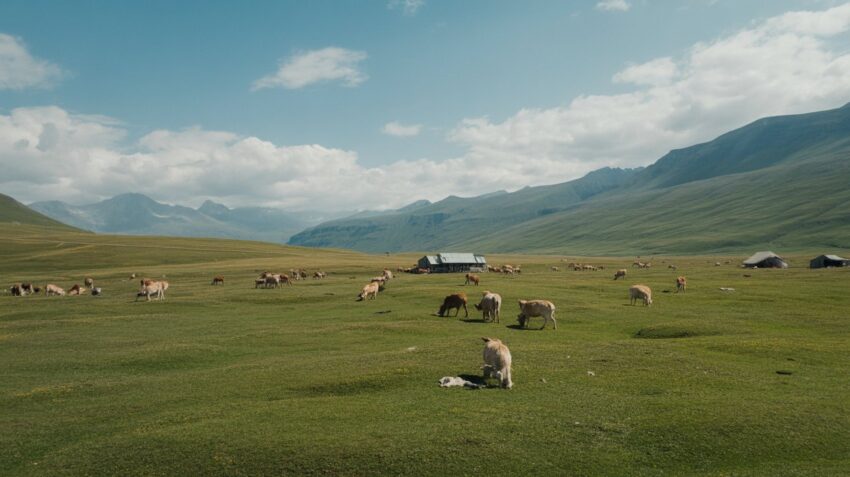
Lak Mountain Pastures represent one of Dagestan’s most atmospheric and culturally rich landscapes. High above permanent villages, these open alpine lands come alive during the warmer months, when families move livestock to summer grazing grounds. The result is a living nomadic environment shaped by tradition, movement, and a deep relationship with the land.

Unlike fixed settlements, the mountain pastures operate on a seasonal rhythm. They exist fully only during summer, when herders, temporary dwellings, and animals transform open grasslands into functioning communities. For travelers, this creates a rare opportunity to witness a way of life that remains closely tied to nature and tradition.
Tourism in the Lak mountain pastures is not about infrastructure or amenities. It is about presence, space, and understanding how culture adapts to altitude and season.
Lak mountain pastures are located in elevated areas above Lak-populated villages, often at altitudes where tree cover thins and wide horizons dominate. Rolling meadows stretch toward distant ridgelines, interrupted only by rocky outcrops and narrow streams.
Advertisement
These open landscapes create a sense of scale and freedom. The absence of permanent structures allows the terrain itself to define the experience. Travelers often describe the pastures as expansive and calming, with uninterrupted views and constant movement of clouds.
The environment changes subtly throughout the day, with light, wind, and temperature shaping how the land feels from morning to evening.
Advertisement
The pastures are accessible primarily during the summer months, when snow has melted, and vegetation supports grazing. During this period, the weather can still change quickly, reinforcing the importance of preparation and local knowledge.
Travelers typically visit between late spring and early autumn. Outside this window, harsh conditions return the land to silence, emphasizing the temporary nature of human presence at altitude.
The use of the Lak mountain pastures follows long-established seasonal patterns. Families move livestock upward during warmer months to take advantage of fresh grazing land, reducing pressure on lower pastures.
This movement is not symbolic but practical, shaped by centuries of adaptation. Temporary shelters, animal enclosures, and cooking areas are set up for the duration of the season, forming a functional yet minimal settlement.
For visitors, witnessing this migration offers insight into how mobility remains central to cultural identity in the highlands.
Life on the mountain pastures is structured around care for animals, food preparation, and maintenance of shelters. Days begin early, with herding and grazing shaping daily routines.
Despite the demanding environment, the atmosphere is calm and focused. Evenings often bring shared meals and conversation, reinforcing social bonds among families who return to the same grazing areas each year.
Travelers who spend time observing this rhythm gain appreciation for the discipline and knowledge required to sustain life at altitude.
For the Lak people, mountain pastures are more than grazing grounds. They represent continuity, shared memory, and collective responsibility.
Specific pastures are often associated with particular communities or family groups, reinforcing a sense of belonging tied directly to the landscape. Stories, routes, and landmarks are remembered and passed down, embedding culture within geography.
Tourism that respects this relationship allows visitors to understand the depth of meaning attached to seemingly empty land.
Skills used on the pastures include animal care, weather observation, and resource management. This knowledge is experiential, learned through participation rather than instruction.
For travelers interested in intangible heritage, the pastures offer a living classroom where culture is practiced rather than explained.
Tourism in the Lak mountain pastures aligns naturally with slow travel principles. Visitors are encouraged to spend time observing rather than moving quickly between points.
Walking across open meadows, watching herds, and experiencing silence become central activities. These moments offer mental space rarely found in busier destinations.
There are no fixed attractions, making each visit unique and shaped by weather, season, and human presence.
Interactions with herders and families are informal and unstructured. Hospitality follows tradition, not tourism scripts.
Visitors may be offered tea or food and invited to sit and talk. These moments are authentic exchanges rather than curated experiences, providing meaningful insight into daily life.
Respect and patience are essential, as the primary purpose of the pastures remains pastoral work.
The open terrain of the Lak mountain pastures is ideal for gentle walking. Routes are informal, often following animal paths or natural contours.
Photography focuses on atmosphere rather than landmarks. Light, weather, and movement define visual storytelling in these landscapes.
Travelers are encouraged to photograph respectfully, avoiding disruption to daily activities.
Some travelers combine visits to the pastures with nearby Lak villages, gaining a fuller picture of seasonal life. This contrast between permanent settlements and temporary summer sites highlights the adaptability of mountain culture.
Such itineraries deepen understanding of how altitude shapes social organization.
Travelers should be mindful that summer is a working season. Avoiding interference with animals, equipment, and routines is essential.
Asking permission before entering grazing areas or photographing people demonstrates respect for local norms.
Mountain pastures are sensitive ecosystems. Litter, noise, and off-path movement can disrupt both the environment and livelihoods.
Visitors should leave no trace, carry out waste, and follow guidance from locals when moving through grazing areas.
Limited tourism provides supplementary income through guiding, accommodation in nearby villages, or food sharing. This support helps maintain traditional practices rather than replacing them.
When managed respectfully, tourism strengthens the value placed on pastoral knowledge and cultural continuity.
Lak mountain pastures add a distinct dimension to Dagestan tourism, emphasizing seasonal life and open landscapes rather than fixed attractions.
They complement destinations focused on architecture, gorges, and historical sites, offering a broader understanding of the region.
These pastures are often included in mountain itineraries that explore Lak-populated areas. Access typically requires local guidance and flexible planning.
Travelers who prioritize immersion over convenience find the experience especially rewarding.
Lak mountain pastures exist between permanence and movement. They appear each summer, shaped by grass, animals, and human presence, then fade back into silence as seasons change.
For travelers, this impermanence is part of the appeal. Visiting the pastures means stepping into a living cycle that has repeated for generations.
Rather than offering monuments or viewpoints, the Lak mountain pastures offer understanding. They reveal how culture adapts to altitude, how community follows the land, and how tradition continues through practice.
In a world increasingly defined by speed and structure, these high-altitude landscapes remind visitors that life can still follow the rhythm of seasons, open space, and shared responsibility.
Advertisement








Thursday, January 1, 2026

Thursday, January 1, 2026

Thursday, January 1, 2026

Thursday, January 1, 2026

Thursday, January 1, 2026
Thursday, January 1, 2026
Thursday, January 1, 2026