Published on March 2, 2026

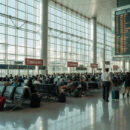
Image generated with Ai
Mass evacuations in the Middle East are underway as the United States, Russia, United Kingdom, and France take swift action to fly out thousands of stranded tourists from the UAE, Qatar, and Bahrain. This urgent response comes in the wake of escalating conflict between Iran, Israel, and the U.S., combined with widespread airspace closures, leaving travelers trapped in a volatile region. As tensions rise, these countries are mobilizing evacuation flights to ensure the safety of their citizens and foreign nationals caught in the turmoil.
The escalating conflict between Iran, Israel, and the United States has turned the Middle East into a dangerous and unpredictable zone for international travelers. With airspace closures and ongoing military strikes, key tourist hubs in the UAE, Qatar, and Bahrain have been heavily affected, resulting in widespread flight suspensions and delays. As cities like Dubai, Doha, and Manama grapple with the aftermath of missile attacks and escalating violence, thousands of tourists remain stranded, unable to safely depart. In response, the United States, Russia, United Kingdom, and France have launched mass evacuation operations, prioritizing the safety of their nationals and other foreign tourists caught in the conflict zone. These actions are part of a larger international effort to ensure that people in the region are swiftly moved to safety, as the conflict shows no sign of slowing down. As governments navigate this crisis, the impact on the travel and tourism industry in the Middle East has been profound, with a ripple effect that could be felt globally.
The Middle East, once a dynamic hub of luxury, culture, and tourism, now finds itself in the grips of an unprecedented crisis. With escalating tensions between Iran, Israel, and the United States, the region’s vibrant tourism industry has come to a crashing halt. The once-thriving cities of the UAE, Qatar, and Bahrain—global landmarks of modernity and wealth—are now facing mass evacuations, suspended flights, and airspace closures, forcing tourists to abandon their vacations and governments to issue urgent advisories for citizens to avoid non-essential travel.
This catastrophic disruption has left thousands of international travelers stranded, unsure of when they will be able to return home. With more than 131 cities in the Middle East burning due to escalating conflicts, the ripple effects are felt not only in the region but globally. Here’s a detailed, step-by-step breakdown of this evolving crisis and its impact on tourism and global travel.
Advertisement
The region is currently witnessing one of the most intense periods of violence in its history. The conflict began after the U.S. and Israel launched joint strikes on Iran in response to growing tensions, which were marked by Iranian missile tests, threats to regional allies, and their ongoing nuclear ambitions. The killing of over 550 people, including high-profile leaders such as Supreme Leader Ayatollah Ali Khamenei, in these strikes set off a series of retaliatory attacks by Iran.
Iran’s counterattacks have been swift, targeting U.S. military assets across the Gulf, while also launching missiles at neighboring Israel, Bahrain, and the UAE. These retaliatory strikes have ignited a catastrophic series of bombings that have spread to 131 cities across the Middle East. From Tehran to Beirut, Baghdad, Kuwait, and other major hubs, cities have been devastated by relentless strikes, causing widespread destruction of infrastructure and overwhelming local healthcare systems.
Advertisement
Advertisement
While the military escalation continues, tourism in these countries has frozen in its tracks. The region’s once bustling streets, markets, and landmarks are now deserted as residents and tourists scramble to escape. UAE, Qatar, and Bahrain, once among the most sought-after tourist destinations, have become battlegrounds where international travelers are trapped with no way out.
As the conflict intensifies, many countries are now focusing on evacuating their citizens from the Gulf states. The United States has started evacuating its nationals from the UAE, with plans to assist its citizens in Qatar, Bahrain, and other impacted nations. The UK, too, has announced that it will evacuate its citizens from the region, further escalating the flight cancellations and travel disruptions.
Reports indicate that over 500 Russian citizens were evacuated from Iran via an overland route through Azerbaijan as of yesterday. This evacuation was part of a larger operation to get Russian nationals out of harm’s way amidst the growing instability in the region.
These evacuations are complicated, as many international flights have been grounded due to airspace closures, and some countries, including the UAE, Qatar, and Bahrain, have imposed severe restrictions on all flights entering or leaving their airspace. The airspace lockdowns have created an additional layer of chaos for travelers seeking to leave or return home.
The UAE, Qatar, and Bahrain have been severely affected by airspace closures as part of the security measures to protect both civilians and military assets. The United Arab Emirates (UAE) has completely shut down airspace over major cities such as Dubai and Abu Dhabi for both commercial and private flights. The Qatar Airways fleet has been grounded, and Doha’s Hamad International Airport has seen severe delays, with thousands of tourists left stranded in the country.
Bahrain’s Manama International Airport has also faced flight suspensions as the airspace above the country is deemed too dangerous for flying. With no clear timeline for when air travel will be restored, tens of thousands of travelers remain trapped in the Middle East, many unsure when they will be able to leave or reach their home countries.
As of now, over 1,800 flights have been canceled, and many others have been rerouted, resulting in massive congestion at airports. The vast majority of flights affected are those connecting the Middle East to Europe, North America, and Asia. This disruption has caused a ripple effect across the global airline industry, and travel to and from major international hubs has been severely limited.
The Middle East had been experiencing a robust tourism boom prior to the outbreak of the conflict. The UAE, in particular, had been the epicenter of luxury tourism, attracting millions of visitors each year to its futuristic skyscrapers, world-class shopping, and opulent resorts. Dubai alone accounts for more than $30 billion annually from tourism revenue. But now, the story has drastically changed.
Hotels are reporting mass cancellations as tourists either postpone their trips or flee the region. Major shopping events like the Dubai Shopping Festival, which typically draws millions of visitors annually, have seen drastic declines in attendance. Tour operators are canceling their planned itineraries, while local businesses that rely on the tourism industry are seeing mass layoffs and closures.
Reports suggest that global tourism to the Middle East will see a 10‑year setback, with billions of dollars in losses from canceled bookings and business closures. The impact is already being felt across restaurants, hotels, airlines, and local attractions that cater to international visitors.
As the conflict escalates, governments are scrambling to assist their citizens. The United States has begun a mass evacuation operation, prioritizing citizens in the UAE and Qatar. Military transport planes, emergency flights, and diplomatic channels are being used to get U.S. nationals out of harm’s way.
The UK has similarly started organizing flights for its citizens, with priority given to those in the UAE, which has one of the largest expatriate populations in the region. It is reported that more than 200,000 British nationals are currently in the region, many of whom have found themselves stranded in airports or forced to shelter in place.
Russia has successfully evacuated around 500 of its citizens from Iran via the Azerbaijan route, taking overland routes due to the closure of airspace. The evacuation operation remains one of the few successful overland escapes from the escalating violence.
The travel disruptions are not confined to the Gulf region. The closure of major Middle Eastern airspace has caused cascading delays and diversions for international flights. Airports in Europe, North America, and Asia are feeling the effects of the Middle East airspace restrictions, as many flights are being diverted to avoid the newly contested air corridors over the Gulf.
For instance, flights between London, New York, Singapore, and Mumbai are being delayed by several hours, with passengers being forced to change connections, endure additional layovers, and endure much longer flight times. This has compounded the already difficult situation for stranded tourists, who face longer, more costly routes to return home.
The economic implications for the tourism industry in the Middle East are dire. With hotel occupancy plummeting and travel bookings at a standstill, countries that were once heavily reliant on tourism revenue, such as the UAE and Qatar, are facing massive losses.
The UAE’s luxury tourism sector, which accounted for billions of dollars in revenue annually, has seen bookings cancel or postpone indefinitely. Iconic events like the Dubai World Cup, Formula 1, and the Dubai Shopping Festival have been left in limbo, with huge losses expected for both organizers and local businesses.
Other sectors, such as hospitality, transportation, and events, have already reported massive financial setbacks, with recovery estimates extending far beyond the expected timeframe.
The Middle East tourism landscape is experiencing a devastating crisis as escalating geopolitical tensions have led to mass evacuations, airspace closures, and unprecedented travel disruptions. While governments scramble to evacuate citizens and ensure their safety, the future of tourism in the UAE, Qatar, and Bahrain remains uncertain.
The global tourism industry will continue to feel the impact for months, if not years, as airlines, hotels, and businesses contend with the long‑lasting effects of this crisis. Recovery will depend heavily on diplomatic efforts to de-escalate the conflict, ensure regional stability, and restore air travel to the Gulf region.
Mass evacuations in the Middle East are underway as the United States, Russia, United Kingdom, and France take swift action to fly out thousands of stranded tourists from the UAE, Qatar, and Bahrain due to escalating conflict and airspace closures. These evacuations are a response to the escalating violence between Iran, Israel, and the U.S., which has left tourists trapped and flights suspended across the region.
For now, international travelers remain stranded, the region’s iconic tourism infrastructure is in disarray, and many are left wondering when — or if — the skies will ever be safe to fly again.
Advertisement


















Monday, March 2, 2026
Monday, March 2, 2026

Monday, March 2, 2026
Monday, March 2, 2026

Monday, March 2, 2026