Published on March 4, 2026

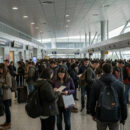
Image generated with Ai
Massive travel disruptions have shaken airports across the UAE, Qatar, Israel, Bahrain, Jordan, and more, with over 2,000 flights grounded. Airlines such as Emirates, FlyDubai, Saudia, Gulf Air, Royal Jordanian, and others have been forced to cancel and delay numerous flights, creating a nightmare for passengers. This chaos has heavily impacted major routes in cities like Dubai, Doha, Tel Aviv, Abu Dhabi, Jeddah, and beyond. Airlines and travelers are grappling with severe delays, while the grounding of flights has left thousands stranded. As a result, passengers are facing longer wait times, unpredictable schedules, and significant inconveniences. With such widespread travel disruption, this situation continues to unfold, leaving passengers and airline companies to navigate the ongoing crisis. The effects are expected to ripple across the Middle East for the coming days, significantly impacting both local and international travel.
The cities and airports impacted by the massive travel disruptions include Dubai (Dubai International – DXB), Doha (Hamad International – DOH), Tel Aviv (Ben Gurion International – TLV), Manama (Bahrain International – BAH), Abu Dhabi (Abu Dhabi International – AUH), Amman (Queen Alia International – AMM), Jeddah (King Abdulaziz International – JED), Riyadh (King Khalid International – RUH), Cairo (Cairo International – CAI), Muscat (Seeb International – MCT), Kuwait City (Kuwait International – KWI), Dammam (King Fahd International – DMM), Beirut (Beirut Air Base / Rafic Hariri International – BEY), Baghdad (Baghdad International – BGW), Medina (Prince Mohammad Bin Abdulaziz – MED), Sharjah (Sharjah International – SHJ), Tehran (Imam Khomeini International – IKA), Dubai (Al Maktoum International – DWC), and Erbil (Erbil International – EBL). These airports have experienced widespread flight cancellations and delays due to the ongoing travel disruptions.
The airlines affected by the widespread travel disruptions include Emirates, FlyDubai, Saudia, Gulf Air, Royal Jordanian, IndiGo, Air India, SpiceJet, Oman Air, Qatar Airways, Air India Express, British Airways, Airblue, SriLankan Airlines, Egypt Air, China Eastern, Ethiopian Airlines, El Al, Kenya Airways, Air France, Air China, Flynas, US-Bangla Airlines, Wizz Air Malta, Aegean Airlines, Cathay Pacific, Cyprus Airways, Pegasus Airlines, Pakistan International Airlines, Singapore Airlines, SunExpress, Ariana Afghan, Uzbekistan Airways, Mahan Air, Royal Air Maroc, Royal Brunei, Bangladesh Biman, RwandAir, Hainan Airlines, Condor, Israir, Air Sial, Kuwait Airways Corporation, Swiss, Air Canada, Turkish Airlines, MEA, My Freighter, Aeroflot, United, MAI, Korean Air, KLM, and Philippine Air Lines. These airlines have grounded flights and are facing significant delays, impacting travel across numerous major airports.
The flight cancellations across the UAE, Qatar, Israel, Bahrain, Jordan, and several other regions have reached unprecedented levels, affecting thousands of passengers. Emirates alone has canceled 441 flights (91% of its scheduled operations) at Dubai International (DXB), while FlyDubai grounded 294 flights (85%). Other major carriers such as Saudia, Gulf Air, and Royal Jordanian have also reported significant cancellations, with Saudia having 14 canceled flights (63%), and Gulf Air and Royal Jordanian both grounding 8 flights each. Similarly, Qatar Airways at Hamad International (DOH) canceled 207 flights (36%), while FlyDubai also had 12 cancellations. IndiGo has reported 30 cancellations (100%) at Dubai International and 4 at Hamad International, indicating the wide-reaching nature of the disruptions. Air India, SpiceJet, and several other regional carriers have also been heavily impacted, with cancellations ranging from 15 (SpiceJet) to 20 (Air India) flights at Dubai International. These cancellations, along with delays, have created severe travel chaos, particularly affecting high-demand routes like Dubai, Doha, Abu Dhabi, Jeddah, Tel Aviv, and Cairo. The ripple effects are expected to continue as airlines struggle to manage the backlog and restore operations to normal.
Advertisement
The major flight cancellations across the Middle East today are primarily due to geopolitical tensions arising from U.S. and Israeli strikes on Iran. These strikes have led to airspace closures and restrictions over key Gulf states, including the UAE, Qatar, Bahrain, Kuwait, and Jordan, as well as Israel. In response, airlines such as Emirates, FlyDubai, and Qatar Airways have grounded flights to ensure passenger safety, avoiding conflict zones. Airspace restrictions and heightened security concerns are forcing global carriers to reroute or cancel services, causing widespread disruption at major airports like Dubai and Doha.
Flight cancellations can be frustrating, but knowing the right steps to take can help minimize stress. Here’s what you can do if you find yourself in this situation:
Advertisement
Advertisement
Stay Updated
Monitor your email, phone, and the airline’s app for rebooking confirmation or further announcements.
Stay Calm and Check for Updates
As soon as you learn your flight is canceled, stay calm and check for updates. Many airlines will notify you via text, email, or their app. Visit the airline’s website for real-time updates on the situation.
Contact the Airline
Reach out to the airline’s customer service either in person at the airport or over the phone. If you’re at the airport, head to the service desk. If you’re not, try calling or using the airline’s online chat system to avoid waiting in long queues.
Know Your Rights
Familiarize yourself with the airline’s policies regarding cancellations. Many airlines offer rebooking options or compensation, especially if the cancellation is within their control. In the EU, for example, passengers are entitled to compensation under certain conditions.
Consider Alternative Flights
Ask the airline about the next available flight. If you can’t find a suitable option, consider booking a new flight through another airline, or check for other forms of transport like trains or buses.
The massive flight cancellations and disruptions across the Middle East today highlight the profound impact of ongoing geopolitical tensions, particularly the Iran–Israel conflict. As airspace restrictions tighten and security concerns rise, airlines are forced to cancel or reroute flights, stranding thousands of passengers and severely impacting key aviation hubs. This situation underscores the vulnerability of air travel to external factors, particularly in regions with heightened political instability. Travelers are advised to stay informed about ongoing developments, and airlines will likely continue adjusting their schedules as the situation evolves.
Source: FlightAware
Advertisement

















Wednesday, March 4, 2026

Wednesday, March 4, 2026

Wednesday, March 4, 2026

Wednesday, March 4, 2026

Wednesday, March 4, 2026

Wednesday, March 4, 2026

Wednesday, March 4, 2026
Wednesday, March 4, 2026



