Published on February 25, 2026
By: Tuhin Sarkar
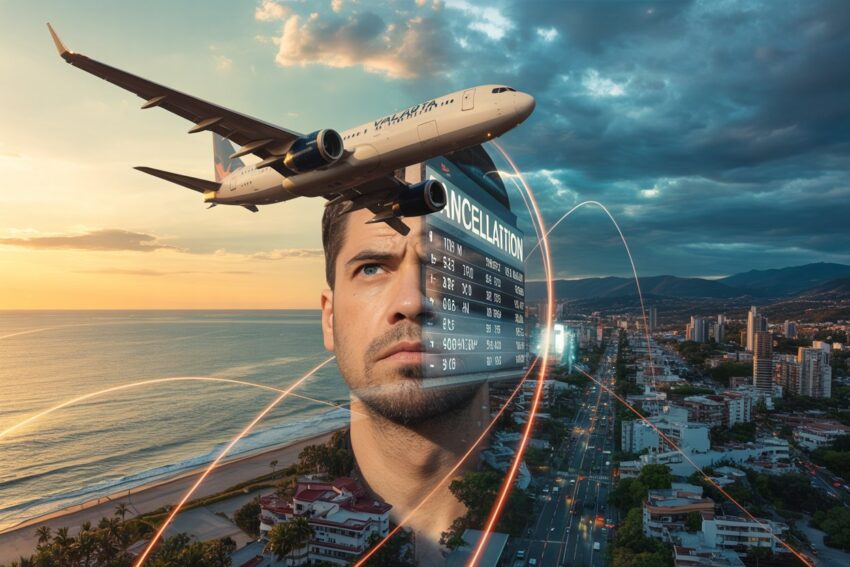
Image generated with Ai
Mexico Cartel Violence Rocks Puerto Vallarta and Guadalajara as Air Canada, United, Aeromexico and American Airlines Suspend and Resume Flights — Tourism Industry on Edge in Western Mexico, and the shockwaves are impossible to ignore. Mexico Cartel Violence Rocks Puerto Vallarta and Guadalajara again, and this time Air Canada, United, Aeromexico and American Airlines Suspend and Resume Flights under urgent security reviews, placing the Tourism Industry on Edge in Western Mexico. Suddenly, Puerto Vallarta and Guadalajara are no longer just sun-drenched gateways but flashpoints where Mexico Cartel Violence Rocks confidence, disrupts connectivity and forces Air Canada, United, Aeromexico and American Airlines to Suspend and Resume Flights within days.
Meanwhile, the Tourism Industry on Edge in Western Mexico watches every advisory, every runway update and every operational shift. As Mexico Cartel Violence Rocks Puerto Vallarta and Guadalajara, airlines recalibrate. As Air Canada, United, Aeromexico and American Airlines Suspend and Resume Flights, travellers question safety. And as the Tourism Industry remains on Edge in Western Mexico, the global travel network feels the tremor.
Now, Travel And Tour World urges readers to read the entire story to understand how Mexico Cartel Violence Rocks Puerto Vallarta and Guadalajara, why Air Canada, United, Aeromexico and American Airlines Suspend and Resume Flights, and what this means for the Tourism Industry on Edge in Western Mexico.
Violence in western Mexico has temporarily disrupted international air travel to Puerto Vallarta and Guadalajara, prompting major North American airlines to suspend and then gradually resume services. The incident, triggered by the reported killing of a senior cartel figure in Jalisco state, led to road blockades and security operations that affected airport accessibility rather than airport infrastructure itself.
Advertisement
This development provides an important case study in how regional security events can influence international tourism flows, aviation scheduling and government travel advisories.
Following a security operation that resulted in the reported killing of a high-profile cartel leader, violence broke out across parts of Jalisco. International media outlets documented road blockades, vehicle burnings and security incidents in and around Guadalajara and Puerto Vallarta.
Advertisement
Advertisement
According to some media, airlines including Air Canada temporarily suspended flights to Puerto Vallarta as a precautionary measure during the unrest. United Airlines, Aeromexico and American Airlines were also reported to have halted certain services.
A few days later, Air Canada confirmed that it would resume full operations from Montreal, Toronto and Vancouver to Puerto Vallarta, and restart Toronto–Guadalajara services shortly thereafter
Advertisement
Advertisement
The temporary suspension and subsequent resumption reflect changing assessments of operational risk.
Importantly, the airports in Puerto Vallarta and Guadalajara were not universally closed. Instead, the disruption centred on ground transportation access.
Airlines require safe and reliable transport routes for:
Road blockades and security incidents created uncertainty regarding safe airport access. Even if runways and terminals remain functional, compromised surface transport can make operations untenable.
This distinction explains why airlines suspended services as a precautionary measure.
For travellers already present in Puerto Vallarta and Guadalajara, the situation created uncertainty.
Airlines typically activated rebooking policies and fee waivers during the disruption. Accommodation providers and digital rental platforms also implemented measures to assist affected guests, as reported by MarketWatch.
Although the unrest was geographically concentrated, international media coverage contributed to broader awareness among travellers planning future trips.
Travel advisories play a central role in shaping international mobility decisions.
The U.S. State Department maintains a state-by-state advisory framework for Mexico, outlining recommended precautions based on security assessments (U.S. advisory).
Similarly, the Government of Canada issues region-specific travel advice for Canadians visiting Mexico (Canada advisory).
During the height of the unrest, American officials advised some citizens in affected areas to shelter in place. Subsequent reporting indicated that this guidance was narrowed as conditions improved.
Travel advisories can influence:
Adjustments to advisories often signal stabilisation in security conditions.
Mexico is one of the world’s leading tourism destinations. According to data from SECTUR’s Datatur platform, international arrivals have shown continued strength entering 2025 (SECTUR data). Official releases from INEGI similarly confirm strong inbound visitor numbers in recent reporting periods (INEGI release).
The World Travel & Tourism Council highlights tourism’s substantial contribution to Mexico’s GDP and employment.
Given this scale, disruptions in major destinations such as Puerto Vallarta can have short-term economic effects on local hospitality businesses, tour operators and transport providers.
However, past experience suggests that disruptions in Mexico are often regionally contained rather than nationwide.
Cruise lines adjusted itineraries during the unrest. Reporting by the Houston Chronicle indicated that some vessels altered port calls in Puerto Vallarta while other Mexican ports continued normal operations
Outside tourism, industrial operations were also affected. The Financial Times reported that Honda temporarily suspended operations at a Mexican plant during the unrest, reflecting wider economic sensitivity to security developments
These developments demonstrate that security incidents can influence multiple sectors simultaneously.
An academic study published via arXiv examined how violence can reduce effective highway connectivity in affected regions of Mexico
The recent events reflect this vulnerability. Airports may remain operational, but when road networks are disrupted, functional connectivity declines.
For tourism-dependent economies, surface transport reliability is critical.
Air Canada’s decision to resume services from Montreal, Toronto and Vancouver to Puerto Vallarta, along with the restart of Toronto–Guadalajara flights, indicates that conditions have stabilised sufficiently for operations to continue.
United Airlines, Aeromexico and American Airlines are similarly adjusting schedules in response to evolving assessments.
Key indicators for the coming weeks include:
Mexico’s tourism sector has historically demonstrated resilience following regional security incidents. Nevertheless, the episode illustrates how quickly aviation networks can respond to localised instability.
In summary, the temporary suspension and resumption of flights to Puerto Vallarta and Guadalajara highlight the interdependence of security conditions, transportation infrastructure and international tourism flows. While operations are normalising, the event underscores the importance of stable ground connectivity in sustaining global travel networks.
Advertisement
Tags: Air Canada United Aeromexico American Airlines, Guadalajara Flight Suspensions, Mexico cartel violence, Puerto Vallarta Travel Disruption, Western Mexico Tourism Industry
















Wednesday, February 25, 2026

Wednesday, February 25, 2026

Wednesday, February 25, 2026
Wednesday, February 25, 2026
Tuesday, February 24, 2026

Tuesday, February 24, 2026

Wednesday, February 25, 2026

Wednesday, February 25, 2026