Published on March 2, 2026

Image generated with Ai
As tensions between the United States and Israel continue to escalate, with direct strikes on Iran and retaliatory missile exchanges across the Gulf, Thailand’s economy finds itself caught in the crossfire of this global crisis. Despite being geographically distant from the epicenter of the conflict, the Kingdom’s vulnerability lies in its reliance on imported oil, global trade, and tourism—three key sectors that are now facing significant disruptions. The Strait of Hormuz, which accounts for 20% of the world’s oil shipments, remains a critical chokepoint, and any blockage or insecurity in the region could send energy prices soaring. Experts warn that this could derail Thailand’s post-pandemic recovery and fuel inflation, further stressing the nation’s already fragile economic state.
Thailand’s energy security has become a primary concern, particularly with the looming threat of rising global oil prices. The country’s 60-day oil reserve has been activated, with government measures in place to prioritize domestic consumption. However, any disruption in the global oil supply could lead to price hikes at home, affecting fuel costs and the price of electricity.
Thailand’s economy is heavily dependent on imported oil, with crude and refined oil reserves offering a temporary buffer. However, with the risk of further disruption to global oil supply routes, officials are closely monitoring the situation. Thailand currently holds 7.66 billion liters of oil, enough to last approximately 60 days, including reserves in transit. Yet, experts caution that any increase in diesel prices beyond $100 per barrel could trigger price hikes at the pump, placing a burden on both businesses and households.
Power generation in Thailand is also under pressure. As the country faces higher costs for Liquefied Natural Gas (LNG), authorities have ordered coal-fired and hydroelectric plants to operate at full capacity, seeking to reduce dependence on LNG, which accounts for 60% of the nation’s energy. This shift aims to mitigate some of the potential effects of rising energy costs, but it remains a precarious balancing act.
Advertisement
The Ministry of Commerce has mobilized Thai Trade Centers across the globe to assess the economic impact of the escalating conflict. While Middle Eastern countries are crucial trading partners for Thailand, the war economy has forced the Kingdom to rethink its strategy. The shipping industry is already seeing a sharp increase in freight rates and maritime insurance premiums, particularly affecting canned fruits, rubber products, and automotive parts—sectors highly vulnerable to price increases.
In response, Thailand is pushing for market diversification, focusing on alternative regions like South Asia, Africa, and Latin America to mitigate the risks posed by supply chain disruptions. Thailand’s global export strategy is adjusting to these new realities, with trade officials working on alternative routes and logistical solutions.
Advertisement
Advertisement
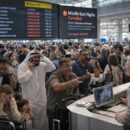
While Thailand remains a relatively safe destination compared to conflict zones, the country’s aviation sector is facing significant challenges. Airlines, including Thai Airways, are adjusting their flight routes to avoid Middle Eastern airspace, leading to longer flight durations and higher fuel surcharges. These disruptions are not only inconveniencing business travelers, but they also pose a threat to the country’s tourism industry, which heavily relies on high-spending tourists from the Gulf Cooperation Council (GCC) countries and Israel.
The tourism sector is experiencing a decline in demand, particularly among those from the Middle East, who typically spend significantly during their vacations in Thailand. The ongoing global instability has shifted tourist sentiment, with many reconsidering long-haul travel to regions affected by the escalating conflict. This comes at a time when Thailand’s tourism sector was hoping to rebound from pandemic-induced losses.
Prime Minister Anutin Charnvirakul has made the safety of the over 77,000 Thai nationals working in the Middle East a top priority. Many of these workers are based in Israel, the UAE, and Saudi Arabia. The government has prepared evacuation plans for Thai citizens, including the establishment of evacuation corridors through India. The Royal Thai Air Force is on standby, ready to deploy Airbus A319/A320 and C-130 Hercules aircraft if necessary. The Thai government is also coordinating with international partners to ensure that Thai nationals in the affected regions can return home safely.
While Thailand remains a safe destination in comparison to areas directly impacted by the conflict, travelers should be prepared for flight delays, increased fuel surcharges, and possible route changes. Here are some tips for travelers planning trips to Thailand during this uncertain time:
Thailand’s economy faces an uphill battle as it grapples with the indirect consequences of the Middle Eastern conflict. The energy sector is particularly vulnerable to global price fluctuations, and while measures are in place to mitigate some of these effects, price hikes and inflation may still hit the pockets of everyday Thais. The trade sector faces additional pressure, with higher shipping costs and disrupted supply chains, while the tourism industry could see a dip in visitor numbers from the Gulf region and Israel.
Despite these challenges, the Thai government is working tirelessly to safeguard the nation’s interests, with a focus on energy security, export diversification, and tourism stabilization. How Thailand navigates this crisis will depend on both global oil market trends and the long-term stability of the region.
Advertisement
Tags: Middle East conflict, oil prices Thailand, Thai Airways rerouting, Thailand economic impact, Thailand tourism disruptions

















Monday, March 2, 2026

Monday, March 2, 2026

Monday, March 2, 2026

Monday, March 2, 2026

Monday, March 2, 2026