Published on March 2, 2026
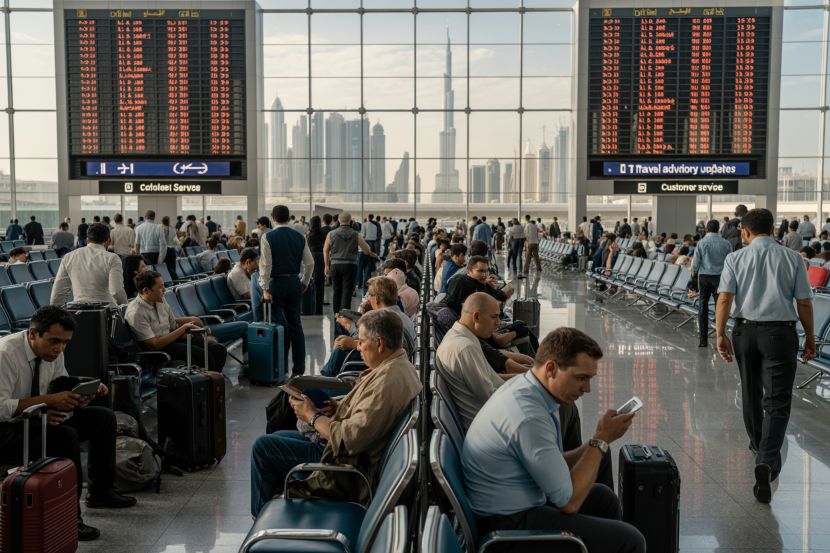
Image generated with Ai
Aviation across the Middle East has been severely disrupted following escalating tensions between the United States and Israel on one side and Iran on the other. Hundreds of flights were canceled on Monday, leaving thousands of passengers stranded at some of the world’s busiest airports, including Dubai International, Doha, and Abu Dhabi. Airspace closures, drone strikes, and the ongoing military actions in the region have caused a level of chaos not seen since the COVID-19 pandemic. Travelers from around the world, including those flying in from Europe and Asia, are now facing uncertainty, as airlines scramble to find alternative routes and restore services.
On Monday, over 1,239 flights were canceled in the Middle East, with Emirates, Etihad Airways, and Qatar Airways suspending services to and from Dubai, Abu Dhabi, and Doha. This marks the third consecutive day of flight cancellations, as airspace over countries including Iran, Israel, Iraq, Bahrain, and the UAE remains closed or restricted. The US-Israel airstrikes on Iran, followed by Iranian retaliatory missile attacks on US allies in the region, have triggered widespread disruption in air travel.
The closure of Dubai International Airport, the world’s busiest international airport by passenger traffic, and other major Middle Eastern airports has left thousands stranded. The UAE government has confirmed that Dubai International Airport was hit during the Iranian missile strikes, damaging parts of the airport and causing the temporary halt of all operations. Qatar and Bahrain have also faced flight cancellations as their airspace remains closed due to safety concerns.
The disruptions are not limited to the Middle East. Global aviation has been hit hard by the ripple effect of the ongoing conflict. Over 3,400 flights were canceled over the weekend alone, with major international carriers like British Airways, Air India, and Singapore Airlines rerouting or canceling flights to and from the Middle East. For business travelers, this has meant canceled meetings, delayed conferences, and an inability to travel to critical hubs in the region.
Advertisement
For tourists, especially those on holiday in the UAE, Qatar, and Israel, the situation has caused a great deal of uncertainty. Holidaymakers who planned to enjoy the sights of Dubai or take in the culture of Jerusalem are now stranded, with no clear timeline on when their flights will be rescheduled.
The economic toll has been considerable, with airline stocks plummeting as investors brace for more disruptions. Shares in Singapore Airlines, Qantas, and Cathay Pacific have all dropped significantly, reflecting market concerns over the long-term impact of the conflict on global travel.
Advertisement
Advertisement
In response to the escalating crisis, the UK government has launched a registration system for British nationals currently in the Middle East. Over 94,000 people have already registered their details with the FCDO, which is crucial for receiving real-time updates and evacuation assistance if necessary. The FCDO has advised British nationals in the region to stay indoors and remain vigilant, as the situation remains fluid.
For those in Qatar, the UAE, and Bahrain, the FCDO recommends monitoring local news and adhering to the safety measures outlined by local authorities. Evacuation plans are under consideration should airspace remain closed for an extended period. The UK government is working with regional authorities to provide alternative routes for British citizens to leave the area safely.
Given the widespread disruption to global air travel, it is important for travelers to stay informed and flexible during this crisis. Here are some key tips for those affected:
The escalating Middle East conflict has caused the worst travel chaos since the COVID-19 pandemic, with hundreds of flights canceled and airspace closures disrupting both business and leisure travel. British nationals and international tourists alike are facing significant uncertainty, and the UK government is working diligently to assist in the safe evacuation of its citizens. For travelers, the key is to stay informed, flexible, and prepared for further disruptions as the situation continues to unfold.
Advertisement
Tags: bahrain, Middle East, QATAR, UAE, United Kingdom

















Monday, March 2, 2026

Monday, March 2, 2026

Monday, March 2, 2026

Monday, March 2, 2026

Monday, March 2, 2026

Monday, March 2, 2026