Published on January 1, 2026
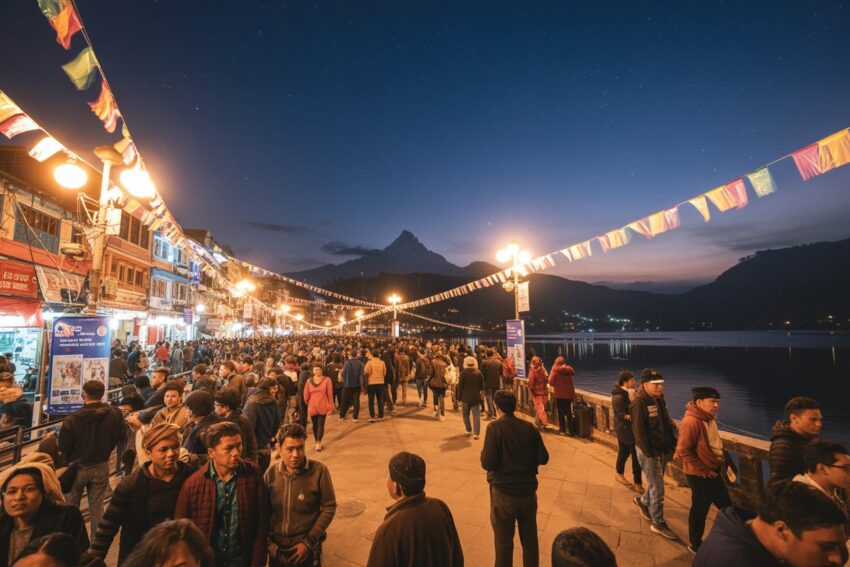
As the sun sets on 2025, the hills of Nagarkot and the lakeside of Pokhara are not echoing with the quiet of winter, but with the vibrant energy of a nation in celebration. In a significant shift for Nepal’s hospitality industry, domestic tourists have taken center stage, filling hotel rooms to near-total capacity for the Gregorian New Year 2026. From luxury resorts in the mountains to jungle lodges in the plains, the message is clear: the “local traveler” is no longer just a secondary market—they are the industry’s most resilient backbone.
Nagarkot, the beloved hill station famous for its sunrise views of the Himalayas, has become the ground zero for New Year festivities. Sushil Dhakal, General Manager of Soltee Westend Resort Nagarkot, reported that his property reached 100% occupancy for New Year’s Eve and is booked solid through the first week of January.
Advertisement
What is most striking is the demographic shift: nearly 80% of these guests are Nepalis. This isn’t just a weekend getaway; it’s a cultural evolution. The Gregorian New Year has moved from being a Western curiosity to a staple of the Nepali social calendar, with families and young professionals opting for “staycations” that offer a blend of luxury and nature.
Further west, Pokhara—the tourism capital—has transformed its iconic Lakeside into a 3.5-kilometer pedestrian-only paradise. The 27th Pokhara Street Festival, organized by REBAN, has pushed hotel occupancy to a staggering 90%.
Advertisement
“Tourism had slowed down significantly following the political movements earlier this year, but the festive period has reclaimed that momentum,” noted Laxman Subedi, President of the Hotel Association Pokhara. The festival features a vibrant mix of cultural performances, traditional music, and pop concerts, creating a multi-generational appeal that draws crowds from across the country.
In the south, the plains of Chitwan and Nepalgunj are also witnessing a “full house.” Sauraha, the gateway to Chitwan National Park, is reporting 100% occupancy, with domestic travelers making up the vast majority. Meanwhile, the border town of Nepalgunj is leveraging star power to fill its halls. Hotels like Siddhartha View and Star Light have launched aggressive campaigns featuring performers like Prakash Saput, offering deep discounts of up to 40% on accommodation to entice both local and Indian visitors.
Advertisement
Behind these numbers lies a deeper story of human resilience. 2025 was a difficult year for Nepal’s tourism sector. Between the flight reductions at Tribhuvan International Airport due to essential maintenance and the political instability caused by the “Gen Z movement,” the industry was in a precarious spot.
However, the year-end surge represents more than just a profit margin; it represents the “repair” phase of the nation. For the hotel owner in Dhulikhel or the restaurant worker in Pokhara, the influx of domestic tourists is a sign that normalcy is returning. It’s a testament to the idea that even when international arrivals fluctuate, the local population’s desire for connection, celebration, and travel remains unshakeable.
As we enter 2026, the Nepal Tourism Board (NTB) has already announced “Nepal–ASEAN Tourism Year” to diversify the market. Yet, the current occupancy levels suggest that the real growth might be closer to home. The industry is adapting by offering “personalized experiences” and “off-grid destinations” to satisfy a tech-savvy, younger Nepali demographic that values peace over noise and authenticity over artificiality.
The New Year 2026 is not just a change on the calendar; it is a celebration of a tourism industry that has learned to find strength from within its own borders.
The 2026 New Year surge is a watershed moment for Nepal. It proves that the “tourism” label no longer belongs exclusively to foreign backpackers or Everest climbers. Today’s tourist is the Nepali family from Butwal visiting the streets of Pokhara; it is the Kathmandu-based entrepreneur finding solace in the misty hills of Nagarkot.
This domestic-led recovery provides a safety net against global volatility. While international markets are subject to airfare spikes and geopolitical shifts, the heart of Nepal’s tourism now beats within its own people. As the country prepares for the March 2026 elections and navigates its economic “repair,” the hospitality sector stands as a beacon of hope—powered by the very people it serves. The message for the new year is one of unity: Nepal is open, it is celebrating, and it is being rediscovered by its own.
Advertisement
Tags: domestic travel Nepal, Nagarkot hotel bookings, Nepal tourism 2026, New Year celebrations Nepal, Pokhara Street Festival









Thursday, January 1, 2026

Thursday, January 1, 2026

Thursday, January 1, 2026
Thursday, January 1, 2026

Thursday, January 1, 2026

Thursday, January 1, 2026

Thursday, January 1, 2026

Thursday, January 1, 2026