
Europe’s Record Tourism Growth Faces a New Challenge at Euronews Travel Summit 2026

Published
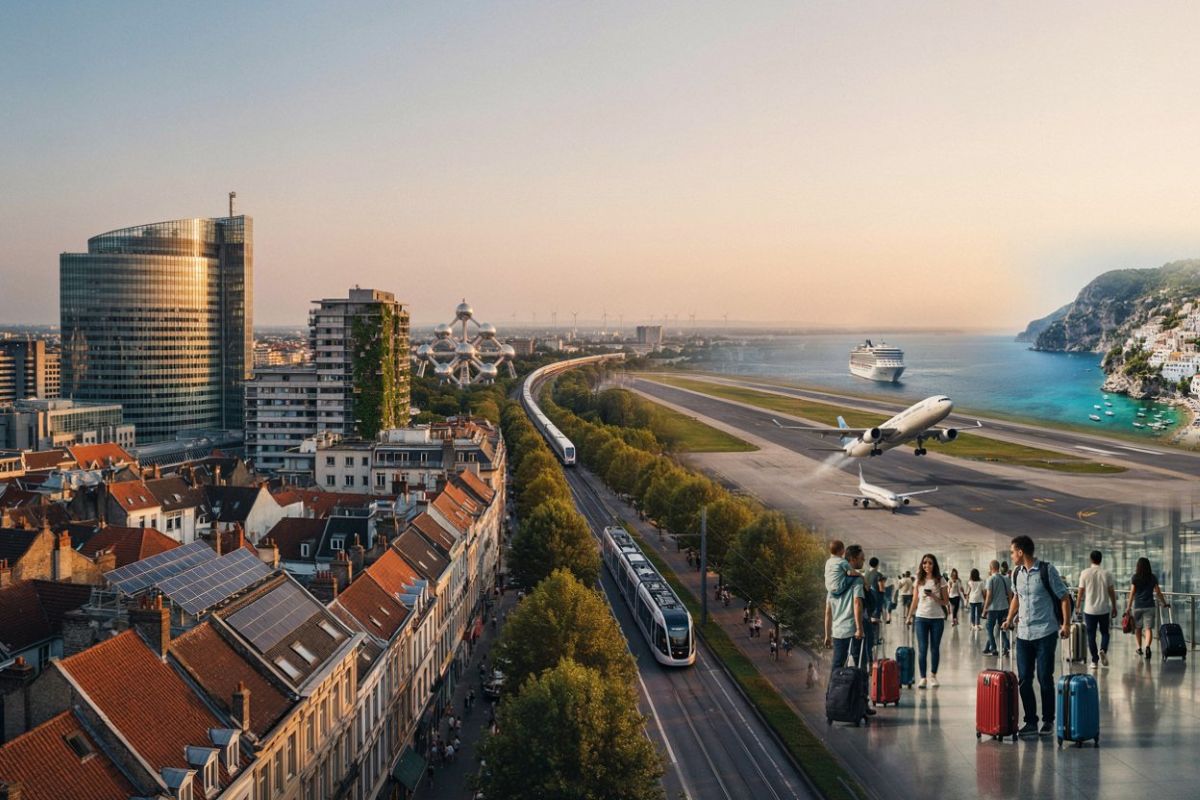
Image generated with Ai
Brussels, Belgium: For travellers arriving in Brussels this week, the city is not only welcoming another busy autumn of European visitors. It is also becoming the meeting point for a much bigger conversation about where tourism goes next. The Euronews Travel & Tourism Summit 2026, taking place at the Albert Hall in Brussels on September 29, is bringing policymakers, tourism officials and industry leaders together to examine how Europe can handle rising travel demand while keeping destinations accessible, connected and sustainable.
Record Travel Demand Changes the Conversation
The summit comes as tourism activity across Europe continues to expand. Eurostat reported 1.321 billion overnight stays in EU tourist accommodation during the first half of 2026, 1.7% higher than during the same period in 2025. The increase follows another record year in 2025, when EU accommodation establishments recorded almost 3.1 billion overnight stays.
Advertisement
Advertisement
That growth is changing the industry’s priorities. Instead of concentrating exclusively on attracting more visitors, destinations increasingly have to consider how visitors move through cities and regions, how infrastructure handles peak demand and how tourism affects local communities.
Aviation Records Show How Strong Travel Demand Has Become
European aviation provides another indication of the strength of the travel market. EUROCONTROL reported that summer 2026 was the busiest summer on record for European aviation, with an average of 35,959 flights per day, 2.4% more than in summer 2025.
Advertisement
Advertisement
On July 24, the European network reached a record 37,659 flights in a single day. Despite the higher traffic levels, air traffic flow-management delays fell by 17%, while arrival punctuality improved compared with the previous summer.
For travellers, the figures point to sustained demand for flights across the continent. They also highlight why airport capacity, airspace management and regional connectivity have become central to Europe’s tourism strategy.
Advertisement
Advertisement
Overtourism Pushes Destinations to Look Beyond Traditional Hotspots
Managing visitor concentration is one of the central issues at the Brussels summit. Euronews has highlighted discussions around overtourism, second cities and ways of encouraging travellers to explore less-visited neighbourhoods and regions.
The European Commission has also identified unbalanced tourism flows, seasonality and tourism intensity as issues that can leave particular destinations vulnerable to excessive visitor pressure. Its tourism dashboard is designed to help policymakers understand these patterns and support a transition towards greener and more digitally enabled tourism.
Advertisement
Advertisement
For travellers, this could gradually mean greater promotion of destinations outside Europe’s most crowded tourism centres. But spreading tourism requires more than marketing. Smaller destinations also need reliable transport, accommodation, attractions and connections to major gateways.
Albania Illustrates the Rise of Emerging Destinations
Albania is an important example of how changing travel patterns are creating new opportunities. Albanian Prime Minister Edi Rama is among the headline speakers at the summit, with the country having emerged as one of Europe’s rapidly growing tourism destinations.
According to Euronews, Albania recorded 11.9 million international arrivals in 2025, 93.6% above its 2019 level, according to UN Tourism. Improved air connectivity, competitive pricing and growing international interest in the Albanian Riviera, Tirana and the country’s mountain regions have contributed to its expansion.
The country’s growth also demonstrates how travellers are increasingly looking beyond Europe’s traditional tourism giants for coastal, cultural and outdoor experiences.
Advertisement
Advertisement
Shoulder Seasons Could Help Relieve Summer Pressure
Seasonality is another challenge facing European tourism. Eurostat found that 31.1% of all EU tourism accommodation nights in 2025 occurred during July and August, making the two months the busiest tourism period in every EU country.
This concentration puts additional pressure on transport networks, accommodation, attractions and local communities during the peak summer period.
Extending travel demand into spring and autumn could therefore become an increasingly important part of destination management. For travellers, a broader tourism season can also create more opportunities to visit popular destinations outside the busiest summer weeks.
Europe and Asia Seek New Travel Corridors
Connectivity beyond Europe is also featuring prominently at the summit. A dedicated session is examining how visa-free arrangements, new air routes and stronger tourism relationships could reshape travel between Europe and Asia. Representatives from Kyrgyzstan, China and Azerbaijan are participating in the discussion.
Easier connections can influence not only how many people travel, but also which destinations become accessible to international visitors. New routes can help emerging destinations compete with established tourism markets while giving travellers more choices for multi-country and long-haul itineraries.
Sustainability Becomes an Infrastructure Question
The summit is also examining whether tourism growth can remain compatible with environmental goals. Discussions include sustainable mobility, destination management, aviation, hospitality and infrastructure, while cruise tourism is being examined through the question of cleaner fuels, next-generation vessels and smarter ports.
Advertisement
Advertisement
This reflects a wider shift in tourism policy. Sustainability is increasingly being considered not simply as an individual traveler’s choice, but as a question involving transport systems, urban planning, accommodation and destination infrastructure.
What the Summit Means for Travellers
The Brussels discussions arrive at a moment when Europe’s tourism industry is growing, but the conditions surrounding that growth are changing. Record flight activity and rising accommodation demand show that travellers continue to move across the continent in large numbers. At the same time, overtourism, affordability, infrastructure pressure, seasonality and environmental concerns are forcing destinations to reconsider how that demand is managed.
For someone planning a European trip, the changes could eventually be felt through new routes, greater attention to lesser-known destinations, stronger shoulder-season promotions and evolving approaches to sustainable travel. The biggest question emerging from Brussels is therefore not whether people still want to travel across Europe. They clearly do. The question is how the continent can make that growing appetite for travel work for visitors and the places they come to experience.
Advertisement
