Published on February 10, 2026
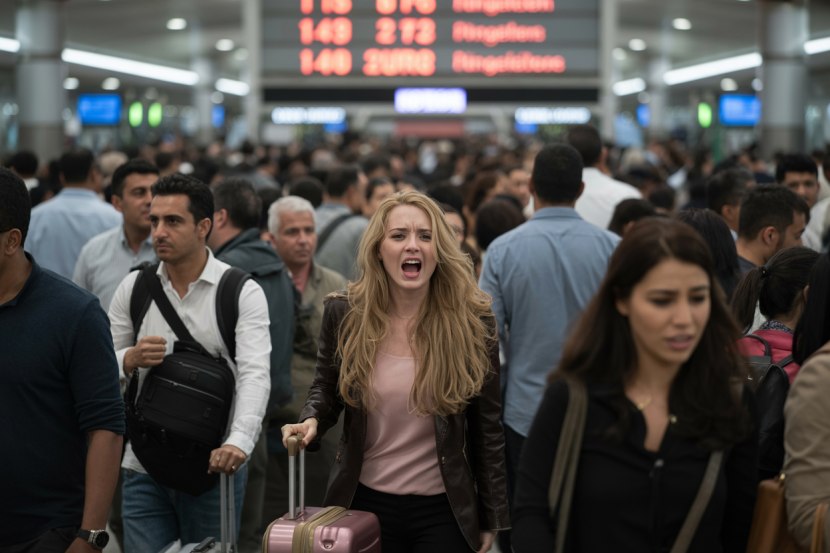
Image generated with Ai
Numerous passengers stranded across the UAE, Egypt, Türkiye, Saudi Arabia, Qatar, Kuwait And Bahrain today as 1,370 flight delays and 16 cancellations were recorded. The most affected airports included Dubai International (DXB: 252 delays, 4 cancellations), Cairo International (CAI: 229 delays, 1 cancellation), Hamad International, Doha (DOH: 204 delays), King Abdulaziz International, Jeddah (JED: 194 delays, 3 cancellations), Istanbul Sabiha Gökçen (SAW: 173 delays, 2 cancellations), King Khalid International, Riyadh (RUH: 150 delays), Kuwait International (KWI: 57 delays, 1 cancellation), Bahrain International (BAH: 59 delays, 2 cancellations), and King Fahd International, Dammam (DMM: 52 delays, 3 cancellations).
Among airlines, Qatar Airways (169 delays at Doha), Pegasus Airlines (121 delays, 2 cancellations at Istanbul Sabiha Gökçen), Emirates (79 delays, 2 cancellations at Dubai; additional delays across Cairo and Bahrain), EgyptAir (95 delays at Cairo), and Saudia (65 delays and 3 cancellations at Jeddah; additional delays across Riyadh, Cairo, and Dammam) were the most affected by volume. Other widely used carriers not among the top disruption drivers in the Middle East, but still impacted included British Airways (delays at Bahrain), Air France (delays at Dubai and Cairo), IndiGo (delays across Dubai, Bahrain, Riyadh, and Dammam), and FlyDubai (delays across Dubai, Doha, Bahrain, Riyadh, and Dammam). Cities facing the greatest passenger impact included Dubai, Cairo, Doha, Jeddah, Riyadh, Istanbul, Kuwait City, Manama, and Dammam, with delay-heavy operations dominating the disruption profile at the UAE, Egypt, Qatar, Saudi Arabia, Türkiye, Kuwait, and Bahrain.
Dubai recorded the highest number of delays (252) and four cancellations, with Emirates (79 delays, 2 cancellations) and FlyDubai (75 delays) contributing significantly. The disruption footprint extended across international carriers including Air France, IndiGo, Air India, and Saudia.
Cairo followed closely with 229 delays and one cancellation, driven primarily by EgyptAir (95 delays), Air Cairo (26 delays), and Nile Air (20 delays), affecting regional and long-haul operations alike.
Doha experienced 204 delays with zero cancellations, overwhelmingly concentrated with Qatar Airways (169 delays), making it one of the most delay-heavy single-airline hubs despite operational continuity.
Advertisement
Advertisement
Jeddah logged 194 delays and 3 cancellations, all cancellations attributed to Saudia, while Flynas and flyadeal added substantial delay volumes.
Istanbul Sabiha Gökçen recorded 173 delays and 2 cancellations, with Pegasus Airlines accounting for the majority of disruption, making it one of the most airline-concentrated delay events of the day.
Advertisement
Advertisement
Qatar Airways recorded 169 delays at Doha, along with additional delays at Cairo, Riyadh, Bahrain, and Kuwait, making it the single largest contributor by delay volume at one hub.
Pegasus Airlines accounted for 121 delays and 2 cancellations at Istanbul Sabiha Gökçen, dominating disruption at that airport.
Advertisement
Advertisement
Emirates logged 79 delays and 2 cancellations at Dubai (UAE), plus additional delays at Cairo and Bahrain, impacting both regional and long-haul passengers.
EgyptAir faced 95 delays at Cairo, along with further delays at Riyadh, Kuwait, and Dammam, affecting multiple regional corridors.
Saudia reported 3 cancellations and 65 delays at Jeddah, with further delays spread across Riyadh, Cairo, Kuwait, and Dammam, making it the most cancellation-impacted airline of the day.
Today’s disruption landscape in The Middle East was defined by delay-heavy operations rather than mass cancellations, with Qatar Airways, Emirates, Saudia, EgyptAir, Pegasus Airlines, Flynas, FlyDubai, and flyadeal emerging as the most affected carriers by volume at key hubs. The concentration of delays across Dubai (UAE), Cairo (Egypt), Doha (Qatar), Jeddah and Riyadh (Saudi Arabia), Istanbul (Türkiye), Kuwait City (Kuwait), Manama (Bahrain), and Dammam (Saudi Arabia) highlighted sustained pressure on major transit and origin-destination markets in the Middle East and Eastern Mediterranean.
Airports in Saudi Arabia, the UAE, Qatar, Egypt, and Türkiye consistently recorded high delay counts, indicating network-wide congestion rather than isolated operational failures. Qatar Airways’ delay dominance in Doha, Emirates’ disruption footprint in Dubai, Saudia’s mix of delays and cancellations across Jeddah and Dammam, and EgyptAir’s heavy delays in Cairo collectively underscored how national carriers bore the largest operational strain. At the same time, the recurrence of delays among regional and international operators such as IndiGo, Air France, British Airways, and Gulf Air demonstrated that disruption effects extended well beyond domestic networks.
While total cancellations were limited to 16 flights overall, the scale of delays across these cities amplified passenger disruption, particularly for connecting travelers moving between Europe, the Middle East, Africa, and South Asia. The repeated appearance of Dubai, Doha, Cairo, Jeddah, Riyadh, and Istanbul as pressure points reinforced their role as critical global aviation corridors, where even moderate operational stress translated into widespread schedule instability.
Image Source: AI
Source: Different airports and FlightAware
Advertisement
Tags: dubai flight cancellations today, Egypt Flight Delays Today, Emirates flights cancelled today, Qatar Airways Cancelled Flights Today, Turkey Flights Cancelled Today


















Saturday, February 28, 2026

Saturday, February 28, 2026

Saturday, February 28, 2026

Saturday, February 28, 2026

Saturday, February 28, 2026

Saturday, February 28, 2026

Saturday, February 28, 2026

Saturday, February 28, 2026