
Philadelphia Joins Dallas, New York, Toronto, San Francisco, Seattle Along with 4AI Systems, Piper Networks, Benesch and Railway Age for Light & Heavy Passenger Rail 2026, at Kimpton Hotel Monaco, Philadelphia, US, on November 4-5

Published
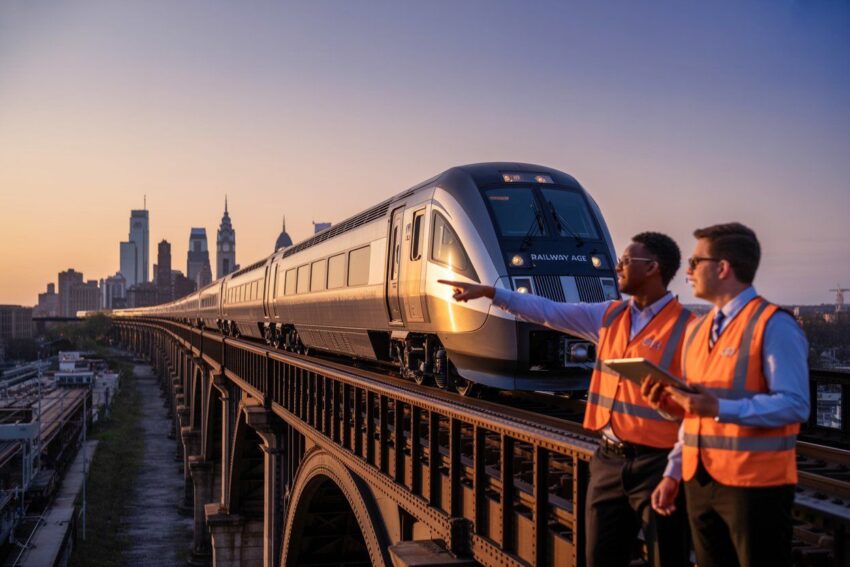 Image generated with Ai
Philadelphia is officially the epicenter of a transit revolution! This November 4-5, the iconic Kimpton Hotel Monaco hosts the massive Light & Heavy Passenger Rail 2026 summit. Are you ready? Industry titans like New York, Toronto, Dallas, San Francisco, and Seattle are descending upon the US. Why? To join forces with 4AI Systems, Piper Networks, and Benesch! Furthermore, Railway Age is leading this charge. Short, bold steps are being taken right now. Consequently, active voices are shaping our tracks. Will you be there? Because this power-packed collaboration is changing how we move forever!
A Confluence of Minds in the City of Brotherly Love
The Light & Heavy Passenger Rail 2026 conference, scheduled for November 4–5, arrives at a critical juncture for the industry. Jointly hosted by industry stalwarts Railway Age and Railway Track & Structures (RT&S), the event serves as the premier annual summit for professionals who keep the continent’s veins and arteries—its rail lines—pumping.
Advertisement
Advertisement
The choice of Philadelphia is no coincidence. As one of the most transit-dependent regions in the United States, the city provides a living laboratory for the very challenges being discussed. While the conference unfolds in the Independence Hall neighborhood, the Southeastern Pennsylvania Transportation Authority (SEPTA) is simultaneously navigating a massive $55 million rehabilitation project on the Norristown High Speed Line. This project, which involves critical structural repairs to the 115-year-old Bridgeport Viaduct, perfectly mirrors the conference’s core themes: balancing the preservation of legacy infrastructure with the urgent need for modernization.
Beyond the Tracks: The 2026 Agenda
The expanded program for this year’s summit suggests an industry no longer content with incremental changes. The focus has shifted toward “Transit Innovation, Powered by Collaboration.” This isn’t just a catchy tagline; it represents a fundamental change in how agencies approach problem-solving in a post-pandemic world where ridership patterns have permanently shifted.
Advertisement
Advertisement
Key pillars of the 2026 program include:
- AI and Automation: Moving beyond simple data collection to “agentic AI” that can independently reroute traffic during accidents or trigger predictive maintenance workflows before a part even fails.
- Electrification Strategies: As North American cities race to meet climate goals, the transition away from diesel is no longer optional. Sessions will focus on the logistical hurdles of charging infrastructure and hydrogen-powered alternatives.
- Next-Generation Rolling Stock: With the North American rolling stock market projected to reach a revenue of nearly $19 billion by 2033, the focus is on “smart” cars equipped with regenerative braking and real-time passenger information systems.
The Digital Revolution: AI as the New Engineer
One of the most anticipated segments of the conference involves the integration of Artificial Intelligence into daily operations. Recent industry reports highlight a shift from pilot programs to full-scale production. In early 2026, global transit experts emphasized the move toward a “human-on-the-loop” model. In this symbiotic relationship, AI handles the heavy lifting of processing high-frequency data and preliminary execution, while human operators retain ultimate oversight for strategic decisions and rare “edge case” scenarios.
Advertisement
Advertisement
The conference will likely echo these sentiments, exploring how AI-enhanced platforms are helping to cut congestion times and offer deeper insights into commuter behavior. For the engineers in attendance, the appeal is practical: AI can monitor the health of thousands of miles of track in real-time, identifying hazardous areas or structural weaknesses that the human eye might miss.
Strengthening the Backbone: Infrastructure and Signaling
While AI captures the headlines, the physical infrastructure remains the backbone of the system. The summit provides a vital space for discussing the Digital Railway. The shift from legacy signaling to technologies like the European Train Control System (ETCS) is unlocking new levels of capacity and reliability.
Advertisement
Advertisement
According to industry analysts, these modern signaling systems are critical enablers for the future. They allow trains to run more frequently and with narrower safety margins, effectively increasing the capacity of existing tracks without the need for expensive new tunnel or bridge construction. This is particularly relevant for agencies managing “mixed-traffic” environments where high-speed passenger trains must share space with heavy freight.
Why This Gathering Matters Now
The stakes for the 2026 conference extend beyond technical specifications. The rail supply industry now contributes an estimated $127 billion annually to the U.S. GDP and supports over 338,000 jobs. However, the industry is also facing significant headwinds, including aging networks, cyber vulnerabilities, and the increasing frequency of extreme weather events.
Attendees are not just there to look at new gadgets; they are there to earn Professional Development Hour (PDH) credits and, more importantly, to learn from the “scars” of their peers. The value of hearing real-world lessons from agencies that have successfully navigated project delays or funding shortfalls is immeasurable. The event fosters a focused, professional environment where a planner from Toronto can trade notes with an operations manager from Dallas over a cup of coffee.
A Historic Backdrop for Modern Progress: The Philadelphia Advantage
The selection of Philadelphia as the host city for the 2026 summit is a deliberate nod to the intersection of heritage and innovation. As the birthplace of American independence, Philadelphia offers more than just a central location on the high-traffic Northeast Corridor; it provides a living case study of urban transit evolution.
Advertisement
Advertisement
The Kimpton Hotel Monaco, nestled in the heart of the historic district, serves as a sophisticated sanctuary for high-level discourse. Housed in a beautifully repurposed 1907 building, the venue mirrors the industry’s own challenge: integrating cutting-edge technology within existing, time-honored frameworks. By staying steps away from landmarks like Independence Hall, attendees are constantly reminded of the long-term impact of infrastructure. This environment fosters a unique atmosphere where the gravity of historical legacy inspires the bold decision-making required to build the transit networks of the next century.
A Sustainable Path Forward
Sustainability is no longer a niche topic; it is the lens through which every new project is viewed. The 2026 summit will dive deep into reduced-carbon transit solutions. Intercity passenger rail is already 47% more energy-efficient than traveling by car, but the push for “net-zero” continues. Innovations such as “smart sleepers” with integrated sensors and the adoption of turbocharged vehicles are part of this green evolution.
Summary of Objectives
The primary cause of this high-level assembly is the accelerating obsolescence of legacy infrastructure and the shifting demands of modern commuter demographics. The answer to these challenges lies in the collaborative integration of next-generation technologies—specifically AI-driven maintenance and high-precision signaling—into existing frameworks. The fundamental reason for selecting Philadelphia and the Kimpton Hotel Monaco as the setting is to ground these futuristic discussions in a city that epitomizes the evolution of American transit. Through this synergy of public agencies and private innovators, the summit aims to deliver a roadmap for a more resilient, efficient, and interconnected rail network.
Advertisement
