
Finland Teams Up With Sweden and More as EU Russian Tourist Visa Ban Push Puts Europe Travel Rules in the Spotlight

Published
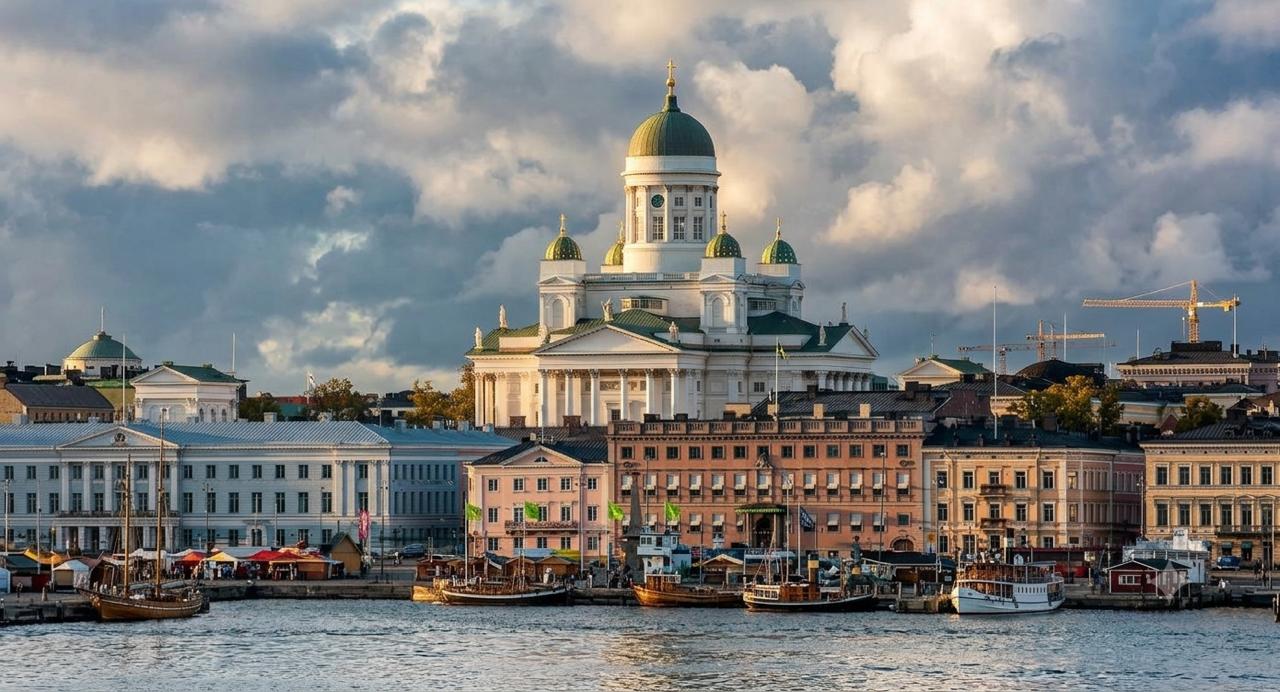
Finland Teams Up With Sweden and more European nations as the EU Russian Tourist Visa Ban Push puts Europe Travel Rules in the Spotlight! The proposal has sparked fresh discussions about Russian tourist visas and the future of travel across Europe. Meanwhile, Finland and Sweden remain central to the wider debate over visa restrictions, border policies and tourism mobility. As the EU Russian Tourist Visa Ban Push attracts attention, travellers need to understand what has changed and what remains under discussion. Travel And Tour World brings readers the latest travel-focused insights, explaining how Europe Travel Rules could affect future holiday plans. Read the entire story for essential updates.
EU Ban on Russian Tourist Visas: In-Depth Analysis of Schengen Restrictions, Visitor Statistics and Tourism Impacts
Finland’s October 2026 proposal to prohibit EU tourist visas for Russian citizens raises a wider question for international tourism: how do visa restrictions influence visitor access, travel demand and destination economies? The debate follows several years of European measures affecting Russian visa applications, while separate EU decisions have altered visa arrangements with Belarus and Vanuatu.
For travellers, the crucial distinction is between a tourist visa ban, a suspension of visa facilitation and the withdrawal of visa-free access. Each measure creates different obligations for visitors. The following analysis examines the available figures, compares policy changes across years and explains what travellers and tourism businesses should watch next.
1. Finland’s Proposal and the Current Position of Russian Tourists
Finland’s Foreign Minister Elina Valtonen called on EU member states to stop issuing tourist visas to Russian citizens until Russia ends its war against Ukraine. The Finnish government also wants the European Commission to develop stricter application guidelines and propose legal changes that would enable an EU-wide ban.
Advertisement
Advertisement
The proposal is not itself a binding EU-wide tourist visa ban. The European Commission’s published information states that there is no general EU ban on issuing Schengen visas to Russian nationals. Most EU member states have continued to process applications, including those for tourism, although national restrictions and enhanced checks can apply.
This distinction matters for travel planning. A Russian passport holder should not assume that every European destination has identical entry rules. Equally, a visa issued by one country does not guarantee admission at every border.
Advertisement
Advertisement
2. Russian Visa Statistics Before and After the 2022 Restrictions
The available European Commission and EU statistical publications show a substantial reduction in Schengen visa issuance after 2019, followed by a partial recovery. However, the figures cover different reporting categories and should not all be interpreted as tourist visas.
The European Commission’s 2025 policy assessment reported that more than four million Schengen visas were issued to Russian nationals in 2019, compared with approximately 500,000 in 2023. The Commission also noted that member states continued to follow different practices.
Advertisement
Advertisement
Table 1. Russian visa policy and issuance timeline
| Year | Policy or statistical development | Reported figure | What it means |
|---|---|---|---|
| 2019 | Pre-pandemic reference year | More than 4 million visas issued to Russian nationals, according to the Commission’s comparison | Historical baseline before the pandemic and later restrictions |
| 2020 | COVID-19 disruption | No comparable figure included here | Travel restrictions and reduced international mobility complicate comparisons |
| 2021 | Partial recovery under pandemic conditions | 507,463 visas issued at Russian consulates, according to a Eurostat annex | A consulate-location figure, not a complete nationality-based tourism total |
| 2022 | Russia’s full-scale invasion of Ukraine; EU visa facilitation suspension | 594,046 visas issued at Russian consulates in the Eurostat table | Nationality-based restrictions and wider travel disruption began shaping access |
| 2023 | Continued restrictive measures | Approximately 500,000 visas issued to Russian nationals in the Commission’s policy comparison | A sharp reduction from the 2019 level |
| 2024 | EU-wide visa issuance continued across multiple national systems | No directly comparable Russian-nationality total quoted in the cited figures | Country-level decisions and application practices remained important |
| 2025 | Finland cites continuing tourist visa issuance | 477,878 tourist visas in the Swedish government’s joint ministerial statement; close to 500,000 in Finland’s statement | Tourist-purpose issuance remained substantial despite restrictions |
Sources: European Commission, Eurostat statistical annex, Finnish Ministry for Foreign Affairs and Swedish government. The 2021 and 2022 figures refer to the country where applications were lodged, not necessarily the applicant’s nationality. They must not be directly equated with nationality-based totals or tourist-purpose visas.
The data point to an important policy outcome: visa issuance fell considerably compared with 2019, but it did not stop. Finland’s proposal therefore seeks a further change rather than simply extending an existing blanket EU tourist visa ban.
3. How the EU’s Existing Restrictions Work
The European Union has used several distinct legal mechanisms to change travel access. These include suspending visa facilitation agreements, withdrawing visa-free arrangements and introducing national entry restrictions. They should not be described as interchangeable measures.
Table 2. EU visa measures affecting Russia, Belarus and Vanuatu
| Country | EU measure | Date or effective period | Effect on ordinary tourists |
|---|---|---|---|
| Russia | Full suspension of the EU–Russia visa facilitation agreement | Adopted 9 September 2022 | Ordinary Schengen visa applications remained possible, but simplified procedures and benefits were withdrawn |
| Belarus | Partial suspension of the EU–Belarus visa facilitation agreement | Effective 12 November 2021 | Restrictions targeted officials of the Belarusian regime; ordinary citizens were not covered by that suspension |
| Vanuatu | Partial suspension of visa-free arrangements | 2022 | Initially affected specified ordinary passports issued under investor citizenship schemes |
| Vanuatu | Full suspension of the visa waiver agreement | Effective 4 February 2023 | Vanuatu nationals lost the agreement’s general short-stay visa-free access and became subject to visa requirements |
Sources: Council of the European Union and European Commission.
Advertisement
Advertisement
Russia: The Visa Facilitation Agreement Suspension
On 9 September 2022, the EU Council suspended the visa facilitation agreement with Russia in full. The earlier agreement had simplified certain application requirements and reduced fees for eligible travellers. Its suspension brought Russian applicants under the ordinary EU Visa Code arrangements instead.
This was not a complete ban on Russian tourist visas. Applicants could still apply, but processing requirements became less favourable, and governments were encouraged to apply heightened scrutiny. The distinction is important because the change affected the conditions for obtaining visas rather than eliminating every legal route for tourism.
For visitors, this means application costs, supporting documents and processing arrangements must be checked against the destination country’s current rules. For tourism operators, the measure introduced additional uncertainty into the planning of trips involving Russian customers.
Belarus: Restrictions Focused on Government Officials
The EU partially suspended the visa facilitation agreement with Belarus in November 2021. The measure followed concerns about the Belarusian government’s role in facilitating irregular migration toward EU borders.
The suspension removed certain simplified provisions for officials associated with the Belarusian regime, including benefits involving documentary requirements, multiple-entry visas and application fees. The Council explicitly stated that ordinary Belarusian citizens were not affected by this particular suspension.
Consequently, this measure should not be described as an EU tourist visa ban on Belarusian citizens. Its scope was narrower and focused on government officials. No claim that Belarusian tourist arrivals fell by a particular percentage can be established from the cited legal announcement alone.
Advertisement
Advertisement
Vanuatu: The Withdrawal of Visa-Free Access
Vanuatu’s case is different because the EU suspended a visa waiver agreement. The agreement, which entered into force in 2017, had allowed eligible Vanuatu citizens to visit for short stays of up to 90 days within any 180-day period without obtaining a visa.
The EU first adopted a partial suspension in March 2022, targeting specified ordinary passports issued from 25 May 2015 under investor citizenship schemes. Following concerns about screening and security safeguards, the Council adopted full suspension in November 2022, effective from 4 February 2023.
This is a loss of visa-free access, not a ban on every Vanuatu citizen applying for a visa. Eligible travellers must instead meet the applicable visa requirements. The EU announcements explain the legal changes, but they do not provide a consistent before-and-after series for Vanuatu visitor arrivals or tourism revenue.
4. Which Other Countries Have Faced EU Tourist Visa Bans?
The available EU-wide records do not establish that the EU has imposed a blanket tourist visa ban on Belarusian or Vanuatu citizens comparable to the measure Finland is proposing for Russians. Their cases involve different restrictions.
| Country | Is there an EU-wide blanket tourist visa ban? | Relevant measure | Tourism impact data available in the cited official sources |
|---|---|---|---|
| Russia | No general EU-wide ban identified; Finland has proposed one | Visa facilitation agreement fully suspended in 2022 | Visa issuance figures available for selected years |
| Belarus | No blanket ban arising from the cited measure | Partial suspension targeting regime officials | No directly comparable before-and-after tourism series in the cited legal announcement |
| Vanuatu | No blanket ban on visa applications | Visa-free agreement fully suspended in 2023 | Legal change documented; comparable arrival and spending figures not established by the cited source |
| Georgia | No blanket tourist visa ban established by the cited measure | Visa-free travel suspended for holders of diplomatic, service and official passports from 6 March 2026 to 6 March 2027 | The measure is passport-category specific, not a general tourist restriction |
The European Commission’s visa-policy information also explains that the EU can suspend visa-free travel arrangements where specified conditions are met. The mechanism can address concerns including irregular migration, security, human rights and a deterioration in external relations.
For a travel news article, it would be inaccurate to label every visa suspension as a tourist visa ban. It would also be misleading to assign tourism losses to a policy without evidence showing that the policy caused those losses.
Advertisement
Advertisement
5. Schengen Visa Demand Before and After the Restrictions
Overall Schengen visa statistics help explain the scale of international travel, but they include applicants from many countries and cannot be used to measure the direct tourism impact of restrictions on Russian visitors alone.
Table 4. Schengen short-stay visa applications and issuance
| Year | Applications received | Visas issued | Context |
|---|---|---|---|
| 2019 | Approximately 17 million | Approximately 15 million | Pre-pandemic benchmark |
| 2021 | Not included in the cited comparison | 2.38 million in the EU and Norway statistical series | International travel remained heavily disrupted |
| 2022 | 7.5 million | 5.9 million | Demand recovered as travel restrictions eased |
| 2023 | 10.3 million | Approximately 8.5 million | Applications increased substantially from 2022 |
| 2024 | 11.7 million | 9.7 million | Further recovery in visa demand |
| 2025 | More than 12 million | More than 10 million | Applications increased 4.3% year over year |
Sources: European Commission and Eurostat. Minor differences between published totals can reflect reporting coverage and statistical definitions.
In 2025, the global refusal rate for short-stay visa applications was 14.6%, compared with 14.8% in 2024. The Commission also reported a refusal rate of 6.4% for applications from Russia in 2025, down from 7.5% in 2024. These are application refusal rates, not estimates of the percentage of Russian tourists denied entry at borders.
The figures show that Schengen visa demand continued recovering after the pandemic. They do not demonstrate that the EU’s measures against Russia caused a corresponding increase or decrease in tourism for any particular destination.
6. European Tourism Before and After the Visa Changes
Tourism accommodation statistics provide another perspective on Europe’s recovery. Eurostat estimated that EU tourist accommodation establishments recorded approximately 2.99 billion overnight stays in 2024, around 2% above the previous year. International guests accounted for 48% of these nights, while domestic guests represented 52%.
Table 5. EU tourism accommodation performance
| Year | Tourist accommodation overnight stays | Interpretation |
|---|---|---|
| 2019 | Not reproduced here as a directly comparable total | Pre-pandemic benchmark year |
| 2022 | Not included in the cited annual comparison | Recovery period following pandemic disruption |
| 2023 | Approximately 2.93 billion, based on the 2024 comparison | Tourism activity continued recovering |
| 2024 | More than 3 billion in Eurostat’s final annual reporting | Record annual performance |
Eurostat’s later publication put the 2024 total above 3 billion overnight stays, representing a 2.2% increase, or 65.4 million additional nights, compared with 2023. The final estimate should be preferred over the earlier preliminary figure.
Advertisement
Advertisement
These numbers cover the EU tourism accommodation sector as a whole. They include domestic and international guests of many nationalities and cannot establish how many overnight stays were lost or gained because of restrictions affecting Russian tourists.
For destinations near Russia, visa and border rules can still influence individual travel decisions. However, a rigorous country-by-country assessment would require comparable nationality-specific arrival data, accommodation nights and tourism receipts before and after each measure. The official sources reviewed here do not provide a complete series for all affected countries.
7. What Travellers and Tourism Businesses Should Watch Next
Finland’s proposal could lead to a more uniform approach to Russian tourist visa applications if it receives sufficient support and the EU adopts the necessary legal measures. The European Council discussed the possibility of reducing Russian tourist visas at its Foreign Affairs Council meeting on 12 October 2026, but that discussion does not itself establish a blanket ban.
Russian travellers should check the latest information published by their destination country’s embassy or consulate before booking. They should confirm whether applications remain open, which documents are required and whether any national entry restrictions apply.
Travellers holding existing visas should not assume that a future proposal automatically cancels their documents. They should follow official announcements concerning validity, entry conditions and any transition arrangements.
Tour operators, airlines and accommodation providers should monitor policy announcements and review cancellation terms for bookings involving potentially affected travellers. Businesses serving international markets should avoid interpreting visa issuance totals as direct measures of tourism demand without additional evidence.
Advertisement
Advertisement
For other international visitors, the central message is that a proposed restriction targeting one nationality does not automatically change the rules for everyone else. Visa eligibility depends on citizenship, destination, travel purpose and the regulations in force when the journey takes place.
Conclusion
In conclusion, Finland Teams Up With Sweden and more European nations in a debate that could reshape Europe Travel Rules and the future of Russian tourist visas. However, the proposed EU Russian Tourist Visa Ban Push remains a developing policy issue, not a confirmed blanket ban across the European Union. Therefore, travellers should monitor official government announcements and verify visa requirements before booking European holidays. As discussions continue, the spotlight remains on Finland, Sweden and the wider EU as policymakers consider their next steps. Travel And Tour World will continue bringing readers important travel updates, helping global tourists stay informed and prepare for changing European travel regulations.
Advertisement
