
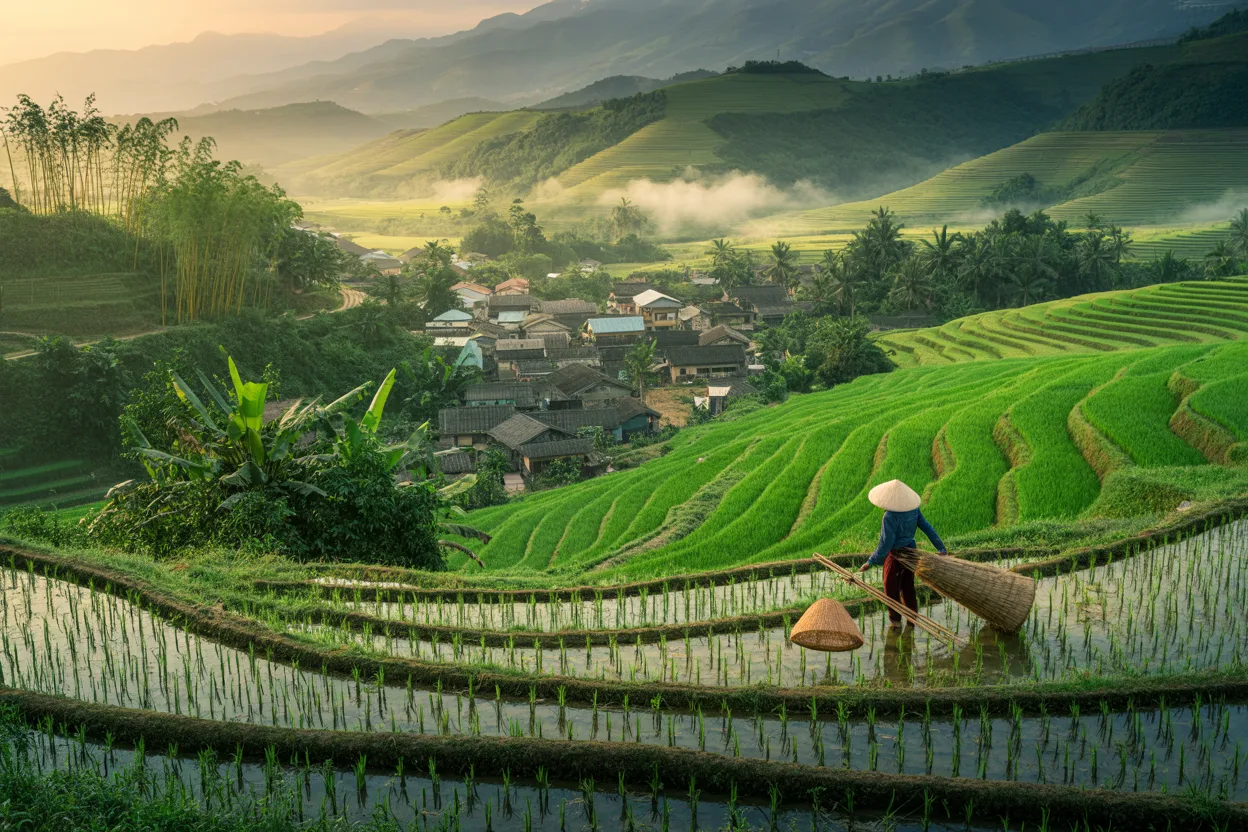
Image generated with Ai
The expansion of rural Vietnam tourism development, the Japan International Cooperation Agency volunteer program, and community-based tourism Vietnam initiatives has been increasingly supported through the active involvement of Japanese volunteers working across Vietnamese provinces such as Nghệ An and Lâm Đồng. Through the Japan International Cooperation Agency (Japan International Cooperation Agency), volunteers have been deployed to support local tourism development efforts, focusing on cultural preservation, digital promotion, and sustainable tourism infrastructure improvement in rural and underserved regions.
These initiatives have been designed to strengthen local economies by promoting lesser-known destinations and enhancing the visibility of Vietnam’s rich cultural and ethnic diversity. The presence of Japanese volunteers has contributed to both practical tourism development efforts and meaningful cultural exchange between Japan and Vietnam.
Japanese volunteers working under the Japan International Cooperation Agency program have been stationed in provinces such as Nghệ An and Lâm Đồng, where community-based tourism initiatives have been actively developed. These regions, known for their natural landscapes and cultural diversity, have been identified as key areas for sustainable tourism expansion.
In these provinces, volunteers have been engaged in supporting local communities in developing tourism services that highlight traditional lifestyles, natural attractions, and ethnic heritage. Efforts have been focused on ensuring that tourism development remains community-driven, allowing local residents to directly benefit from increased visitor activity.
Advertisement
The volunteers have also assisted in identifying tourism potential in rural areas that have historically received limited international attention, helping to diversify Vietnam’s tourism offerings beyond major urban centers.
A significant focus of the initiative has been the promotion of ethnic minority cultures, particularly the traditions of groups such as the K’Ho people in Lâm Đồng province. Cultural heritage tourism has been developed as a key component of local tourism strategies, with emphasis placed on preserving traditional customs, crafts, and lifestyles.
Japanese volunteers have worked closely with local communities to document cultural practices and support the development of tourism experiences that allow visitors to engage respectfully with indigenous traditions. These efforts have been designed to ensure that cultural representation remains authentic while also contributing to economic opportunities for local residents.
By highlighting ethnic heritage as a central tourism asset, rural communities have been able to attract visitors interested in cultural immersion and sustainable travel experiences.
Advertisement
Advertisement
The development of digital tourism marketing in Vietnam, rural Vietnam tourism development, and online visibility strategies has been significantly enhanced through the involvement of Japanese volunteers. Tourism promotion has been supported through the creation of blogs, websites, and digital promotional materials aimed at increasing awareness of rural destinations.
Platforms such as Airbnb and other online travel services have been utilized to showcase community-based tourism experiences, enabling local hosts to reach international audiences. Volunteers have assisted in improving the quality and accessibility of online content, ensuring that tourism offerings are effectively communicated to potential visitors.
Training has also been provided to local stakeholders on how to manage digital platforms, update tourism listings, and engage with international travelers through online channels. This has contributed to improved digital literacy and long-term sustainability of tourism marketing efforts in rural areas.
Collaboration between Japanese volunteers and local authorities in Vietnam has played a crucial role in improving tourism infrastructure and strategic planning. Efforts have been made to support the development of basic tourism facilities, including signage, visitor information systems, and community guest accommodations.
Local governments have worked alongside volunteers to identify infrastructure gaps and implement targeted improvements aimed at enhancing visitor experiences. These initiatives have been aligned with broader regional development plans focused on sustainable tourism growth.
Marketing strategies have also been developed collaboratively, with emphasis placed on positioning rural destinations as attractive alternatives to more commercialized tourist areas.
A central feature of the initiative has been the strong emphasis on cultural exchange and mutual learning between Japanese volunteers and Vietnamese communities. Through daily interaction and collaborative project work, both groups have gained deeper understanding of each other’s cultural practices, values, and approaches to community development.
Japanese volunteers have been exposed to Vietnam’s rural traditions, agricultural lifestyles, and ethnic diversity, while local communities have benefited from exposure to Japanese tourism development expertise and international best practices.
This exchange has been widely regarded as a key strength of the Japan International Cooperation Agency program, reinforcing the idea that development cooperation can also serve as a platform for intercultural understanding.
The broader role of the Japan International Cooperation Agency (Japan International Cooperation Agency) volunteer program has been recognized as a significant contributor to international development and tourism promotion. Through long-term volunteer deployments, JICA has supported capacity building in partner countries by focusing on local empowerment, knowledge transfer, and sustainable development practices.
In the context of Vietnam, tourism development has been integrated into broader community development goals, with emphasis placed on reducing regional inequality and improving economic opportunities in rural areas.
The program has demonstrated how international cooperation can contribute not only to infrastructure and economic development but also to cultural preservation and sustainable tourism growth.
As community based tourism Vietnam, ethnic tourism K’Ho people, and rural Vietnam tourism development initiatives continue to expand, the long-term impact of Japanese volunteer involvement has been increasingly recognized. Tourism has been positioned as a key driver of rural economic development, enabling local communities to diversify income sources while preserving cultural heritage.
The integration of digital marketing, infrastructure support, and cultural promotion has contributed to a more structured and sustainable tourism model in rural Vietnam. At the same time, cultural exchange programs have strengthened international cooperation and mutual understanding between Japan and Vietnam.
The ongoing work of Japanese volunteers under the Japan International Cooperation Agency framework reflects a broader global trend in which tourism development is increasingly linked to community empowerment, cultural preservation, and sustainable economic growth in emerging destinations.
Advertisement
Tags: community based tourism Vietnam, cultural heritage tourism Asia, Japanese volunteers Vietnam, sustainable tourism Vietnam
Advertisement
Advertisement

Saturday, September 12, 2026

Saturday, September 12, 2026
Saturday, September 12, 2026
Saturday, September 12, 2026
Friday, September 11, 2026
Friday, September 11, 2026
Saturday, September 12, 2026
Saturday, September 12, 2026