Image generated with Ai
Svalbard, Lascaux Caves, and more places across the globe are off-limits to tourists. Hidden borders exist across our planet. Entire regions are locked behind heavy steel gates and guarded by armed patrols. You cannot buy a ticket here. No luxury tour operator can help you step inside. These forbidden zones hold terrifying biological secrets, fragile ancient treasures, and top-secret military operations. Humanity is completely locked out. Here is the shocking truth behind why the world’s most guarded locations remain strictly off-limits to casual travelers forever.
While a global passport unlocks access to thousands of open cities, natural wonders, and cultural landmarks, some locations remain strictly closed to casual travelers. These restricted zones are off-limits due to grave biological hazards, delicate ecological preservation, religious sanctity, top-secret national security, or extreme personal danger. Across oceans, subterranean vaults, and protected sovereign zones, these hidden sites remind us that certain boundaries on Earth are meant to stay permanently sealed.
Advertisement
| Location | Country / Region | Primary Reason for Restriction | Access Status | Key Details |
| North Sentinel Island | Andaman Islands, India | Protection of indigenous people & bio-security | Strictly Banned | Home to the Sentinelese tribe, who live isolated. Entering within 5 nautical miles is illegal under Indian law to prevent disease transmission and violence. |
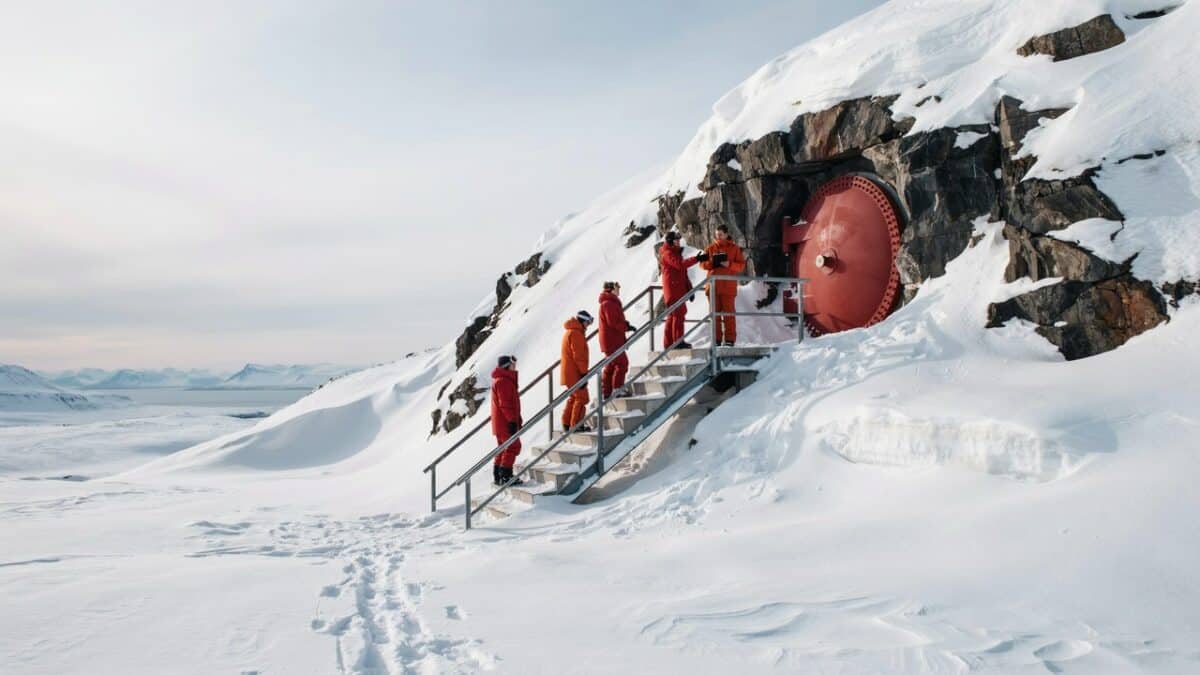
| Svalbard Global Seed Vault | Spitsbergen, Norway | Preservation of global food infrastructure | Closed to Public | Built over 300 feet inside a mountain, it stores back-up agricultural seeds for global emergencies. Only authorized research staff can enter. |
| Lascaux Caves | Dordogne, France | Artifact & cave painting conservation | Closed to Public | Houses 17,000-year-old Paleolithic cave art. Human breath, humidity, and heat triggered destructive fungal growth, forcing permanent closure in 1963. Replica sites exist nearby. |
| Ilha da Queimada Grande (Snake Island) | São Paulo, Brazil | Extreme danger (venomous wildlife) | Government Authorization Only | Overpopulated by thousands of critically endangered Golden Lancehead vipers. The Navy strictly bans public access for public safety and ecological preservation. |
| Surtsey Island | Vestmannaeyjar, Iceland | Pristine ecological research | Restricted (Scientists Only) | Formed by a volcanic eruption in 1963. Entry is restricted exclusively to scientists studying ecological succession without human contamination. |
| Vatican Apostolic Archives | Vatican City | Papal privacy & historical security | Vetted Scholars Only | Houses centuries of confidential Catholic Church records, papal correspondence, and state documents. Tourists are strictly barred; access requires rigorous academic vetting. |
| Area 51 (Groom Lake) | Nevada, United States | Top-secret military operations | Strictly Banned | Highly classified U.S. Air Force facility. Guarded by lethal force authorization, sensor networks, and strict restricted airspace. |
| Ise Grand Shrine (Inner Shrine) | Mie Prefecture, Japan | Sacred Shinto religious tradition | Royal / High Priests Only | Dedicated to the sun goddess Amaterasu. Access past the outer wooden fences is restricted to high priests and members of the Japanese imperial family. |
| Mezhgorye | Republic of Bashkortostan, Russia | Strategic military security | Closed City | A closed nuclear-missile military site situated near Mount Yamantau. Governed by armed patrols and strict state security clearance requirements. |
| Poveglia Island | Venetian Lagoon, Italy | Public safety & historical hazard | Strictly Restricted | Historical plague quarantine site and former asylum. Decaying structures and safety hazards led Venetian authorities to ban public visitation. |
| Pravčická Brána | Bohemian Switzerland, Czechia | Geological erosion preservation | Restricted (Viewable from afar) | Europe’s largest natural sandstone arch. Walking across the bridge was permanently banned in 1982 to protect the erosion-prone sandstone from collapsing. |
| North Brother Island | New York, United States | Wildlife conservation & safety | Restricted (Permit Only) | Former quarantine hospital location (notably housing “Typhoid Mary”). It is now a protected bird sanctuary with decaying, unsafe infrastructure. |
| Heard Island | Southern Indian Ocean, Australia | Geological protection & remote safety | Scientific Permit Only | Remote, barren, active volcanic territory situated between Madagascar and Antarctica. Restricted to prevent human disruption to fragile marine ecosystems. |
| Bohemian Grove | California, United States | Exclusive private ownership | Private Members Only | A 2,700-acre private retreat host to exclusive summer gatherings of prominent global political and business leaders, protected by private security. |
| Room 39 | Pyongyang, North Korea | State security & financial operations | Strictly Forbidden | Secret government organization facility allegedly managing elite funds and foreign exchange operations for North Korean state leadership. |
North Sentinel Island, located in the Bay of Bengal and governed as part of India’s Andaman archipelago, remains completely forbidden to outsiders to protect its indigenous population from catastrophic biological exposure. The Sentinelese tribe has lived in voluntary isolation for tens of thousands of years, entirely untouched by modern society. Because their immune systems lack exposure to common global pathogens like the flu or measles, even minor contact with tourists could wipe out the entire civilization. To safeguard their survival, the Indian government maintains an exclusive five-nautical-mile maritime exclusion zone around the island. Enforced strictly by coast guard patrols, this legal perimeter prevents illegal landings and prevents potential violence. Outsiders who attempt to cross these territorial waters face severe criminal prosecution and extreme hostility from the tribe, making North Sentinel one of the most rigorously protected human sanctuaries anywhere on Earth.
Deep inside an icy mountain on the Norwegian island of Spitsbergen, the Svalbard Global Seed Vault stores humanity’s ultimate agricultural backup plan. Dug more than 300 feet into solid permafrost, the facility holds duplicate samples of hundreds of thousands of plant species to safeguard global crop diversity against catastrophic climate change, nuclear war, or natural disasters. While the exterior entrance, featuring a striking illuminated art installation, has become an iconic Arctic visual, the interior remains off-limits to the public. Entry beyond the heavily fortified steel doors is limited to authorized genebank curators, international diplomats, and specialized technical staff managing crop deposits. Tourists traveling through the remote Svalbard archipelago can view the vault’s exterior from a distance, but the subterranean chambers housing the world’s agricultural reserve remain permanently sealed to preserve strict environmental and biosecurity conditions.
Advertisement
Advertisement
The Lascaux Caves in southwestern France contain some of the world’s most famous Paleolithic wall art, featuring nearly 20,000-year-old paintings of large animals and intricate symbols. After opening to the public following World War II, the cavern system suffered rapid environmental degradation. Thousands of daily visitors introduced body heat, humidity, carbon dioxide, and airborne bacteria into the delicate subterranean environment. This sudden atmospheric disruption caused destructive black fungus and lichen to spread across the ancient stone canvas, directly threatening the prehistoric artwork. To halt the damage, French authorities permanently closed the original caves to all public access in 1963. Today, only a small team of conservation scientists is permitted brief visits under controlled conditions to monitor air quality. Tourists wishing to appreciate the cave art must visit neighboring, exact-scale replicas like Lascaux IV, which mirror the original sanctuary without risking its destruction.
Ilha da Queimada Grande, widely known as Snake Island, sits roughly 20 miles off the coast of São Paulo, Brazil, and is one of the world’s most dangerous landmasses. The isolated island is home to thousands of Golden Lancehead vipers, an intensely venomous pit viper species that evolved in isolation to hunt birds in the canopy. The snake’s venom is exceptionally potent, capable of melting human tissue and causing rapid organ failure. Because of the density of this lethal population and the absence of medical facilities, the Brazilian Navy strictly prohibits public access to the island. Only a few approved scientific researchers carrying specialized permits and medical teams, alongside military personnel servicing the island’s automated lighthouse, are permitted ashore. The naval ban serves a double purpose: protecting human lives from fatal bites and preserving the critically endangered Golden Lancehead from illegal wildlife poaching.
Rising unexpectedly out of the North Atlantic Ocean off the southern coast of Iceland, Surtsey Island was formed by a series of undersea volcanic eruptions between 1963 and 1967. Because it emerged completely devoid of life, geologists and biologists recognized a rare opportunity to observe primary biological succession—how seeds, insects, and bird life naturally colonize untouched land—without any human interference. To protect this living laboratory, the Icelandic government declared Surtsey a strictly controlled nature reserve. Casual tourists, private vessels, and unauthorized aircraft are barred from landing or flying low over the island. Only a select group of vetted researchers are permitted short seasonal visits, during which they must adhere to rigorous decontamination protocols to prevent introducing non-native seeds, microbes, or invasive plant species that could corrupt this ongoing scientific study.
Spanning dozens of miles of climate-controlled underground shelving within Vatican City, the Vatican Apostolic Archives store centuries of papal history, state correspondence, trial transcripts, and historical papal bulls. Despite frequent conspiratorial myths, the archives are not secret to hide shocking truths, but rather function as a private working repository for the Holy See. Casual tourists, local sightseers, and general curiosity seekers are strictly barred from entering the underground vaults. Access is granted exclusively to qualified academic historians and specialized researchers who undergo a rigorous application process. Those admitted must request specific documents in advance and are confined to monitored reading rooms. The strict protocol preserves centuries-old parchment, protects ongoing religious diplomatic records, and ensures that historic records documenting global history are safely maintained away from foot traffic.
Situated inside the desolate Nevada Test and Training Range, the remote military installation known as Area 51 has fueled pop-culture speculation for decades. Administered by the United States Air Force, the facility serves as an active, highly classified development site for advanced aerospace hardware and experimental defense technologies. The surrounding perimeter is heavily fortified with warning signs, motion sensors, infrared cameras, and armed security patrols authorized to use lethal force against trespassers. The airspace above the complex is strictly restricted to military craft, prohibiting commercial flights and civilian drones. While tourists routinely travel along Nevada’s “Extraterrestrial Highway” to snap photos near the outer perimeter gates, taking a single step past the clearly marked boundary lines leads to immediate arrest, severe federal fines, and potential imprisonment.
Located in Mie Prefecture, Japan, the Ise Grand Shrine stands as the spiritual heart of Shintoism, dedicated to the sun goddess Amaterasu. The sprawling complex consists of over a hundred individual shrines, but its central sanctuary, the Kotai Jingu, remains off-limits to the public. Rooted in ancient tradition, the inner sanctum is hidden behind tall wooden fences, allowing everyday visitors to see only the thatched roofs from a distance. Access past the inner gates is restricted exclusively to members of the Japanese Imperial Family and high-ranking Shinto priests. Adding to its sacred nature, the main shrine buildings are entirely dismantled and painstakingly rebuilt every 20 years on an adjacent plot according to precise ancient techniques. This continuous ritual rebirth symbolizes the Shinto belief in the periodic renewal of nature and purity, preserving its sacred role far from public intrusion.
Hidden deep within the Ural Mountains near Mount Yamantau, Mezhgorye is one of Russia’s official “closed administrative-territorial formations.” Founded during the Soviet era, the entire city is off-limits to foreign tourists, commercial travelers, and citizens without specific government security clearance. Satellite imagery shows extensive underground excavation work, fueling international intelligence analysis that the area houses nuclear bunker complexes, command centers, or strategic missile reserves. The surrounding mountain range is patrolled by dedicated armed security battalions, while entry points are guarded by strict military checkpoints. Unlike typical cities that encourage economic growth through regional tourism, closed cities like Mezhgorye operate under total federal secrecy, keeping their daily residential activities, underground infrastructure, and defense missions completely invisible to the outside world.
Located in the Venetian Lagoon between Venice and Lido, Poveglia Island carries a long, dark history that ultimately led to its total closure. During the height of the Bubonic Plague, the island served as a quarantine station and mass burial ground for thousands of victims. Decades later, in the early 20th century, the site was converted into a psychiatric facility that operated until its abandonment. Today, the island lies uninhabited, covered in dense vegetation and decaying brick architecture. Due to severe structural instability, crumbling roofs, and the hazards of abandoned medical facilities, the Italian government officially banned public access. While rumors of hauntings draw interest from thrill-seekers, local maritime police routinely patrol the surrounding waters, issuing steep fines to boaters or urban explorers who attempt to land on its unsafe shores.
Spanning across the lush forests of Bohemian Switzerland in Czechia, Pravčická Brána holds the title of Europe’s largest natural sandstone arch. For generations, the magnificent rock formation was a primary tourist attraction, with thousands of travelers walking directly across its stone span to take in views of the surrounding national park. However, decades of foot traffic caused severe accelerated erosion to the fragile sandstone structure. Geological inspections revealed that human weight was stripping away thin layers of stone, thinning the arch and risking a catastrophic structural collapse. In 1982, park authorities permanently banned visitors from walking across or stepping onto the arch. Today, travelers can view the geological landmark from nearby trails and designated observation platforms, ensuring its preservation for future generations without putting the natural bridge at risk.
Positioned in the East River between the Bronx and Rikers Island, North Brother Island is an abandoned 20-acre parcel of land rich in New York history. Originally developed as the site for Riverside Hospital, a quarantine complex designed to isolate individuals with contagious diseases, it famously housed “Typhoid Mary” Mallon until her death. Following a brief post-war stint as a rehabilitation center, the island was permanently abandoned in the 1960s. Over the decades, nature reclaimed the island, turning the rotting hospital corridors into a haven for wildlife. Today, the site is managed by the New York City Department of Parks and Recreation as a protected heron sanctuary. Public access is strictly forbidden due to hazardous structural collapses, asbestos risks, and the imperative to protect nesting bird populations from human disturbance.
Situated deep in the Southern Ocean between Madagascar and Antarctica, Heard Island is one of the most remote places on the planet. Governed as an external territory of Australia, this sub-Antarctic island features an active volcano, Big Ben, covered by heavy glaciers. The island’s extreme isolation has kept its ecosystem free from invasive alien species introduced by human settlement. To maintain this untouched biological baseline, the Australian Antarctic Division maintains strict management policies over the territory. Commercial tourism is completely absent due to dangerous seas, extreme weather, and strict conservation laws. Entry requires formal scientific permits, which are granted only to research expeditions studying sub-Antarctic wildlife, glaciology, and volcanology under stringent biosecurity guidelines designed to protect the fragile environment.
Tucked away in the dense redwoods of Sonoma County, California, Bohemian Grove is a private 2,700-acre campground belonging to the Bohemian Club, an exclusive San Francisco-based men’s organization. Every July, the secluded retreat hosts a two-week gathering of some of the world’s most powerful individuals, including former U.S. presidents, cabinet officials, military leaders, and prominent corporate executives. Because of the high-profile roster of attendees, security at the perimeter is exceptionally tight. The private property is monitored year-round by private security personnel, off-duty law enforcement, thermal imaging systems, and elite physical barriers. Casual visitors, journalists, and uninvited guests are strictly barred from entering the grounds, keeping the club’s theatrical traditions, private speeches, and high-level networking entirely concealed behind closed doors.
Hidden inside a government complex in Pyongyang, North Korea, Room 39 (also referred to as Bureau 39) is a secretive state organization tied directly to the country’s highest leadership. Believed to have been established in the late 1970s, the office operates as a central financial hub tasked with generating foreign currency through various international commercial enterprises, trade operations, and illicit financial networks. Because of its critical role in funding state operations and elite programs, the facility is shrouded in total secrecy. Entry is restricted exclusively to a trusted circle of high-ranking state officials and security personnel. Foreign tourists visiting North Korea on guided state tours are kept far away from the administrative sector, making Room 39 one of the most inaccessible operational sites in the world.
Mass tourism, ecological fragility, and strict security cause these global closures. Humanity is barred from entry to protect delicate ecosystems, safeguard high-level military assets, and preserve ancient cultural history. Hazardous wildlife and isolated native populations also dictate these absolute bans. These sites remain sealed because human presence threatens their existence or causes immediate mortal danger. The answer is clear: controlled exclusion prevents permanent destruction. While travelers crave access, these boundaries maintain global safety, biosecurity, and historical preservation. Respecting these permanent limits ensures fragile environments, priceless human artifacts, and critical national defense systems stay protected for generations to come.
Advertisement
Tags: Forbidden Places, Global Mysteries, Lascaux Caves, off-limits destinations, Svalbard Seed Vault
Advertisement
Advertisement














Friday, September 11, 2026

Friday, September 11, 2026
Friday, September 11, 2026

Friday, September 11, 2026

Friday, September 11, 2026

Friday, September 11, 2026

Friday, September 11, 2026

Friday, September 11, 2026