Published on February 16, 2026
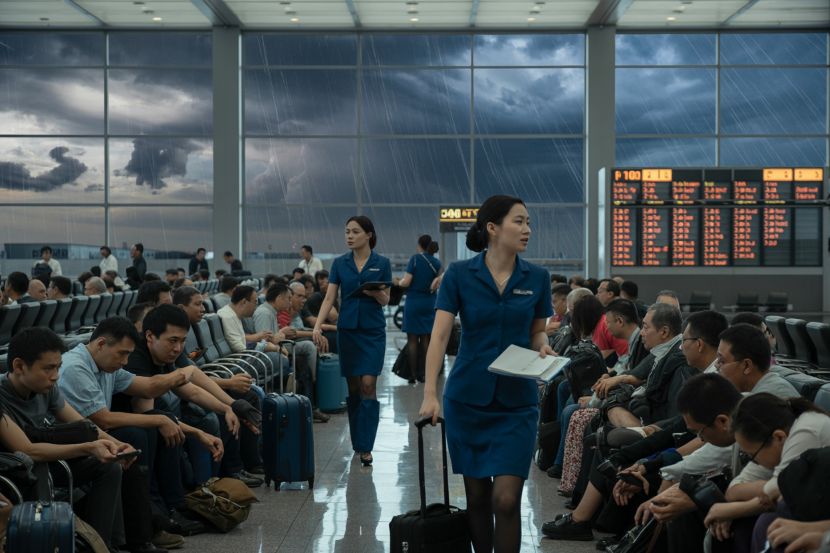
Image generated with Ai
In a time when travel is rapidly bouncing back from pandemic restrictions, the airline industry has faced a series of setbacks due to unforeseen circumstances. Over the past few days, multiple airlines have been forced to cancel flights due to bad weather conditions across major airports, leaving passengers stranded and struggling to rebook their travel plans. In this article, we delve into the extensive flight cancellations caused by adverse weather, primarily affecting Turkish Airlines, Kenya Airways, Saudia, and Royal Jordanian, as they navigate through turbulent skies.
Airlines are often at the mercy of Mother Nature, with bad weather, such as thunderstorms, snowstorms, or heavy winds, forcing them to halt flights for passenger safety. The three airlines, Turkish Airlines, Kenya Airways, Saudia, and Royal Jordanian, have all been affected by these disruptions, leading to significant impact on passenger itineraries, schedules, and connections.
Turkish Airlines, one of the largest carriers in the world, had to cancel several flights departing from and arriving at Istanbul Airport (IST) due to adverse weather conditions. Among the canceled flights, flight THY1955 from Istanbul Airport to Amsterdam Schiphol (AMS) was affected, with another return flight, THY1956, from Amsterdam to Istanbul being grounded. These cancellations left hundreds of passengers stranded at the airport, struggling to secure alternate arrangements.Ident Type Origin Destination Scheduled Departure Time THY1955 A21N Istanbul Airport (IST / LTFM) Amsterdam Schiphol (AMS / EHAM) Sun 07:40PM +03 THY1956 A21N Amsterdam Schiphol (AMS / EHAM) Istanbul Airport (IST / LTFM) Sun 10:30PM CET
Kenya Airways, the flag carrier of Kenya, was not immune to the weather disruptions either. Flight KQA764 from Nairobi’s Jomo Kenyatta International Airport (NBO) to Johannesburg’s OR Tambo International Airport (JNB) was grounded, with its return flight, KQA765, also affected. Passengers traveling on these routes had no choice but to deal with long delays and cancellations, causing significant disruptions in their travel plans. The airline was forced to issue refunds and offer compensation to those affected by the cancellations.
Advertisement
| Ident | Type | Origin | Destination | Scheduled Departure Time |
|---|---|---|---|---|
| KQA764 | B738 | Jomo Kenyatta Int’l (NBO / HKJK) | OR Tambo Int’l (JNB / FAOR) | Sun 09:20PM EAT |
| KQA765 | B738 | OR Tambo Int’l (JNB / FAOR) | Jomo Kenyatta Int’l (NBO / HKJK) | Mon 01:45AM SAST |
Saudia, the national carrier of Saudi Arabia, faced its own weather-related challenges, particularly in the cities of Riyadh and Jeddah. Flight SVA1047 from King Khalid International Airport (RUH) to King Abdulaziz International Airport (JED) was canceled, as was flight SVA1110, traveling from Jeddah to Dammam. These disruptions left passengers scrambling for alternative arrangements, and in some cases, forced to book flights with other airlines or adjust their itineraries entirely.Ident Type Origin Destination Scheduled Departure Time SVA1047 A333 King Khalid Int’l (RUH / OERK) King Abdulaziz Int’l (JED / OEJN) Sun 08:10PM +03 SVA1110 A20N King Abdulaziz Int’l (JED / OEJN) King Fahd Int’l (DMM / OEDF) Mon 09:10AM +03 SVA1109 A20N King Fahd Int’l (DMM / OEDF) King Abdulaziz Int’l (JED / OEJN) Mon 12:10PM +03
Lastly, Royal Jordanian also faced major flight disruptions due to bad weather, particularly affecting their operations between Queen Alia International Airport (AMM) in Amman and Maastricht Aachen Airport (MST) in the Netherlands. Flights RJA33 and RJA34 were both canceled, leaving passengers stranded as they sought rebooking options or compensation from the airline.
Advertisement
Advertisement
| Ident | Type | Origin | Destination | Scheduled Departure Time |
|---|
| RJA33 | A321 | Queen Alia Int’l (AMM / OJAI) | Maastricht Aachen (MST / EHBK) | Mon 09:25AM +03 |
| RJA34 | A321 | Maastricht Aachen (MST / EHBK) | Queen Alia Int’l (AMM / OJAI) | Mon 02:10PM CET |
Weather remains a primary reason for flight cancellations, with airlines across the globe dealing with the fallout of bad weather conditions. While there was no official statement about the specific weather systems affecting these flights, it is known that thunderstorms, strong winds, and potential snowfalls across various regions led to the widespread cancellations. As airlines aim to prioritize passenger safety and comply with air traffic regulations, flights are often grounded when the conditions become unsafe.
The flight cancellations caused by these airlines resulted in a significant impact on passengers. For many, this meant long delays, missed connections, and uncertainty about when they would be able to board their flights again. Passengers found themselves navigating a complex process of refunds, rebooking, and finding accommodations while stranded at airports.
Advertisement
Advertisement
For business travelers and those with tight schedules, these disruptions were particularly troublesome, forcing them to miss meetings, events, and family gatherings. Families with children, elderly passengers, and those with special needs faced additional challenges, particularly in navigating crowded airports and finding last-minute travel solutions.
Local tourism was also negatively affected by the cancellations. For countries like Kenya, Saudi Arabia, and Jordan, which heavily rely on international tourism, these flight disruptions led to a decrease in the number of visitors arriving at key tourist destinations. While domestic tourism might have picked up, international travelers, especially those from Europe and Asia, had their plans disrupted.
Local businesses, such as hotels, restaurants, and tour operators, felt the immediate economic impact of these disruptions, with many seeing canceled reservations or a lack of tourists due to the cancellations. The governments of these affected countries would need to act swiftly to mitigate the effects of these cancellations on their local economies.
Despite these cancellations, the tourism industry can look forward to a rebound. Airlines, working in close collaboration with local authorities and governments, can implement contingency plans and better communication strategies to mitigate the impact of such disruptions. With the global travel industry recovering, countries can use this as an opportunity to improve their infrastructure and services to better handle unforeseen challenges. As airlines continue to modernize their fleets and invest in technology, it’s likely that future disruptions will be more manageable.
For passengers whose flights have been canceled or delayed due to severe weather disruptions, airlines typically provide a variety of options to assist with rebooking. Here are the common rebooking guidelines to help travelers navigate the process:
The airline industry has faced its fair share of challenges, but resilience is key. Airlines that provide excellent customer service, timely information, and effective contingency measures will remain the top choice for travelers. Additionally, governments and tourism boards can collaborate to create alternative travel plans, ensuring that tourists’ experiences are not entirely ruined by weather-related disruptions. These steps will ultimately lead to a stronger and more sustainable future for the global tourism industry.
Advertisement

















Monday, February 16, 2026

Monday, February 16, 2026

Monday, February 16, 2026

Monday, February 16, 2026

Monday, February 16, 2026

Monday, February 16, 2026

Monday, February 16, 2026

Monday, February 16, 2026