
Middle East Travel Disruptions Intensify As Kuwait, Qatar, UAE, Saudi Arabia And More Face 21 Flight Cancellations And 205 Delays, Impacting Etihad, Saudia, Emirates, IndiGo And Other Airlines Across Jeddah, Sharjah, Cairo, Frankfurt, Barcelona And Beyond

Published
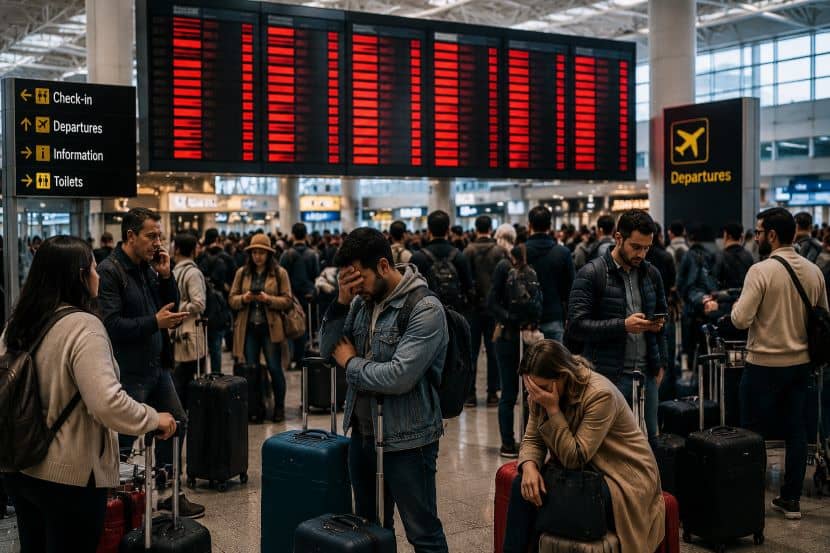
Middle East Travel Disruptions Intensify Today As Kuwait, Qatar, UAE, Saudi Arabia And More Face 21 Flight Cancellations And 205 Delays, Impacting Etihad, Saudia, Emirates, IndiGo And Other Airlines Across Jeddah, Sharjah, Cairo, Frankfurt, Barcelona And Beyond, due to widespread operational strain across major aviation hubs where congestion, aircraft rotation delays, and tight hub scheduling have disrupted normal flight sequencing and reduced on-time performance across interconnected global routes. The situation today reflects pressure across key airports including Cairo, Kuwait, Hamad, Dubai, Abu Dhabi, Riyadh, Jeddah, Dammam, and Sharjah, where simultaneous arrival delays and departure backlogs have forced airlines to adjust schedules and cancel selected services to stabilise operations. As a result, Etihad, Saudia, Emirates, IndiGo and other carriers are experiencing cascading disruptions across Europe-Asia corridors, with major ripple effects extending to Frankfurt, Barcelona and other international connection points, further intensifying passenger delays and global network instability.
Overview of the disruption across the Middle East aviation network
The consolidated operational picture shows:
Advertisement
Advertisement
- 21 total flight cancellations
- 205+ total flight delays
However, airport-level breakdowns reveal that the impact is uneven. Some airports are experiencing cancellation-heavy disruption, while others are dealing primarily with delay accumulation. This indicates that airlines are selectively cancelling flights in certain markets to stabilise broader network operations, while still attempting to maintain overall connectivity.
The most significant operational strain is being observed in hub airports with high transfer traffic, where even minor delays in inbound flights result in missed connections and cascading schedule changes.
Advertisement
Advertisement
Airport-by-airport analysis of disruption
Cairo International Airport
Cairo has recorded 6 cancellations and 31 delays, making it one of the most affected hubs in this disruption cycle. As a major North African transit gateway, Cairo plays a key role in connecting regional traffic to Gulf hubs and European destinations.
The combination of cancellations and delays suggests both operational congestion and schedule restructuring. The delays have particularly affected connecting passengers travelling between Africa, the Middle East, and Europe, with missed onward flights increasing pressure on airline rebooking systems.
Advertisement
Advertisement
King Khalid International Airport (Riyadh)
Riyadh has reported 2 cancellations and 17 delays. While comparatively moderate, the impact is significant given the airport’s role as a central hub for Saudia operations.
Delays at Riyadh have affected domestic-to-international feeder routes, particularly those connecting to long-haul services bound for Europe and South Asia. The ripple effect has extended into fleet rotation timing, creating knock-on delays across subsequent departures.
King Abdulaziz International Airport (Jeddah)
Jeddah has experienced 3 cancellations and 15 delays. As one of Saudi Arabia’s busiest international gateways, particularly for pilgrimage-related travel, even small disruptions can escalate quickly into wider congestion.
The airport’s tightly scheduled departure banks have been affected, with outbound waves experiencing compression and extended turnaround times. This has impacted both regional and long-haul connectivity.
King Fahd International Airport (Dammam)
Dammam has recorded 1 cancellation and 7 delays. While relatively contained compared to other Saudi hubs, it remains affected by broader network scheduling imbalances.
The disruption here is largely secondary, driven by aircraft repositioning delays from Riyadh and Jeddah.
Advertisement
Advertisement
Kuwait International Airport
Kuwait has reported 6 cancellations and 5 delays. The higher cancellation-to-delay ratio suggests deliberate schedule reductions rather than prolonged operational congestion.
Short-haul Gulf routes have been most affected, with reduced frequency impacting regional connectivity and onward transfer options.
Hamad International Airport (Doha)
Doha stands out for its delay-heavy profile, with 2 cancellations and 43 delays. As one of the world’s busiest long-haul transit hubs, Hamad International Airport is particularly sensitive to even small scheduling disruptions.
The high number of delays has significantly impacted connecting passengers travelling between Asia, Europe, and the Americas. Missed connections have forced airlines to rebook passengers across multiple waves, increasing pressure on terminal operations and gate availability.
Sharjah International Airport
Sharjah has recorded 1 cancellation and 18 delays. The disruption here is largely concentrated in low-cost carrier operations serving regional and South Asian routes.
Delays have affected short-haul turnaround cycles, leading to knock-on impacts on aircraft scheduling across multiple destinations.
Advertisement
Advertisement
Dubai International Airport
Dubai has experienced 42 delays, making it one of the most delay-affected airports in the region. As a global aviation hub handling extremely high traffic density, Dubai’s operations are highly sensitive to inbound aircraft timing.
Even minor disruptions in arrival sequences have caused cascading delays across outbound long-haul flights to Europe, Asia, and the Americas. The hub’s tightly structured departure banks have amplified the impact of scheduling instability.
Abu Dhabi International Airport
Abu Dhabi has recorded 27 cancellations, making it the most cancellation-affected airport in this disruption cycle. This has had a direct operational impact on Etihad Airways, which relies heavily on Abu Dhabi as its primary hub.
The cancellation-heavy pattern suggests proactive schedule adjustments to stabilise fleet operations. However, it has also reduced available capacity on long-haul routes, particularly those connecting Europe and Asia.
Major airlines affected
Emirates
Emirates has experienced significant knock-on disruption through Dubai International Airport, primarily in the form of delays rather than cancellations. The airline’s global network structure, which depends on timed connections through Dubai, has been particularly sensitive to inbound aircraft delays.
Long-haul services to Europe, North America, and Asia have seen schedule adjustments due to late arrivals and reduced turnaround buffers.
Advertisement
Advertisement
Etihad Airways
Etihad has been directly impacted by the high cancellation rate at Abu Dhabi. The airline has had to adjust multiple long-haul operations, particularly those requiring precise aircraft sequencing for intercontinental routes.
The cancellations have had a more structural impact compared to delays, affecting overall capacity availability.
Saudia
Saudia has been impacted across its domestic hubs in Riyadh, Jeddah, and Dammam. The airline’s network, which integrates both domestic feeder routes and long-haul international services, has experienced cascading delays.
Pilgrimage and business travel routes have been particularly affected due to high-frequency scheduling requirements.
IndiGo
IndiGo has faced secondary disruption through Gulf transit hubs. While not a primary Middle Eastern carrier, its operations are heavily dependent on connections through Doha, Dubai, and Abu Dhabi.
Missed connections and delayed rotations have affected India–Middle East–Europe itineraries, leading to extended journey times and rescheduling pressure.
Advertisement
Advertisement
Key reasons behind the disruptions
Several overlapping operational factors are contributing to the current situation:
Air traffic flow congestion
High-density air corridors connecting Europe, the Middle East, and Asia are experiencing sequencing delays, particularly during peak departure periods.
Aircraft rotation delays
Late inbound flights have disrupted tight turnaround schedules, leading to cascading delays across multiple subsequent sectors.
Hub capacity pressure
Major airports such as Dubai, Doha, and Cairo operate with tightly structured flight banks, where minor delays quickly escalate into broader congestion.
Operational recovery adjustments
Airlines have proactively cancelled select flights in order to stabilise fleet utilisation and reduce downstream disruption.
Weather and operational variability
Intermittent weather and ground handling delays have contributed to uneven operational flow across multiple hubs.
Advertisement
Advertisement
Interconnected global routing
Delays in the Middle East have propagated into European airports such as Frankfurt and Barcelona, where incoming wave congestion has increased.
Passenger impact and disruption effects
Travellers across the affected network have experienced:
- Missed international connections at transit hubs
- Extended layovers and rescheduling
- Baggage delivery delays due to rerouted aircraft
- Reduced seat availability on alternative flights
- Increased congestion at rebooking counters
Passengers on long-haul itineraries with multiple stopovers have been the most affected, particularly those travelling through Gulf hubs.
Passenger guidance and travel tips
Given the scale of disruption, passengers are advised to take several precautions:
- Monitor flight status frequently through airline apps and airport updates
- Avoid tight layovers, especially at major hubs such as Doha and Dubai
- Arrive earlier than usual at airports due to increased processing delays
- Maintain flexible booking options where possible
- Keep buffer days when travelling for business or critical schedules
- Prepare for rerouting via alternative hubs if required
- Reconfirm gate and boarding information multiple times before departure
Middle East Travel Disruptions Intensify Today as Kuwait, Qatar, UAE, Saudi Arabia face 21 cancellations and 205 delays due to airport congestion affecting Etihad, Saudia, Emirates, IndiGo across Jeddah, Sharjah, Cairo, Frankfurt, Barcelona.
Outlook
The current disruption pattern indicates a medium-term stabilisation phase rather than a short-lived event. While cancellations may gradually decrease as airlines rebalance fleet availability, delays are likely to persist until full synchronisation of aircraft rotations and air traffic flow is restored across the region.
Advertisement
Advertisement
Given the interconnected nature of Middle Eastern aviation hubs, recovery will not be uniform. Some airports may stabilise faster, while others—particularly high-density transit hubs—may continue to experience residual delays over the coming operational cycles.
Authors Observation: All information is sourced manually from FlightAware’s official website and reflects real-time operational data, which remains subject to change. Airlines may adjust schedules at short notice to ensure passenger safety and maintain secure operations. Travelers are advised not to panic during disruptions and instead remain attentive to official updates and announcements.
Advertisement
