
Skylark Labs Launches Groundbreaking FOD Detection System For Unmatched Runway Safety At Airports Worldwide

Updated
Published
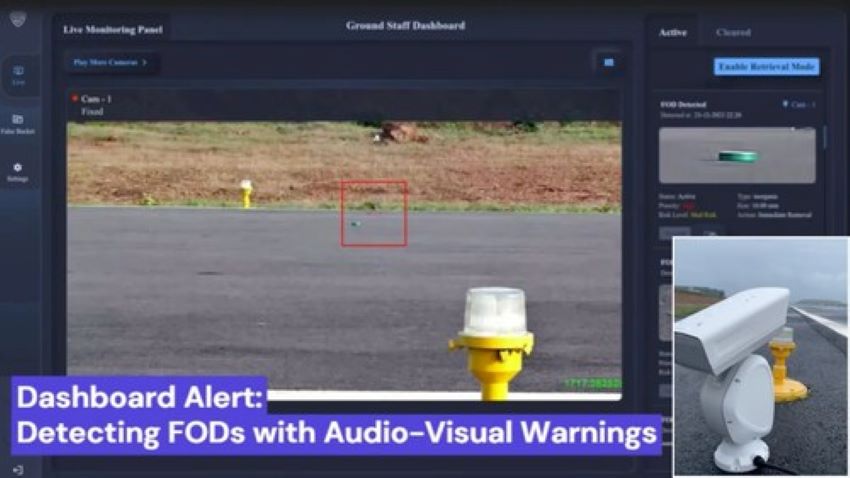 Image generated with Ai
Skylark Labs is rolling out its Fixed Foreign Object Debris (FOD) detection system at commercial airports around the world, marking the start of a new era of autonomous, continuous safety monitoring at runways. Already, several major airports have integrated the new system, which will change the runway maintenance patrols significantly. Additionally, this system will increase safety, reduce runway maintenance patrols, decrease operational downtime, and improve the overall operational efficiency of the airport.
The Problems of Runway Safety Are Being Solved
During takeoff, landing, and taxiing, FOD (Foreign Object Debris) is a major safety concern. Even the smallest items, such as small rocks and even loose components, can damage an aircraft severely. This can lead to costly delays and repairs, and even accidents. In commercial aviation, delays and downtime during runways are highly costly, which is why it is crucial to have FOD detection systems at airports.
In the past, the only way to detect FOD involved mobile vehicle patrols, as airport workers would patrol the runways at set intervals to look for debris. Although this practice was useful, there were limitations as well. These included the fact that patrols were limited to the availability of the operators, as well as the fact that human error is a possibility. FOD threats warranted a more timely, real-time response, which the mobile patrols were not able to provide.
Advertisement
Advertisement
Continuous, Fixed FOD Detection (Tailored for the Optimized Perimeter of the Runway)
Skylark Labs has tackled these limitations with the launch of the first Fixed FOD Detection System that will provide 24/7 automated runway monitoring. Unlike mobile patrols, this fixed system does not work with intervals, as it has no interruptions. Instead, it scans the runway for debris using AI to adaptively identify runway debris. It has the same proprietary Runway Monitoring Intelligence Layer (RMIL) as is used with Skylark Labs mobile Tracer AI vehicles, which allows the stationary system to update its debris detection, surface anomaly, and false positive detection in real time.
Advertisement
Advertisement
All operational constraints are lifted by fixed detection systems. No runway monitoring impact means no impact on airport schedules. Therefore, the system maintains the schedules by monitoring the runway. The system will capture, document, and send the debris to air traffic control. Ground operations can be dispatched without delay or the need to staff the operational vehicles.
How It Works: Smart and Autonomous Debris Detection
Advertisement
Advertisement
With debris detection, the Skylark Labs’ Fixed FOD Detection system classifies the type of debris and relays the information to airport ground operations. Because of the immediate communication with the operations team, runway downtime is reduced, and the runway is quickly cleared of any debris. The system also monitors the condition of the debris; with the collection of historical data, runway safety profiles are compiled. This data assists in determining predictive maintenance and the formation of high-risk zones.
A major advantage of this system is its capability to integrate intelligence with all of the world’s airports. The intelligence received from the detection of new debris signatures, new patterns of false positives, and indicators of surface degradation is immediately communicated to all other fixed installations and mobile units on the Skylark Labs network. This contributes to the development of a cohesive and collaborative ecosystem for runway safety across the aviation industry.
Improved Safety and Operational Efficiency
The Fixed FOD Detection system presents the industry with new and improved safety and operational efficiency benefits. The autonomous and real-time detection, monitoring, and reporting of runway debris increases safety and operational efficiency by eliminating the need for manual monitoring, detection, and reporting, which reduces the risk of human error. This also eliminates the need for roving patrol vehicles, which allows the airport to be operational at all times, meaning there is no need for operational delays.
Advertisement
Advertisement
The real-time operational learning capability of the system offers a clear and significant operational advantage. The system will detect the debris, fouling, and trash that are present on and around the airport runway and will update its operational modes to be more precise with less chance of false positives. This proactive system will continue to improve with time, thereby enabling the airport to be proactive in managing safety-related risks.
Airports and Airlines Commercial Benefits
Skylark Labs’ Fixed FOD Detection system exemplifies modern runway safety infrastructure. With this system, commercial airports can gain:
A Monitoring System that Operates Continuously Over the Entire Year: Scheduled vehicle patrols run the risk of missing debris, whereas automated goal post patrols will ensure any debris is immediately reported and able to be put under control.
A System that Can Report at any Second: Ground operations will have the ability to receive control of any debris and report the data even before the runway is in use, which will help to decrease the time of interventions and the runway’s delay.
The system’s integration with air traffic control and ground operations ensures a streamlined and coordinated response to any potential FOD hazards, further enhancing the safety and efficiency of airport operations. This level of automation and intelligence helps airports maintain continuous, uninterrupted service while keeping operational costs in check.
Advertisement
Advertisement
The Coming Years of Runway Safety: A Comprehensive International Interlacing of FOD Discerning Technology
The firm FOD Detectors (Fixed FOD Detectors) is likely to drive innovation in other important areas of airport safety operational systems, as FOD is one of the main issues of runway safety in the present day. According to Skylark Labs, as the main winner of the FOD detection challenge, there exists a runway safety evolution (although we do not yet have FOD detection in the present).
Skylark Labs is creating the first runway safety “data intelligence” network. This network will allow the first-ever cross-airport collaboration in runway safety data sharing, increasing runway safety over more airports in more areas of the world.
Conclusion: Skywalker FOD Detection Technology for Advanced and Intelligent Safety Operational Systems
The Fixed FOD Detection System is the first of its kind to allow uninterrupted and continuous monitoring of the operational systems of airports. Therefore, it represents a new, technologically advanced means of achieving roadway safety. Furthermore, the system also advanced the global operational system safety, as well as the artificial intelligence incorporated in it, toward a significant improvement in airport safety and operational systems.
The worldwide implementation of Skylark Labs’ Fixed FOD Detection system illustrates a major advancement in airport safety technology. Airport innovation is constant. The future of aviation is reliant on technology that ensures the safety and security of passengers, aircraft, and operations with minimal interruptions.
Advertisement
