Published on March 2, 2026

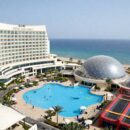
Image generated with Ai
A significant new development in Muscat’s Al Qurm neighbourhood is poised to redefine the city’s architectural and economic horizons. The Ministry of Heritage and Tourism recently finalised an agreement to establish an “Integrated Tourism Complex” (ITC), marking a watershed moment in the Sultanate’s burgeoning travel industry. Telal Al Qurum is an ambitious venture that aims to become a cornerstone of urban luxury and recreational excellence in the capital.
The government and Sorouh Al Qurm Real Estate Company formalised their partnership, signalling a watershed moment in the country’s strategic push for economic diversification. With a staggering total investment of RO 230 million (approximately $596 million), the project is one of the most significant financial commitments to the Muscat Governorate in recent memory. This investment is intended to create a world-class destination that seamlessly combines high-end hospitality and residential sophistication.
The selected site for this expansive project is located within the Wilayat of Bausher, a region already celebrated for its balance of modern infrastructure and natural beauty. Spanning an impressive area of 165,000 square metres, the complex has been designed to serve as a self-contained ecosystem for both international voyagers and local residents.
The developmental roadmap for Telal Al Qurum is characterized by a long-term vision, with implementation scheduled to occur in structured phases over a 15-year duration. This phased approach is utilized by the Ministry to ensure that every stage of construction meets the highest international standards of sustainability and urban planning. By stretching the development timeline, the integration of the complex into the existing fabric of Muscat can be managed with precision, allowing for the gradual evolution of the Al Qurm skyline.
Advertisement
Advertisement
Central to the allure of the new complex is the planned addition of two premium 4-star hotels. These establishments are expected to provide a combined capacity of more than 400 meticulously designed hotel units. Through the introduction of these keys, the hospitality sector in Muscat is expected to receive a significant boost, catering to the rising demand from business travellers and leisure seekers alike.
Beyond traditional lodging, the spirit of the project is rooted in the “integrated” nature of its facilities. A diverse array of recreational venues is included in the master plan, designed to appeal to families and adventure enthusiasts. Included among these features are a sprawling indoor games hall and state-of-the-art trampoline facilities. These amenities are intended to transform Al Qurm into a vibrant social hub, where physical activity and digital entertainment converge under one roof.
Advertisement
Advertisement
One of the most significant aspects of the agreement is the provision for freehold residential units. This legal framework is particularly noteworthy, as it allows for property ownership by both Omani citizens and international investors. By offering these units, the project is expected to attract a global community, further enhancing the cosmopolitan character of the Bausher district.
Complementing the residential and hotel sectors, a wide variety of commercial outlets will be established throughout the complex. These spaces are envisioned as high-end retail and dining destinations, curated to provide a sophisticated shopping experience that mirrors the luxury of the surrounding environment. The synergy between living, working, and playing within a single geographic footprint is a hallmark of the Integrated Tourism Complex model, which continues to be a successful pillar of Oman’s urban strategy.
Advertisement
Advertisement
The formal signing of the contract was conducted by Sayyid Ibrahim bin Said Al Busaidi, the Minister of Heritage and Tourism, representing the public interest. On the private sector front, the agreement was endorsed by Eng. Khaled Khudair Mashaan, who serves as the Chairman of the Board of Directors of Al Argan International Real Estate Company. In this capacity, he acted as the authorized signatory for Sorouh Al Qurum Real Estate Company.
The involvement of Al Argan International brings a wealth of regional expertise to the project. The company is widely recognized for its commitment to sustainable development and its history of delivering award-winning real estate solutions across the Middle East. Through this collaboration, the Ministry aims to leverage private sector innovation to achieve the lofty goals set out in the national development agenda.
The inception of Telal Al Qurum is deeply intertwined with the broader objectives of Oman Vision 2040. This national blueprint identifies the tourism industry as a primary engine for sustainable growth and a vital source of employment for the Omani workforce. By facilitating projects of this magnitude, the Ministry of Heritage and Tourism is actively working to increase the sector’s contribution to the national Gross Domestic Product (GDP).
In addition to its economic impact, the project is expected to foster “local content” by prioritizing Omani talent and suppliers throughout its 15-year construction and operational lifecycle. The creation of sustainable job opportunities is a core tenet of the agreement, ensuring that the benefits of such massive investments are felt across the local community. Furthermore, the development is expected to enhance the global competitiveness of Muscat as a top-tier destination for international tourism.
As the first phases of construction begin, the Telal Al Qurum project demonstrates the Sultanate’s resilience and forward-thinking spirit. It is more than just a collection of buildings; it represents a strategic investment in the future of Omani hospitality. The complex, which combines luxury 4-star accommodations, innovative recreational zones, and inclusive residential options, is poised to set a new standard for integrated living in the Gulf.
Muscat is being transformed into a city that honours tradition while also achieving contemporary excellence for modern travellers. The development of the Al Qurm area ensures that the capital remains a hotspot for those seeking the best in Middle Eastern travel and culture.
Advertisement
Tags: integrated tourism complex Oman, luxury hotels Muscat, Oman tourism investment, Telal Al Qurum Muscat
















Monday, March 2, 2026

Monday, March 2, 2026

Monday, March 2, 2026

Monday, March 2, 2026

Monday, March 2, 2026

Monday, March 2, 2026